Connect with us

Showbiz

Legends, Music & TV Icons – Unmissable Stories to Stream on Showmax

Published

on

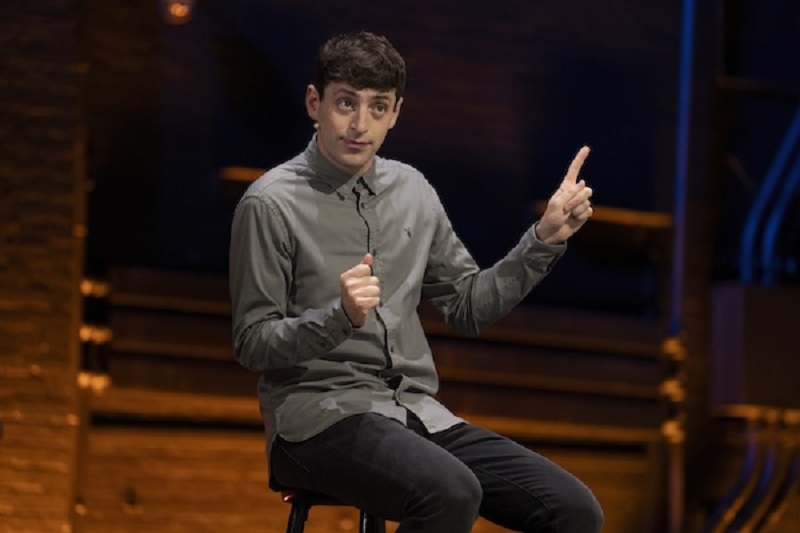
Alex Edelman Just For Us

Some stories make us laugh, some inspire us, and some remind us why we fell in love with music, TV and comedy in the first place. This time, Showmax is bringing a mix of all three, packed with some of entertainment’s biggest names and even bigger stories. Whether you’re in the mood for a powerful music documentary, a hilarious comedy special, or a nostalgic deep dive into television history, there’s always something new to discover.

Here are five unmissable stories to add to your list.

Alex Edelman: Just For Us | Streaming from Wednesday, 19 February

Best for when you need a laugh

Ever found yourself in an unexpected situation that made you question everything? That’s exactly what happened to Alex Edelman, and the result is one of the funniest comedy specials of the year.

Just For Us is based on Edelman’s Broadway show, where he tells the story of infiltrating a white nationalist meeting after being targeted with anti-Semitic threats online. What unfolds is a sharp, witty, and sometimes shocking journey into the world of extremism, identity, and human connection.

With an Emmy for Outstanding Writing and praise from The Washington Post, this is the kind of stand-up special that makes you laugh while making you think.

Stevie Van Zandt: Disciple | Streaming from Wednesday, 26 February

Best for fans of Bruce Springsteen and The Sopranos

Stevie Van Zandt: Disciple explores the fascinating life of a man who has lived multiple careers,from rockstar to activist to actor. With appearances from legends like Paul McCartney, Bono, and Eddie Vedder, this Grammy-nominated documentary paints an inspiring portrait of a musician who used his fame for good, most notably in the fight against apartheid.

With a 90% rating on Rotten Tomatoes, this is a must-watch for music lovers and history buffs alike.

Being Mary Tyler Moore | Streaming from Wednesday, 26 February

Best for when you’re feeling nostalgic

If you grew up watching The Mary Tyler Moore Show, then you already know the impact she had on television. But Being Mary Tyler Moore goes beyond her on-screen legacy, offering an intimate look at the life of a woman who redefined what it meant to be a leading lady.

Through stunning archival footage and interviews with icons like Betty White and Julie Andrews, this Emmy-nominated documentary celebrates Moore’s influence on feminism, television, and culture. It’s a powerful, emotional watch that reminds us just how much things have changed and how far we still have to go.

Diddy: The Making of a Bad Boy | Stream now

Best for true-crime and hip hop fans

Diddy: The Making of a Bad Boy takes an unfiltered look at the man behind the music. This revealing documentary features exclusive interviews, never-before-seen footage, and a deep dive into the highs and lows of his career—from his rise in the rap game to recent legal controversies. Whether you admire his genius or question his methods, this documentary will have you glued to the screen.

Combs’ trial is set for May 2025, making this the perfect time to watch and unpack his story.

Despicable Me 4 | Streaming from Thursday, 20 February 2025

Best for watching with kids over six

What’s better than more Minions? Even MORE Minions! Despicable Me 4 is back with more chaos, more laughs, and a new addition to the Gru family (Gru Jr.), who is determined to make his dad’s life a nightmare.

But it’s not all fun and games. When Gru faces off against a stylish new villain, Maxime Le Mal, and his femme fatale partner, Valentina, the family must go on the run. With a voice cast featuring Steve Carell, Kristen Wiig, Will Ferrell, and Sofia Vergara, this blockbuster hit is guaranteed to be a fun ride for the whole family.

Start streaming now and don’t miss out on these must-watch titles! Don’t have a Showmax account, Head to www.showmax.com/ng to sign up for Showmax mobile for as low as N1,600.


Click to comment

Leave a Reply

Your email address will not be published. Required fields are marked *

Showbiz

How Entertainment Quietly Escaped the Living Room

Published

on

Living Room entertainment

The living room used to be run by a quiet dictatorship: one television, one remote, and an entire household constantly fighting for control. That hierarchy didn’t just organise entertainment; it defined it. Now it’s gone. Not because television disappeared, but because it stopped being contained. At the centre of this shift is on-demand access, and it has completely rewritten viewing behaviour.

Streaming platforms, smart TVs, and mobile apps have removed the idea of “waiting for something to come on.” Content no longer asks for your time; you give it fragments of your attention whenever it fits. A commute becomes an episode. A lunch break becomes a binge. A late-night scroll becomes a full viewing session you didn’t plan for. Entertainment isn’t scheduled anymore. It’s ambient.

Where Traditional TV Didn’t Die, It Adapted

Here’s the part people often miss: broadcast television didn’t lose the fight; it changed tactics. Platforms like DStv and GOtv Africa didn’t just sit back and watch streaming take over. They adapted by merging the old reliability of curated channels with the flexibility audiences now expect.

Live sports still pull people into real-time viewing. Reality shows still create shared moments. But now those same experiences can move with the viewer through mobile access and digital extensions that keep the screen from being tied to one place. The decoder is no longer the endpoint. It’s just one entry point.

Televisions aren’t just televisions anymore; they’re control centres. Your screen now talks to your speakers, your phone, your console, even your lights. A single command can dim the room, switch inputs, and drop you straight into a match or a movie. The experience is no longer “watching TV.” It’s entering an environment. Entertainment has quietly stopped being passive.

Everyone Is Now a Broadcaster

Content creation has also been completely flattened. You don’t need a studio anymore, just a phone, a decent idea, and enough consistency to survive the algorithm. High-end production still exists, but it now shares the same battlefield with short-form clips filmed in bedrooms, cars, and street corners.

People don’t just watch anymore. They react, remix, argue, quote, and push content into new spaces. A clip isn’t finished when it ends; it’s finished when the internet is done with it. That shift has turned entertainment into something closer to a live conversation than a finished product.

Nigeria’s Hybrid Reality

In markets like Nigeria, the change is not replacement; it’s layering. Global streaming platforms sit alongside established broadcasters like DStv and GOtv in the same household, often on the same devices. One moment it’s a curated channel lineup. Next, it’s YouTube, Netflix, or a TikTok feed.

Sports nights still bring families together around live TV. At the same time, everyone in that same room is also watching something else on a second screen. Coexistence isn’t a transition phase here; it’s the new normal.

Ultimately, technology has not killed traditional entertainment; it has expanded it. The living room is no longer the only stage. It now includes mobile screens, smart devices, and cloud platforms. And as innovation continues, the question is no longer “what’s on TV tonight?” but “what do I feel like watching right now?”

Continue Reading

Showbiz

MasterChef Nigeria Fire, Flavour and Fabulous Fads

Published

on

MasterChef Nigeria Chef Fads

White Apron Day brought pizza drama, pasta pressure and a Dish of the Day performance worthy of applause

It was White Apron Day in the MasterChef Nigeria kitchen — which meant nobody was going home. But make no mistake, this was not a day off.

With elimination off the menu, creativity took centre stage as the contestants were challenged to bring two worlds together in one unforgettable feast. Their task? Create two Afro-Italian dishes — Italian favourites reimagined with a proudly Nigerian twist.

From rich sauces to bold spices, fresh dough to fearless flavour combinations, the home cooks had 90 minutes to prove that Nigerian ingredients and Italian classics can speak the same delicious language. And as always in the MasterChef Nigeria kitchen, the contestants were running against the clock.

Even though nobody would be packing their knives, the competition was still piping hot. Up for grabs was the Dish of the Day title — and a dream prize for any pizza lover: an Ooni pizza oven.

Pizza quickly became the star of the conversation. Loved across the world and made to be shared, pizza is the ultimate social food — the kind of dish that brings friends together, fills a table, and starts a debate before the first slice is even taken.

Chef Stone made it clear that he is all about a thick, satisfying pizza base, while Chef Eros stood firmly on the side of a thin, crisp base. Thick or thin, soft or crunchy, classic or reinvented — the contestants had to find their own way to impress.

But for the judges, the biggest concern was clear: the dough. A pizza can have the boldest toppings and the most exciting Nigerian twist, but if the base is not right, the whole dish falls flat. The contestants had to prove they understood that great pizza starts long before it reaches the oven.

The pasta dish brought its own pressure. It was not enough to simply add Nigerian flavour to an Italian favourite; the home cooks had to elevate the dish to true MasterChef quality. The judges were looking for refinement, balance, technique and a plate that felt worthy of the competition.

And then came the extra drama: fire in the kitchen.

Isabella had a fiery moment with the pizza oven, while Favy faced separate fire drama at her bench. But fear not, Chef Stone came to the rescue, proving that even on White Apron Day, the kitchen can still bring the heat in more ways than one.

Of course, there is another kind of danger in the MasterChef Nigeria kitchen: Chef Eros removing his glasses. That is never a casual move. It is the clearest sign that he does not approve of what he is tasting.

Unfortunately for David and Isabella, both experienced the glasses-off moment. Chef Eros was not impressed with what they served, and the message was loud without needing to be shouted.

Favy also had a serious setback when she served uncooked mussels in her pasta — a mistake that could have cost her dearly on an elimination day. However, while the mussels missed the mark, the judges still enjoyed the overall flavours of her dish.

But the standout of the day belonged to Fads.

Her pizza and pasta impressed the judges the most, earning praise as restaurant-ready, delicious, classy, elegant and beautiful. It was the kind of plate that showed confidence, control and creativity — and it even earned her a round of applause from Chef Eros.

Newly named “Fabulous Fads” by Chef Eros, Fads walked away with Dish of the Day, the Ooni pizza oven and serious bragging rights.

Nobody went home, but the Afro-Italian challenge still delivered fire, flavour, pressure and a winning performance to remember.

Next week, the safety of the white apron is gone.  The Top 4 will be cooking in black aprons, which means one contestant will be eliminated.

With only three coveted spots left in the competition, every dish, every decision and every mistake could change everything. The remaining home cooks will be fighting for a place in the Top 3 — and moving one step closer to the 73 million grand prize and the title of MasterChef Nigeria.

The show airs weekly on Sundays at 7 pm on Africa Magic Showcase and Africa Magic Family, with rebroadcasts on Wednesdays at 6 pm on Africa Magic Showcase and Thursdays at 12 pm on Africa Magic Family.

Continue Reading

Showbiz

Davido’s World Cup 2026 Performance Reached 3.92 billion People Across 156 Countries

Published

on

davido world cup performance
What began as a performance on one of the world’s biggest stages has evolved into a global communications phenomenon that demonstrates the growing power of African storytelling, purpose-driven advocacy and reputation-led influence.

A newly released Media Intelligence Report by P+ Measurement Services reveals that Nigerian music icon Davido’s participation during the FIFA World Cup 2026 generated extraordinary levels of global media attention, audience engagement and positive sentiment, transforming a cultural performance into a worldwide conversation about unity, hope, justice and African influence.

The report analysed media coverage, public conversations and stakeholder engagement generated between June 10 and June 20, 2026, across print, online, broadcast and social media platforms worldwide. Beyond measuring visibility, the analysis examined the broader reputation implications of the campaign and its impact across traditional media ecosystems, digital communities and emerging AI-powered discovery environments.

According to the report, Davido generated approximately 1.48 million media mentions globally within the ten-day reporting period, reaching an estimated audience of 3.92 billion people and producing 6.78 billion impressions across media channels. Social conversations exceeded 432,700 discussions while total engagements surpassed 54.3 million interactions, highlighting one of the most impactful African entertainment-led communication moments recorded on the global stage in recent years.

The report found that public response to the performance was overwhelmingly favourable. Positive sentiment accounted for 89 per cent of all measured conversations, while neutral conversations represented only 2 per cent. Negative and strongly negative narratives combined accounted for less than 1 per cent of total discussions, indicating widespread approval not only of the performance itself but also of the underlying message embedded within the campaign.

At the centre of the conversation was Davido’s “Bring Them Home” message, which drew international attention to the plight of abducted schoolchildren and teachers from Oyo State. Rather than positioning the performance solely as entertainment, the campaign successfully integrated advocacy into one of the world’s largest cultural and sporting platforms.

The report suggests that this strategic combination of entertainment, social purpose and national storytelling significantly contributed to the scale and quality of media attention generated globally. In an era where audiences increasingly reward authenticity and meaningful narratives, the campaign demonstrated how celebrity influence can be leveraged to drive conversations that extend beyond music and popular culture.

One of the most significant findings of the report is the geographic diversity of the audience reached. While Nigeria remained a major contributor to conversations surrounding the performance, the United States emerged as the largest international market by reach, accounting for approximately 16 per cent of global visibility. Nigeria contributed 15 per cent, followed by the United Kingdom, Canada, Ghana, South Africa, France, Brazil, Germany and India.

The presence of conversations across 156 countries underscores the increasingly global nature of African cultural influence. It also reinforces the growing capacity of African creatives to shape narratives that resonate across continents and cultural boundaries.

For Nigeria, the findings provide further evidence that entertainment continues to function as one of the country’s most powerful soft power assets. While governments often invest heavily in national branding campaigns, the report indicates that cultural exports such as music, film and creative storytelling remain among the most effective vehicles for shaping international perception and projecting national influence.

The analysis further reveals that social media served as the primary engine of visibility throughout the reporting period. Social platforms generated approximately 1.32 million mentions, representing more than 89 per cent of total conversations recorded. X, formerly Twitter, accounted for the largest share of discussions, followed by Instagram, TikTok, Facebook and YouTube.

The dominance of social media highlights a broader shift in the communications landscape. Traditional media continues to play an important role in validating narratives and extending credibility, but public conversations increasingly originate and gain momentum through digital communities. For brands, institutions and public figures, this reinforces the importance of integrating earned media, influencer engagement and community-driven storytelling within communication strategies.

Online media also recorded significant performance, generating approximately 268,000 mentions and reaching an estimated audience of 1.65 billion people. Coverage was amplified by leading international and regional media organisations, including BBC News, CNN, Reuters, Al Jazeera, The Guardian and several influential African news platforms.

Broadcast media contributed an additional 11,500 mentions with a reach exceeding 452 million people, while print media generated more than 35,000 mentions and reached over 512 million audiences globally.

The report notes that the strength of this performance lies not merely in media volume but in media diversity. Visibility was achieved across multiple platforms, audience segments and geographic regions simultaneously, creating a highly resilient communication ecosystem capable of sustaining attention long after the initial event.

Analysis of audience demographics revealed particularly strong engagement among younger and economically active audiences. Individuals between the ages of 18 and 34 accounted for nearly 58 per cent of all measured social media engagement, reflecting the growing influence of youth-driven digital communities in shaping modern reputation outcomes.

From a communications and public relations perspective, the report identifies the campaign as a compelling case study in strategic narrative management. Traditionally, major sporting events have been viewed primarily as sponsorship and visibility opportunities. However, the Davido World Cup performance illustrates how organisations and personalities can use globally relevant moments to introduce social causes, build emotional connection and drive stakeholder engagement simultaneously.

For communications professionals, the findings reinforce the principle that visibility alone does not create influence. Influence emerges when visibility is supported by relevance, purpose and audience resonance. The campaign’s success demonstrates the effectiveness of aligning advocacy messages with cultural moments capable of generating significant public attention.

For the entertainment industry, the report highlights the increasing importance of purpose-driven storytelling. Audiences are becoming more responsive to artists and creators who leverage their platforms to address societal issues while maintaining authenticity. The performance illustrates how entertainment brands can generate both cultural impact and reputation value when social purpose is integrated into communication efforts.

For government institutions and policymakers, the findings offer important lessons regarding nation branding. The report suggests that Africa’s creative industries continue to represent one of the continent’s strongest tools for shaping international perception. As countries compete for tourism, investment and global relevance, cultural ambassadors such as musicians, filmmakers and creators are increasingly becoming key contributors to national reputation.

The report also presents significant implications for the public relations industry itself. As measurement frameworks evolve beyond traditional metrics such as impressions and advertising value equivalency, communications professionals are being challenged to evaluate influence through more sophisticated indicators, including sentiment quality, audience engagement, narrative ownership, stakeholder resonance and AI discoverability.

One of the report’s most forward-looking findings concerns performance within AI-powered information environments. An assessment of leading generative search and AI discovery platforms found exceptionally strong visibility for the campaign across ChatGPT, Perplexity AI, Claude AI and Microsoft Copilot.

Visibility scores ranged from 89 to 92 per cent across the evaluated platforms, indicating strong representation of campaign narratives within AI-generated responses and emerging search environments. Associated themes consistently included global impact, unity, humanitarian advocacy, African culture and Davido’s performance.

This development is particularly significant because reputation management is entering a new era where discoverability within AI systems increasingly influences public understanding. As users rely more on generative AI platforms to access information, organisations must ensure that their narratives are not only visible in traditional media but also accurately represented within AI-powered search and discovery ecosystems.

The report concludes that Davido’s World Cup 2026 performance represents far more than a successful entertainment event. It stands as a powerful example of how African talent can shape global conversations, amplify important social issues and create measurable influence across interconnected media environments.

More importantly, it demonstrates that purpose-driven storytelling, when combined with cultural relevance and strategic communications, can transform a single performance into a global reputation asset.

For PR practitioners, communication strategists, policymakers, marketers and brand leaders, the campaign offers valuable lessons on the future of influence. In a media environment increasingly driven by attention scarcity, algorithmic discovery and AI-generated information, success will belong to those who can create narratives that are not only seen but remembered, shared, trusted and discovered.

As Africa continues to strengthen its voice on the global stage, the findings reinforce a growing reality: the continent is no longer merely participating in global conversations. It is increasingly helping to shape them.

As part of its ongoing commitment to advancing evidence-based communications practice, P+ Measurement Services continues to make industry intelligence, measurement frameworks and media insights available to communications professionals, helping organisations move beyond assumptions and make informed decisions based on data, reputation intelligence and stakeholder understanding. With more than a decade at the forefront of media intelligence and communications measurement in Nigeria, the firm remains committed to strengthening the practice of public relations through research, accountability and meaningful evaluation.

Continue Reading

Trending