Economy
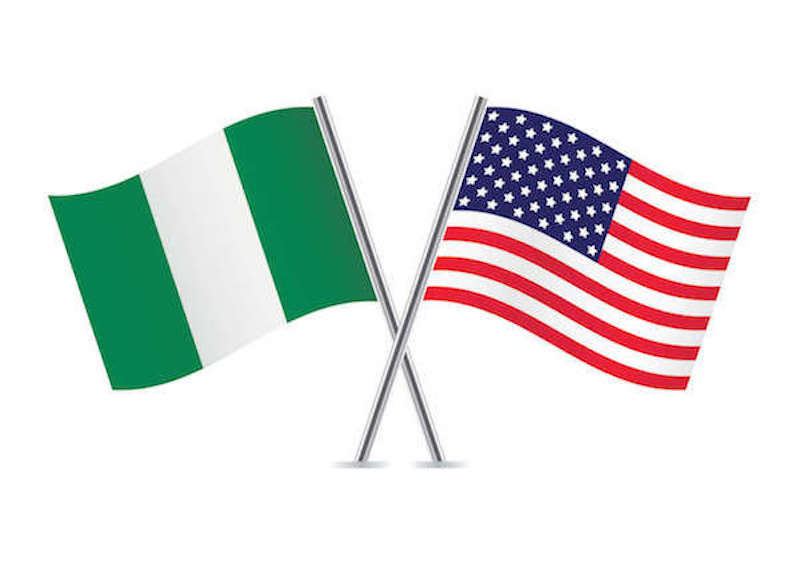
Trump Tariffs: Nigeria Faces Lower FX Earnings, Higher Tariffs on Wheat, Cars
By Adedapo Adesanya
President Donald Trump on Wednesday imposed reciprocal tariffs on imports from all countries of the world. This has been regarded as the biggest shake-up in the international trading system in decades and has the propensity to significantly affect trade.
According to the US government, there will be a baseline levy of 10 per cent on all imports and far higher tariffs on many key trading partners.
The Trump administration said, “For years, hard working American citizens were forced to sit on the sidelines as other nations got rich and powerful, much of it at our expense.”
Nigeria, a key trade partner of imports and exports, faces 27 per cent in US tariffs and a 14 per cent reciprocal tariff.
Giving a breakdown of how this may impact countries particularly on the continent, African Export and Import Bank (Afreximbank) in a research published on Thursday noted that these tariffs could reduce export revenues, increase production costs, and disrupt investment flows, particularly for nations heavily reliant on US trade.
For Nigeria, it could affect some key exports like crude oil, cocoa, and rubber as well as impact imports like wheat, refined petroleum, and vehicles.
In the fourth quarter of 2024, the US was Nigeria’s fourth top trading partner by import as it carried out 6.4 per cent of its total imports from the US, according to the National Bureau of Statistics (NBS) valued at N1.055 trillion.
As a result of this relationship, this development could lead to challenges such as reduced oil demand which could lower the country’s foreign exchange earnings.
It could also lead to higher tariffs on wheat, which translates to Nigerians facing higher cost of food particularly bread, noodles, and pastries.
Imported vehicles are not exempt, as the cost of buying cars will increase as importers look to cover their profit margins.
“Impact: Reduced oil demand could lower forex earnings, while higher tariffs on wheat and vehicles could raise local prices,” it said in a post published on X (formerly Twitter).
Economy
Edun Thanks Tinubu, Expresses Optimism About Nigeria’s Trajectory
By Aduragbemi Omiyale
The outgoing Minister of Finance and Coordinating Minister of the Economy, Mr Wale Edun, has thanked President Bola Tinubu for giving him the opportunity to serve in his administration.
In a statement personally signed by him on Tuesday, Mr Edun said it was an honour to be called by the President to help put the Nigerian economy on the path of recovery after facing difficult economic circumstances.
“It has been an honour to contribute to the implementation of the administration’s economic agenda at a pivotal moment in Nigeria’s journey,” a part of the statement made available to Business Post read.
The Minister noted that he was “proud of what we achieved alongside colleagues in the Federal Executive Council (FEC), State Governors, our partners in the public and private sectors, and the many dedicated professionals whose work continues to support the nation’s economic transformation. While much remains to be done, the direction is clear, and the foundations are firmly in place.”
While reaffirming his commitment to the service of the nation and to supporting Mr President, he declared that, “The work of economic reform is, by its nature, a continuous process,” expressing optimism about Nigeria’s trajectory.
“I wish my successor and the entire government the very best as they continue the work of improving the lives of Nigerians,” he stated.
In 2023, Mr Edun first served as the head of the Presidential Transition Committee, and later became the Special Adviser to the President on Monetary Policy, before his appointment as Finance Minister.
During his time as Minister, he worked to advance critical reforms that stabilised the macroeconomic environment, strengthened fiscal sustainability, and laid the foundation for inclusive and long-term growth.
Key results of these efforts included growth improving from a rate of 2 per cent to over 4 per cent, and inflation falling from 35 per cent to 15 per cent.
These outcomes were driven by a shared commitment to restoring public trust and enabling faster and inclusive growth through greater investor confidence and improved economic coordination.
Economy
CSCS Improves NASD Securities Exchange by 0.56%
By Adedapo Adesanya
A price appreciation recorded by Central Securities Clearing System (CSCS) Plc lifted the NASD Over-the-Counter (OTC) Securities Exchange by 0.56 per cent on Tuesday, April 21.
Data showed that the Nigerian depository company gained N4.13 during the trading day to close at N63.15 per share compared with the preceding session’s N59.02 per share.
As a result, the NASD Unlisted Security Index (NSI) added 21.81 points to close at 3,935.27 points compared with Monday’s closing value of 3,913.46 points, and the market capitalisation expanded by N12.99 billion to finish at N2.354 trillion, in contrast to the previous day’s N2.341 trillion.
Yesterday, the price of 11 Plc went down by N21.08 to settle at N191.00 per unit versus N212.08 per unit.
There was a 48.9 per cent decline in the value of transactions on Tuesday to N5.7 million from N11.1 million, as the volume of transactions dipped by 48.9 per cent to 185,420 units from 245,830 units, while the number of deals shrank by 4.2 per cent to 23 deals from 24 deals.
Great Nigeria Insurance (GNI) Plc remained the most active stock by value on a year-to-date basis, with 3.4 billion units worth N8.4 billion, followed by CSCS Plc with 58.9 million units exchanged for N4.0 billion, and Okitipupa Plc with 27.8 million units traded at N1.9 billion.
GNI Plc was also the most traded stock by volume on a year-to-date basis with 3.4 billion units valued at N8.4 billion, followed by Resourcery Plc with 1.1 billion units sold for N415.7 million, and Infrastructure Guarantee Credit Plc with 400 million units transacted for N1.2 billion.
Economy
Naira Slips to N1,350 Per Dollar at NAFEX, Trades Flat at Black Market
By Adedapo Adesanya
The Naira depreciated further against the United States Dollar in the Nigerian Autonomous Foreign Exchange Market (NAFEX), on Tuesday, April 21, by N1.07 or 0.08 per cent to quote at N1,350.74/$1, in contrast to the N1,349.67/$1 it was traded on Monday.
The Nigerian currency also tumbled against the Euro in the same market segment during the trading session by 4 Kobo to settle at N1,589.42/€1 versus N1,589.38/€1, but appreciated against the Pound Sterling by 31 Kobo to close at N1,826.47/£1 compared to the previous rate of N1,826.78/£1.
At the GTBank FX desk, the local currency slumped against the greenback yesterday by N5 to sell at N1,359/$1 compared with Monday’s closing price of N1,354/$1, and at the black market, it traded flat at N1,375/$1.
The depreciation of the domestic currency came as FX outflows exceeded inflows amid a sustained decline in external reserves to debt service costs on Nigeria’s borrowings.
According to data published by the Central Bank of Nigeria (CBN), interbank liquidity at the market surged to N91.866 million across 106 deals.
Despite intervention in the market to keep the domestic currency stable, traders noted that the FX injections have slowed, reflecting the absence of a significant shock.
Analysts at Coronation Merchant Bank reiterated the expectation that the Naira will remain relatively stable in the near term, supported by sustained FX liquidity at the official window and ongoing foreign portfolio participation.
Meanwhile, the cryptocurrency market remained bullish as traders reacted to President Donald Trump’s decision to extend the Iran cease-fire while Strategy made a $2.54 billion purchase of 34,164 bitcoins, its largest buy since 2024.
The new acquisition lifts Strategy’s holdings to 815,061 bitcoins, putting the position modestly in profit and coinciding with $1.4 billion in weekly inflows to global crypto funds, led by bitcoin and ether.
Ethereum (ETH) gained 3.4 per cent to trade at $2,391.54, Bitcoin (BTC) jumped by 2.9 per cent to $77,953.29, Solana (SOL) appreciated by 2.7 per cent to $88.00, Cardano (ADA) rose by 2.6 per cent to $0.2555, and Binance Coin (BNB) improved by 1.8 per cent to $642.67.
Further, Dogecoin (DOGE) added 1.7 per cent to finish at $0.0971, Ripple (XRP) increased by 1.6 per cent to $1.45, and TRON (TRX) chalked up 1.3 per cent to sell at $0.3329, while the US Dollar Tether (USDT) and the US Dollar Coin (USDC) remained unchanged at $1.00 each.
-
Feature/OPED6 years agoDavos was Different this year
-
Travel/Tourism10 years ago
Lagos Seals Western Lodge Hotel In Ikorodu
-
Showbiz3 years agoEstranged Lover Releases Videos of Empress Njamah Bathing
-
Banking8 years agoSort Codes of GTBank Branches in Nigeria
-
Economy3 years agoSubsidy Removal: CNG at N130 Per Litre Cheaper Than Petrol—IPMAN
-
Banking3 years agoSort Codes of UBA Branches in Nigeria
-
Banking3 years agoFirst Bank Announces Planned Downtime
-
Sports3 years agoHighest Paid Nigerian Footballer – How Much Do Nigerian Footballers Earn