Connect with us

World

Trump’s Tariffs Will Affect Global Trade—Okonjo-Iweala

Published

on

Green Hydrogen Ngozi Okonjo-Iweala

By Adedapo Adesanya

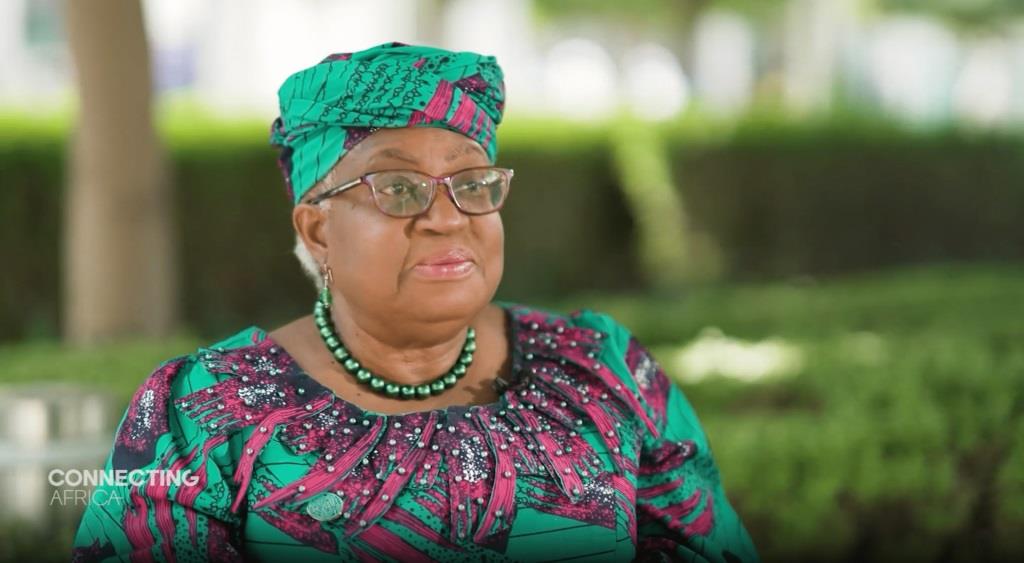
The Director-General of the World Trade Organisation (WTO), Mrs Ngozi Okonjo-Iweala, has said the recent tariffs announced by the United States would have substantial implications for global trade and economic growth prospects.

Mrs Okonjo-Iweala said this in a statement in reaction to recent tariffs imposed on goods from other countries by US President Donald Trump.

The WTO DG added that the organisation was closely monitoring and analysing the measures announced by the United States on April 2, 2025.

She noted that many members have reached out to the WTO and the organization is actively engaging with them in response to their questions about the potential impact on their economies and the global trading system.

“While the situation is rapidly evolving, our initial estimates suggest that these measures, coupled with those introduced since the beginning of the year, could lead to an overall contraction of around 1 per cent in global merchandise trade volumes this year, representing a downward revision of nearly four percentage points from previous projections.

“I’m deeply concerned about this decline and the potential for escalation into a tariff war with a cycle of retaliatory measures that lead to further declines in trade,” the WTO DG stated.

She, however, noted that despite the emerging tariffs war, the vast majority of global trade is still being conducted under the WTO’s Most-Favored-Nation (MFN) terms.

“Our estimates now indicate that this share currently stands at 74 per cent, down from around 80% at the beginning of the year. WTO members must stand together to safeguard these gains,” the former Nigeria’s Finance Minister said.

Nevertheless, Mrs Okonja- Iweala urged caution while advising members to utilise the platform of WTO to prevent the tariff war from escalating.

“Trade measures of this magnitude have the potential to create significant trade diversion effects. I call on Members to manage the resulting pressures responsibly to prevent trade tensions from proliferating.

“The WTO was established to serve precisely in moments like this — as a platform for dialogue, to prevent trade conflicts from escalating, and to support an open and predictable trading environment. I encourage Members to utilize this forum to engage constructively and seek cooperative solutions,” she remarked.


Adedapo Adesanya is a journalist, polymath, and connoisseur of everything art. When he is not writing, he has his nose buried in one of the many books or articles he has bookmarked or simply listening to good music with a bottle of beer or wine. He supports the greatest club in the world, Manchester United F.C.

World

Trump Picks Kevin Warsh to Succeed Jerome Powell as Federal Reserve Chair

Published

on

Kevin Warsh

By Adedapo Adesanya

President Donald Trump has named Mr Kevin Warsh as the successor to Mr Jerome Powell as the Federal Reserve chair, ending a prolonged odyssey that has seen unprecedented turmoil around the central bank.

The decision culminates a process that officially began last summer but started much earlier than that, with President Trump launching a criticism against the Powell-led US central bank almost since he took the job in 2018.

“I have known Kevin for a long period of time, and have no doubt that he will go down as one of the GREAT Fed Chairmen, maybe the best,” Mr Trump said in a Truth Social post announcing the selection.

US analysts noted that the 55-year old appear not to ripple market because of his previous experience at the apex bank as Governor, with others saying he wouldn’t always do the bidding of the American president.

If approved by the US Senate, Mr Warsh will take over the position in May, when Mr Powell’s term expires.

Despite having argued for reductions recently, “Warsh has a long hawkish history that markets have not forgotten,” one analyst told Bloomberg.

President Trump has castigated Mr Powell for not lowering interest rates more quickly. His administration also launched a criminal investigation of Powell and the Federal Reserve earlier this month, which led Mr Powell to issue an extraordinary rebuke of President Trump’s efforts to politicize the independent central bank.

Continue Reading

World

BRICS Agenda, United States Global Dominance and Africa’s Development Priorities

Published

on

Vsevolod Sviridov BRICS Agenda

By Kestér Kenn Klomegâh

Donald Trump has been leading the United States as its president since January 2025. Washington’s priority is to Make America Great Again (MAGA). Trump’s tariffs have rippled many economies from Latin America through Asian region to the continent of Africa. Trump’s Davos speech has explicitly revealed building a ‘new world order’ based on dominance rather than trust. He has also initiated whirlwind steps to annex Greenland, while further created the Board of Peace, aimed at helping end the two-year war between Israel and Hamas in Gaza and to oversee reconstruction. Trump is handling the three-year old Russia-Ukraine crisis, and other deep-seated religious and ethnic conflicts in Africa.

These emerging trends, at least in a considerable short term, are influencing BRICS which has increased its geopolitical importance, and focusing on uniting the countries in the Global East and Global South. From historical records, BRICS, described as non-western organization, and is loosing its coherence primarily due to differences in geopolitical interests and multinational alignments, and of course, a number of members face threats from the United States while there are variations of approach to the emerging worldwide perceptions.

In this conversation, deputy director of the Center for African Studies at Moscow’s National Research University High School of Economics (HSE), Vsevolod Sviridov, expresses his opinions focusing on BRICS agenda under India’s presidency, South Africa’s G20 chairmanship in 2024, and genegrally putting Africa’s development priorities within the context of emerging trends. Here are the interview excerpts:

What is the likely impact of Washington’s geopolitics and its foreign policy on BRICS?

From my perspective, the current Venezuela-U.S. confrontation, especially Washington’s tightened leverage over Venezuelan oil revenue flows and the knock-on effects for Chinese interests, will be read inside BRICS as a reminder that sovereign resources can still be constrained by financial chokepoints and sanctions politics.  This does not automatically translate into BRICS taking Venezuela’s side, but it does strengthen the bloc’s long-running argument for more resilient South-South trade settlement, diversified energy chains, and financing instruments that reduce exposure to coercive measures, because many African and other developing economies face similar vulnerabilities around commodities, shipping, insurance, and correspondent banking. At the same time, BRICS’ expansion makes consensus harder: several members maintain significant ties with the U.S., so the most likely impact is a technocratic push rather than a loud political campaign.

And highlighting, specifically, the position of BRICS members (South Africa, Ethiopia and Egypt, as well as its partnering African States (Nigeria and Uganda)?

Venezuela crisis urges African members to demand that BRICS deliver usable financial and trade tools. For South Africa, Ethiopia, and Egypt, the Venezuela case is more about the precedent: how quickly external pressure can reshape a country’s fiscal room, debt dynamics, and even investor perceptions when energy revenues and sanctions compliance collide. South Africa will likely argue that BRICS should prioritize investment, industrialization, and trade facilitation. Ethiopia and Egypt, both debt-sensitive and searching for FDI, will be especially attentive to anything that helps de-risk financing, while avoiding steps that could trigger secondary-sanctions anxieties or scare off diversified investors.

Would the latest geopolitical developments ultimately shape the agenda for BRICS 2026 under India’s presidency?

India’s 2026 chairmanship is already framed around “Resilience, Innovation, Cooperation and Sustainability,” and Venezuela’s shock (paired with broader sanction/market-volatility lessons) will likely sharpen the resilience part. From an African perspective, that is an opportunity: South Africa, Ethiopia, and Egypt can press India to translate the theme into deliverables that matter on the ground: food and fertilizer stability, affordable energy access, infrastructure funding. India, in turn, has incentives to keep BRICS focused on economic problem-solving rather than becoming hostage to any single flashpoint. So the Venezuela episode may function as a cautionary case study that accelerates practical cooperation where African members have the most to gain. And I would add: the BRICS agenda will become increasingly Africa-centered simply because Africa’s weight globally is rising, and recent summit discussions have repeatedly highlighted African participation as a core Global South vector.  South Africa’s G20 chairmanship last year explicitly framed around putting Africa’s development priorities high on the agenda, further proves this point.

Continue Reading

World

Afreximbank Terminates Credit Relationship With Fitch Amid Rating Tension

Published

on

Afreximbank

By Adedapo Adesanya

African Export-Import Bank (Afreximbank) has has officially terminated its credit rating relationship with Fitch Ratings, indicating friction between both firms.

According to a statement on Friday, the Cairo-based African lender said the decision follows a review of the relationship, and its firm belief that the credit rating exercise no longer reflects a good understanding of the bank’s Establishment Agreement, its mission, and its mandate.

“Afreximbank’s business profile remains robust, underpinned by strong shareholder relationships and the legal protections embedded in its Establishment Agreement, signed and ratified by its member states,” the statement added.

Business Post reports that Fitch had cut Afreximbank’s credit rating to one notch above ‘junk’ Status last year and currently has it on a ‘negative outlook’, which is a rating agency’s terminology for another downgrade warning.

Lower rating means higher borrowing costs for Afreximbank, which could directly impact its ability to lend and the low rates at which it does so.

Recall that Fitch in its report published in June 2025, had estimated Afreximbank’s non-performing loans at 7.1 per cent by the end of 2024, exceeding Fitch’s 6 per cent “high risk” threshold.

The African Peer Review Mechanism (APRM) contested Fitch’s assessment and argued that Fitch confused loan restructuring requests from South Sudan, Zambia, and Ghana by considering them as defaults, claiming this was inconsistent with the 1993 treaty establishing Afreximbank.

African policymakers have raised worries about the ratings by foreign rating agencies like Fitch, Moody’s, and S&P among others. This has increased call for an African focused agency, which is expected to have commenced but continues to face delays.

Continue Reading

Trending