Media OutReach
Zero-Carbon Village Rises in Tujia Countryside
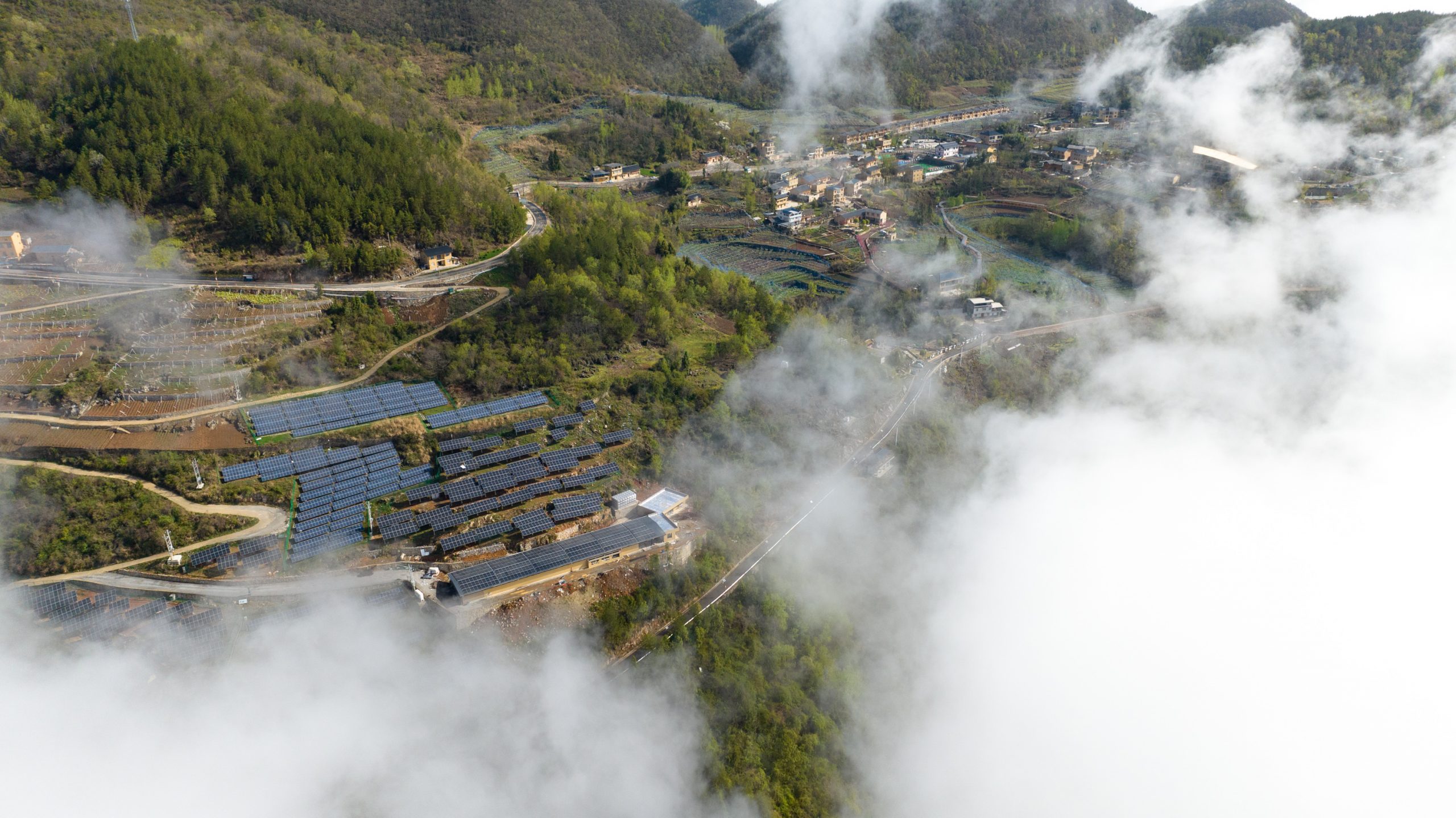
From Tudianzi Village, perched 1,200 meters above sea level, the mist-shrouded Wu Gorge stretches into the distance, while terraced pear blossoms blanket the slopes. A light breeze carries the delicate floral fragrance, marking the most picturesque season for this Tujia ethnic mountain village.
“The table actually charges my phone wirelessly!” exclaimed tourist Ms. Tan, surprised when her phone began charging on a solar-powered bench in the food corridor.
Located in Badong County, Enshi Tujia and Miao Autonomous Prefecture, Tudianzi Village earned its name during the Ming Dynasty as a rest stop for merchants on the ancient Tea Horse Road. Long secluded in the mountains, the village has now gained fame as a model for rural energy revolution, achieving 24/7 zero-carbon operations and 100% green electricity supply.
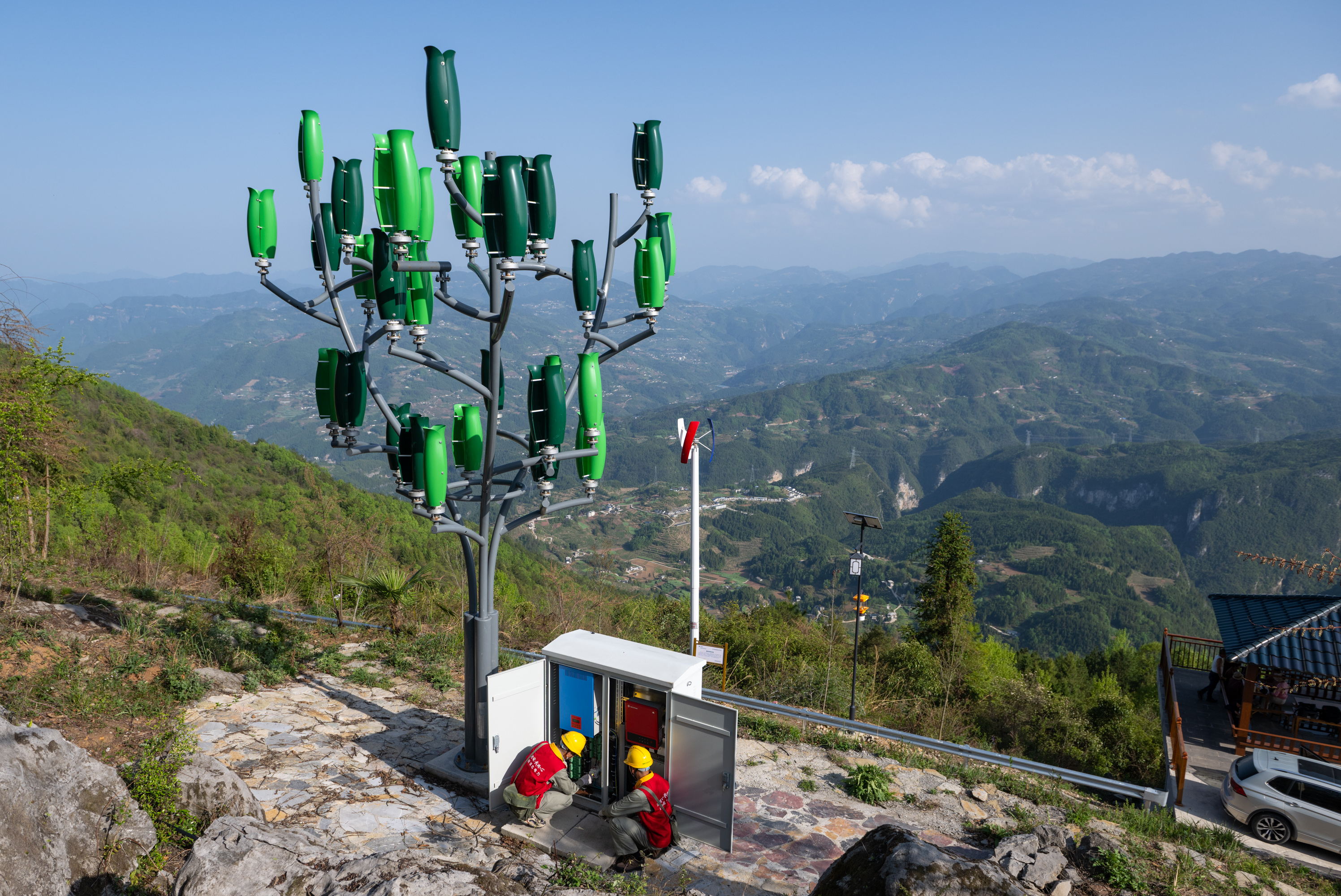
Solar panels are ubiquitous here — on rooftops, pavilions, plaza corridors, chicken coops, and pigsties. “The village’s solar capacity reaches 1,800 kW. At full capacity for one hour, it can generate 1,800 kWh, enough to power the entire village for a day,” said Chen Wentao, person in charge of the State Grid Enshi’s development department.
Reliable electricity was once a distant dream for villagers. Aging power infrastructure — characterized by extensive grid coverage, outdated single-radial network designs, and seasonal load fluctuations — left communities vulnerable to frequent and prolonged outages, particularly during extreme weather.
“Whenever thunderstorms struck, power lines would fail, plunging the entire village into darkness,” recalled 75-year-old Hu De’an. Like many residents, Hu once relied entirely on firewood for light and heat. “Our homes were filled with smoke, but seeing firewood piled under the eaves was the only way we felt secure,” he said.
In September 2020, China unveiled its ambitious “dual carbon” goals to the world: achieving peak carbon emissions by 2030 and carbon neutrality by 2060.
Studies showed that traditional biomass fuels like firewood, burned through direct combustion, operate at a mere 10-15% efficiency while generating heavy carbon emissions. This inefficiency has thrust rural China into a critical dilemma — how to build resilient, clean energy networks that meet growing demand without compromising sustainability.
A breakthrough came in March 2023 when China’s National Energy Administration and three other ministries launched a landmark initiative. The plan prioritizes pilot projects to accelerate rural energy transitions, coupling clean power adoption with broad rural revitalization objectives. By August 2023, State Grid Hubei Electric Power had spearheaded a flagship demonstration project in Tudianzi Village, targeting three pillars: stable clean energy supply, efficient resource utilization, and green industrial development.
During a recent visit to Tudianzi’s black pig breeding base — an operation producing over 4,000 hogs annually — reporters observed a model of integration. Solar panels crowned the spotless pigsty roofs, while odor-free pathways defied backward farm.
The transformation stems from a 30-kilowatt biogas plant constructed adjacent to the facility. Engineered by local power authorities, the system collects manure from the breeding base and kitchen waste from nearby households, channeling them into a closed-loop cycle of “biomass resources – biogas – electricity – fertilizer”.
“Biogas is converted into electricity, while its byproducts — digestate and residues — are processed into fertilizers for farmland, achieving circular biomass utilization and clean energy supply,” said Su Lei, senior engineer of State Grid Hubei Electric Power Research Institute. Notably, the installation of an 80-cubic-meter gas storage tank ensures nighttime green power supply and enables off-grid operations when integrated with flexible energy storage systems.
For local farmer Feng Cailong, the project has brought tangible economic gains. “Previously, disposing pig waste cost over 40,000 yuan annually. Now, delivering it directly to the biogas plant not only cuts disposal expenses but also saves more than 60,000 yuan yearly in electricity, disinfection, and fertilizer costs for forage cultivation,” he informed.
These developments epitomize Tudianzi’s rural energy transformation. After nearly two years of construction, the village has established a low-carbon energy system dominated by wind and solar power, featuring agile microgrid-distribution network interactions and coordinated “source-grid-load-storage” operations. A multidimensional industrial ecosystem integrating renewable energy, livestock farming, and eco-tourism is taking shape.
In 2024, the village’s electricity consumption surged to 537,000 kWh, a 188% increase from 2022. Since launching its energy revolution, Tudianzi’s annual renewable energy output reaches 1.44 million kWh, equivalent to saving 472 tons of standard coal while reducing CO₂ emissions by 1,436 tons and SO₂ by 43 tons annually.
“With the village’s total installed renewable energy capacity now reaching 1,871 kilowatts, we not only achieve full green power supply for the entire village but also export substantial surplus electricity to external grids,” explained Yang Lin, official of the Development and Reform Commission of Enshi Tujia and Miao Autonomous Prefecture.
Hashtag: #EVcharging
The issuer is solely responsible for the content of this announcement.
Media OutReach
Credo Assurance Earns ESG Certification to Support Sustainability Reporting
A Response to a Changing Regulatory Environment
Singapore’s corporate sustainability environment has undergone a major transformation in recent years. What began as voluntary corporate social responsibility is now transitioning into a regulated requirement driven by new disclosure mandates. The Singapore Exchange (SGX) requires all listed companies to publish sustainability reports, with climate-related disclosures to be aligned with the International Sustainability Standards Board (ISSB) framework.
These developments mirror global trends, including the European Union’s Corporate Sustainability Reporting Directive (CSRD) and the proposed climate disclosure rules by the US Securities and Exchange Commission (SEC). Notably, these frameworks are influencing supply chains and investment decisions worldwide.
A Commitment to Rigorous Standards and Responsible Practice
The certification was issued by the Institute of Singapore Chartered Accountants (ISCA) under the Professional Certification in Sustainability Assurance programme, which focuses on the International Standard on Sustainability Assurance (ISSA 5000). The curriculum also covers key frameworks, such as ISAE 3000, ISO 14064-3, and the reporting principles set out by the Sustainability Reporting Advisory Committee (SRAC).
Participants undergo six months of structured e-learning and a three-day capstone assessment module, which includes a comprehensive 65-question examination. The programme integrates the Task Force on Climate-related Financial Disclosures (TCFD), European Sustainability Reporting Standards (ESRS), Global Reporting Initiative (GRI), Carbon Disclosure Project (CDP), the Sustainability Accounting Standards Board (SASB), and other global reporting standards.
“The certification demonstrates our firm’s dedication to professional rigour and to supporting Singapore’s transition toward a sustainable, transparent economy,” as revealed by Ethan Ong, Director of Credo Assurance. “We aim to strengthen stakeholder confidence and enhance the quality of ESG reporting.”
New Sustainability Assurance Services to Support Businesses Across Sectors
Building on this certification, Credo Assurance has launched its sustainability assurance service. The firm will provide assurance on ESG disclosures, assess internal data controls, and advise on alignment with recognised frameworks such as GRI, ISSB, TCFD, and SASB. In addition, the service covers climate audit and reporting, ESG data verification, and training programmes to help companies integrate sustainability practices into daily operations.
Credo Assurance’s new offering aims to support a wide spectrum of organisations, from listed companies preparing for upcoming SGX requirements to SMEs participating in global supply chains. Industries with significant environmental or social footprints, such as energy, construction, manufacturing, transport, and real estate, are expected to benefit most from independent verification. These services also extend to firms seeking ESG-linked financing or those aiming to enhance their brand credibility and investor trust through transparent reporting.
Shaping the Future of ESG Assurance in Singapore
As Singapore moves toward mandatory climate-related disclosures in 2025, ESG assurance is set to become essential in the audit and accounting sector. Independent verification of non-financial information, such as carbon emissions, labour practices, or governance metrics, helps ensure sustainability reports present accountable and measurable performance.
“ESG assurance is the next evolution of trust in business reporting,” said Mr Ong. “It applies the principles of audit integrity to sustainability, enabling companies to demonstrate both their financial performance and their broader responsibility to society and the environment.”
Hashtag: #CredoAssurance #AccountingFirmSingapore #ESGAssurance
https://credo.sg/
https://www.linkedin.com/company/credo-assurance-llp
The issuer is solely responsible for the content of this announcement.
About Credo Assurance
Credo Assurance LLP is an ACRA-registered public
accounting firm in Singapore. They provide audit, accounting, and advisory services to both businesses and individuals, helping clients navigate complex regulatory requirements and economic challenges.
Media OutReach
Understanding Credit Exemptions at SIM: A Guide for Polytechnic and SIM GE Diploma Graduates
Understanding Credit Exemptions
Credit exemptions enable students to receive recognition for modules previously completed during prior studies. This eliminates the need to repeat similar content, allowing eligible students to focus on new areas of learning. This practice, widely adopted in higher education, ensures students build upon existing knowledge while meeting the academic standards of their chosen degree programme.
Eligibility and Assessment
Credit exemptions at SIM GE are not granted automatically. Each application undergoes a rigorous evaluation to maintain academic integrity. The assessment considers several factors, including the relevance of previous qualifications to the chosen degree, the level and content of prior modules compared to the programme requirements, and the accreditation and recognition of the awarding institution. Through these measures, SIM GE ensures flexibility for students with diverse educational backgrounds while upholding academic excellence.
Types of Exemptions Available
SIM offers several pathways for credit exemptions, depending on prior qualifications and programme requirements. Holders of relevant Polytechnic or equivalent diplomas may receive exemptions that can reduce the overall study duration by up to one year, subject to programme-specific criteria and GPA requirements. Students who have completed SIM GE diplomas or other recognized qualifications may be eligible for advanced standing when enrolling in selected partner university programmes offered through SIM Global Education. For applicants with qualifications outside standard frameworks, exemptions are assessed individually on a case-by-case basis to ensure alignment with academic standards and programme requirements.
Key Information for Applicants
Credit exemptions are designed to acknowledge prior learning while ensuring that all students meet the academic standards of their chosen programme. They are not guaranteed and vary based on factors such as the relevance of previous qualifications, programme requirements, and institutional recognition. Applicants are encouraged to review the specific exemption policies for their intended programme and seek guidance from SIM Counsellors to understand their options.
References:
- SIM GE University Partners – https://www.sim.edu.sg/degrees-diplomas/sim-global-education/university-partners-sim-ge
Hashtag: #SIMGlobalEducation #SIMGE #GlobalEducation #InternationalDegree #CareerReady #FutureSkills
The issuer is solely responsible for the content of this announcement.

About SIM Global Education
SIM Global Education (SIM GE) is a leading private education institution in Singapore and the region. We offer more than 140 academic programmes ranging from diplomas and graduate diploma programmes to bachelor’s and master’s degree programmes with some of the world’s most reputable universities from Australia, Canada, Europe, United Kingdom, and the United States. SIM GE’s cohort is made up of 16,000 full- and part-time students and adult learners, of which approximately 36% are international students hailing from over 50 countries.
SIM GE’s holistic learning approach and culturally diverse learning environment aim to equip students with knowledge, industry skills and employability competencies, as well as a global perspective to succeed as future leaders in a fast-changing, technologically driven world.
For more information on SIM Global Education, visit sim.edu.sg
Media OutReach
30 Million Strong: China Changan Automobile Group Hits Historic Production Milestone, Ushering in New Era of User-Centric, Tech-Driven Global Growth
“Changan remains committed to delivering smarter, greener, and more fulfilling mobility, meeting the aspirations of global users for a better future.” said Zhu Huarong, Chairman of China Changan Automobile Group.
Uncompromising Safety: The “Safe Journey Home”
Safety is Changan’s top priority, a commitment dating back to 1999 with China’s first minivan crash test. Since then, the company has advanced its protective capabilities from passive safety structures to today’s active safety interventions. Backed by the industry’s only State Key Laboratory of Intelligent Vehicle Safety Technology, Changan uses its proprietary CA-ITVS verification system to subject vehicles to over 5 million kilometers of testing—guaranteeing a lifespan of 10 years or 260,000 kilometers.
In the smart era, Changan is redefining protection with its newly launched “SDA Intelligence”. Moving beyond physical defense, SDA Intelligence introduces a holistic safety ecosystem that secures both passengers and their data, ensuring a “Safe Journey Home” in every dimension.
Tech-Driven: Innovations That Matter
Driven by its Green and Intelligent strategies, Changan is bringing tangible innovations to market. The Green Plan targets electrification, battery safety, and new energy vehicle ecosystems, while the Intelligent Plan advances vehicle intelligence, autonomous systems, and connectivity. Key breakthroughs include the Golden Shield Battery system for superior safety, and the high-frequency pulse heating for cold-weather efficiency. The BlueCore 3.0 powertrain delivers hybrid and ICE solutions, balancing high performance with exceptional fuel economy. These technologies ensure that every journey is efficient and reliable.
A Bold Future: Smart Mobility and Global Reach
Looking ahead to 2030, Changan has unveiled a visionary roadmap to rank among the world’s top 10 automotive brands with annual sales of 5 million units. By 2030, Changan expects over 60% of sales to be new energy vehicles and 30% to come from overseas markets, solidifying its place on the world stage.
The issuer is solely responsible for the content of this announcement.

-
Feature/OPED6 years agoDavos was Different this year
-
Travel/Tourism9 years ago
Lagos Seals Western Lodge Hotel In Ikorodu
-
Showbiz3 years agoEstranged Lover Releases Videos of Empress Njamah Bathing
-
Banking7 years agoSort Codes of GTBank Branches in Nigeria
-
Economy3 years agoSubsidy Removal: CNG at N130 Per Litre Cheaper Than Petrol—IPMAN
-
Banking3 years agoFirst Bank Announces Planned Downtime
-
Banking3 years agoSort Codes of UBA Branches in Nigeria
-
Sports3 years agoHighest Paid Nigerian Footballer – How Much Do Nigerian Footballers Earn