Connect with us

Media OutReach

Vingroup and the Rise of the ESG Ecosystem

Published

on

Vingroup is positioning itself to lead Vietnam’s ESG push, using its broad business network to drive sustainable growth at home and abroad, while eyeing partnerships in the Middle East’s expanding sustainability sector.

HANOI, VIETNAM – Media OutReach Newswire – 7 May 2025 – In one of Vietnam’s crowded conference halls this month, corporate leaders gathered to debate the importance of ESG in business. One idea gained particular attention, even though it seemed obvious: no single company can tackle environmental and social challenges alone. It is necessary to build an ESG (Environmental, Social, Governance) ecosystem, an interconnected network of businesses, investors, and regulators. Among the Vietnamese companies seen as capable of leading this effort is Vingroup, a giant with a footprint spanning transportation, healthcare, real estate, and education.

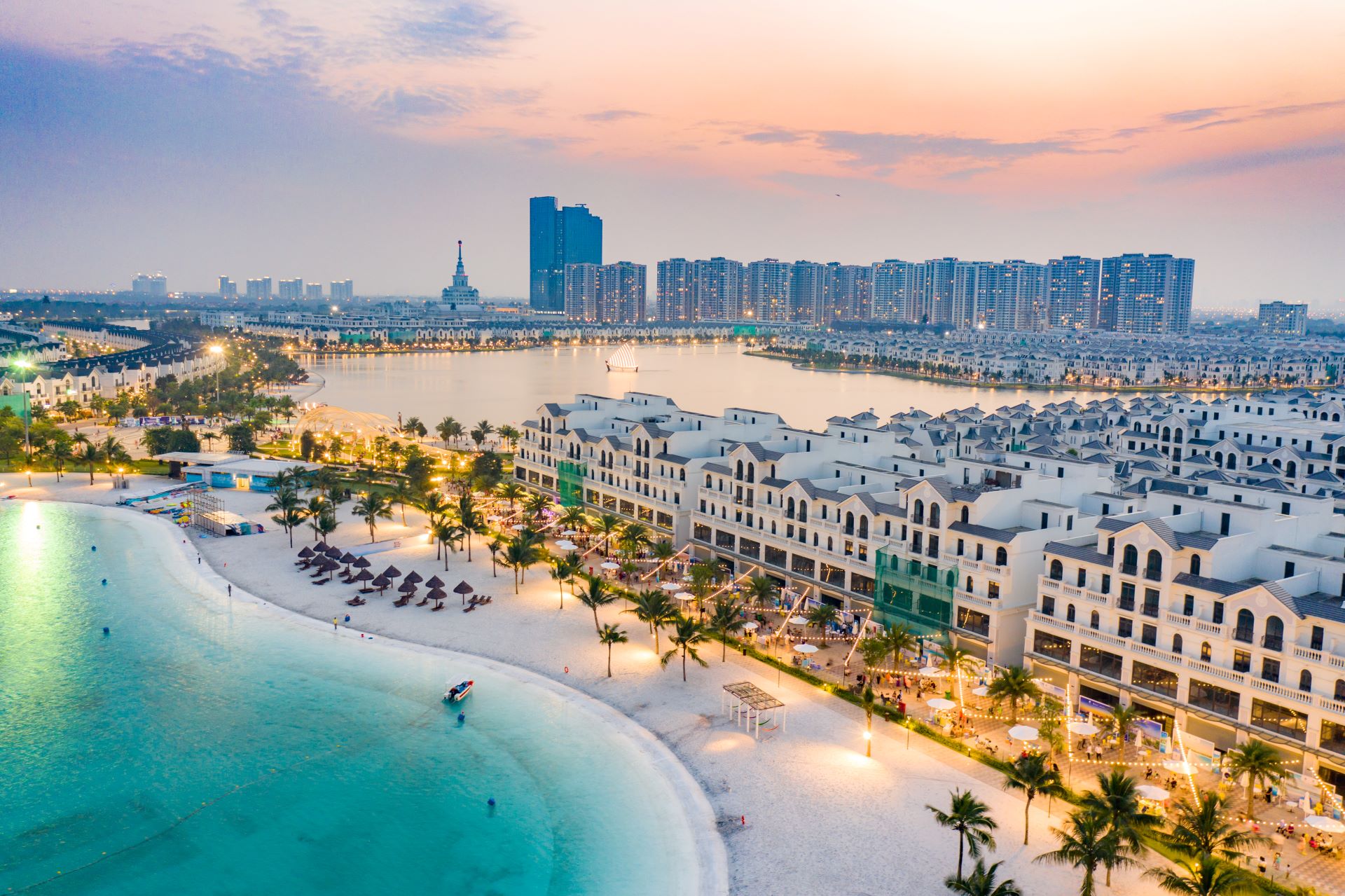
Vinhomes Ocean Park 1 urban area, part of the Vingroup ecosystem.

The shift toward ecosystem thinking has been happening around the world for years. Governments are tightening disclosure rules. In Europe, new regulations now require businesses to track ESG performance across their entire supply chains. In the Middle East, despite a long reliance on oil wealth, new initiatives are emerging to support sustainability, including large-scale urban construction projects. Countries like the United Arab Emirates and Saudi Arabia are launching ambitious efforts such as NEOM and Masdar City, which are planned communities centered around clean energy, smart mobility, and sustainable living.

The trend is clear. Companies are positioning themselves to lead the next phase of global commerce by embedding ESG principles into every aspect of their operations.

For Vingroup, ESG is not simply a new box to tick. It has already become an integral part of their business model. Their EV arm, VinFast, moved aggressively into electric mobility, ending production of gasoline-powered vehicles in 2022. Last year, VinFast delivered more than 97,000 electric cars, representing an increase of approximately 192 percent compared to 2023. Although this figure may seem modest compared to established global giants, it made VinFast the top-selling car brand in Vietnam. These vehicles are helping to cut tens of thousands of tons of carbon dioxide emissions each year.

Electric public buses, operated by VinBus, offering commuters a clean alternative to diesel-powered transport. Vinhomes, Vingroup’s real estate arm, has integrated solar panels, smart water systems, and green parks into its large-scale developments. VinUni, Vingroup’s university in Hanoi, has established a Center for Environmental Intelligence to focus on real-world applications of sustainability research.

Meanwhile, Vietnam’s small- and medium-sized businesses, which account for about 97 percent of the country’s enterprises, are still finding their footing in ESG adoption. Many businesses remain unclear about how to begin. Sixty percent lacked information on where to register for support, according to Mr. Mạc Quốc Anh, Vice Chairman and Secretary-General of the Hanoi Small and Medium Enterprises Association. Without larger players stepping up, the gap between companies embracing ESG and those left behind will only widen. With its scale and expertise, Vingroup is in a strong position to anchor a broader movement and help smaller companies align with global standards.

Beyond Vietnam, new opportunities are emerging in regions that were once considered unlikely markets. The Middle East is undergoing a profound economic and environmental transformation. Driven by national visions such as Saudi Arabia’s Vision 2030 and the UAE’s Net Zero 2050 strategy, Middle Eastern governments are investing heavily in green mobility, smart infrastructure, and renewable energy. Entire cities, industrial hubs, and tourism complexes are being designed with sustainability as a core principle.

For a company like Vingroup, the alignment is natural. Its experience in creating interconnected and sustainable businesses matches the region’s demand for credible, fully integrated partners.

Cooperation could take many forms, including electric vehicles on desert highways, smart residential hubs powered by renewable energy, green hospitals, or financial models that reward environmental stewardship. While the specifics may vary, the central idea remains the same: combining strengths to create long-term value.

As public awareness grows and regulatory pressures intensify, Vietnam’s corporate sector is moving from fragmented ESG efforts toward a more unified approachWith companies like Vingroup leading the way, Vietnam is actively shaping what sustainable development will look like, both at home and on the global stage.

Hashtag: #Vingroup

The issuer is solely responsible for the content of this announcement.

Advertisement

Media OutReach

Woodfibre LNG Marks 2025 as a Year of Construction Progress, Environmental Stewardship and Community Partnership

Published

on

SINGAPORE – Media OutReach Newswire – 24 December 2025 – Woodfibre LNG recently marked 2025 as a year of significant progress across construction, environmental protection and community partnerships, as the project moved deeper into its development phase toward delivering responsibly produced Canadian liquefied natural gas to global markets.

Over the past year, the project advanced from planning into visible, on-the-ground execution. Major construction milestones included the pouring of foundations for key modules, continued progress on marine piling, and further implementation of modular construction techniques designed to reduce on-site footprint while accelerating delivery timelines.

These advancements were achieved through close collaboration with project partners, suppliers and contractors, and in partnership with the Sḵwx̱wú7mesh Úxwumixw (Squamish Nation).

In 2025, Woodfibre LNG, a member of the RGE group of companies founded by Sukanto Tanoto, continued to operate its floatel workforce accommodation solution, designed to minimise pressure on local housing and community services. As of November, two floatels were in active operation, providing high-quality, safe and comfortable living conditions for the project workforce while supporting construction efficiency.

Environmental protection remained a central focus throughout the year. The project’s Marine Mammal Monitoring Programme, which includes hydroacoustic monitoring, exclusion zones and shore-based observation posts, delivered measurable outcomes by enabling real-time operational decisions, including pauses to marine activities when marine mammals entered exclusion areas.

In parallel, remediation of legacy materials from the former pulp mill site continued, with hundreds of thousands of tonnes of historical waste removed. These efforts have contributed to improving site conditions for both local communities and marine and terrestrial ecosystems in Howe Sound.

Woodfibre LNG’s Operator Training Programme, delivered in partnership with the Squamish Nation Training and Trades Centre and the British Columbia Institute of Technology (BCIT), progressed throughout the year. The programme’s first cohort of graduates transitioned into full-time roles, supporting the development of long-term, skilled local employment opportunities linked to the project.

Through its Community Partnership Programme (CPP), Woodfibre LNG continued to invest in local communities across the Sea-to-Sky corridor. In 2025, the programme surpassed $1 million in total grants since its inception, supporting initiatives in sports, healthcare, emergency services, arts and culture, and youth development.

Luke Schauerte, CEO of Woodfibre LNG, said, “2025 has been a year of significant progress for Woodfibre LNG. We are proud of what our team and partners have accomplished together and look forward to building on this momentum in the year ahead.”

With more than half of the project’s development now complete, Woodfibre LNG remains focused on advancing construction safely and responsibly, while maintaining strong partnerships with Indigenous communities, local stakeholders and regulators.

As the project looks ahead to 2026, Woodfibre LNG continues its work toward delivering lower-carbon, responsibly produced Canadian energy to international markets.

Hashtag: #RGE #PacificEnergy #PacificCanbriamEnergy #WoodfibreLNG #LNG #environment #partnerships #LNG #liquefiednaturalgas #energy #sustainability

The issuer is solely responsible for the content of this announcement.

About Woodfibre LNG

The Woodfibre LNG Project is owned by Woodfibre LNG Limited Partnership, owned 70 per cent by Pacific Energy Corporation (Canada) Limited and 30 per cent by Enbridge Inc. The Woodfibre LNG facility is being built on the site of the former Woodfibre pulp mill site, which is located about seven kilometres southwest of Squamish, B.C. Woodfibre LNG will source its natural gas from Pacific Canbriam Energy, a Canadian company with operations in Northeastern British Columbia. Pacific Canbriam is an industry leader in sustainable natural gas production. Woodfibre LNG and Pacific Canbriam Energy are subsidiaries of Pacific Energy Corporation Limited. Woodfibre LNG is the first industrial project in Canada to recognise a non-treaty Indigenous government, Sḵwx̱wú7mesh Úxwumixw (Squamish Nation), as a full environmental regulator.

Continue Reading

Media OutReach

New Opportunities in Southeast Asia’s Digital Shift: Thailand Emerges as the New ASEAN’s AI Hub

Published

on

BANGKOK, THAILAND – Media OutReach Newswire – 24 December 2025 – As global attention remains fixed on the AI race, Thailand is now carving out a new identity as an emerging “AI Hub for Association of Southeast Asian Nations (ASEAN).” The government is steadily advancing its “Thailand 4.0” initiative, positioning the digital economy as the key driver of national transformation.

The expansion of AI and data centers (DCs) in Thailand is driving several transformative trends:

  • Changing data traffic patterns. As DCs multiply in Bangkok, Chonburi, and beyond, Thailand is evolving from a traditional data “transit point” into a regional “convergence hub.” East-west digital traffic is accelerating, with Thai DC clusters increasingly meeting the computing demands of Southeast Asia and the broader Asia-Pacific.
  • Optimized data routing. Data flows that once relied on submarine cables via Hong Kong and Singapore are gradually shifting to land-based digital corridors linking China, Laos, and Thailand. This route reduces data transmission latency from southwestern China to Southeast Asia.
  • Elevated business expectations. Demand is shifting beyond “sufficient bandwidth” toward “high-quality experience.” Thailand sits in a “latency sweet spot” for key Asia-Pacific markets, with latencies to Singapore, Vietnam, and Malaysia falling within an optimal range—a crucial advantage for latency-sensitive sectors like autonomous driving, telemedicine, and fintech.

New opportunities inevitably bring new challenges, and Thailand also addresses the following three challenges:

1. Massive traffic impacting existing networks: Compared with mature hubs like Singapore, Thailand has insufficient international submarine cables. A large volume of cross-border data still needs to be transmitted through detours. Meanwhile, as DC investments continue to accelerate, traffic will keep rising. Analysis shows that by 2029, Thailand’s DC capacity may reach 2000 MW, with cross-region traffic surging to 630 Tbps. The current network architecture is no longer capable of supporting such heavy traffic.

2. Latency advantages not fully realized: Despite its geographic advantages, Thailand’s network latency performance has yet to reach its full potential. Routes to key markets, like China, still require third-party transit. What’s more, traditional network scheduling lacks intelligent route selection capabilities, making it difficult to provide deterministic assurance for latency-sensitive services like financial transactions and real-time AI interactions.

3. Potential risks in network reliability: Thailand’s network reliability faces structural challenges. Single points of failure have previously caused hours-long interruptions to critical services, directly undermining enterprise users’ confidence.

To overcome these challenges, Thailand can take a systematic approach to upgrading its digital infrastructure, aiming to build next-generation AI-ready networks.

1. Building ultra-high-bandwidth “sea-land” connectivity. By actively introducing new submarine cables, Thailand can significantly enhance its connectivity with the Asia-Pacific region and the world. Meanwhile, accelerating the construction and expansion of key terrestrial cable routes—such as China-Laos-Thailand and Thailand-Malaysia-Singapore—will transform Thailand’s geographic advantage into a tangible connectivity advantage.

2. Optimizing network routes to create a regional low-latency core. Strengthening the Kunming-Laos-Thailand terrestrial cable route will continuously reduce transmission latency between China and Thailand, meeting the needs of real-time applications. In addition, the introduction of autonomous networks will enable automatic selection of the optimal, shortest route, shifting from “best effort” to “deterministic low latency.”

3. Designing a “never-interrupted” high-resilience architecture. Deploying active-active DC networks with millisecond-level switchover capabilities ensures the continuity of core services. Meanwhile, AI-driven intelligent O&M can reduce fault detection and diagnosis from hours to minutes.

Thailand’s booming AI and DC industries are driving rapid growth in regional and cross-border business demand. In this trend, network infrastructure construction centered on DCs is the core engine that drives AI transformation, propelling Thailand toward its vision of becoming the new AI hub for ASEAN.

Hashtag: #huawei

The issuer is solely responsible for the content of this announcement.

Continue Reading

Media OutReach

MyRepublic Launches Card Sub, Singapore’s First Subscription Service for Trading Card Game Fans

Published

on

SINGAPORE – Media OutReach Newswire – 23 December 2025 MyRepublic today announced the launch of Card Sub, a new subscription-based service designed for Trading Card Game (TCG) enthusiasts. Card Sub offers subscribers a convenient way to receive Magic: The Gathering (MTG) products monthly, including access to premium booster packs not typically available through standard retail purchases.

MyRepublic Launches Card Sub, Singapore’s First Subscription Service for Trading Card Game Fans

Card Sub introduces a structured monthly subscription model in which customers pay a fixed monthly rate and receive up to 3 Play Booster packs or 2 Play booster boxes from the current MTG release. In addition, subscribers will receive free premium booster packs or boxes. These premium boosters may include Collector Booster Packs or Boxes, such as the highly sought-after Final Fantasy Collector Booster, which is constantly sold out worldwide which features the extremely valuable serialised Golden Chocobo card
“The trading card community in Singapore is incredibly passionate, and Card Sub is our small way of adding value to that ecosystem,” said Terry Williams, Head of Consumer at MyRepublic. “As TCG players ourselves, we wanted to offer something to the community to provide an easier access to the latest release every month, and the chance to secure premium packs that might not be readily accessible to players. We see Card Sub as a community-driven initiative, open to all who share a passion for growing the hobby.”
The subscription tiers available at launch are:
MyRepublic Card Sub Plans

Card Sub will be available to both MyRepublic and non-MyRepublic customers. All product redemptions will take place in person at the upcoming Card Arena by MyRepublic, located at Suntec City. Customers will redeem their Premium booster or box in-store.

Card Sub is positioned to serve cost-conscious TCG consumers by providing reliable monthly access to boosters with the added benefit of premium packs or boxes at no additional charge. The inclusion of Collector Boosters in the premium pool provides an opportunity for subscribers to obtain higher-value products through a predictable monthly model. MyRepublic also plans to expand Card Sub to additional TCG franchises, including Pokémon.
Card Sub is open for sign-up at cardsub.net and available to everyone in Singapore. Monthly redemption of subscription items will be fulfilled exclusively at:
Card Arena by MyRepublic
Suntec City, 3 Temasek Boulevard, #02-323/324

Hashtag: #CardSub, #MyRepublic #MyRepublicCardSub #CardSubSG #TCG #GeeksUseUs


The issuer is solely responsible for the content of this announcement.

MyRepublic

MyRepublic is an award-winning telecom operator whose values lie in the future of connectivity, the next opportunity to disrupt, and innovations that will make a real difference. The provider’s priority is to redefine broadband and mobile connectivity in the markets it operates and empower customers to understand what a true modern connectivity experience can be.
For more information, please visit
cardsub.net

Continue Reading

Trending