

Connect with us

Media OutReach

Energizing a Sustainable Future: The 29th World Gas Conference Opens in Beijing

Published

on

BEIJING, CHINA – Media OutReach Newswire – 20 May 2025 – On the morning of May 20, the 29th World Gas Conference (WGC2025) opened at the China National Convention Center in Beijing. This marks the first time in the nearly 100-year history of the World Gas Conference that the event is being held in China. As one of the three flagship events of the International Gas Union (IGU), this year’s conference is themed “Energizing a Sustainable Future.” It has brought together more than 3,000 delegates from 70 countries and regions around the world to engage in in-depth discussions and consensus-building on global energy transition, the development of the natural gas industry, and pathways to a sustainable future.

Energizing a Sustainable Future: The 29th World Gas Conference Opens in Beijing
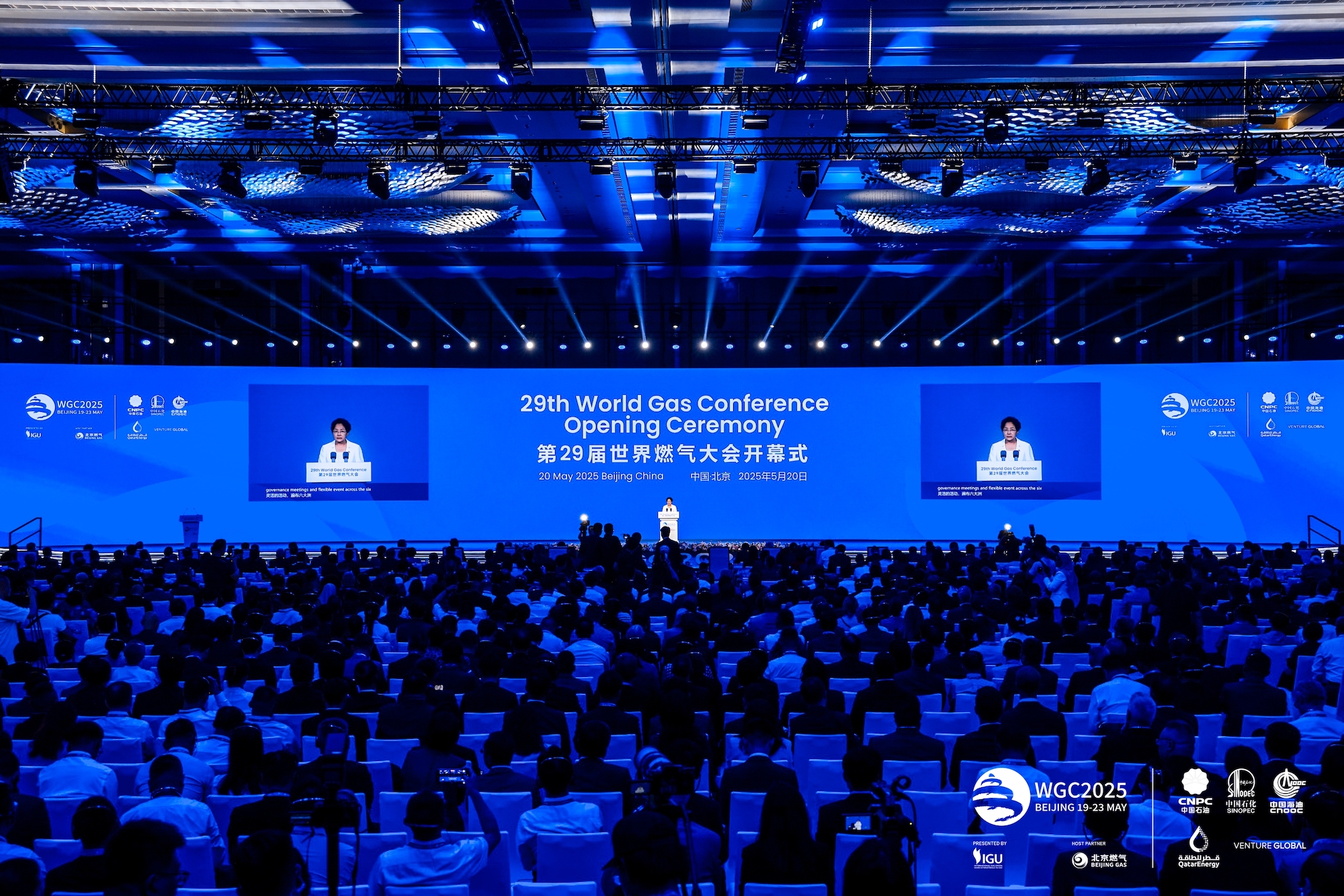
The opening ceremony was chaired by Mr. Cao Yujun, Chair of the National Organizing Committee (NOC). Speeches were delivered by Li Yalan, President of the International Gas Union; Yin Yong, Mayor of Beijing; Wan Jinsong, Deputy Director of the National Energy Administration; Patrick Pouyanné, Chairman and CEO of TotalEnergies; and Dai Houliang, Chairman of China National Petroleum Corporation (CNPC).

Li Yalan, emphasized that amid multiple global challenges such as climate change, energy security, and geopolitical tensions, natural gas — with its advantages of abundant reserves, cleanliness, efficiency, and cost-effectiveness — is becoming an indispensable pillar of the global energy mix. She noted that China, as the world’s largest importer of natural gas and LNG, is drawing growing international attention for its development model. In particular, she highlighted how Beijing has leveraged natural gas to significantly improve air quality, offering a replicable model for other developing countries.

Yin Yong stated that Beijing firmly implements the country’s new energy security strategy and continues to promote the green and low-carbon transformation of the energy structure. Currently, natural gas accounts for more than 35% of Beijing’s energy consumption. Through initiatives such as coal-to-gas conversion, the city has achieved a more than 60% reduction in average annual PM2.5 concentrations and nearly a 50% decrease in carbon intensity over the past decade. He reaffirmed Beijing’s commitment to opening up and deepening international energy cooperation while promoting sustainable urban development.

Wan Jinsong noted that China’s energy production and consumption continue to grow, with increasingly robust infrastructure and a nationwide unified gas network essentially completed. He emphasized significant improvements in natural gas dispatching and emergency response capacity. He said breakthroughs were seen in deep-earth, deep-sea, and unconventional resource development, helping boost output of natural gas. Wan proposed four key initiatives: enhancing supply capabilities to serve global public welfare, prioritizing ecology in green development, empowering the energy system through digital transformation, and improving governance via multilateral cooperation. He called for continued openness and win–win collaboration to jointly build a secure, efficient, clean, and low-carbon global energy system.

Patrick Pouyanné highlighted TotalEnergies’ efforts to maintain its leadership in the conventional oil and gas market while actively participating in the global energy transition. He reiterated TotalEnergies’ commitment to achieving net-zero emissions by 2050 and to furthering international cooperation to build a diversified, clean, secure, and sustainable energy future.

Dai Houliang introduced CNPC’s recent breakthroughs in deep oil and gas exploration, including the successful completion of a 10,000-meter ultra-deep drilling mission and continuous progress in unconventional resource development. As Asia’s largest and the world’s second-largest energy company, CNPC plays a key role in safeguarding national energy security and consistently undertakes critical supply missions during peak winter and summer periods. He stressed CNPC’s unwavering commitment to green transition, accelerating the integration of oil, gas, and new energy, and building a synergistic, multi-energy system. As the only Chinese member of the Oil and Gas Climate Initiative (OGCI), CNPC will continue to actively participate in global climate governance, contribute to China’s carbon peak and carbon neutrality goals, and help extend the benefits of green development to more countries, clients, and communities, he said.

Following the speeches, Mr. Cao Yujun, Chair of the NOC, invited Yin Li, Secretary of the Beijing Municipal Committee of the CPC; Yin Yong, Mayor of Beijing; Li Yalan, President of the IGU; Wan Jinsong, Deputy Director of the National Energy Administration; Li Xiaolong, Vice Minister of Housing and Urban-Rural Development; Dai Houliang, Chairman of CNPC; and Patrick Pouyanné, Chairman and CEO of TotalEnergies, to jointly inaugurate the opening ceremony. As the countdown reached zero, the main screen lit up with the words “WGC2025 Officially Opens,” and the venue erupted in enthusiastic applause—marking the official launch of the 29th World Gas Conference.

According to schedule, WGC2025 will feature more than 80 high-level forums covering topics such as LNG development, natural gas and renewable energy integration, energy security, and digital transformation. More than 400 distinguished guests will engage in deep dialogue on industry trends and technological innovation. The concurrent exhibition spans 50,000 square meters — the largest in the event’s history — and is expected to attract more than 30,000 professional visitors from China and abroad.

The 29th World Gas Conference (WGC2025) is presented by the International Gas Union, hosted by Beijing Gas Group, and exclusively organized by Capital Convention & Exhibition Group.

The issuer is solely responsible for the content of this announcement.

Advertisement

Media OutReach

St. George’s University Prepares Future South Korean Physicians for the Growing Global Cancer Care Challenge

Published

on

SEOUL, SOUTH KOREA – Media OutReach Newswire – 4 February 2026 – Rising global cancer incidence is straining healthcare systems, which already face workforce shortages. In East Asia, the number of trained physicians in cancer care, spanning diagnosis, treatment coordination, and long-term management—has not met the increasing demand. According to the Global Cancer Observatory, South Korea reported over 230,000 new cancer cases and more than 97,000 fatalities in 2022. A recent original academic research by Myongji College and The Catholic University of Korea warned that simply increasing medical school enrollments alone does not fix shortages in key specialties and underserved regions where medical demand is rising fastest.

Source: St. George’s University

Recognizing the importance of addressing workforce shortage in South Korea, St. George’s University (SGU) School of Medicine in Grenada, West Indies, highlights how its medical education approach supports the development of clinical competencies relevant to cancer care across healthcare settings.

These challenges reflect broader global trends, where cancer care increasingly depends on multidisciplinary teams rather than specialty expansion alone. SGU’s curriculum is designed to build a strong foundation in clinical diagnosis, patient communication and multidisciplinary care, which are essential skills for effective oncology and cancer-related care. Through anatomy labs, simulation-based learning, and integrated digital tools, students develop foundational clinical skills in structured, supervised environments designed to reflect real-world medical practice.

The curriculum also integrates traditional cadaveric dissection with modern 3D anatomical modeling. This blend helps students visualize the human body in a holistic way while reinforcing knowledge through their hands-on interaction. SGU’s simulation lab also enables medical students to have their first direct interaction with ill patients in a safe, simulated learning environment.

On top of core medical training, SGU offers early exposure to prevention, diagnosis and patient-centered care to prepare graduates to tackle complex health issues. SGU has developed long-standing relationships with more than 75 established hospitals and clinical centers in the US and UK. These clinical placements provide exposure to diverse patient populations and care environments, including settings where cancer diagnosis and management are part of routine clinical practice.

South Korean SGU alumni are contributing to healthcare systems through roles that intersect with cancer diagnosis, treatment coordination, and long-term patient care. For example, Dr. Julia Hweyryoung Cho, MD 2022 is practicing internal medicine, which plays a crucial role in cancer care. Internal medicine physicians are often involved in the initial diagnosis of cancer, managing complex medical conditions that may arise during treatment and providing long-term comprehensive care and survivorship planning for patients with a history of cancer.

In observance of World Cancer Day 2026, SGU encourages all medical professionals and organizations to collaboratively address global cancer care challenges. This includes recognizing and meeting the cancer healthcare needs of individuals and communities in South Korea.

For more information on the programs and tracks available through SGU School of Medicine, visit SGU’s website.Hashtag: #St.George’sUniversity

The issuer is solely responsible for the content of this announcement.

Continue Reading

Media OutReach

Finalists and Semifinalists for $1 Million Seeding The Future Global Food System Challenge Announced

Published

on

BONN, GERMANY – Newsaktuell – 3 February 2026 – The Seed Grant Finalists and Growth Grant and Seeding the Future Grand Prize Semifinalists of the 5th annual Seeding The Future Global Food System Challenge (GFSC) have been announced, marking a key milestone in the USD 1 million global Challenge supporting impactful and innovative solutions to transform food systems.

Created and funded by Seeding The Future Foundation and, for the first time, hosted by Welthungerhilfe (WHH), the Challenge attracted a record 1,600+ applications from innovator teams in 112 countries, underscoring growing global momentum for food systems transformation.

Following a multi-stage, rigorous international review process, 36 teams have advanced across three award levels. These include 16 Seed Grant Finalists (competing for 8 awards of USD 25,000), 12 Growth Grant Semifinalists (competing for 3 awards of USD 100,000), and 8 Seeding The Future Grand Prize Semifinalists (competing for 2 awards of USD 250,000).

“Hosting the GFSC reflects Welthungerhilfe’s commitment to accelerating bold, scalable innovations where they are needed most. This year’s diversity of solutions underscores the complexity of food system challenges and the creativity of innovators worldwide.” said Jan Kever, Head of Innovation at Welthungerhilfe

The submitted innovations span diverse themes and approaches, including climate-smart production, nutrient-dense foods, food loss reduction, and inclusive market models, reflecting the complexity and interconnected nature of today’s food systems challenges.

“The Seeding The Future Global Food System Challenge exists to catalyze impactful, bold, and scalable innovations that advance food systems transformation. We are excited to work alongside Welthungerhilfe as a trusted partner and host of the Challenge and are encouraged by the quality and diversity of innovations emerging from this first year of collaboration.” said Bernhard van Lengerich, Founder and CEO of Seeding The Future Foundation

While the number of awards is limited, all semifinalists and finalist applicants plus all applicants with any prior recognition of other innovation competitions can join the STF Global Food System Innovation Database and Network—currently in beta testing with the Food and Agriculture Organization of the United Nations—vastly expanding their visibility and reach across a global audience.

List of 2025 GFSC Seed Grant Finalists, Growth Grant and Seeding The Future Grand Prize Semifinalists

Find details here: welthungerhilfe.org/gfsc-finalists

Seeding The Future Grand Prize Semi-Finalists

Growth Grant Semi-Finalists

Seed Grant Finalists

Hashtag: #TheFutureGlobalFoodSystemChallenge

The issuer is solely responsible for the content of this announcement.

About Seeding The Future Foundation

STF is a private nonprofit dedicated to ensuring equitable access to safe, nutritious, affordable, and trusted food. It supports innovations that transform food systems and benefit both people and planet. More at .

About Welthungerhilfe
WHH is one of Germany’s largest private aid organizations, striving for a world without hunger since 1962. More at:

Continue Reading

Media OutReach

PolyU develops novel antibody targeting fat cell protein, offering new approach to treating metabolism-related liver cancer

Published

on

HONG KONG SAR – Media OutReach Newswire – 3 February 2026 – Liver cancer is one of the three deadliest cancers worldwide, and metabolic dysfunction-related cases have become increasingly common in recent years. A research team from The Hong Kong Polytechnic University (PolyU) has identified a protein secreted by fat cells that promotes cancer growth and has successfully developed a novel antibody that neutralises this protein, marking a significant breakthrough in impeding the progression of liver cancer. The research findings have been published in the Journal of Clinical Investigation.

Prof. Terence Lee, Associate Head and Professor of the PolyU Department of Applied Biology and Chemical Technology, and his research team have developed a novel antibody targeting the adipocyte-derived protein FABP4, offering a new approach to treating metabolism-related liver cancer.

Metabolic dysfunction-associated steatotic liver disease (MASLD), commonly known as fatty liver disease, currently affects around a quarter of the global population and is an important risk factor for liver cancer. In affected individuals, fat cells induce insulin resistance and chronic inflammation, leading to excessive fat accumulation in the liver. This ultimately impairs liver function and may progress to liver cancer. Treatment options for MASLD-induced liver cancer remain limited and the effectiveness of current immunotherapies is suboptimal.

A breakthrough study led by Prof. Terence LEE, Associate Head and Professor of the PolyU Department of Applied Biology and Chemical Technology, and his research team has revealed that an adipocyte-derived protein, known as fatty acid-binding protein 4 (FABP4) is a key driver that accelerates tumour growth. Through mass spectrometry, the team confirmed that patients with MASLD-induced liver cancer had markedly elevated FABP4 levels in their serum. Further investigations showed that FABP4 activates a series of pro-proliferative signalling pathways within cells, causing cancer cells to multiply and grow more rapidly.

Prof. Lee’s team has successfully developed a monoclonal antibody that neutralises FABP4. This antibody not only inhibits the growth and proliferation of FABP4-driven cancer stem cells, but also enhances the ability of immune cells to combat cancer.

Prof. Lee said, “This neutralising antibody against FABP4 demonstrates significant potential in inhibiting tumour growth and activating immune cells, providing a complementary approach to current immunotherapy strategies. Our findings highlight that targeting adipocyte-derived FABP4 holds promise for treating MASLD-induced liver cancer.”

Prof. Lee added that gaining deeper insights into how adipocyte-derived FABP4 affects liver cancer cells helps to explicate the disease mechanisms of liver cancer, particularly in obese individuals. Intervening in the relevant signalling pathways could provide effective methods to combat this aggressive malignancy.

Prof. Lee believes that, as this adipocyte-targeted immunotherapy continues to mature, it will bring more treatment options to MASLD patients. He remarked, “If its efficacy can be proven in clinical trials, it could offer new hope to many affected individuals.”

The research is supported by the Innovation and Technology Fund of the Innovation and Technology Commission of the Government of the Hong Kong Special Administrative Region of the People’s Republic of China. PolyU has filed a non-provisional patent for the developed antibody and is continuing to optimise its binding affinity to facilitate future clinical applications.
Hashtag: #PolyU #FattyLiver #Cancer #LiverCancer #理大 #香港理工大学 #肝癌 #癌症 #脂肪肝

The issuer is solely responsible for the content of this announcement.

Continue Reading

Trending
