

Connect with us

Media OutReach

Carta receives Financial Services Permission from ADGM’s Financial Services Regulatory Authority, unlocking new phase of growth in MENA’s Venture Capital and Private Equity Ecosystem

Published

on

RIYADH, SAUDI ARABIA – Media OutReach Newswire – 23 May 2025 – Carta, the software platform purpose-built for private capital, today announced its Financial Services Permission (FSP) from ADGM’s Financial Services Authority (FSRA), unlocking a new phase of growth in Middle East and North Africa (MENA). This milestone significantly advances Carta’s global mission to make private markets more accessible, transparent, and equitable. As the world’s largest fund administrator for venture capital, Carta will support the private market ecosystem in the MENA region with its end-to-end software platform for fund operations, in addition to its cap table and equity management solutions for startups.

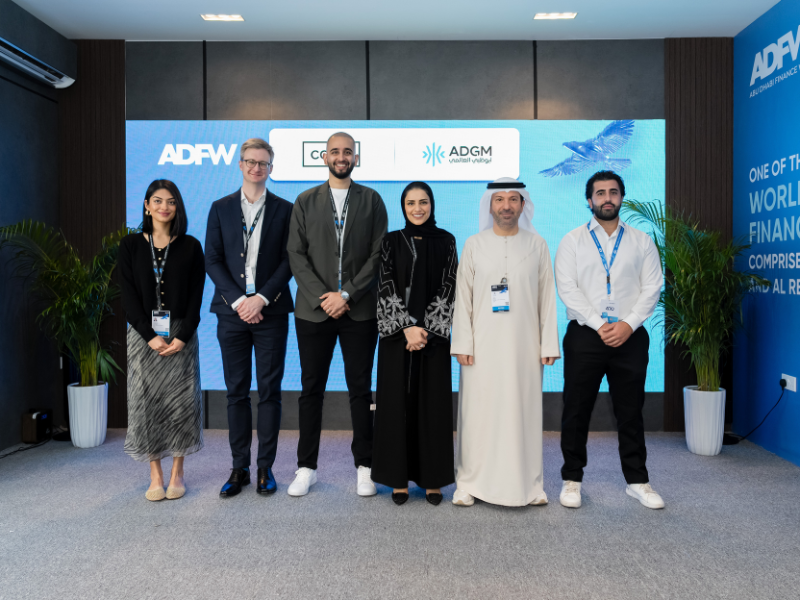
Carta and ADGM representatives at Abu Dhabi Finance Week 2024

Abu Dhabi, renowned as the “capital of capital,” has shown exceptional growth in the financial services sector. Carta’s expansion comes as the UAE establishes itself as a key player in the Middle East, constituting 40% of all funding rounds in the region—a 9% year-on-year increase—according to industry reports. In 2024, assets under management (AUM) within ADGM grew by 245%, with 134 fund and asset managers operating 166 funds by the end of 2024.

Carta has strategically chosen ADGM as the location for its new Middle Eastern office, strengthening the company’s commitment to aligning with regions that demonstrate significant market potential and robust economic policies. Located at Hub71 WeWork, in the heart of the financial district, Carta’s new office serves as a strategic base for expanding sales and marketing efforts in the MENA region, a region the company sees as highly promising.

“The Middle East is the perfect place for Carta expansion,” said Bhavik Vashi, Managing Director of Carta APAC & MENA. “The regulatory framework in ADGM is one of the most progressive we’ve seen globally–exactly the type of environment needed to fuel the private markets, which is why we have made a big bet here.”

Over the past two years, Carta has been laying the groundwork for its expansion by engaging in conversations with key government-linked institutions, such as ADGM, the Financial Services Regulatory Authority (FSRA), the Abu Dhabi Investment Office (ADIO), and the Abu Dhabi Department of Economic Development (ADDED). These discussions have surfaced ongoing private equity needs that Carta is equipped to solve, offering MENA funds a comprehensive suite of software and services, including quarterly reporting, compliance services, and end-of-year tax and audit readiness.

Arvind Ramamurthy, Chief of Market Development Officer at ADGM said; “We congratulate Carta on receiving their FSP from ADGM. We are thrilled to welcome them to ADGM’s dynamic ecosystem, where innovation, growth, and opportunity thrive. Your presence enriches Abu Dhabi’s financial landscape, and we look forward to supporting your success in this vibrant and forward-thinking community.”

Carta currently supports a number of prominent regional customers, including Global Ventures, BECO Capital, Cotu Ventures, Outliers VC, Dubai Future District Fund, and Middle East-based unicorns Foodics and Kitopi. With ADGM license approval, Carta will continue to collaborate with the local VC & PE ecosystem to further enhance the company’s service offerings and deliver greater value for the Middle East’s growing private markets.

Hashtag: #Carta

The issuer is solely responsible for the content of this announcement.

About Carta

Carta connects founders, investors, and limited partners through world-class software purpose-built for everyone in venture capital and private equity. Carta’s world-class fund administration platform supports nearly 9,000 funds and SPVs representing over $188B in assets under administration on fund administration, SPV formation, and more. Trusted by more than 50,000 companies, Carta helps private businesses in over 160 countries manage their cap tables, valuations, taxes, equity programs, compensation, and more. Carta has been included on the Fortune Best Large Workplaces in Financial Services and Insurance list, Forbes’ list of the World’s Best Cloud Companies, Fast Company’s Most Innovative list, and Inc.’s Fastest-Growing Private Companies list. For more information, visit carta.com.

DISCLOSURE: This communication is on behalf of eShares, Inc. dba Carta, Inc. (“Carta”). This communication is for informational purposes only, and contains general information only. Carta is not, by means of this communication, rendering accounting, business, financial, investment, legal, tax, or other professional advice or services. This publication is not a substitute for such professional advice or services nor should it be used as a basis for any decision or action that may affect your business or interests. Before making any decision or taking any action that may affect your business or interests, you should consult a qualified professional advisor. This communication is not intended as a recommendation, offer or solicitation for the purchase or sale of any security. Carta does not assume any liability for reliance on the information provided herein. ©2025 Carta. All rights reserved. Reproduction prohibited. Regulated by the Financial Services Regulatory Authority.

Media OutReach

Skills Become the New Currency: Salary Polarisation Deepens as AI and Semiconductor Talent Command Up to 30% Pay Increases in Taiwan

Published

on

Robert Walters Taiwan’s 15th anniversary report Reveals Structural Shift in the Local Talent Market

  • Taiwan’s talent market has officially shifted from an employer-driven to a candidate-driven market, with critical skills increasingly replacing tenure and job titles as the core measure of talent value.
  • AI adoption and global supply chain restructuring are accelerating salary polarisation. Professionals in semiconductors and high-tech industries are seeing salary increases of 15–20% when changing jobs, while those with AI, HPC and cross-border supply chain expertise can command increases of up to 30%.
  • Career priorities are evolving beyond compensation. 54% of professionals cite learning and development opportunities as a key reason for staying with their current employer.
  • By 2030, Gen Z is expected to account for 30–33% of Taiwan’s workforce, making flexibility, work-life balance and transparent workplace culture critical factors in talent attraction and retention.

TAIPEI, TAIWAN – Media OutReach Newswire – 29 May 2026 – Taiwan’s talent market has gradually shifted from an employer-driven to a candidate-driven market through globalisation, digital transformation and pandemic-driven disruption. Meanwhile, the rapid advancement of technology and AI is not only accelerating demand for critical skills, but also reshaping industry structures and redefining the rules of talent competition.

Robert Walters, the world’s most trusted talent solutions business, said in its latest 15th anniversary report, Taiwan’s Talent Market: The New Rules of Competition, that “critical skills” are increasingly replacing tenure and job titles as the primary indicators of talent value and compensation. Particularly as Taiwan’s semiconductor industry strengthens its strategic position within the global technology supply chain, professionals with in-demand capabilities are seeing salary growth significantly outpace the broader market, making salary polarisation an increasingly structural feature of Taiwan’s labour market.

As competition for high-skilled talent intensifies, candidates are placing greater emphasis not only on compensation, but also on Career Value Proposition (CVP), including career development, workplace flexibility and management culture. The report also highlights the rise of a candidate-driven market, where professionals are becoming increasingly selective about what they expect from employers.

In today’s market, growing uncertainty and increasing business complexity are shifting competition away from workforce scale towards the ability to secure critical capabilities and high-value talent. John Winter, Country Manager of Robert Walters Taiwan, noted: “Since entering the Taiwan market in 2011, we have seen talent strategy evolve into a core business strategy. Organisations that can identify critical capabilities early, integrate talent effectively and continuously strengthen organisational resilience will be best positioned for long-term success.”

Global Supply Chain Restructuring Accelerates the Shift Towards a Skills-Based Talent Market and Salary Polarisation

Amid geopolitical uncertainty and ongoing global supply chain restructuring, organisations are increasingly reshaping their structures and global workforce strategies to strengthen resilience and competitiveness. As a result, hiring priorities are shifting away from narrow technical expertise towards cross-functional integration, strategic thinking and problem-solving capabilities. At the same time, talent assessment is moving beyond tenure and job titles, with greater emphasis placed on practical capability, skill scarcity and immediate business impact.

Rapid AI adoption is further accelerating demand for critical skills, driving increasingly concentrated salary growth across the market.

In semiconductor and high-tech industries, professionals changing jobs may see salary increases of 15–20%, while talent with expertise in AI, High-Performance Computing (HPC), Edge Computing and cross-border supply chain management may achieve salary growth of up to 30% reinforcing the growing shift towards a labour market increasingly defined by “skills value”. In contrast, salary growth among execution-focused roles has remained relatively moderate. According to Taiwan’s Directorate-General of Budget, Accounting and Statistics (DGBAS), nearly 70% of employees in 2025 earned below the average salary level — the highest proportion on record — highlighting widening salary polarisation across the labour market.

Candidate-Driven Market Takes Shape:

Career Value Proposition Emerges Alongside Salary as a Key Driver of Employer Attractiveness

The rise of in-demand skills is accelerating Taiwan’s shift towards a candidate-driven labour market, with professionals becoming increasingly selective about what they expect from employers. According to Robert Walters Taiwan’s 15th Anniversary Report, candidates are moving beyond a compensation-led mindset and placing greater emphasis on Career Value Proposition (CVP), including career growth, workplace flexibility and management culture.

As AI adoption and industry transformation continue to reshape the workforce, professionals are placing greater importance on long-term career development and employability. Robert Walters Taiwan’s research found that 54% of professionals view continuous learning and development opportunities as a key reason for staying with their current employer.

Expectations around workplace culture and working models are also evolving. The report shows that beyond salary and benefits (75%), professionals increasingly prioritise flexible working arrangements (36%) and an open, effective management culture (32%) when evaluating employers. Meanwhile, Taiwan’s National Development Council projects that Gen Z will account for approximately 30–33% of the labour force by 2030. As the influence of this generation continues to grow, priorities such as work-life balance, workplace flexibility and transparent organisational culture are becoming defining factors in employer attractiveness.

Reflecting on the findings, John Winter noted: “The rise of a candidate-driven market reflects a broader shift in how professionals evaluate employers. Beyond compensation, talent is increasingly prioritising long-term growth, flexibility and organisational culture. Companies that can provide meaningful career development and adaptability will be better positioned to attract and retain top talent.”

Five Strategies Reshaping Talent Competition:

Building Organisational Resilience Through Critical Capabilities and Skills Value

As geopolitical uncertainty, global supply chain restructuring and rapid AI adoption continue to reshape business environments, organisations are increasingly competing on critical capabilities and organisational resilience rather than scale alone. In this context, talent strategy is no longer a back-office HR function, but a core driver of transformation, competitiveness and long-term business sustainability.

Robert Walters Taiwan’s report identifies five key strategies organisations should focus on to remain competitive in a rapidly evolving market:

1. Shift from workforce expansion to critical capability planning
Hiring success will increasingly depend on the ability to identify and secure high-value talent with in-demand, business-critical skills.

2. Build compensation strategies around skills value

As skills replace tenure as the key measure of talent value, organisations must redesign salary structures and talent evaluation frameworks to remain competitive.

3. Strengthen long-term learning and capability development

AI-driven transformation will require organisations to proactively build reskilling and upskilling cultures to reduce future capability gaps.

4. Redesign workplaces around flexibility and employee experience

Beyond compensation, organisations must strengthen career development, flexibility and workplace culture to attract and retain high-performing talent.

5. Elevate talent strategy to a core business priority

Future talent competition will increasingly shape organisational agility, transformation capability and long-term competitiveness.

Reflecting on the evolving talent landscape, John Winter said: “In the past, talent strategies were largely designed to address immediate hiring needs. Today, the nature of talent strategy has fundamentally changed. Organisations must shift from asking ‘Who do we need now?’ to ‘What capabilities will we need in the future?’ The businesses that can continuously build adaptable talent and resilient organisations will be the ones best positioned for long-term success.”

-END-

About Taiwan’s Talent Market: The New Rules of Competition

Published as Robert Walters Taiwan’s 15th anniversary report, Taiwan’s Talent Market: The New Rules of Competition explores how globalisation, digital transformation, the pandemic, AI adoption and geopolitical uncertainty have structurally reshaped Taiwan’s labour market over the past 15 years.

The report combines Robert Walters Taiwan’s long-term market observations, talent insights and findings from the Salary Survey 2026, covering key sectors including semiconductors, high technology, manufacturing, digital transformation and cross-border operations. It also examines the major workforce trends redefining talent competition, salary structures and employer attractiveness in Taiwan’s evolving labour market.

To access the full report, please visit: https://reurl.cc/9W97bn

Hashtag: #RobertWalters

The issuer is solely responsible for the content of this announcement.

About Robert Walters

Robert Walters is the world’s most trusted talent solutions business. Across the globe, we deliver recruitment, recruitment process outsourcing and advisory services for businesses of all shapes and sizes, opening doors for people with diverse skills, ambitions, and backgrounds. We help organisations find the skills and solutions to reach their goals and assist talented professionals to power their unique potential.

The Taipei office specialises in placing candidates in the following specialities: accounting & finance, electronics & industrial, healthcare, human resources, IT & digital transformation, marketing, manufacturing, sales, semiconductors, software, supply chain, logistics & procurement.

Continue Reading

Media OutReach

Vietnam’s Bridge to the Global Experience Economy

Published

on

HANOI, VIETNAM – Media OutReach Newswire – 29 May 2026 – As traditional Asian markets such as Singapore and Thailand approach saturation, Vietnam is accelerating its rise as a new destination for the Experience Economy, with the integrated ecosystem of the Vietnam Exposition Center (VEC) emerging as a strategic bridge connecting Vietnam to the world.

Vietnam Exposition Center (VEC) will become the definitive hub for international exhibitions and world-class outdoor mega-events in Vietnam.

The rapid growth of the Experience Economy is reshaping competition across the global MICE industry, spanning meetings, incentives, conferences, and exhibitions. Against this backdrop, Vietnam is increasingly positioning itself as a new regional hub. At the center of this shift is the Vietnam Exposition Center (VEC), whose record-breaking scale and all-in-one ecosystem are redefining event infrastructure standards while creating new opportunities to bring Vietnamese culture onto the global stage.

The Rise of the Experience Economy

No longer viewed simply as entertainment, the event industry has become a major economic growth driver, a trend increasingly reflected in Vietnam’s market performance.

Speaking at the High-Level Conference connecting the Vietnam Exhibition, Event & Advertising Industry 2026 held at VEC on May 8, Jason Yan, Partner at M Square Capital, the investment fund behind the global EDM festival brand Ultra Worldwide, said Vietnam’s live entertainment market has surpassed USD 50 million in revenue. More than 700 large-scale events are now held annually, generating over USD 1 billion in economic impact from international visitors.

In 2025 alone, Vietnam hosted more than 800 music events of varying scales, while music copyright revenues grew by 200%. According to Yan, these figures indicate that Vietnam is entering a period of accelerated growth within the Experience Economy.

The momentum extends beyond live entertainment. Dr. Cấn Văn Lực, Chief Economist at BIDV, noted that Vietnam’s MICE market has reached approximately USD 6 billion, while the advertising industry has grown to USD 3.5 billion. With annual growth projected at around 12%, Vietnam is increasingly viewed as entering a “golden period” for experiential industries.

At the same time, the market itself is evolving. Consumers are no longer simply purchasing tickets to events, but seeking immersive and integrated experiences. Global brands, meanwhile, are looking beyond venues alone, prioritizing platforms capable of delivering meaningful “Return on Experience.”

VEC’s emerging role as a “strategic connector”

Capturing investment flows from the Experience Economy requires more than consumer demand alone. Large-scale infrastructure remains essential, and for many years, this was one of the limitations preventing Vietnam from hosting major international events. The emergence of VEC is increasingly changing that equation.

Located in Cổ Loa, Hanoi, VEC is a landmark development spanning 900,000 square meters, making it one of Southeast Asia’s largest exposition complexes. At the heart of the venue is the Kim Quy Exhibition Hall, a 13-hectare centerpiece designed with flexible operational capabilities capable of accommodating exhibitions and events welcoming millions of visitors.

The complex is complemented by the VinPalace conference and banquet system, parking facilities for up to 10,000 vehicles integrated with VinFast charging stations, and transportation links providing rapid access to central Hanoi. Together, these elements create a seamless experience ecosystem aligned with international standards.

Vingroup’s world-class organization and operational excellence have already been proven through legendary mega-events, most notably bringing G-Dragon’s “Übermensch” World Tour to Vietnam under the 8Wonder brand. Leveraging this proven expertise, VEC is designed to seamlessly execute the next generation of large-scale activations. Looking ahead, this operational blueprint will further expand across the Vingroup ecosystem, notably with the upcoming VEC Can Gio project in Ho Chi Minh City, the Blue Wave Theater—a 60,000-capacity venue set to become the largest in Southeast Asia.

Perspective view of the Blue Wave Theater—Southeast Asia's largest theater, located within the Vietnam Exposition Center in Can Gio, Ho Chi Minh City (VEC Can Gio).
Perspective view of the Blue Wave Theater—Southeast Asia’s largest theater, located within the Vietnam Exposition Center in Can Gio, Ho Chi Minh City (VEC Can Gio).

Building a nationwide all-in-one event ecosystem

Much of VEC’s all-in-one capability is tied directly to its integration within the broader Vingroup ecosystem. Events hosted at VEC can simultaneously leverage platforms including Vincom, Vinpearl, VinWonders, Vinhomes, and the green mobility network Green SM, which now operates across 34 provinces and four countries.

As a result, VEC is evolving beyond a standalone venue into a broader platform connecting commerce, tourism, entertainment, and culture within a unified experience ecosystem.

The broader infrastructure ecosystem also includes the 135,000-seat Hùng Vương Stadium and the 60,000-seat PVF Stadium, equipped with a retractable roof system capable of opening or closing within minutes.

While many traditional Asian venues, including Singapore National Stadium and Thailand’s Rajamangala Stadium, are increasingly facing constraints related to capacity and aging infrastructure, Vingroup’s next-generation venue network is positioning Vietnam as a more competitive player in the regional event market.

The growing presence of global MICE leaders in Vietnam is increasingly viewed as a reflection of both the market’s potential and VEC’s operational readiness.

Jason Yan described Vietnam as “a convergence point of limitless energy for the future of cultural industries,”emphasizing that realizing such potential requires operators capable of managing venues at massive scale. According to him, the ecosystem developed by Vingroup and VEC provides the operational confidence needed for Ultra Worldwide to expand major festival productions into Vietnam.

Geoff Dickinson, CEO of dmg events, shared a similar perspective, noting that decisions by global corporations and political leaders to choose a destination “are never accidental,” but rather the result of “deliberate” long-term strategies.

According to Dickinson, the emergence of VEC, combined with Vietnam’s broader development vision, is creating what he described as a “perfect storm” for international businesses seeking long-term opportunities in the market.

From that viewpoint, the launch ceremony for Vietnam’s Exhibition, Event and Advertising Ecosystem at VEC on May 8 marked more than a new partnership milestone between VEC and international partners. It also signaled a broader new phase for Vietnam’s cultural industries.

Supported by large-scale infrastructure, growing operational capabilities, and Vingroup’s integrated ecosystem, VEC is increasingly positioning itself as a strategic platform connecting Vietnam with the global Experience Economy while advancing its vision of “Bring Vietnam to the world and bring the world to Vietnam.”

Hashtag: #VEC

The issuer is solely responsible for the content of this announcement.

About the Vietnam Exposition Center (VEC)

The Vietnam Exposition Center (VEC) is Southeast Asia’s largest exhibition complex, covering more than 90 hectares. As a destination for major national and international events, VEC pursues the mission of “Bring Vietnam to the world and bring the world to Vietnam,” serving as a gateway where global excellence converges and Vietnamese identity reaches audiences worldwide, while contributing to the growth of key economic sectors and strengthening Vietnam’s position on the global stage.

Website:
Email:

Continue Reading

Media OutReach

Hong Kong rises to world No.1 cross-boundary wealth hub

Published

on

HONG KONG SAR – Media OutReach Newswire – 28 May 2026 – Hong Kong has overtaken Switzerland as the world’s top cross-boundary wealth management centre, according to the latest Global Wealth Report 2026 published by the Boston Consulting Group (May 27).

Hong Kong has emerged as the world’s largest cross-boundary wealth management centre

Hong Kong’s cross-boundary wealth rose 10.7% in 2025 to US$2.9 trillion, driven by Chinese Mainland flows and a vigorous stock market that delivered significant IPO (initial public offering) activity and strong gains in benchmark-heavy internet platforms, according to the report. It also projected that, from 2025 to 2030 the cross-boundary wealth managed by Hong Kong will grow by 9% on average annually and maintain first place globally, fully affirming Hong Kong’s position as a world-leading cross-boundary wealth management centre.

Paul Chan, Financial Secretary of the Hong Kong Special Administrative Region Government (HKSARG), highlighted that China’s National 15th Five-Year Plan clearly supports Hong Kong in strengthening its functions as an international asset and wealth management centre, which is also a key component of Hong Kong’s ‘Finance +’ development strategy.

“Over the past few years, the Government has worked closely with the financial sector to continuously improve the financial infrastructure and ecosystem, expand the range of investment products and risk management tools, and deepen the connectivity with capital markets around the world.

“Leveraging the advantages of ‘one country, two systems’, complemented by free, open, transparent, and predictable economic policies as well as a stable and secure investment environment, and cross-market connectivity, Hong Kong is attracting more and more ultra-high-net-worth individuals and family offices to establish a presence and invest in the city,” Mr Chan said.

Hong Kong rises to world's top cross-boundary wealth management centre (1).jpg

Christopher Hui, Secretary for Financial Services and the Treasury of the HKSARG, noted that the Government had issued the Policy Statement on Developing Family Office Businesses in Hong Kong in March 2023 and has since implemented various measures to encourage family offices to operate in Hong Kong. Such initiatives, he said, include providing profits tax concession to family-owned investment holding vehicles managed by eligible single family offices and introducing the New Capital Investment Entrant Scheme.

“The Government will introduce legislative proposals into the Legislative Council next month (June 2026) to further enhance the preferential tax regimes for funds, single family offices and carried interest, so as to further enhance the competitiveness of the tax regimes, and attract more funds and family offices to set up and operate in Hong Kong,” Mr Hui said.

According to a study commissioned by Invest Hong Kong and published in February 2026, there were over 3,380 single family offices operating in Hong Kong as of end-2025, representing an increase of more than 25%, over the past two years.

Hashtag: #HongKong #BrandHongKong #Global #Wealth #Management #Top


The issuer is solely responsible for the content of this announcement.

Continue Reading

Trending


