Economy
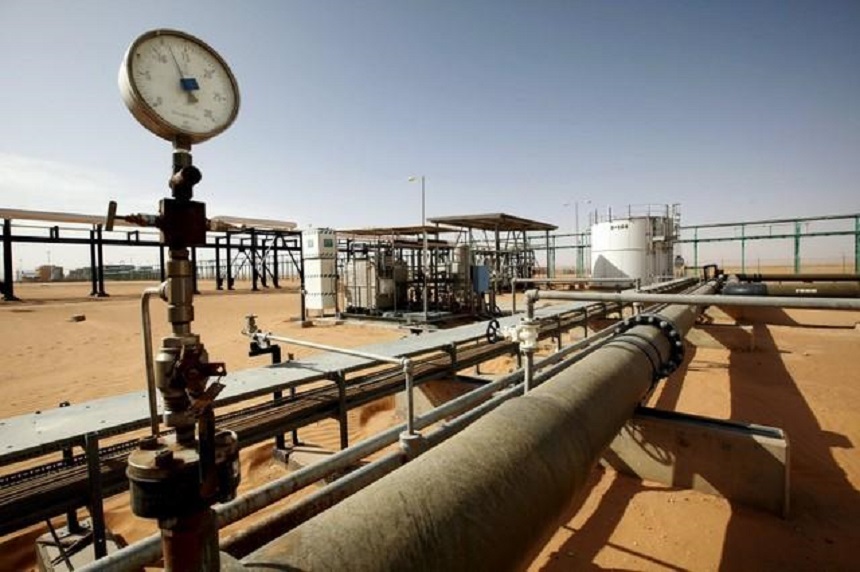
Tinubu Issues Executive Order to Slash Oil Production Costs
By Adedapo Adesanya
President Bola Tinubu has signed the Upstream Petroleum Operations Cost Efficiency Incentives Order, 2025— a landmark presidential directive designed to cut operational costs, enhance fiscal discipline, and attract more investment into Nigeria.
The new order, announced by the Special Adviser to the President on Energy, Ms Olu Verheijen, is seen as a bold response to rising concerns over Nigeria’s dwindling oil competitiveness amid softening global oil prices and increasingly selective capital.
“This is a bold and pragmatic step to make Nigeria’s upstream sector more globally competitive, fiscally resilient, and investor-aligned,” Ms Verheijen said in a statement.
According to her, the order introduces three key pillars that will drive down costs and encourage efficiency: “Links tax incentives to verifiable cost savings. Establishes terrain-specific cost benchmarks (onshore, shallow water, deep offshore). Caps credits to protect government revenue while rewarding efficient operators.”
“These reforms mark a transition from intent to execution, with performance, discipline, and value at the center,” Ms Verheijen noted.
The new order, according to the Presidential Advisor, complements previous reform initiatives under the Tinubu administration, including improved fiscal terms, faster contracting processes, and more commercially realistic local content regulations.
Nigeria has recent years sought to cut its high oil production costs, which is higher than that of regional and global peers, especially in deep water projects.
If executed, the new presidential directive is expected to close this competitiveness gap and unlock dormant upstream assets by incentivizing leaner, smarter operations.
“With this order, we are telling the world that Nigeria is serious about putting every barrel to work, for our economy, for investors, and for the future of Nigeria’s energy security,” Ms Verheijen added.
The government now hopes this policy shift will not only boost oil output and revenue but also position Nigeria more favorably among energy investment destinations in Africa and globally.
Economy
Okitipupa Jumps 9% to Lift NASD OTC Exchange Market
By Adedapo Adesanya
Okitipupa Plc was the sole price gainer at the NASD Over-the-Counter (OTC) Securities Exchange on Friday, August 7, lifting the trading platform by 0.44 per cent at the close of transactions.
The share price of the palm oil producer appreciated during the trading session by N25.00 or 9.0 per cent to N277.00 per unit compared with the previous day’s N252.00 per unit.
As a result, the market capitalisation gained N12.29 billion to close at N2,807 trillion, in contrast to the previous session’s N2.795 trillion, while the NASD Security Index (NSI) added 93.63 points to finish at 4,678.08 points compared with Thursday’s 4,657.59 points.
The bourse recorded a price loser yesterday, and this was Mass Telecoms Innovation Plc, which crashed by 3 Kobo or 9.4 per cent to settle at 32 Kobo per share versus the previous day’s 35 Kobo per share.
The volume of securities traded by investors plunged by 81.5 per cent to 535,7560 units from 2.9 million units, the value of securities slumped by 93.9 per cent to N6.0 million from N99.2 million, and the number of deals decreased by 41.9 per cent to 36 deals from 62 deals.
Great Nigeria Insurance (GNI) Plc remained the most active stock by value on a year-to-date basis, with 3.4 billion units valued at N8.4 billion, followed by Infrastructure Credit Guarantee (Infracredit) Plc with 2.3 billion units transacted for N6.5 billion, and Central Securities Clearing System (CSCS) Plc with 77.0 million units exchanged for N5.5 billion.
GNI Plc also ended the day as the most traded stock by volume on a year-to-date basis, with 3.4 billion units worth N8.4 billion, trailed by Infracredit Plc with 2.3 billion units valued at N6.5 billion, and Resourcery Plc with 1.1 billion units sold for N415.7 million.
Economy
Banking Stocks Raise Nigerian Exchange by 0.15%
By Dipo Olowookere
A 0.15 per cent growth was achieved by the Nigerian Exchange (NGX) Limited, driven by continued buying interest in banking stocks such as First Holdco and others.
The banking index was up by 1.53 per cent during the session, offsetting the losses recorded by the others. The industrial goods segment fell by 0.37 per cent, the insurance counter shrank by 0.21 per cent, and the energy sector contracted by 0.04 per cent, while the consumer goods space closed flat.
At the close of business, the All-Share Index (ASI) moved up by 364.26 points to 245,573.60 points from 245,209.34 points, and the market capitalisation increased by N235 billion to N158.513 trillion from N158.278 trillion.
Despite the gains printed by Customs Street during the trading day, investor sentiment was weak, as there were 22 price gainers and 24 price losers, indicating a negative market breadth index.
UPDC surged by 9.23 per cent to N3.55, CWG soared by 6.56 per cent to N19.50, AXA Mansard appreciated by 4.80 per cent to N13.10, Neimeth advanced by 4.24 per cent to N8.60, and Cutix improved by 4.00 per cent to N2.60.
Conversely, Red Star Express lost 10.00 per cent to trade at N18.00, CAP declined by 9.98 per cent to N115.45, John Holt shrank by 9.82 per cent to N10.10, ABC Transport depreciated by 9.57 per cent to N5.20, and Legend Internet crashed by 8.70 per cent to N4.20.
A total of 1.5 billion equities worth N26.7 billion exchanged hands in 42,580 deals on Friday versus the 531.8 million equities valued at N20.5 billion traded in 44,826 deals on Thursday, representing a spike in the trading volume, value, and number of deals by 182.06 per cent, 30.24 per cent, and 5.01 per cent, respectively.
The busiest stock during the session was Fortis Global Insurance, with a turnover of 824.5 million units valued at N2.1 billion, FCMB traded 217.9 million units worth N2.8 billion, Access Holdings exchanged 176.2 million units for N4.7 billion, Chams sold 32.5 million units worth N132.1 million, and First Holdco transacted 25.0 million units valued at N3.7 billion.
Economy
Naira Further Dips Against Dollar at NAFEX to N1,365/$1
By Adedapo Adesanya
The Naira further closed south against the US Dollar in the Nigerian Autonomous Foreign Exchange Market (NAFEX) on Friday, August 7, by 81 Kobo or 0.06 per cent to N1,365.69/$1 from N1,364.88/$1.
It was a similar situation for the Nigerian Naira in the official market during the session as against the Pound Sterling; it lost N1.08 to quote at N1,839.17 versus the previous day’s N1,838.09/£1, and against the Euro, it slipped by N1.23 to close at N1,575.73/€1, in contrast to the preceding session’s N1,574.80/€1.
Further, at the GTBank forex counter, the Nigerian currency weakened against the Dollar yesterday by N2 to settle at N1,371/$1 compared with Thursday’s N1,369/$1, and at the black market, it traded flat at N1,400/$1.
The country’s legal tender came under FX demand pressure on Friday, with turnover rising by 304.3 per cent to $399.5 million from $98.8 million the previous day, with the number of deals slightly up to 107 from 106.
Next week, traders expect the Naira to hold steady, buoyed by dollar sales by the Central Bank of Nigeria (CBN), whose presence in the market could help ease demand pressure.
As for the cryptocurrency market, Bitcoin (BTC) neared the $65,000-mark after it gained 0.8 per cent to trade at $64,968.05, as investors took advantage of recent drops to shore up their holdings.
Previously, the decision by the US Senate to delay a vote on the Crypto Clarity Act until at least September weakened the outlook. The bill, which would set out which US regulator oversees which digital assets, needs 60 votes to pass and it is unclear whether it currently has 50.
Solana (SOL) grew by 2.5 per cent to $74.81, Dogecoin (DOGE) rose by 1.3 per cent to $0.0702, Binance Coin (BNB) jumped by 1.1 per cent to $593.80, Ethereum (ETH) expanded by 0.5 per cent to $1,916.08, Ripple (XRP) also soared by 0.5 per cent to $1.03, and TRON (TRX) appreciated by 0.2 per cent to $0.3275.
However, Cardano (ADA) depreciated by 1.0 per cent to $0.1997, while the US Dollar Tether (USDT) and the US Dollar Coin (USDC) remained unchanged at $1.00 apiece.


Pingback: Presidential Orders on Oil Sector Have Not Weakened NOGICD Act—NCDMB | Business Post Nigeria