Media OutReach
PolyU develops novel multi-modal agent to facilitate long video understanding by AI, accelerating development of generative AI-assisted video analysis
Videos, especially those longer than 15 minutes, carry information that unfolds over time, such as the sequence of events, causality, coherence and scene transitions. To understand the video content, AI models therefore need not only to identify the objects present, but also take into account how they change throughout the video. As visuals in videos occupy a large number of tokens, video understanding requires vast amounts of computing capacity and memory, making it difficult for AI models to process long videos.
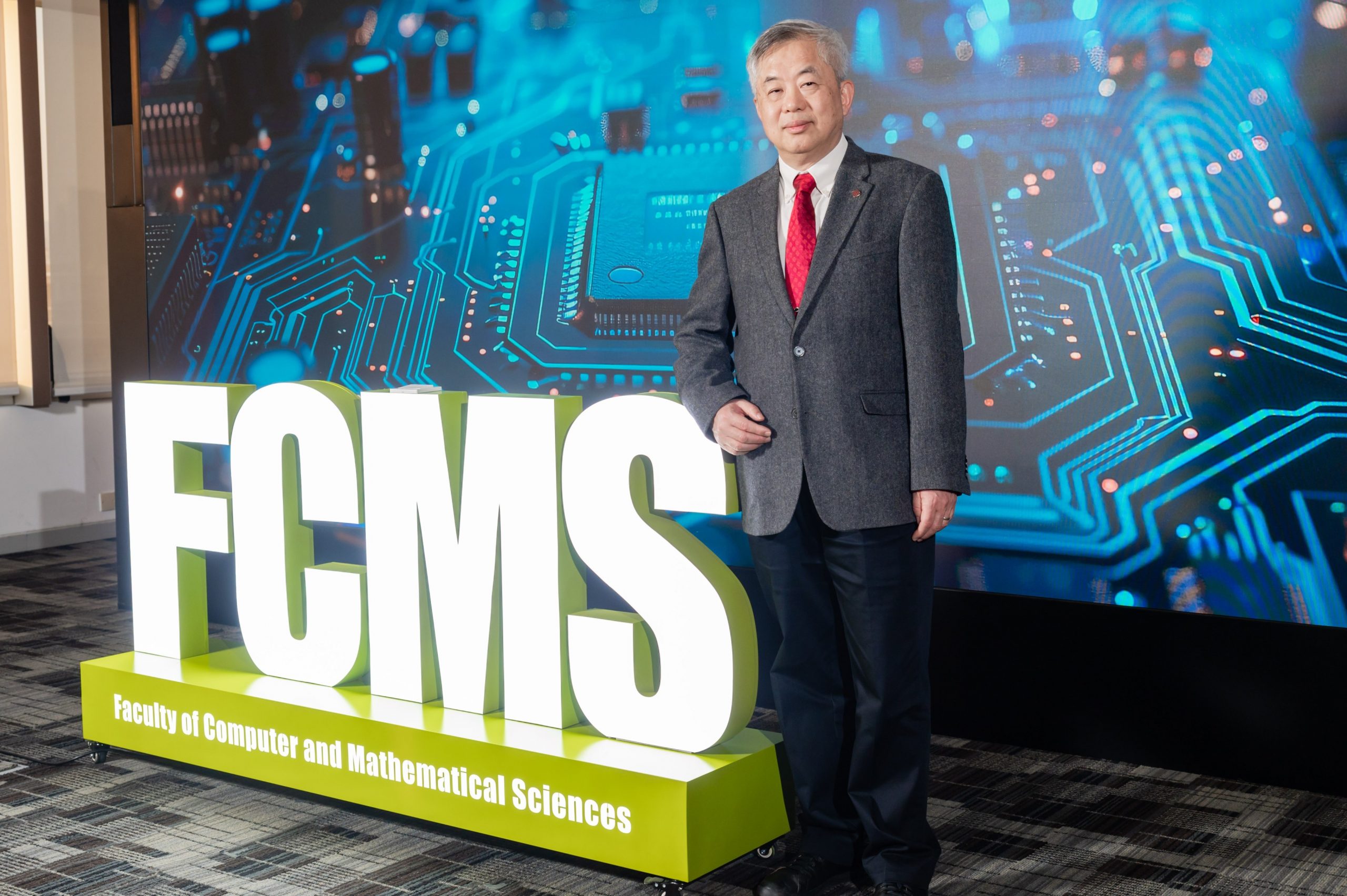
Prof. Changwen CHEN, Interim Dean of the PolyU Faculty of Computer and Mathematical Sciences and Chair Professor of Visual Computing, and his team have achieved a breakthrough in research on long video reasoning by AI. In designing VideoMind, they made reference to a human-like process of video understanding, and introduced a role-based workflow. The four roles included in the framework are: the Planner, to coordinate all other roles for each query; the Grounder, to localise and retrieve relevant moments; the Verifier, to validate the information accuracy of the retrieved moments and select the most reliable one; and the Answerer, to generate the query-aware answer. This progressive approach to video understanding helps address the challenge of temporal-grounded reasoning that most AI models face.
Another core innovation of the VideoMind framework lies in its adoption of a Chain-of-LoRA strategy. LoRA is a finetuning technique emerged in recent years. It adapts AI models for specific uses without performing full-parameter retraining. The innovative chain-of-LoRA strategy pioneered by the team involves applying four lightweight LoRA adapters in a unified model, each of which is designed for calling a specific role. With this strategy, the model can dynamically activate role-specific LoRA adapters during inference via self-calling to seamlessly switch among these roles, eliminating the need and cost of deploying multiple models while enhancing the efficiency and flexibility of the single model.
VideoMind is open source on GitHub and Huggingface. Details of the experiments conducted to evaluate its effectiveness in temporal-grounded video understanding across 14 diverse benchmarks are also available. Comparing VideoMind with some state-of-the-art AI models, including GPT-4o and Gemini 1.5 Pro, the researchers found that the grounding accuracy of VideoMind outperformed all competitors in challenging tasks involving videos with an average duration of 27 minutes. Notably, the team included two versions of VideoMind in the experiments: one with a smaller, 2 billion (2B) parameter model, and another with a bigger, 7 billion (7B) parameter model. The results showed that, even at the 2B size, VideoMind still yielded performance comparable with many of the other 7B size models.
Prof. Chen said, “Humans switch among different thinking modes when understanding videos: breaking down tasks, identifying relevant moments, revisiting these to confirm details and synthesising their observations into coherent answers. The process is very efficient with the human brain using only about 25 watts of power, which is about a million times lower than that of a supercomputer with equivalent computing power. Inspired by this, we designed the role-based workflow that allows AI to understand videos like human, while leveraging the chain-of-LoRA strategy to minimise the need for computing power and memory in this process.”
AI is at the core of global technological development. The advancement of AI models is however constrained by insufficient computing power and excessive power consumption. Built upon a unified, open-source model Qwen2-VL and augmented with additional optimisation tools, the VideoMind framework has lowered the technological cost and the threshold for deployment, offering a feasible solution to the bottleneck of reducing power consumption in AI models.
Prof. Chen added, “VideoMind not only overcomes the performance limitations of AI models in video processing, but also serves as a modular, scalable and interpretable multimodal reasoning framework. We envision that it will expand the application of generative AI to various areas, such as intelligent surveillance, sports and entertainment video analysis, video search engines and more.”
Hashtag: #PolyU #AI #LLMs #VideoAnalysis #IntelligentSurveillance #VideoSearch
The issuer is solely responsible for the content of this announcement.
Media OutReach
New Documentary A MONA LISA OBSESSION from Discovery to debut December 14 in Southeast Asia
Owned by Frank Huang, an art collector and Taiwanese technology leader from Taiwan, this depiction of the Mona Lisa from his private collection adds a unique perspective to the ongoing conversation surrounding one of Leonardo da Vinci’s most iconic works.
The Mona Lisa has long captivated the world with her enigmatic smile and mysterious gaze – over centuries, many artistic interpretations inspired by the Mona Lisa have emerged, with scholars discovering more hidden details and subtle symbols, fueling the fascination of the original painting.
Catch A Mona Lisa Obsession in Southeast Asia on the Discovery Channel, Thursday, December 11, 2025 at 7:10 PM SGT and on Discovery Asia on Sunday, December 14 at 9:00 PM SGT.
****
Note to editors:
The issuer is solely responsible for the content of this announcement.
About Discovery Channel
Media OutReach
Financial Stress Keeps Singapore Awake, while Overall Well-Being in APAC Lags Behind Global Peers
Promotion of exercise culture and therapy may boost physical and mental health
The Singapore report of the Cigna Healthcare International Health Study 2025, released today encompasses more than 11,000 respondents across 13 markets, including 1,000 in Singapore and 4,000 across the Asia-Pacific region. The study reveals that physical, mental and financial well-being are the three aspects prioritized by Singapore residents. However, financial well-being is ranked the lowest with almost four in 10 (39%) rating their financial health as “fair” or “poor”.
Raymond Ng, CEO & Country Manager, Cigna Healthcare Singapore & Australia said: “Health and vitality are key to building resilient communities. It promises the well-being of our workforce and enables us to grow and prosper as a society. While vitality and well-being levels held firm among Singapore residents, more needs to be done in today’s uncertain environment to tackle stressors that can negatively impact their physical and mental well-being.”
The key indicators of vitality and well-being in Singapore are as follows:
| Vitality Score | Overall Well-Being
(% rating as “excellent” or “very good”)
|
Top Three Areas of Well-Being
(% rating as “excellent” or “very good” in 2025) |
| 2025: 61.2
2024: 61.4 |
2025: 34%
2024: 33% |
Family well-being: 44%
Mental well-being: 36% Physical well-being: 34% |
On a regional level, overall well-being in Asia Pacific lags behind the global average, with less than three in 10 (28%) Asia-Pacific respondents rating their overall well-being as “excellent” or “very good”, compared to four in 10 (41%) globally. While physical and mental well-being are the two most important aspects of well-being for respondents globally, financial well-being is more important for those in Asia Pacific, coming in as the third most important aspect. With financial well-being remaining the weakest aspect across the globe, there is a pressing need for governments and organizations to render support to address financial concerns.
Robert Peat, Chief Executive Officer, Asia Pacific, Cigna Healthcare said: “Asia Pacific continues to be one of the fastest growing regions in the world. To sustain this momentum, communities and employers need to recognize that healthy people are the foundation of a healthy economy and implement measures to close the gaps in their well-being.”
Sleepless in Singapore: Financial stress as the sleep killer
While mental well-being in Singapore remains stable with more than a third of respondents rating it as “excellent” or “very good” this year, eight in 10 (79%) respondents are stressed. Their greatest stressors are the current cost of living (53%); uncertainty about the future (47%); and personal finance (43%).
Stress affects more than mental and emotional health and can have huge implications on physical well-being. Our study reveals that disrupted sleep is the most common effect of stress among respondents in the nation, with close to half (48%) of respondents who are stressed reporting this effect, compared to 38% regionally.
Therapy remains underused by Singapore respondents. Despite nearly half (49%) of respondents reporting being negatively impacted by poor mental health, nearly nine in 10 (89%) say they did not receive counselling or therapy in the past 12 months, with 77% believing they do not need it. Given the impacts of stress and poor mental health on physical and overall well-being, more efforts are needed to raise awareness about the benefits of therapy and destigmatize seeking help.
Exercise culture runs strong in Singapore
More than a quarter (26%) of respondents in Singapore rate their exercise habits as “excellent” or “very good”.
When asked how they manage their weight, two-thirds (66%) said they exercise regularly, higher than the Asia-Pacific average of 61%; with only 4% of Singapore respondents turning to medication for weight management. The findings underscore a relatively strong exercise culture and the prioritization of healthy habits among those living in the nation. Communities and organizations may leverage the growing fitness trend to enhance physical well-being.
Cautious optimism around AI in healthcare
Close to half (47%) of Singapore respondents are positive about the impact of AI on healthcare, with 45% expecting it will reduce wait times within three years. This could have an outsized impact in Singapore, as respondents here are 29% more likely to have delayed or avoided getting care due to concern with wait times than their regional counterparts.
Additionally, almost half of Singapore respondents (48%) mention a reduction in human interaction as an expected change with the advent of AI. The challenge ahead is striking the right balance between efficiency and empathy.
The full findings of the report are available here.
Hashtag: #CignaHealthcare #CignaHealthcareInternationalHealthStudy #Health #Wellness #Wellbeing
https://www.cigna.com.sg/
https://www.linkedin.com/company/cigna-singapore/
https://www.facebook.com/cignasg/
https://www.instagram.com/cignasg/
The issuer is solely responsible for the content of this announcement.

Cigna Healthcare Singapore
Cigna Healthcare is a division of The Cigna Group, a global health company committed to creating a better future built on the health and vitality of every individual and every community. Cigna Healthcare is a health benefits provider that advocates for better health through every stage of life. We guide our customers through the healthcare system, empowering them with the information and insight they need to make the best choices for improving their health and vitality.
Cigna Healthcare Singapore is a strong believer of total health and wellness and prides itself on delivering personalized solutions for the health of our clients and customers. To achieve this, Cigna Healthcare Singapore works as one global team and in close partnership with its customers, network providers and communities to understand and address their diverse needs. Learn more at
www.cigna.com.sg
Media OutReach
SWISS REJU wins “JESSICA Best AI Body Slimming Award” with INDIBA
The JESSICA Beauty and Wellness Awards celebrate excellence across luxury beauty, healthcare and wellness. It is one of the most recognized beauty industry awards in Hong Kong. The organizer, JESSICA, is a major lifestyle and media company. For over 25 years, JESSICA has been reporting on fashion, lifestyle and business, as one of the most trustworthy and influential media sources in Hong Kong.
“We’re incredibly fortunate to win this new, Best AI Slimming Award with JESSICA,” said the spokesperson for SWISS REJU. “Our goal was to provide our guests with top medical aesthetic technologies. Platforms like BTL EXION and INDIBA, are exactly the type of top medical technologies which SWISS REJU is heavily investing in. The breathtaking results powered by AI, reflect the endless possibilities new technologies can bring to the beauty and slimming field”
The JESSICA Beauty and Wellness Awards is extremely selective and has a rigorous nominations and editorial selection process. Only brands that have been proven to provide genuine service and excellent results are eligible to compete. Amongst the Winners this year, are Australian organic brand “CANVAS” and Japanese household name “Panasonic VITALIFT” beauty appliances.
SWISS REJU, with its heavy investment in new and prestigious technologies such as INDIBA (recently approved in Europe under the Medical Device Regulation), offers a seamless blend of traditional wellness and innovation, allowing guests to experience what many considered to be one of the most effective slimming treatments in Hong Kong. INDIBA with its trademark Proionic 448khz technology, is loved by the Top 1% most influential users in the world, amongst them European royalties, celebrity footballers and international singers.
The recognition of this major annual Award, reaffirms SWISS REJU’s commitment to exceptional technology. It is the 12th annual award won by the brand, representing a new record.
SWISS REJU and integrative power of cutting edge technologies
SWISS REJU’s trademarked “K-Lipolysis” body contouring program offers winning technologies including INDIBA, BTL EXION, Winback, ATP LIPO X, amongst others. It is the unique contouring solution beauty lovers are craving for.
Hashtag: #SWISSREJU #熱光溶脂
The issuer is solely responsible for the content of this announcement.

-
Feature/OPED6 years agoDavos was Different this year
-
Travel/Tourism9 years ago
Lagos Seals Western Lodge Hotel In Ikorodu
-
Showbiz3 years agoEstranged Lover Releases Videos of Empress Njamah Bathing
-
Banking7 years agoSort Codes of GTBank Branches in Nigeria
-
Economy3 years agoSubsidy Removal: CNG at N130 Per Litre Cheaper Than Petrol—IPMAN
-
Banking3 years agoFirst Bank Announces Planned Downtime
-
Banking3 years agoSort Codes of UBA Branches in Nigeria
-
Sports3 years agoHighest Paid Nigerian Footballer – How Much Do Nigerian Footballers Earn