Connect with us

General

How to Choose a Durable & Stylish Women’s Engagement Ring for Healthcare Workers

Published

on

women’s engagement ring

Healthcare professionals are guardians of life, tirelessly navigating hospital corridors with hands busy at operating tables and at the bedside. A women’s engagement ring is more than a symbol of love—it’s a constant companion through their high-intensity work. How do you choose a ring that’s both beautiful and practical for long-term wear? This decision goes beyond aesthetics, focusing on functionality and comfort. Healthcare workers need a ring as reliable as a trusted partner, able to withstand frequent handwashing, disinfectant exposure, and extended wear. This guide covers material, design, comfort, and personalization to help healthcare professionals select the perfect engagement ring, making it a seamless addition to both work and life.
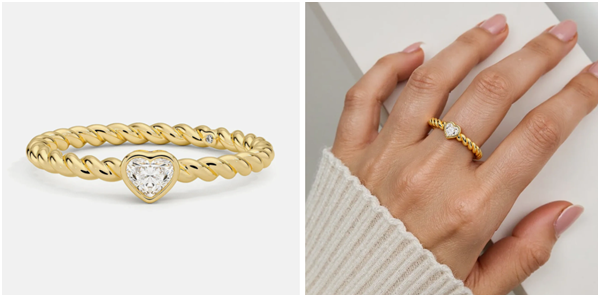
14K Yellow Gold 0.5 Carat

14K Yellow Gold 0.5 Carat Heart-Shaped Lab-Grown Diamond Engagement Ring 

Key Tips: Choosing the Right Engagement Ring for Healthcare Professionals

1. Material Choice: Tough as Their Professional Spirit

Healthcare workers regularly handle disinfectants, soaps, and glove friction, so the ring material must be durable. Platinum and 14K or 18k gold are top picks—resilient, corrosion-resistant, and deformation-proof. Platinum mirrors their calm professionalism with a lasting shine suited for frequent cleaning. Gold, warm like sunlight, offers durability; 14K is harder, ideal for long-term wear. Titanium or tungsten are modern alternatives, lightweight and scratch-resistant, reflecting their resilient spirit.

Diamonds, the classic engagement ring centerpiece, are as unyielding as their sense of duty, resisting wear forever. Lab-grown diamonds are eco-friendly, budget-conscious, and match natural diamonds in quality, blending practicality with sentiment. Want a ring that sparkles while enduring daily work challenges? Yes, high-quality materials crown both love and professional commitment.

2. Simple Design: Elegance Without Complexity

The healthcare environment calls for sleek, uncluttered ring designs to avoid snagging gloves or harboring germs. Smooth solitaire or low-set designs are ideal, reflecting their straightforward, efficient work style. A single diamond ring is timelessly elegant, its gem sparkling like a star without interfering with tasks. Halo rings, with their flowing lines, offer understated beauty for those who prefer simplicity.

Ever wondered how a ring can transition from the operating room to a candlelit dinner? A minimalist design complements their poised demeanor, subtle under scrubs yet radiant in social settings. A women’s engagement ring doesn’t need ornate details—simplicity is timeless.

3. Comfort First: A Second-Skin Fit

For healthcare workers wearing rings through long shifts, comfort is non-negotiable. The ring’s inner edge should be smooth, like a gentle embrace, preventing skin irritation. Comfort Fit designs feel like a second skin, barely noticeable during wear. A width of 3-5mm is recommended—too wide may hinder finger dexterity, while too narrow can feel flimsy.

Imagine a ring that distracts you during a 12-hour shift—unthinkable, right? A lightweight, snug engagement ring is like a supportive partner, always there without causing hassle.

4. Antibacterial and Easy to Clean: A Health-First Defense

In high-hygiene settings, rings must be easy to clean and resist bacteria. Platinum and gold’s smooth surfaces repel dirt, regaining shine with a quick wipe. Lab-grown diamonds, with their pure chemical structure, are equally low-maintenance. Avoid intricate engravings or multi-stone settings—these maze-like designs trap bacteria, complicating cleaning.

Can a ring withstand alcohol wipes or frequent handwashing while still gleaming? An easy-to-clean women’s engagement ring honors both love and professional responsibility.

5. Personalization: A Ring That Tells Your Unique Story

Healthcare workers bring warmth to their profession, and their engagement rings should reflect that personal touch. Customization makes a ring one-of-a-kind. Engrave names, dates, or a heartfelt phrase, turning the ring into a chapter of your love story. Moss agate rings, with their unique green patterns, symbolize life and hope, perfect for nature-loving professionals. Lab-grown diamond rings appeal to eco-conscious, practical brides with their modern vibe and ethical brilliance.

Want a ring that’s more than jewelry—a snapshot of your story? A custom women’s engagement ring adds a touch of tenderness to a healthcare worker’s demanding life.
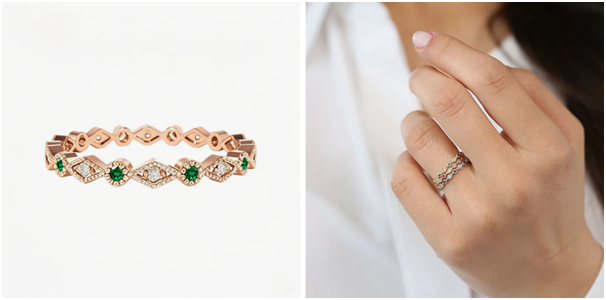
14K Rose Gold Diamond

14K Rose Gold Diamond and Emerald Stacking Engagement Ring

Common Pitfalls: Mistakes to Avoid When Choosing a Ring

  1. Overly Complex Designs: Fancy settings or multi-gem designs look stunning but can snag gloves or harbor bacteria, making cleaning a chore.
  2. Ignoring Material Durability: Silver or low-purity alloys may tarnish under frequent cleaning or cause allergies.
  3. Wrong Sizing: Too-tight rings can restrict blood flow, while loose ones risk slipping off—healthcare workers need a precise fit.
  4. Prioritizing Looks Over Comfort: A gorgeous but uncomfortable ring is like a beautiful shoe that pinches—it’ll end up in a drawer.

14K Yellow Gold 0.25ct

14K Yellow Gold 0.25ct Lab-Grown Diamond Enamel Swirl Wave Ring 

YFN Jewelry: Crafting Love Tokens for Healthcare Professionals

YFN Jewelry, a factory-direct gold jewelry brand, is renowned for its diverse styles and efficient customization. With over 500 themed collections and 10,000+ online pieces, we offer women’s engagement rings, moss agate rings, and lab-grown diamond options tailored to healthcare workers’ needs. From minimalist solitaires to nature-inspired moss agate designs, YFN crafts rings that tell your love story.

Our personalization services include photo, letter, name engravings, and gem settings, completed in just 7-10 days, faster than industry standards. Each ring, like a healthcare worker’s hands, carries love and duty. Use code “Share15” for 15% off your first order! Choose YFN to make your engagement ring a perfect testament to your career and commitment.


Advertisement
Click to comment

Leave a Reply

Your email address will not be published. Required fields are marked *

General

Bill Seeking Creation of Unified Emergency Number Passes Second Reading

Published

on

Unified Emergency Number

By Adedapo Adesanya

Nigeria’s crisis-response bill seeking to establish a single, toll-free, three-digit emergency number for nationwide use passed for second reading in the Senate this week.

Sponsored by Mr Abdulaziz Musa Yar’adua, the proposed legislation aims to replace the country’s chaotic patchwork of emergency lines with a unified code—112—that citizens can dial for police, fire, medical, rescue and other life-threatening situations.

Lawmakers said the reform is urgently needed to address delays, miscommunication and avoidable deaths linked to Nigeria’s fragmented response system amid rising insecurity.

Leading debate, Mr Yar’adua said Nigeria has outgrown the “operational disorder” caused by multiple emergency numbers in Lagos, Abuja, Ogun and other states for ambulance services, police intervention, fire incidents, domestic violence, child abuse and other crises.

He said, “This bill seeks to provide for a nationwide toll-free emergency number that will aid the implementation of a national system of reporting emergencies.

“The presence of multiple emergency numbers in Nigeria has been identified as an impediment to getting accelerated emergency response.”

Mr Yar’adua noted that the reform would bring Nigeria in line with global best practices, citing the United States, United Kingdom and India, countries where a single emergency line has improved coordination, enhanced location tracking and strengthened first responders’ efficiency.

With an estimated 90 per cent of Nigerians owning mobile phones, he said the unified number would significantly widen public access to emergency services.

Under the bill, all calls and text messages would be routed to the nearest public safety answering point or control room.

He urged the Senate to fast-track the bill’s passage, stressing the need for close collaboration with the Nigerian Communications Commission (NCC), relevant agencies and telecom operators to ensure nationwide coverage.

Senator Ali Ndume described the reform as “timely and very, very important,” warning that the absence of a reliable reporting channel has worsened Nigeria’s security vulnerabilities.

“One of the challenges we are having during this heightened insecurity is lack of proper or effective communication with the affected agencies,” Ndume said.

“If we do this, we are enhancing and contributing to solving the security challenges and other related criminalities we are facing,” he added.

Also speaking in support, Senator Mohammed Tahir Monguno said a centralised emergency number would remove barriers to citizen reporting and strengthen public involvement in security management.

He said, “Our security community is always calling on the general public to report what they see.

“There is a need for government to create an avenue where the public can report what they see without any hindrance. The bill would give strength and muscular expression to national calls for vigilance.”

The bill was referred to the Senate Committee on Communications for further legislative work and is expected to be returned for final consideration within four weeks.

Continue Reading

General

Tinubu Swears-in Ex-CDS Christopher Musa as Defence Minister

Published

on

ex-cds christopher musa

By Modupe Gbadeyanka

The former chief of defence staff (CDS), Mr Christopher Musa, has been sworn-in as the new Minister of Defence.

The retired General of the Nigerian Army took the oath of office for his new position on Thursday in Abuja.

The Special Adviser to the President on Information and Strategy, Mr Bayo Onanuga, confirmed this development in a post shared on X, formerly Twitter, today.

“General Christopher Musa takes oath of office as Nigeria’s new defence minister,” he wrote on the social media platform this afternoon.

Earlier, President Bola Tinubu thanked the Senate for confirming Mr Musa when he was screened for the post on Wednesday.

“Two days ago, I transmitted the name of General Christopher G. Musa, our immediate past Chief of Defence Staff and a fine gentleman, to the Nigerian Senate for confirmation as the Federal Minister of Defence.

“I want to commend the Nigerian Senate for its expedited confirmation of General Musa yesterday. His appointment comes at a critical juncture in our lives as a Nation,” he also posted on his personal page X on Thursday.

The former military officer is taking over from Mr Badaru Abubakar, who resigned on Sunday on health grounds.

Continue Reading

General

Presidential Directives Helping to Remove Energy Bottlenecks—Verheijen

Published

on

Cut Energy Costs

By Adedapo Adesanya

The Special Adviser to President Bola Tinubu on Energy, Mrs Olu Verheijen, says Presidential Directives 41 and 42 have emerged as the most transformative policy tools reshaping Nigeria’s oil and gas investment landscape in more than a decade, by helping eliminate bottlenecks.

Mrs Verheijen made this assertion while speaking at the Practical Nigerian Content Forum 2025, noting that the directives issued by her principal in May 2025, are specifically designed to eliminate rent-seeking, slash project timelines, reduce contracting costs, and restore investor confidence in the Nigerian upstream sector.

“These directives are not just policy documents; they are enforceable commitments to make Nigeria competitive again,” she declared.

She noted that before the directives were issued, Nigeria faced chronic delays in contracting cycles, which discouraged capital inflows and stalled major upstream projects.

“For years, investment stagnated because our processes were too slow and too expensive. Presidential Directives 41 and 42 are removing those bottlenecks once and for all,” she said.

According to her, the directives have already begun to shift investor sentiment, unlocking billions of dollars in new commitments from international oil companies.

“We are seeing unprecedented investment inflows. Shell, Chevron and others are returning with confidence because they can now see credible timelines and competitive project economics,” Verheijen said.

Speaking on the link between streamlined contracting and local content development, she stressed that the directives were crafted to reinforce, not weaken, Nigerian participation.

“Local content is not an obstacle; it is a catalyst. It helps us meet national objectives, contain costs, and deliver projects faster when applied correctly,” she explained.

Mrs Verheijen highlighted that the directives complement the government’s data-driven approach to refining local content requirements while ensuring Nigerian talent and enterprises remain central to new investments.

“Our goal is to empower Nigerian companies with opportunities that are commercially sound and globally competitive,” she said.

She pointed to the current spike in industry activity, over 60 active drilling rigs, as evidence that the directives are driving real operational change.

“We have moved from rhetoric to results. These directives have triggered a new cycle of upstream development,” she said.

The energy expert added that the reforms are critical to achieving Nigeria’s production ambition of 3 million barrels of oil and 10 billion standard cubic feet (bscf) of gas per day by 2030.

“To meet these targets, we need speed, efficiency, and collaboration across the value chain. The directives are the foundation for that,” she noted.

She also linked the directives to Nigeria’s broader regional ambitions, including its leadership role in the African Energy Bank.

“With a $100 million facility now launched, we are ensuring that investment translates into jobs, technology transfer, and long-term value for Nigeria,” she said.

Mrs Verheijen concluded by urging the industry to uphold the spirit and letter of the presidential instructions.

“These directives are a collective responsibility. Government, operators, financiers, and host communities must work together to deliver the Nigeria we envision,” she said. “We remain committed to ensuring Nigeria remains Africa’s premier investment destination,” she said.

Continue Reading

Trending