General
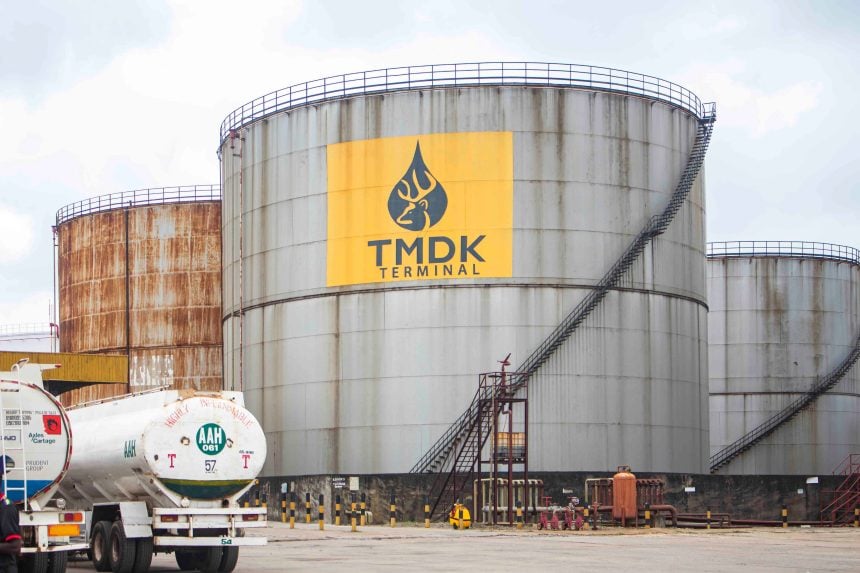
NIMASA Shuts ShellPlux, TMDK Terminals in Lagos Over Safety Code Violation
By Adedapo Adesanya
The Nigerian Maritime Administration and Safety Agency (NIMASA) has shut down ShellPlux and TMDK Terminals, both located in the Ijegun-Egba area of Lagos for non-implementation of the International Ship and Port Facility Security (ISPS) Code.
The enforcement action followed persistent non-compliance by the facilities with the provisions of the ISPS Code, despite several formal warnings.
The move aligns with global best practices and is in accordance with Section 79(f) of the ISPS Code Implementation Regulations (2014), which mandates the closure of any facility that remains in violation for over three calendar months, the agency said.
Speaking on the development, the Director General of NIMASA, Mr Dayo Mobereola, emphasised the agency’s commitment to safeguarding Nigeria’s maritime domain.
“In wielding the big stick, we acted only as a last resort. Our primary goal is to enforce safety and security practices across Nigerian ports and jetties. At a time when we are collaborating with the United States Coast Guard to lift the conditions of entry on vessels from Nigeria, we cannot afford lapses that jeopardise our progress,” he said.
Mr Mobereola added that the facilities would be reopened once all compliance requirements are satisfactorily met, acknowledging their important role in service delivery and trade facilitation.
“Our Minister of Marine and Blue Economy, Adegboyega Oyetola, is committed to enhanced sustainable trade facilitation for the maritime sector in a safe and conducive environment,” he added.
The ISPS Code, an amendment to the SOLAS Convention, was developed by the International Maritime Organisation (IMO) to enhance maritime and port security, particularly for facilities engaged in international trade.
He reiterated that the agency will continue to ensure that infractors are punished, until there is adequate change in culture that will help drive the sector forward.
General
NUPRC, NNPC Pledge Deeper Collaboration for Operational Efficiency
By Adedapo Adesanya
The Nigerian Upstream Petroleum Regulatory Commission (NUPRC) and the Nigerian National Petroleum Company (NNPC) Limited have pledged to deepen collaboration to boost operational efficiency.
This was the outcome of a meeting between the managements of the NUPRC and the NNPC at the commission’s corporate headquarters in Abuja, where the chief executive of the former, Mrs Oritsemeyiwa Eyesan, said the two oil regulators, as creations of the Nigerian government, have similar goals.
“As major instruments of the government in the industry, we are aligned toward the same goal, and I think this is pivotal, and we must not lose this golden opportunity,” she disclosed.
Further addressing the NNPC team, led by its chief executive, Mr Bayo Ojulari, Mrs Eyesan said the NUPRC is focused on reducing the cost of operations by harmonising fees and rents to make Nigeria’s oil and gas sector more competitive.
To this end, the NUPRC boss revealed that the agencywas working closely with the Oil Producers Trade Section, OPTS, to address the multiplicity of fees and rents to improve Nigeria’s competitiveness.
“We are working with the industry on harmonising the fees and rents that we charge. The whole idea is to harmonise and reduce it to the barest minimum so that we can reduce the cost of operations,” she said.
Mr Eyesan further stated that the Commission is working on enhancing measurement and hydrocarbon accounting.
“We have done the first phase, which is to audit what we already have. The second phase, which will commence shortly, will be the real implementation of the metering standards, and this entire programme will entail us having a data centre and having all the meters in all our locations to standard,” she stated.
The NUPRC boss said the Host Community Development Trust (HCDT) had so far been a success but maintained that there was a need to fully utilise these funds for its intended purpose, as this would enhance community peace and improve the operating environment.
Mrs Eyesan encouraged NNPC, as the country’s national oil company, to participate in the ongoing 2025 licensing round and deepen exploration.
In his remarks, the NNPC GCEO reiterated the need for an improved relationship between the national oil company and the regulator.
Mr Ojulari hailed Mr Eyesan, noting that, “Your antecedents, your track records, your integrity, your forthrightness and clarity for those who have had the privilege of interacting with you, excite the industry.”
He said the NUPRC had continued to demonstrate exceptional leadership in terms of regulation and has been promoting transparency and shaping an enabling environment crucial for investment and operational excellence, which is good for the industry.
The NNPC boss said the national oil firm had recently launched the national gas master plan, which would boost the country’s gas production.
Mr Ojulari said critical projects like the OB3 and the AKK gas pipeline have continued to progress. He also presented a copy of the Gas masterplan to the CCE.
He, however, maintained that there was a need to reduce the cost of operation in Nigeria to attract fresh investments and boost Nigeria’s energy security. This, he said, would not be possible without the NUPRC’s regulatory role.
“As the national energy company operating commercially under the Petroleum Industry Act, our success is intertwined with the regulatory stewardship, which we are absolutely confident will be taken to the next level. We believe that deepening this partnership will greatly enhance our ability to unlock more value for Nigeria,” he stated.
General
Electricity Workers Issue 21-Day Strike Notice Over Pay, Working Conditions
By Adedapo Adesanya
Electricity workers, under the aegis of the National Union of Electricity Employees (NUEE), have issued a 21-day nationwide strike notice to the federal government, citing unresolved labour grievances and what they described as worsening conditions across the power sector.
They formally notified the Minister of Power, Mr Adebayo Adelabu, of their intention to embark on industrial action if urgent steps are not taken to address the persistent violations of workers’ rights within the Nigerian Electricity Supply Industry (NESI).
In the letter, the union accused power sector operators of refusing to honour collective agreements, implement the 2025 National Minimum Wage Act and effect its consequential adjustments. It also alleged widespread anti-labour practices across power generation and distribution companies.
“We have written several letters to the ministry on these issues, but there has been little or no response,” the union stated, expressing frustration over what it described as official indifference.
Among the grievances listed are non-remittance of pension deductions and Pay-As-You-Earn (PAYE) taxes, denial of workers’ right to unionise, intimidation of staff, and failure to improve welfare despite repeated tariff increases.
The union said in some distribution companies, pension contributions deducted from workers’ salaries have allegedly remained unpaid for years, leaving employees uncertain about their retirement security.
The electricity workers also criticised what they termed the “militarisation” of workplaces, alleging harassment and threats in certain power firms.
According to the union, labour is increasingly being treated as an adversary rather than a critical stakeholder in a sector already struggling with public confidence.
The notice further questioned the performance of investors who acquired power assets during the 2013 privatisation exercise.
The union argued that promises of improved infrastructure, capital injection, metering expansion and better service delivery have not translated into meaningful gains for workers or consumers.
While electricity tariffs have risen multiple times in recent years, the union said workers have seen no corresponding improvement in salaries, promotions, bonuses or working conditions.
Business Post reports that the ultimatum likely places the federal government under pressure to act as a nationwide strike would significantly disrupt power generation and distribution, affecting homes, hospitals, small businesses and critical infrastructure already grappling with unreliable supply.
General
Oyetola Warns Budget Shortfall Threatens Operations of NPA, NIMASA, Others
By Adedapo Adesanya
The Minister of Marine and Blue Economy, Mr Adegboyega Oyetola, has warned that operations of agencies under his ministry were being severely constrained by excessive deductions at source by the Office of the Accountant-General of the Federation.
He disclosed on Tuesday while presenting a N10.5 billion budget proposal for the Federal Ministry of Marine and Blue Economy for the 2026 fiscal year.
He lamented that the allocation was grossly insufficient to effectively execute the ministry’s wide-ranging mandate, critical to Nigeria’s trade, transport efficiency and food security.
Mr Oyetola while defending the ministry’s budget before a joint sitting of the Senate Committee on Marine Transport and the House of Representatives committees on Ports and Harbours; Maritime Safety, Education and Administration; Shipping Services; Inland Waterways; and Ocean and Fisheries, said the proposed budget, which comprises N8.24 billion for capital expenditure, N453.86 million for overheads and N1.81 billion for personnel costs, would only sustain minimal operational continuity rather than deliver meaningful reforms or sectoral growth.
The minister explained that the ministry oversees interconnected subsectors, including ports, shipping, inland waterways, fisheries and aquaculture, which collectively handle over 90 per cent of Nigeria’s international trade by volume, national food and nutrition security, and economic competitiveness.
He noted that while agencies such as the Nigerian Ports Authority (NPA), Nigerian Maritime Administration and Safety Agency (NIMASA) and Nigerian Shippers’ Council (NSC) were self-funding and made significant remittances to the Consolidated Revenue Fund, their operations were being severely constrained by excessive deductions at source by the Office of the Accountant-General of the Federation.
According to him, these deductions had weakened liquidity and reduced the operational flexibility of key agencies responsible for maritime safety, port efficiency and regulatory oversight, with far-reaching consequences including port congestion, higher logistics costs, delayed cargo movement, revenue losses and inflationary pressures.
He stressed that what appeared to be an accounting issue had become a national economic concern.
Mr Oyetola also said that the 2026 budget of the Council for the Regulation of Freight Forwarding in Nigeria (CRFFN) was wrongly placed by the Budget Office under the Federal Ministry of Transportation, even though it is an agency under the Federal Ministry of Marine and Blue Economy, saying the misalignment undermined clarity in oversight and policy coherence within the maritime logistics value chain.
On inland waterways, the Minister appealed for increased funding to curb accidents and loss of lives. He said water transport is globally recognised as significantly cheaper than road transport.
He noted that Nigeria’s heavy reliance on road haulage for over 80 per cent of freight movement had worsened road deterioration and increased the cost of goods, arguing that safer and more efficient inland waterways would ease pressure on roads and lower logistics costs.
On fisheries and aquaculture, Oyetola said Nigeria’s annual fish demand of over 3.6 million metric tonnes far exceeded domestic production of about 1.4 million metric tonnes, sustaining imports valued at more than one billion dollars annually.
He added that post-harvest losses of up to 30 per cent further reduced supply, despite fish being one of the most affordable sourNiger.
“As long as we hinder official trade, individuals will resort to informal channels. Currently, we estimate that up to 50 per cent of our domestic areas have resorted to illegal trade, while only about 30 per cent is conducted legally, which is detrimental to our security.”
He pointed out that “this situation is beneficial for the economies of both countries. It will positively impact our maritime sector, as we expect an increase in transit cargo passing through our ports to Niger, resulting in economic activities for our investors in the maritime industry.
“Additionally, this development will benefit Nigerians in border communities, many of whom are engaged in farming and other economic activities, providing them with opportunities to export goods to Niger.”
-
Feature/OPED6 years agoDavos was Different this year
-
Travel/Tourism10 years ago
Lagos Seals Western Lodge Hotel In Ikorodu
-
Showbiz3 years agoEstranged Lover Releases Videos of Empress Njamah Bathing
-
Banking8 years agoSort Codes of GTBank Branches in Nigeria
-
Economy3 years agoSubsidy Removal: CNG at N130 Per Litre Cheaper Than Petrol—IPMAN
-
Banking3 years agoSort Codes of UBA Branches in Nigeria
-
Banking3 years agoFirst Bank Announces Planned Downtime
-
Sports3 years agoHighest Paid Nigerian Footballer – How Much Do Nigerian Footballers Earn