Connect with us

Showbiz

How Flavour’s Uplifted Album Changed the Game: 15 Years of Igbo Pride and Global Hits

Published

on

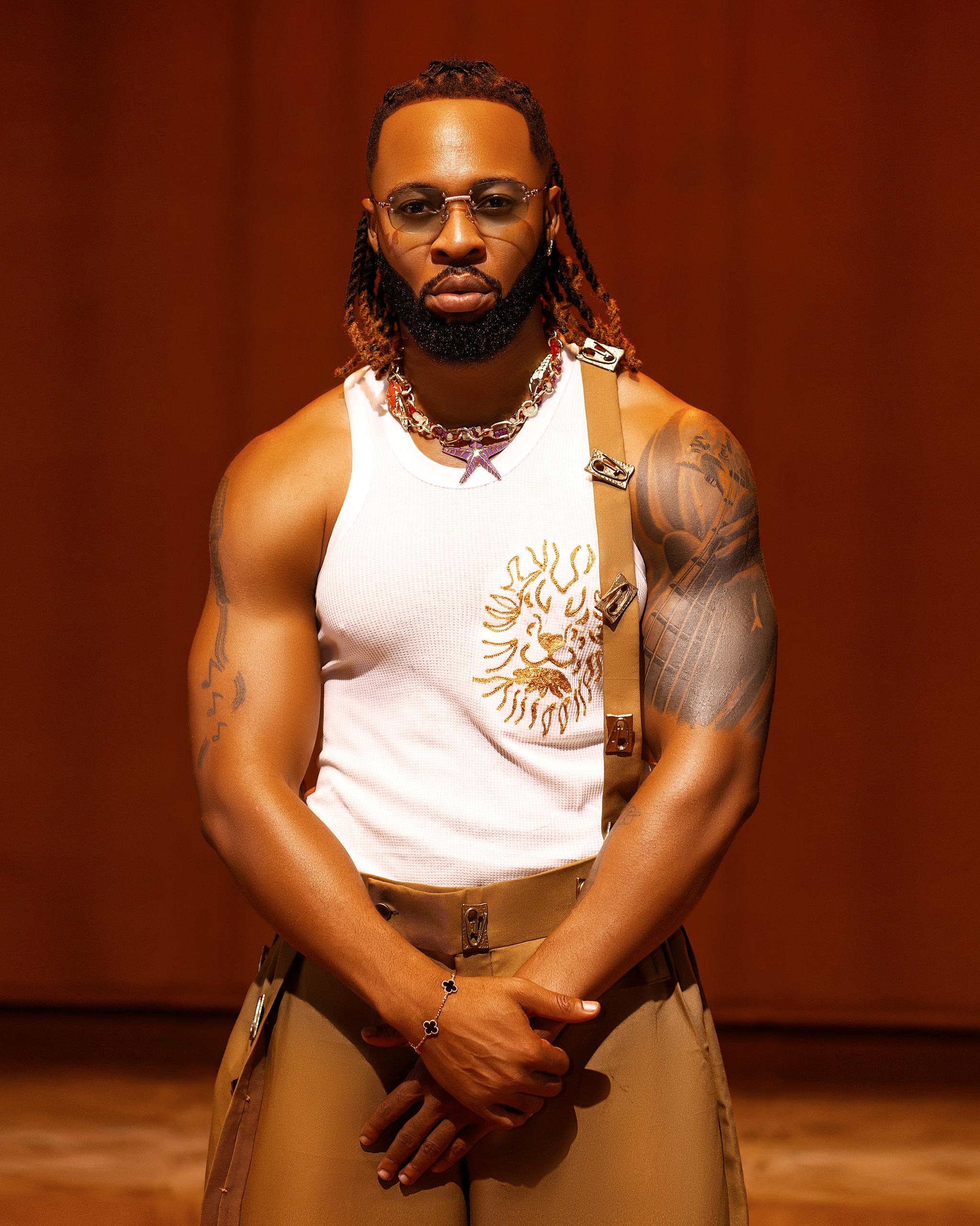
Flavour's Uplifted album

Fifteen years ago, something truly special dropped onto the music scene: Flavour N’abania’s second album, Uplifted. This was a first showcase of his talent. With powerful vocals, masterful highlife production, and a deep connection to his cultural roots, Uplifted solidified Flavour’s reputation as a gifted artist. 

At the time of its release, Uplifted smashed through borders and cultural divides, all thanks to Flavour’s deep commitment to celebrating his Nigerian roots, especially his Igbo heritage. This powerful connection to his culture has made him a major force, not just in Nigeria, particularly in the East, but also among the Igbo community dotted around the world.

The sheer success of Flavour’s cultural expression is highlighted by Spotify data from Uplifted and his other tracks. Even though his songs are deeply rooted in his culture and often sung in Igbo, they’re getting massive plays all over the globe.

Uplifted itself has stayed a big deal on streaming platforms, with its standout tracks racking up some serious numbers. Among the most-streamed hits from the Uplifted album are Ashawo Remix, Adamma, and Oyi (I dey Catch Cold). These tracks, along with other timeless fan favourites like Time To Party, Nwa Baby (Ashawo Remix), and Game Changer (Dike) have all contributed significantly to Flavour’s overall streaming success, proving their lasting appeal. Reflecting on the album’s anniversary during an exclusive chat with Spotify, Flavour revealed that for him, “Adamma” truly captured the essence of Flavour from the Uplifted album era.”

From the heart of Nigeria to global playlists: Flavour’s universal pull

Flavour’s music really does have a universal pull. His songs have popped up in over 2 million user-made playlists, which shows just how much people are connecting with and sharing his tunes. And get this: in the last three years, from 2022 to 2024, Flavour’s music has seen a growth in streams, a total stream increase of 134% globally, and a 573% increase across Sub-Saharan Africa.

While 51% of his total audience is in Nigeria, his influence stretches far and wide with the USA, UK, Canada, South Africa, and France all among his top listening countries. That’s a truly global footprint, reaching across Africa, Europe, and America.

Leading Flavour’s listenership in Nigeria is a strong showing from Lagos, accounting for 38% of his Nigerian audience. The Federal Capital Territory (FCT) and Rivers State also follow closely, making up 22% and 16% respectively, together claiming 76% of his Nigerian audience. He also enjoys love in the east as two Eastern Nigerian cities, Enugu and Onitsha, break into his global top 10. Big international cities like Greater London, Johannesburg, and New York City feature prominently too. This wide geographical spread shows how his music crosses all sorts of borders.

Who’s listening? A look at Flavour’s fanbase

Flavour’s audience is diverse  with Gen Zs (18-24 year olds) as his biggest fans globally and across Sub-Saharan Africa. This strong youth appeal is vital for his long-term success. While his music celebrates women, men form the majority of his listeners globally (57%) and in Sub-Saharan Africa (63%). 

The lasting success of Uplifted highlights how digital streaming has completely changed the music industry. Platforms like Spotify have given artists like Flavour ways to connect with fans everywhere. These days, streaming data gives us a clear, numbers-based look at an artist’s reach, showing that Flavour’s cultural stories, delivered in fluent Igbo, truly resonate far beyond Nigeria’s borders.

Flavour’s strong link to his Igbo roots, seen in his music, has driven his global success, acting as a cultural bridge for Nigerian traditions. The ongoing popularity of Uplifted and his other songs on streaming platforms proves that genuine cultural expression, mixed with great artistry, ensures lasting success today. As Uplifted hits 15 years, it showcases the power of culture worldwide. 

Click to comment

Leave a Reply

Your email address will not be published. Required fields are marked *

Showbiz

Dear Fashion Designer Ready-To-Wear Masterclass Holds May 28

Published

on

Ready-To-Wear Masterclass

By Modupe Gbadeyanka

On Thursday, May 28, 2026, the highly anticipated Ready-To-Wear Masterclass, organised by Dear Fashion Designer, will take place.

This event, according to the organisers, will be live and in-person, with topics to be covered including Fashion Product Life Cycle, Manufacturing for Ready-To-Wear, Fashion Law, Marketing Strategy, Digital Literacy, and 3D Fashion Technology.

These six masterclass features will have experts dissecting the topics, with each session curated to give designers practical, real-world insights, no fluff, just the tools needed to build, scale, and sustain a fashion business in today’s fast-evolving market.

Beyond the learning, attendees will also gain access to valuable networking opportunities, connecting with industry experts and like-minded designers shaping the future of African fashion.

The first edition of the initiative was powerful and successful, with participants speaking glowingly of it.

The debut virtual session had over 200 fashion designers across Africa in attendance, sparking strong testimonials around clarity, growth, and direction.

Coming off the momentum of the Dear Fashion Designer Vision Board Retreat held in January 2026, the brand continues its mission to help designers move from ideas to execution, bridging the gap between creativity and structure in the African fashion industry.

Registration for the programme is available via the link in Sonayon Cadmus’ Instagram bio, and intending participants can get more information via  [email protected].

Continue Reading

Showbiz

Bovi Ugboma and Nomzamo Mbatha: Why These Two Stars are the Perfect Pair to Host AMVCA 12

Published

on

Bovi Ugboma and Nomzamo Mbatha

Nigeria’s Bovi Ugboma and South Africa’s Nomzamo Mbatha have been officially unveiled as co-hosts for the 12th edition of the Africa Magic Viewers’ Choice Award, set to take place on May 9, 2026, at the Eko Hotel and Suites in Lagos. This announcement serves as a bold pairing, and it makes sense. Here’s why.

They Represent the Breadth of African Entertainment

The AMVCA has always positioned itself as a continental celebration, not just a Nigerian one. Putting a West African comedian and a South African actress on the same stage reinforces that. Bovi’s comedy is rooted in everyday African life, which has built him audiences well beyond borders. Nomzamo, on the other hand, rose to prominence through the South African drama Isibaya, crossed over to Hollywood with Coming 2 America, and currently stars as Queen Nandi in Shaka iLembe, where she also serves as executive producer. Between the two of them, they cover a lot of ground.

Bovi Knows How to Work a Room

Stand-up comedy is probably the best training ground for live hosting. You have to read the room, recover from dead moments, and keep energy up for hours. Bovi has been doing that at the highest level for years. He’s described the opportunity as significant, noting the platform’s influence across the continent, and says he intends to bring energy and laughs to the ceremony while celebrating African storytelling.

Nomzamo Brings Credibility Beyond Entertainment

Off-screen, Nomzamo is a UNHCR Goodwill Ambassador, a climate advocate, and founder of the Nomzamo Lighthouse Foundation. That kind of profile adds weight to her presence on a stage that’s increasingly watched across the continent and beyond. She’s not just a famous face, she’s someone with a serious body of work and a reputation that extends outside of acting.

The Balance Between Them is Practical

Awards shows need two things from their hosts: someone to keep the energy light and moving, and someone who can anchor the more formal moments. Bovi brings sharp wit and comedic timing, while Nomzamo adds elegance and global star power.

It Fits Where African Entertainment Is Right Now

African storytelling is getting serious global attention, from streaming platforms to cinema screens, the continent’s creative industry is at a defining moment. Having two hosts who reflect different parts of that story is a reasonable way to reflect that reality on stage. The AMVCA, presented by MultiChoice, a subsidiary of Canal+, honours outstanding achievements in television, film, and digital storytelling across Nollywood and the wider African creative landscape and the hosting choice reflects exactly that ambition.

The 12th edition also introduces two new award categories: Best Indigenous Language (North Africa) and Best Indigenous Language (Central Africa), signalling a broader pan-African direction for the awards. The hosting choice fits that direction.

Bovi keeps the energy moving, Nomzamo brings the presence and credibility. Together, they cover everything an awards show of this scale needs.

Continue Reading

Showbiz

AMVCA 2026: Broadening Spotlight with New North, Central Africa Categories

Published

on

AMVCA Celebrating African Cinema

For over a decade, the Africa Magic Viewers’ Choice Awards has stood as the continent’s biggest film and television awards platform. Now, it is expanding its scope in a way that brings even more of Africa into the spotlight.

This year, two new categories have been introduced: Best Indigenous Language (North Africa) and Best Indigenous Language (Central Africa). They now sit alongside existing categories for West, East and Southern Africa, creating a full five-region structure for the first time.

This change speaks to where the AMVCA is headed, not just as an entertainment event, but as a truly pan-African platform. The languages in these new categories, including Arabic dialects, Berber, Lingala and Sango, are widely spoken across their regions. They are the languages people use in their everyday lives to tell stories, express emotions and share culture. Giving them recognition on a stage like the AMVCA matters.

Across countries like Morocco, Algeria, Tunisia, Chad, Cameroon, the Central African Republic and Congo, the film and television industries have been growing steadily, even if they do not always get continental attention. For filmmakers in these regions, being included in the AMVCA is more than just a chance to win an award. It brings visibility, credibility and a sense that their work is being seen.

There is also a cultural angle to this move. Films made in indigenous languages help keep those languages alive. By recognising these works, the AMVCA is reinforcing the idea that telling authentic stories in native languages is important and valuable.

Beyond recognition, this expansion also creates room for connection. Filmmakers from North and Central Africa now have a stronger presence on the same platform as their peers from West, East, and Southern Africa. This opens the door for collaboration, shared ideas, and creative exchange across the continent.

African cinema has always been rich in diversity, but it has not always had a single platform bringing it all together. While these two new categories will not fix everything overnight, they are a meaningful step forward.

This development comes as the 12th edition shapes up to be highly competitive. There are 32 award categories in total, including 18 decided by judges and 11 open to audience votes. There will also be special recognition awards, including Lifetime Achievement and the Trailblazer Award.

Veteran actress Joke Silva will serve as Head Judge, taking over from Femi Odugbemi.

Nominees were announced on March 29, 2026, hosted by actor Chimezie Imo. As expected, Nigerian films dominate the list. Gingerrr and The Herd lead with nine nominations each, followed by To Kill A Monkey with eight and My Father’s Shadow with seven.

Actors like Sola Sobowale, Uzor Arukwe, and Lateef Adedimeji earned nominations in multiple categories, while Genoveva Umeh received her first Best Lead Actress nomination.

At first glance, adding two categories to a list of 32 may not seem like much. But in the bigger picture, it shows a shift. The AMVCA is slowly becoming what it has always set out to be a platform that reflects the full diversity of African storytelling.

Continue Reading

Trending