Banking
CBN Directs Banks to Increase ATM Terminals to Ease Reliance on PoS
By Adedapo Adesanya
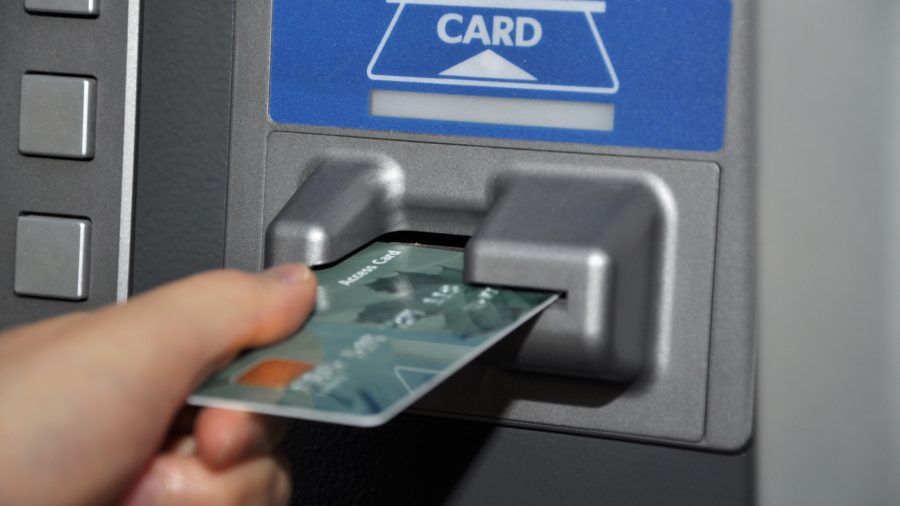
The Central Bank of Nigeria (CBN) has introduced new minimum standards for Automated Teller Machines (ATMs) across the country as part of efforts to make more cash points available and reduce the growing reliance on Point-of-Sale (PoS) terminals.
The move, contained in a draft circular titled Exposure of the Draft Guidelines on the Operations of Automated Teller Machines (ATMs) in Nigeria, build up on previous regulations and is aimed at improving accessibility, security, and consumer protection in ATM operations.
The directive comes amid a sharp increase in the use of PoS terminals across Nigeria. As of March 2025, there were about 8.3 million registered PoS machines nationwide, while deployed terminals stood at 5.56 million in December 2024, a 127 per cent rise from the previous year.
The surge in PoS usage has turned merchant-based withdrawals into a major part of everyday cash transactions, but it has also come with a lot of worries.
According to the new guidelines, all card-issuing institutions must deploy at least one ATM for every 5,000 payment cards issued. The implementation will be gradual, with 30 per cent of the target to be achieved by 2026 and full compliance by 2028.
By increasing the number of ATMs nationwide, the CBN hopes to ease pressure on the PoS network, expand banking touchpoints, and strengthen confidence in the country’s payment infrastructure.
The CBN’s latest policy seeks to address this imbalance by ensuring that banks deploy more ATMs to meet public demand for easy and secure access to cash.
ATMs must be located in safe and secure environments that guarantee user confidentiality, and those installed outside buildings must be bolted to the floor.
Any deployment, relocation, or removal of ATMs will require prior written approval from the CBN.
Independent ATM Deployers (IADs) must also obtain CBN approval, fulfill licensing requirements, and show evidence of partnership with a bank responsible for cash supply.
To strengthen consumer protection, the CBN ordered that failed “on-us” transactions, those carried out on a customer’s own bank ATM, must be reversed instantly, or within 24 hours if technical issues occur.
For “not-on-us” transactions conducted on other banks’ ATMs, refunds must be completed within 48 hours.
The guidelines also mandate automatic refund mechanisms that initiate reversals without the customer or issuing bank having to raise a complaint.
The new framework also places emphasis on security. All ATMs must have cameras that record persons and activities such as card insertion and cash dispensing but must not record customer keystrokes.
They must also be equipped with anti-skimming devices to prevent card fraud. ATM encryption keys must be changed annually and cannot be used for multiple machines, while customers are allowed to change their PINs free of charge.
Furthermore, the apex bank noted that all deployers and acquirers must comply with the Payment Card Industry Data Security Standards (PCI DSS) to ensure data safety and transaction integrity.
Operationally, ATMs must remain functional with downtime not exceeding 72 consecutive hours.
The CBN also noted that where this is unavoidable, customers must be informed.
Banks are also required to ensure that cash is always available in their ATMs, and even where non-bank deployers are involved, the partner bank remains fully responsible for cash provisioning.
Also, each ATM must clearly display customer service contacts, charges, and fees, and provide receipts for all transactions except balance enquiries.
To enforce compliance, the CBN said it will conduct regular audits and on-site inspections to verify service quality, cash availability, and adherence to the guidelines.
All institutions must also submit monthly reports on new ATM deployments and related activities no later than the fifth day of the following month. Defaulters will face penalties and other regulatory sanctions.
The apex bank said the new measures are designed to guide ATM deployers on density requirements, enhance consumer protection, and improve access to cash through secure and reliable channels.
Banking
The Alternative Bank Opens Effurun Branch in Delta
By Modupe Gbadeyanka
One of the non-interest banks in Nigeria, The Alternative Bank (AltBank), has opened a new branch in Effurun, Delta State.
The new office will serve the Edo-Delta region and provide purposeful banking and real financial empowerment for individuals, entrepreneurs, and businesses, a statement from the firm stated.
The lender disclosed that the Effurun branch is a bold move in its mission to reshape banking in Nigeria.
The launch was graced by key dignitaries, including the Ovie of Uvwie Kingdom, Emmanuel Ekemejewa Sideso Abe I; the Chairman of Uvwie Local Government, Anthony O. Ofoni, represented his vice, Andrew Agagbo; and the Special Adviser to the Governor of Delta State on Community Development, Mr Ernest Airoboyi; amongst others.
The Divisional Head for South at The Alternative Bank, Mr Chukwuemeka Agada, emphasised the institution’s commitment to Warri and its surrounding communities.
“By establishing a presence here, we are initiating a transformation in the way banking serves the people of Delta. Our purpose-driven approach ensures that customers’ financial goals are not just met but exceeded,” he stated.
“This branch represents our pledge to empower Warri’s dynamic businesses and families, providing them with the tools to grow without compromise,” Mr Agada added.
“We understand the heartbeat of this community, and we are excited to integrate our bank into the fabric of this dynamic region,” he stated further.
On his part, the representative of the Ovie, Mr Samuel Eshenake, challenged the bank to facilitate development and employment within the Effurun community.
The Regional Head for Edo/Delta at The Alternative Bank, Mr Akanni Owolabi, embraced this challenge, pledging that the bank will work sustainably to drive local commerce.
“At The Alternative Bank, we are committed to being an active partner in the development of Effurun. We see this branch as a catalyst for creating opportunities, driving employment, and supporting the growth of local businesses.
“Our mission is to empower this community, ensuring that every step forward is one of progress, prosperity, and shared success.”
Banking
Payattitude, PAPSSCARD to Co-brand Payment Card
By Aduragbemi Omiyale
A partnership aimed to enable seamless, real-time and secure transactions for cardholders across Africa and the rest of the world has been entered into by Payattitude and PAPSSCARD, the card scheme initiative of the Pan-African Payment & Settlement System (PAPSS).
The collaboration will allow Payattitude cards issued by banks and other deposit-taking institutions to be co-branded with PAPSSCARD, Discover, Diners and Pulse for acceptance across their networks in Nigeria, Africa and worldwide.
As an initiative of the African Export-Import Bank (Afreximbank) and a key financial infrastructure supporting the African Continental Free Trade Area (AfCFTA), the PAPSSCARD scheme will facilitate instant cross-border payments in local currencies.
“This partnership reflects our commitment to cross-enterprise alliances and enabling inclusive, efficient, and borderless payments across Africa and the world
“With Payattitude, Nigerian cardholders and financial institutions can now enjoy the benefits of a Nigerian card that can be used worldwide,” a director at Payattitude, Dr Agada Apochi, said.
The acting chief executive of PAPSSCARD, Mr John Bosco Sebabi, said the aim is “to connect African payment ecosystems, reduce the cost and inefficiencies of cross-border payments, and strengthen African sovereignty over payments infrastructure.
“Collaborating with Payattitude, a key innovator in Nigeria’s payment space, represents a significant step towards a more unified African payment landscape.”
The chief executive of PAPSS, Mr Mike Ogbalu, said, “By bringing together PAPSSCARD’s robust cross-border payment capabilities with Payattitude’s leadership in the Nigerian digital payments, we are taking tangible steps toward building a single African market where individuals and businesses can transact easily and securely, both within and beyond Africa.”
Payattitude is the first-in-kind Nigerian Payment Scheme to pioneer multibank App and USSD Code *569#.
Banking
CBN Stops Special Authorisation to Withdraw Above N5m
By Adedapo Adesanya
The Central Bank of Nigeria (CBN) has revised its cash withdrawal rules, discontinuing the special authorisation previously permitting individuals to withdraw N5 million and corporates N10 million once monthly, effective January 2026.
The new set of cash-related policies are designed to reduce the cost of cash management, strengthen security, and curb money laundering risks associated with the economy’s heavy reliance on physical currency.
This was contained in a circular released on Tuesday, December 2, 2025, and signed by the Director of the Financial Policy and Regulation Department of the central bank, Ms Rita I. Sike.
The apex bank explained that previous cash policies had been introduced over the years in response to evolving circumstances. However, with time, the need has arisen to streamline these provisions to reflect present-day realities.
“These policies, issued over the years in response to evolving circumstances in cash management, sought to reduce cash usage and encourage accelerated adoption of other payment options, particularly electronic payment channels. With the effluxion of time, the need has arisen to streamline the provisions of these policies to reflect present-day realities,” the CBN stated.
So, effective January 1, 2026, individuals will be allowed to withdraw up to N500,000 weekly across all channels, while corporate entities will be limited to N5 million.
Withdrawals above these thresholds will attract excess withdrawal fees of 3 per cent for individuals and 5 per cent for corporates, with the charges shared between the CBN and the financial institutions.
Daily withdrawals from Automated Teller Machines (ATMs) will be capped at N100,000 per customer, subject to a maximum of N500,000 weekly. These transactions will count toward the cumulative weekly withdrawal limit.
The special authorisation previously permitting individuals to withdraw N5 million and corporates N10 million once monthly has been discontinued.
The CBN also confirmed that all currency denominations may now be loaded in ATMs, while the over-the-counter encashment limit for third-party cheques remains at N100,000. Such withdrawals will also form part of the weekly withdrawal limit.
Deposit Money Banks (DMBs) are required to submit monthly reports on cash withdrawals above the specified limits, as well as on cash deposits, to the relevant supervisory departments.
They must also create separate accounts to warehouse processing charges collected on excess withdrawals.
Revenue-generating accounts of federal, state, and local governments, along with accounts of microfinance banks and primary mortgage banks with commercial and non-interest banks, are exempted from the new withdrawal limits and excess withdrawal fees.
However, exemptions previously granted to embassies, diplomatic missions, and aid-donor agencies have been withdrawn.
The apex bank clarified that the circular is without prejudice to the provisions of certain earlier directives but supersedes others, as detailed in its appendices.
This is the latest move by the apex bank to strengthen the Nigerian financial ecosystem. In October, the CBN issued a directive requiring all financial institutions to submit detailed monthly reports on the activities of their Point-of-Sale (POS) agents.
In the circular signed by the Director of the CBN’s Payments System Policy Department, Mr Musa Jimoh, it was stated that the reports must include comprehensive data on the nature, value, and volume of transactions conducted by agents.
The circular also stated that POS agents are restricted to a maximum of N1.2 million per day, while individual customers are limited to N100,000 in daily transactions.
CBN said these limits are intended to curb misuse, enhance financial integrity, and protect consumers within the agent banking framework.
-
Feature/OPED6 years agoDavos was Different this year
-
Travel/Tourism9 years ago
Lagos Seals Western Lodge Hotel In Ikorodu
-
Showbiz3 years agoEstranged Lover Releases Videos of Empress Njamah Bathing
-
Banking7 years agoSort Codes of GTBank Branches in Nigeria
-
Economy2 years agoSubsidy Removal: CNG at N130 Per Litre Cheaper Than Petrol—IPMAN
-
Banking3 years agoFirst Bank Announces Planned Downtime
-
Banking3 years agoSort Codes of UBA Branches in Nigeria
-
Sports3 years agoHighest Paid Nigerian Footballer – How Much Do Nigerian Footballers Earn