Connect with us

Banking

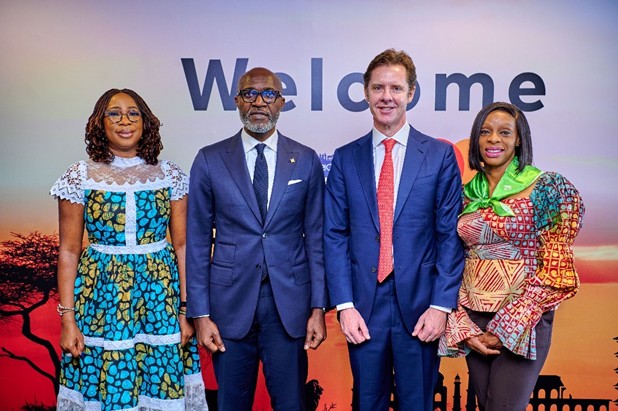
Access Bank and Mastercard: Enabling Seamless Africa-Global Payments

Published

on

Access Bank and Mastercard

In today’s interconnected world, seamless cross-border payments are vital for economic growth, business expansion, and personal empowerment. For decades, millions of Africans faced steep barriers in sending or receiving money internationally: high fees, opaque exchange rates, and long delays that made transactions uncertain and costly. Whether theyare students paying tuition abroad or traders settling import bills and families depending on remittances, these challenges have touched every layer of society.

Africa’s fragmented payments landscape, marked by multiple currencies, varying regulations, and limited banking infrastructure, has long slowed financial inclusion. In this system, a trader in Lagos might wait weeks for funds from Nairobi, while a Ghanaian student in the United States could lose a significant portion of tuition to intermediary charges. For many, especially in rural or informal sectors, formal banking channels were out of reach, forcing reliance on informal and risky alternatives.

Recognising the need for change, Access Bank, one of Africa’s largest and most innovative financial institutions, has partnered MasterCard, a global payments leader, to reimagine how money moves across borders. The collaboration aims to make cross-border payments faster, cheaper, and more transparent, empowering individuals and businesses to participate more fully in the global economy.

“By combining our strengths, we can unlock new opportunities, bridge the financial divide, and create a more inclusive and prosperous future for all Africans,” says Robert Giles, Senior Advisory, Retail Banking at Access Bank.

The partnership leverages Access Bank’s extensive African footprint and its Access Africa platform alongside MasterCard’s global network, treasury infrastructure, and advanced technology, particularly through the Mastercard Move system. Together, they have built an ecosystem that finally delivers on the promise of speed, convenience, and reliability.

The solution is designed to be inclusive and versatile, allowing users to send and receive money via multiple channels: bank accounts, cards, mobile wallets, and even cash. Whether a student in Ghana paying tuition in Europe, a trader in Lagos importing goods from China, or a family in Kenya receiving remittances, cross-border transactions are now simpler and safer.

For MasterCard, the goal extends beyond expanding services; it is about deepening financial inclusion. “This partnership transforms payment experiences, extending MasterCard’s digital ecosystem to ensure millions from underserved communities can participate in the evolving digital economy,” says Mark Elliott, Mastercard’s Division President for Africa.

The alliance builds on mutual strengths, Access Bank’s deep local knowledge and MasterCard’s global reach, to create a seamless payments corridor connecting Africa to the world.

A critical element of this innovation is the technical integration led by Fable Fintech, a MasterCard Express Partner under the Move Programme. Integrating Access Bank’s operations across multiple African markets was a massive undertaking, given diverse currencies and regulatory frameworks. The result is a unified cross-border payment experience, reducing complexity and delays.

“We were fortunate to be the fulcrum of the seamless multi-country integration of one of Africa’s largest banks using MasterCard’s cross-border assets,” a Fable Fintech representative noted. The platform now supports real-time or near-real-time transactions, offering resilience, scalability, and strong fraud protection.

Apart from technology, this partnership signals a paradigm shift, from dependency to empowerment, from financial fragmentation to unity. By democratising access to affordable and transparent payments, Access Bank and MasterCard are enabling millions of Africans to engage in international trade, education, and family support. The impact is tangible: faster transactions, lower costs, and increased financial inclusion.

Already, the ripple effects are visible. Informal traders in Kigali now use formal financial channels instead of risky agents. SMEs in Nairobi can settle invoices with international clients more predictably. Families in Accra receive remittances with less worry about lost payments, while students overseas manage tuition with ease. Each transaction strengthens Africa’s participation in global commerce.

The partnership also prioritises financial literacy and empowerment. Recognising that technology alone isnot enough, Access Bank and MasterCard are educating users on digital payments, security, and the benefits of financial inclusion, particularly in underserved communities where awareness gaps remain.

The collaboration aligns with broader socio-economic goals such as job creation, poverty reduction, and gender inclusion. By expanding access to finance, it empowers women entrepreneurs, youth, and small businesses to thrive. A woman running a rural enterprise can now receive payments from clients abroad and reinvest in her community; a young professional can more easily fund studies or start a venture. The result is a more inclusive and resilient African economy.

This initiative also complements Access Bank’s wider sustainability agenda, seen in projects like the Access Clean Water Initiative, which integrates financial inclusion with social impact. The Bank’s approach underscores that responsible banking and profitability can go hand in hand.

Access Bank and MasterCard are looking at scaling their innovation, embrace emerging technologies, and deepen collaborations with governments and development partners to expand access even further. As Africa’s economies evolve, agile and secure payment systems will be essential to sustaining growth.

The partnership stands as example of what is possible when business, technology, and purpose converge. By harnessing shared vision and innovation, Access Bank and MasterCard are redefining Africa’s role in the global payments ecosystem, breaking down financial barriers and enabling millions to connect, trade, and thrive across borders.


Banking

The Alternative Bank Opens Effurun Branch in Delta

Published

on

The Alternative Bank Effurun

By Modupe Gbadeyanka

One of the non-interest banks in Nigeria, The Alternative Bank (AltBank), has opened a new branch in Effurun, Delta State.

The new office will serve the Edo-Delta region and provide purposeful banking and real financial empowerment for individuals, entrepreneurs, and businesses, a statement from the firm stated.

The lender disclosed that the Effurun branch is a bold move in its mission to reshape banking in Nigeria.

The launch was graced by key dignitaries, including the Ovie of Uvwie Kingdom, Emmanuel Ekemejewa Sideso Abe I; the Chairman of Uvwie Local Government, Anthony O. Ofoni, represented his vice, Andrew Agagbo; and the Special Adviser to the Governor of Delta State on Community Development, Mr Ernest Airoboyi; amongst others.

The Divisional Head for South at The Alternative Bank, Mr Chukwuemeka Agada, emphasised the institution’s commitment to Warri and its surrounding communities.

“By establishing a presence here, we are initiating a transformation in the way banking serves the people of Delta. Our purpose-driven approach ensures that customers’ financial goals are not just met but exceeded,” he stated.

“This branch represents our pledge to empower Warri’s dynamic businesses and families, providing them with the tools to grow without compromise,” Mr Agada added.

“We understand the heartbeat of this community, and we are excited to integrate our bank into the fabric of this dynamic region,” he stated further.

On his part, the representative of the Ovie, Mr Samuel Eshenake, challenged the bank to facilitate development and employment within the Effurun community.

The Regional Head for Edo/Delta at The Alternative Bank, Mr Akanni Owolabi, embraced this challenge, pledging that the bank will work sustainably to drive local commerce.

“At The Alternative Bank, we are committed to being an active partner in the development of Effurun. We see this branch as a catalyst for creating opportunities, driving employment, and supporting the growth of local businesses.

“Our mission is to empower this community, ensuring that every step forward is one of progress, prosperity, and shared success.”

Continue Reading

Banking

Payattitude, PAPSSCARD to Co-brand Payment Card

Published

on

Payattitude PAPSSCARD Payment Card

By Aduragbemi Omiyale

A partnership aimed to enable seamless, real-time and secure transactions for cardholders across Africa and the rest of the world has been entered into by Payattitude and PAPSSCARD, the card scheme initiative of the Pan-African Payment & Settlement System (PAPSS).

The collaboration will allow Payattitude cards issued by banks and other deposit-taking institutions to be co-branded with PAPSSCARD, Discover, Diners and Pulse for acceptance across their networks in Nigeria, Africa and worldwide.

As an initiative of the African Export-Import Bank (Afreximbank) and a key financial infrastructure supporting the African Continental Free Trade Area (AfCFTA), the PAPSSCARD scheme will facilitate instant cross-border payments in local currencies.

“This partnership reflects our commitment to cross-enterprise alliances and enabling inclusive, efficient, and borderless payments across Africa and the world

“With Payattitude, Nigerian cardholders and financial institutions can now enjoy the benefits of a Nigerian card that can be used worldwide,” a director at Payattitude, Dr Agada Apochi, said.

The acting chief executive of PAPSSCARD, Mr John Bosco Sebabi, said the aim is “to connect African payment ecosystems, reduce the cost and inefficiencies of cross-border payments, and strengthen African sovereignty over payments infrastructure.

“Collaborating with Payattitude, a key innovator in Nigeria’s payment space, represents a significant step towards a more unified African payment landscape.”

The chief executive of PAPSS, Mr Mike Ogbalu, said, “By bringing together PAPSSCARD’s robust cross-border payment capabilities with Payattitude’s leadership in the Nigerian digital payments, we are taking tangible steps toward building a single African market where individuals and businesses can transact easily and securely, both within and beyond Africa.”

Payattitude is the first-in-kind Nigerian Payment Scheme to pioneer multibank App and USSD Code *569#.

Continue Reading

Banking

CBN Stops Special Authorisation to Withdraw Above N5m

Published

on

cash deposits

By Adedapo Adesanya

The Central Bank of Nigeria (CBN) has revised its cash withdrawal rules, discontinuing the special authorisation previously permitting individuals to withdraw N5 million and corporates N10 million once monthly, effective January 2026.

The new set of cash-related policies are designed to reduce the cost of cash management, strengthen security, and curb money laundering risks associated with the economy’s heavy reliance on physical currency.

This was contained in a circular released on Tuesday, December 2, 2025, and signed by the Director of the Financial Policy and Regulation Department of the central bank, Ms Rita I. Sike.

The apex bank explained that previous cash policies had been introduced over the years in response to evolving circumstances. However, with time, the need has arisen to streamline these provisions to reflect present-day realities.

“These policies, issued over the years in response to evolving circumstances in cash management, sought to reduce cash usage and encourage accelerated adoption of other payment options, particularly electronic payment channels. With the effluxion of time, the need has arisen to streamline the provisions of these policies to reflect present-day realities,” the CBN stated.

So, effective January 1, 2026, individuals will be allowed to withdraw up to N500,000 weekly across all channels, while corporate entities will be limited to N5 million.

Withdrawals above these thresholds will attract excess withdrawal fees of 3 per cent for individuals and 5 per cent for corporates, with the charges shared between the CBN and the financial institutions.

Daily withdrawals from Automated Teller Machines (ATMs) will be capped at N100,000 per customer, subject to a maximum of N500,000 weekly. These transactions will count toward the cumulative weekly withdrawal limit.

The special authorisation previously permitting individuals to withdraw N5 million and corporates N10 million once monthly has been discontinued.

The CBN also confirmed that all currency denominations may now be loaded in ATMs, while the over-the-counter encashment limit for third-party cheques remains at N100,000. Such withdrawals will also form part of the weekly withdrawal limit.

Deposit Money Banks (DMBs) are required to submit monthly reports on cash withdrawals above the specified limits, as well as on cash deposits, to the relevant supervisory departments.

They must also create separate accounts to warehouse processing charges collected on excess withdrawals.

Revenue-generating accounts of federal, state, and local governments, along with accounts of microfinance banks and primary mortgage banks with commercial and non-interest banks, are exempted from the new withdrawal limits and excess withdrawal fees.

However, exemptions previously granted to embassies, diplomatic missions, and aid-donor agencies have been withdrawn.

The apex bank clarified that the circular is without prejudice to the provisions of certain earlier directives but supersedes others, as detailed in its appendices.

This is the latest move by the apex bank to strengthen the Nigerian financial ecosystem. In October, the CBN issued a directive requiring all financial institutions to submit detailed monthly reports on the activities of their Point-of-Sale (POS) agents.

In the circular signed by the Director of the CBN’s Payments System Policy Department, Mr Musa Jimoh, it was stated that the reports must include comprehensive data on the nature, value, and volume of transactions conducted by agents.

The circular also stated that POS agents are restricted to a maximum of N1.2 million per day, while individual customers are limited to N100,000 in daily transactions.

CBN said these limits are intended to curb misuse, enhance financial integrity, and protect consumers within the agent banking framework.

Continue Reading

Trending