Sports
Football Hooligans: The Culture of Fans and Streets
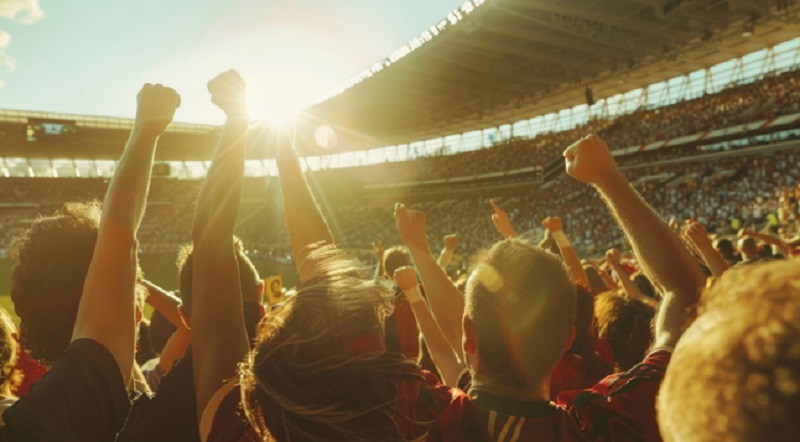
In Europe, sport is everywhere. On match days, you see fans flood the streets around the stadium. They come from nearby towns or other regions. You meet groups of friends stopping at cafés, buying snacks, and talking loudly. If you walk down these streets, you feel the energy long before kickoff. Sport shapes daily routines, not just the games.
Football pulls the biggest crowds. You can barely find a seat in large stadiums. Streets near stadiums fill with fans, drums, flags, and chants. You notice how alive the area becomes hours before the first whistle. Deep understanding and legit betting service have allowed fans not only to have fun but also to predict outcomes and profit from them. But how did football fan culture emerge? How did Europe’s most popular sport develop a “dark side”?
The History of a Phenomenon: British Ghetto and Glittering Stadiums
Football hooliganism extends beyond stadiums and sports bars. It’s an entire ideology that originated in the UK’s working-class districts in the mid-20th century. The first fan groups came together out of a need among young people from working-class families to feel part of a group and share interests. Matches immediately became not only a celebration but also a place for self-expression.
The economic crisis of the 1970s forced new members into the fan groups. The first “firms” developed their own style – tracksuits, hoodies, and sneakers became a way to conceal their identity. It was also during this time that the first clashes with other groups and the concept of “honor” for the home club began.
In the 1980s, football hooliganism grew fast across the UK. You could spot rival fan groups ready to clash at almost every match. Newspapers and TV reported fights constantly. If you walked near a stadium, the tension hit you immediately. Police watched the groups closely and followed troublemakers moving between cities.
By the 1990s, hooliganism was no longer just a UK problem. Similar fan culture appeared in Italy, Germany, and other parts of Europe, spreading across borders. Italy developed the ultras movement, Germany saw organized fan stands take shape in the Bundesliga, and similar patterns appeared in other countries, turning hooliganism into a continental phenomenon.
Today, media and cinema have mainstreamed the phenomenon and transformed hooliganism into a more peaceful medium. The new aesthetic hasn’t deprived fans of their identity, but it has civilized their chants, rules, and behavior. This fanatical passion, uniqueness, and diversity of concepts have made sports fans loyal and popular worldwide.
Beyond the Field: How Hooligans Became Part of Football
For hooligans, football isn’t just a favorite sport, but a part of their identity. Club communities have become their “second home,” and chants and flags have become new national symbols. The most interesting part is these concepts of football fans:
- A match is like an arena. Matches are about more than just the teams. Fans compete for the best spots in the stands, the most visible banners, and who can make the most noise. In England, these rivalries can feel as intense as the game on the pitch itself.
- Symbolism and rituals. Hooligans always carry drums and smoke flares, and use chants, flags, and clothing with symbols. This is their way of expressing support and their own potential through their favorite hobby. Casual sportswear has also become a powerful cultural asset: the style has remained trendy among the masses for over 30 years.
- Fans have a real impact on the game. Players, coaches, and even well-known football stars often say that the energy and support from the crowd can make a difference, especially in tough matches. Hooligan behavior has changed the structure of matches, shifting the priority to safety.
- Contradiction and uniqueness. It’s difficult to give an objective assessment of this phenomenon: on the one hand, many football fans promote violence, on the other hand, they expose sensitive social issues.
Hooligans change how fans experience the game. On match days, streets and stadiums are crowded as people go to support their team. Their presence shows the level of commitment some fans have to their club.
Hooligans Around the World
Fan culture looks different in every country, shaped by local history, social habits, and the way communities connect to football. We have already discussed casuals from England. How do their “colleagues” from other countries differ?
Italian ultras vividly reflect the locals’ temperament. For them, football is a spectacular show in the stands, combining pyrotechnics, banners, and songs. Here, the phenomenon carries a stronger political agenda – these fans are almost always outspoken right- or left-wingers, and they don’t hesitate to discuss social issues and advocate for civil rights.
Eastern Europe is a region where fanaticism is also tied to national identity. Local fans strive to assert themselves within the community and emphasize their love for their country. South America, on the other hand, is about passion, dancing, and almost folkloric elements. Here, football is loved since childhood and watched with families. At the same time, some fans are intertwined with crime and politics, further highlighting the phenomenon’s unique duality.
Football hooliganism has become a way to demonstrate one’s belonging to something bigger through their favorite club. The concept’s primary appeal lies in its flexibility – it constantly changes depending on generation, historical stage, economic level, and even location. This has made football a tremendous cultural asset worldwide.
Sports
Sports Viewing is Becoming More Social and Here’s Why
Sports viewing has quietly changed its personality in Nigeria. It is no longer just about sitting in front of a TV and following a match from start to finish. It has become something more layered, constant, and social, stretching across both physical spaces and digital platforms.
From viewing centres and barbershops to X feeds and WhatsApp groups, football is no longer watched in isolation; it is experienced collectively, even when people are not in the same room. Platforms like GOtv have also supported this shift by making football more accessible and consistent, helping fans stay plugged into live matches and highlights without missing key moments. But beyond access, what has truly changed is the culture around the game and how conversations now live far beyond the screen.
There was a time when football talk had a clear beginning and end. You watched the match at a viewing centre, a neighbour’s house, or wherever there was a working screen, and that was where everything happened. The arguments, celebrations, and banter stayed in that space. Once you left, the conversation faded until the next match day. Football was social, but it was also limited by time and place.
Then social media changed everything. What used to stay in viewing centres now spills across the entire day. A goal is no longer just a moment in a match; it becomes a tweet, a meme, a hot take, and a debate within seconds. Rival fans respond instantly, stats are shared, and the same incident is argued from multiple angles across different platforms. Football didn’t just become more visible; it became continuous.
Viewing centres used to be the main social hub for football culture. That was where strangers bonded, arguments felt personal, and every match had a shared energy. Today, that barrier is gone. Football is no longer tied to a location. Someone is watching highlights in traffic, another is following updates at work, while others are debating online while the match is still ongoing. The reaction now runs alongside the game itself.
This shift has changed the emotional rhythm of football. The conversation no longer ends at full-time. It continues through post-match analysis, memes, tactical debates, and recycled clips that keep rivalries alive long after the final whistle. Football has become less of a fixed event and more of a constant social stream.
Ultimately, the desire behind watching football has not changed. People still want to celebrate, argue, and feel part of something bigger. What has changed is where that experience happens. It is no longer confined to one screen or one space; it now exists everywhere at once.
That is why sports viewing today feels more social than ever, not because the matches have changed, but because the conversation around them never stops.
To make football’s biggest moment even more accessible, MultiChoice has introduced special World Cup bundle offers across DStv and GOtv ahead of the 2026 FIFA World Cup in the US, Mexico, and Canada. From June 1, 2026, new customers can get a full decoder kit plus a one-month subscription for ₦15,000 on either platform. The offer is aimed at helping more Nigerians stay connected to the tournament, which will feature 48 teams and 104 matches. Through SuperSport, viewers will enjoy full live coverage of all games, dedicated 24-hour World Cup channels, expert analysis, highlights, multilingual commentary including pidgin, and flexible viewing options on TV and streaming, so fans don’t miss any moment of the action.
Sports
Multichoice Rolls Out Special DStv, GOtv World Cup Offers
MultiChoice, a CANAL+ company, has introduced special World Cup bundle offers on DStv and GOtv to give more Nigerians access to football’s biggest event.
From Monday, June 1, 2026, new DStv customers can purchase an HD decoder, dish kit and one-month DStv Yanga subscription for N15,000, while new GOtv customers can get a GOtv decoder, antenna and one-month GOtv Jolli subscription for N15,000.
The offer comes as anticipation builds for the 2026 FIFA World Cup, which will be hosted by the United States, Mexico and Canada. The tournament, the biggest in FIFA World Cup history, will feature 48 national teams, including 10 African nations, competing across 104 matches over 39 days.
Commenting on the offer, Chief Executive Officer of MultiChoice Nigeria, Kemi Omotosho, said the company is focused on making the FIFA World Cup experience more accessible to football fans across the country.
“The FIFA World Cup is more than just a tournament – it’s a shared global moment. Our goal is to ensure that fans in Nigeria can experience every goal, every story and every unforgettable moment as it happens. Through our special World Cup bundle offers, we are making it more affordable for customers to get connected ahead of the tournament,” she stated.
As Africa’s home of football, SuperSport on DStv will deliver comprehensive, round-the-clock coverage of the tournament. Viewers will enjoy live broadcasts of all 104 FIFA World Cup matches, four dedicated 24-hour World Cup channels and a bonus pop-up channel showcasing the best moments in World Cup history. To make navigation easier, selected SuperSport channels will be renamed for the duration of the tournament, ensuring customers can easily find and follow the action.
Beyond the live matches, viewers will enjoy a rich slate of FIFA World Cup programming, including match highlights, expert analysis, exclusive tournament magazine shows, African football stories and behind-the-scenes content.
The World Cup coverage on SuperSport will also feature multiple language commentary options, including pidgin delivered through a distinct Pan-African lens, featuring top local commentators.
Customers will also have the flexibility to watch the tournament their way through Live TV, Catch Up, replays and on DStv Stream, ensuring they never miss a moment of the action, whether at home or on the move.
The promotional offer is available for a limited period, giving football fans an affordable way to get connected ahead of the world’s biggest football spectacle.
Sports
Experience Real PH Bingo Online on GameZone
PH Bingo Online continues to be popular among Filipino players because it offers a gaming format that does not depend on complicated systems or difficult learning curves.
Many online games today require players to memorize controls, study layered mechanics, or spend time adjusting to unfamiliar interfaces.
Bingo works differently. The structure stays direct from the beginning, allowing users to understand the flow almost immediately after joining a session.
This simplicity reflects how bingo developed in the Philippines long before online platforms became common.
Community gatherings, local fiestas, and perya spaces regularly included bingo because almost anyone could participate without extensive instruction.
People often joined after briefly observing the game, making it accessible across different age groups and experience levels.
Digital platforms have modernized the operational side of bingo while preserving the same familiar gameplay structure.
Instead of manually calling numbers and checking cards, software systems now automate number generation, monitor active entries, and verify winning combinations in real time.
These changes improve efficiency without changing the core identity of the game.
As online gaming becomes more organized, players also pay closer attention to platform quality. Fast navigation, stable systems, and secure account management now influence how users evaluate their overall experience.
For many players, accessibility alone is no longer enough. They also want platforms that maintain consistency behind the scenes.
GameZone supports PH Bingo Online through a structured digital environment focused on usability and organized gameplay flow.
By combining automated systems with easy-to-follow mechanics, the platform allows players to experience bingo in a format that remains approachable while adapting to modern online gaming standards.
Familiar Peryagame Concepts Adapted by PH Bingo Online
Many online bingo platforms in the Philippines still reflect the influence of traditional peryagame entertainment. Perya games became popular because they encouraged spontaneous participation.
Most formats relied on visible mechanics and quick understanding instead of detailed tutorials or advanced gaming knowledge. People nearby could easily follow the action after watching only a few rounds.
Bingo naturally became associated with this style of entertainment because the gameplay emphasized recognizable progression and simple participation. Players only needed to monitor the called numbers while completing patterns on their cards.
The format remained approachable whether someone was playing for the first time or already familiar with the mechanics.
Modern digital platforms continue using this same accessibility-focused approach.
Rather than transforming bingo into a highly technical game, developers mainly improved the organization of the experience through automated systems and cleaner interfaces.
The result allows users to participate quickly while still recognizing the familiar structure that made bingo popular in physical venues.
GameZone also includes several games inspired by traditional perya setups. Color Game follows one of the simplest formats on the platform, requiring players to choose colors before the dice determine the outcome.
The process stays easy to follow because the result depends on visible movement rather than complicated interaction.
Pinoy Drop Ball uses a similarly transparent structure. Players observe the ball as it moves through a vertical board before settling into a labeled slot. Since the entire process remains visible, anticipation develops naturally throughout the round.
By organizing bingo alongside carnival-style titles, GameZone creates a digital environment that still reflects the approachable nature of Filipino peryagame culture while improving technical organization through online systems.
Stable Regulation Helps Strengthen Player Confidence
As digital gaming platforms continue growing, many users now consider system reliability just as important as gameplay accessibility.
This shift has become more noticeable in online bingo because fairness depends heavily on accurate number generation and proper result handling.
Licensed gaming platforms rely on certified software systems that automate operational processes instead of depending on manual oversight.
Number draws, active card monitoring, and winner confirmation are processed through regulated technology designed to maintain consistency across sessions. These systems help reduce operational errors while allowing gameplay to move more efficiently.
GameZone applies these standards across multiple categories available on the platform.
Livestream-oriented titles such as PacMan’s Bingo Boom and PacMan’s Color Game combine interactive hosting with independently verified systems operating behind the scenes.
While the presentation may appear more dynamic, the technical processes responsible for determining outcomes remain regulated and software-based.
Other games available on the platform include Manny Punch and Pacquiao Fortune.
Although these titles use different gameplay formats compared to bingo, they continue operating within the same monitored digital framework involving verification standards, account protection, and responsible gaming tools.
Financial security also contributes to the overall experience. Payment services such as GCash, Maya, and QRPH-supported channels allow users to manage transactions through providers that are already widely recognized in the Philippines.
Organized deposit and withdrawal systems help create a more stable environment for players using online platforms regularly.
GameZone supports PH Bingo Online through a regulated ecosystem designed around transparency, accessibility, and structured gameplay operations.
By combining familiar entertainment formats with monitored digital systems, the platform helps maintain long-term usability for players exploring online bingo and related games.

GameZone Brings Bingo Into a Structured Online Setting
The popularity of PH Bingo Online continues to grow because the game remains easy to follow even as digital platforms become more advanced.
Players still recognize the same core mechanics that made bingo common in fiestas, community halls, and perya spaces across the Philippines, but modern systems now improve the speed and organization of the experience.
GameZone helps modernize bingo by placing it inside a regulated gaming environment that prioritizes secure systems, responsible gaming tools, and organized platform management.
Alongside bingo, players can also explore livestream titles and peryagame-inspired formats that maintain similarly accessible mechanics without overwhelming users with unnecessary complexity.
As more Filipino players transition toward digital gaming platforms, organized systems and stable operations will likely continue shaping platform preference.
Through its focus on accessibility, technical reliability, and familiar gameplay structures, GameZone supports a more streamlined direction for modern online bingo experiences.
FAQs
Q: What is PH Bingo Online?
A: It refers to online bingo platforms and games designed for Filipino users.
Q: Why is bingo easy for beginners?
A: Players only need to follow the number calls and complete their respective card patterns.
Q: What is a peryagame?
A: A peryagame is a carnival-style game commonly seen during fiestas and local events.
Q: What is Color Game?
A: It is a game where players choose colors before the dice determine the winning outcome.
Q: What is Pinoy Drop Ball?
A: It is a game where a ball drops through a board before landing inside a marked slot.
Q: Why do online platforms use verification systems?
A: Verification systems help maintain fairness, security, and proper gameplay monitoring.
-
Feature/OPED6 years agoDavos was Different this year
-
Travel/Tourism10 years ago
Lagos Seals Western Lodge Hotel In Ikorodu
-
Showbiz3 years agoEstranged Lover Releases Videos of Empress Njamah Bathing
-
Banking8 years agoSort Codes of GTBank Branches in Nigeria
-
Economy3 years agoSubsidy Removal: CNG at N130 Per Litre Cheaper Than Petrol—IPMAN
-
Banking3 years agoSort Codes of UBA Branches in Nigeria
-
Banking3 years agoFirst Bank Announces Planned Downtime
-
Sports3 years agoHighest Paid Nigerian Footballer – How Much Do Nigerian Footballers Earn