Media OutReach
IAIC Launches First Multi-Region Study on Ageing and Ageing Well, Advancing Global Collaboration and Research in Integrated Care


- First-of-its-kind multi-region study on the perceptions of ageing and ageing well officially launched at the Intercontinental Alliance for Integrated Care (IAIC) gala dinner.
- The study featured insights from five member regions to advance support for ageing.
- The Alliance welcomed seven new members, strengthened its local chapters and handed over 2026 hosting duties to the United Kingdom.
SINGAPORE – Media OutReach Newswire – 21 November 2025 – The Intercontinental Alliance for Integrated Care (IAIC), hosted by the Singapore University of Social Sciences (SUSS), today launched its first-ever multi-region study on the perceptions of ageing and ageing well. Now in its second edition, the Alliance’s annual flagship event IAIC 2025 brought together partners from across Asia, Europe, and North America, including new members from Estonia, India, Japan, Malaysia, South Korea, and Chinese Taipei, to advance new knowledge, partnerships and innovations shaping the future of ageing and integrated care.
Launch of the IAIC Multi-Region Study Report
Led by SUSS and co-developed with IAIC members, the multi-region study – A Study on Perceptions of Ageing and Ageing Well: Exploring Older Adults’ Experiences and Coping Strategies Across Regions – draws insights from five regions: Singapore, Canada, Mainland China, Hong Kong SAR and the United Kingdom. It examines how older adults across different societies understand ageing, navigate later-life transitions and define what it means to age well.
Placing the lived experiences of older adults at its core, the study offers a clearer picture of what ageing well means to them and underscores the role of families, communities and care systems in shaping those experiences. It provides a cross-cultural view of older adults’ aspirations and coping strategies, revealing how social, economic and policy contexts influence their day-to-day realities. Insights from Brunei and Thailand will be incorporated in the next phase and shared progressively.
Across regions, the findings highlight a common theme: ageing is shaped not only by biological changes, but also by social and cultural contexts. A recurring paradox emerges – despite physical decline, many older adults continue to experience purpose, connection and well-being.
Singapore Chapter: Local Insights into Ageing Well
Within this broader landscape, the Singapore chapter adds depth to how these themes manifest locally, drawing on responses from about 1,000 survey respondents and 15 in-depth interviews. Several key insights emerged on how older Singaporeans understand and experience ageing. For instance:
- Women aged 75–84 placed higher value on family and close relationships than men of the same age bracket, underscoring the central role of social bonds. Staying socially connected helps them remain emotionally engaged and supported by strong community ties. Men, by contrast, are more vulnerable to isolation after retirement, particularly when their identities were closely tied to work.
- The study also highlighted “mastery” – the belief that one can still influence the course of one’s life – as a strong predictor of successful ageing. Older adults with a strong sense of mastery tend to stay socially connected, feel more satisfied, and continue pursuing activities that bring purpose and joy. They remain active not simply because they are physically stronger, but because they believe their actions continue to matter.
For the full report, please visit https://suss.to/iaic2025-report.
Associate Professor Justina Tan, Vice President of Strategic Partnership and Engagement at SUSS and Principal Investigator for the study, shared “As Singapore becomes ‘super-aged’ next year, the multi-region study aims to provide us with invaluable insights to guide more targeted policies and interventions. By understanding the unique needs and aspirations of our older adults, we can design programmes that not only preserve autonomy and foster meaningful conversations but also ensure that support is tailored to help every senior thrive in their own way.”
Following today’s launch, the IAIC partners will move into the implementation phase, where each country will adapt insights into on-the-ground pilot initiatives within their local care systems.
IAIC 2025: Beyond Borders, Beyond Age
Themed “Beyond Borders, Beyond Age: Shaping Tomorrow’s Tapestry of Integrated Care”, IAIC 2025 convened like-minded partners such as academic institutions, care providers, policymakers, and innovators across regions to shape care systems that transcend geographical, generational, and institutional boundaries.
Across the two-day programme, delegates took part in discussions, learning journeys and collaborative sessions focused on integrated care and healthy ageing. A key highlight was a visit to TOUCHpoint@AMK 433 this morning, where participants learned about Singapore’s community-based approaches to ageing well and supporting seniors to age in place.
The event culminated in a gala dinner at Conrad Singapore Marina Bay, where Guest-of-Honour, Mdm Halimah Yacob, Chancellor, SUSS, witnessed the official launch of the multi-region study together with IAIC representatives from Singapore, Canada, Mainland China and the United Kingdom.
In her address, Mdm Halimah said “Ageing is not a burden to be managed. It is a season of life to be respected, supported, and reimagined, where every person, regardless of age, continues to have value, voice, and belonging.” She added, “As we look to the future, the challenge of ageing will test every society’s capacity for compassion, creativity, and courage. It also offers a profound opportunity to redefine what it means to live and age well, and to reaffirm our shared humanity.”
Alliance Expansion and New Local Chapters
IAIC 2025 also marked a significant milestone for the Alliance with the addition of seven new member institutions, welcomed through a symbolic handprint ceremony. Led by SUSS, the IAIC is supported by 12 founding members across Asia, Europe and North America, each contributing expertise in ageing and integrated care.
This year, the Alliance expanded its network with the following new members:
- Jeonbuk National University (South Korea)
- Center for Sports Science and Healthy Aging, National Cheng Kung University (Chinese Taipei)
- National Mental Health and Welfare Commission (South Korea)
- Public Health Foundation India (India)
- Tallinn University (Estonia)
- Teikyo University (Japan)
- Universiti Pendidikan Sultan Idris (Malaysia)
SUSS also formalised two new Local Chapter Memoranda of Understanding (MOUs) with Presbyterian Community Social Services Limited and Singapore Hospice Council. These partnerships seek to strengthen community-based initiatives, pilot projects and workforce development in integrated care, while advancing applied research and fostering innovation to better serve community needs.
Intergenerational Fashion Runway Featuring Seniors and Young Designers
A highlight of the gala dinner was a vibrant intergenerational fashion showcase co-created by seniors from Lions Befrienders and student-designers from the Nanyang Academy of Fine Arts (NAFA), University of the Arts Singapore (UAS), in partnership with SUSS.
Themed “Tapestry of Style: Weaving Generations Together through Fashion,” the showcase brought together lived experience, creativity and technical skill as seniors and students co-designed each ensemble. It celebrated seniors as active creators, spotlighting their stories, perspectives and style while demonstrating the value of intergenerational collaboration.
Passing the Baton
IAIC 2025 drew to a meaningful close with a symbolic handover ceremony, where SUSS formally passed hosting duties to Royal Holloway, University of London, which will host IAIC 2026. After two years of stewardship in Singapore, the Alliance now continues its journey of learning and collaboration beyond Singapore’s shores.
The handover highlighted IAIC’s rotating stewardship model and its commitment to continuity, shared leadership and cross-border knowledge exchange. It reaffirmed the Alliance’s vision of a global community working together to advance integrated care through partnership, research and collective progress.
Professor Tan Tai Yong, President, SUSS, said “The Intercontinental Alliance for Integrated Care reinforces a collective commitment across regions to rethinking how societies can better support ageing populations. SUSS is proud to take the lead in convening this year’s Alliance and in spearheading the multi-region study with our partners. The intergenerational elements woven into this year’s edition – from the study’s findings to the collaborative fashion showcase with Lions Befrienders and the Nanyang Academy of Fine Arts – remind us that strengthening care systems requires the voices, creativity and participation of all ages.”
Hashtag: #IAIC2025 #SUSS #HealthyAgeing #IntegratedCare #ActiveAgeing #SeniorsWellbeing #PublicHealth #SocialCare #Gerontology #AgeFriendlySociety
https://www.suss.edu.sg/ https://www.linkedin.com/school/singapore-university-of-social-sciences/
The issuer is solely responsible for the content of this announcement.
About Singapore University of Social Sciences
At SUSS, we have a singular vision to be a university that inspires learning for life and impacts lives, regardless of age, background or life path. Our university is a vibrant tapestry of ages and experiences. From recent JC and polytechnic graduates to seasoned professionals, parents seeking new horizons and individuals redefining their careers in their golden years—our diverse community comes together for one common goal: to empower themselves with an education that impacts lives and society.
We offer more than 110 undergraduate and graduate programmes, available in full- and part-time study modes which are flexible, modular and interdisciplinary, catering to both fresh school leavers and adult learners. SUSS also offers a broad range of continuing education and training modular courses for the professional skills upgrading of Singapore’s workforce.
Our programmes and courses are offered by our six schools:
- S R Nathan School of Human Development
- School of Business
- School of Humanities & Behavioural Sciences
- School of Law
- School of Science & Technology
- School of Social Work & Social Development
Since becoming an Autonomous University in 2017, over 25,000 graduates have experienced our unique brand of education. More than 19,000 students are currently pursuing their full- and part-time studies with us.
The Institute for Adult Learning (IAL), as part of SUSS, leads in the field of research on adult and workplace learning and training of adult educators to build capabilities of the training and adult education sector in Singapore and beyond.
For more information about SUSS, please visit www.suss.edu.sg.



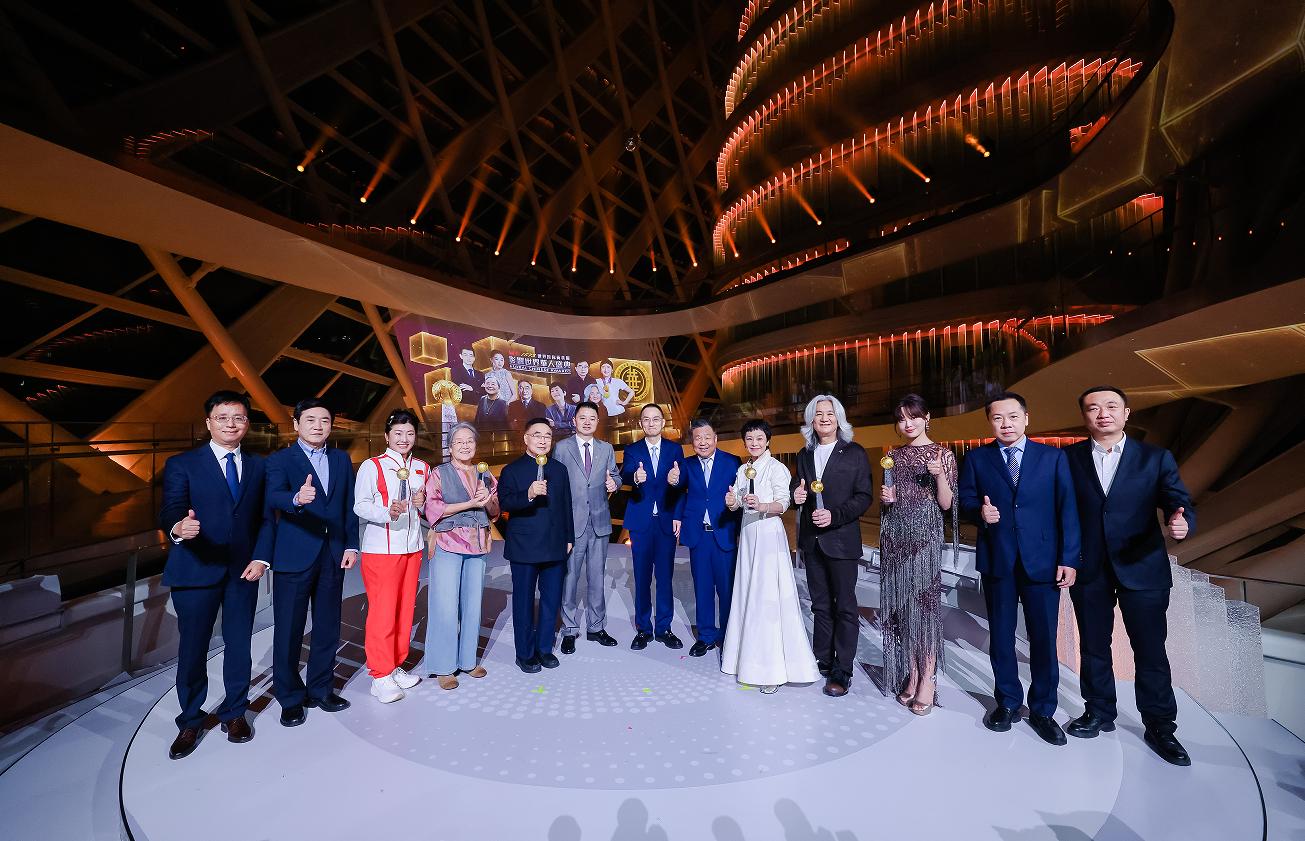
At this year’s awards ceremony, Academician Zhang Boli of the Chinese Academy of Engineering received the Global Chinese Lifetime Achievement Award, while actress Sylvia Chang received the Global Chinese Special Tribute Award. Academician Pan Jianwei of the Chinese Academy of Sciences, Lu Chaoyang, Chair Professor at the University of Science and Technology of China, picture-book illustrator Cai Gao, Chinese freestyle skier Xu Mengtao, Gao Du, professor at the Beijing Dance Academy, and actress Xin Zhilei received the Global Chinese Award.
In his speech, Xu Wei, Chairman of the Board and CEO of Phoenix TV, said: “Each generation of Chinese people has its own responsibilities. The older generation worked hard with their roots in their homeland, while the younger generation embraces innovation and the world, becoming connectors between different cultures.” Phoenix TV will continue to serve as an on-the-ground reporter of major global events, an international storyteller of Chinese culture, and a platform builder for international exchange, enabling audiences around the world to see more of the vibrant and diverse achievements of Chinese people.
The tribute section of the ceremony opened with an immersive children’s picture-book theatrical performance based on classic works including The Story of the Peach Blossom Spring and Bao’er. Both works were created by Cai Gao, who received the Hans Christian Andersen Award for Illustration in April this year. During the ceremony, the host recalled the children’s song Cai sang at the Andersen Award ceremony, prompting her to smile and sing “The Cuckoo” once again.
Upon receiving the Global Chinese Award, Cai Gao said that the splendid and outstanding artistic heritage of China has been a source of inspiration for her work, and that she has a deep love for the culture of this land. Seeing so many Chinese people achieve remarkable accomplishments in different fields has also given her spiritual strength. Quoting the phrase, “As long as life goes on, the struggle continues,” she encouraged herself to keep creating with passion and curiosity. “Life and creation require dedication and perseverance. I am willing to devote myself to them, as I always have.”
Joining the ceremony via video link, Lu Chaoyang shared his joy and said that the honor belongs to all Chinese researchers who have climbed, generation after generation, along the long and steep road of quantum science. Looking to the future, he offered this message: “The quantum world is very small, so small that it cannot be seen with the naked eye; but China’s dreams in science and technology are immense. Through fundamental innovation, we should illuminate a farther future for human civilization.”
In her acceptance speech, Xin Zhilei said she particularly liked the phrase “YOU BRING CHARM TO THE WORLD.” “Everyone is a unique ray of light in this world. Through our efforts and down-to-earth dedication, we each make our own small contribution to the beauty of the world. As an actress, what I can do is put my heart into every role and bring to the world a little bit of the unique color that belongs to me.” Lu Yang, director of Brotherhood of Blades II: The Infernal Battlefield, also sent his congratulations via video, expressing hope for continued collaboration and for the creation of more outstanding Chinese-language stories.
“If the dance steps of a people disappear, that chapter of history will also lose its voice.” Over the past 50 years, Gao Du and his team have traveled across more than 20 provinces and autonomous regions throughout China, venturing deep into remote mountains and visiting people’s courtyards and fireside gatherings. They learned from local communities dances that had no names, no stages and sometimes not even an audience, devoting themselves to the creation of the Chenxiang series.
Gao Du said he would continue dancing, both in the classroom and on larger stages, bringing folk dance traditions rooted in the land to the world and fostering dialogue among different cultures, so that the world can see the beauty of the East.
Wu Qingcai, Deputy Editor-in-Chief of China News Service, presented Xu Mengtao with the Global Chinese Award. Xu shared that August 13, 2026, marked exactly 24 years since she began competing in the aerials discipline of snow sports. She hopes everyone can create something extraordinary through perseverance and dedication. “In the future, I will once again stand on the starting platform and set off again. See you again at the summit.”
As one of the creators of the song Tomorrow Will Be Better, Sylvia Chang said that she and fellow Chinese-language singers hope to use music to build a bridge for peaceful communication. She expressed gratitude for being able to continue pursuing a career she loves and for having a wonderful family. “I hope to share this gratitude and these blessings with everyone.”
At the ceremony, the host recounted the eight-character motto that Academician Zhang Boli has followed throughout his life: “Uphold virtue to broaden its influence; use medical skills to serve humanity.” Now approaching 80, Zhang Boli continues to see patients at a clinic every week. When patients have difficulty walking, he takes the initiative to go downstairs and see them in their cars.
Zhang Boli said that the concepts of traditional Chinese medicine—including health preservation, wellness and preventive treatment—represent one of the best practices of “proactive health management.” Looking to the future with the compassion of a physician, he said: “Let traditional Chinese medicine benefit Chinese people around the world, and let traditional Chinese medicine benefit people everywhere. The world will be healthier because of traditional Chinese medicine.”
It is reported that the “YOU BRING CHARM TO THE WORLD — Global Chinese Awards” was initiated by Phoenix Media Group in collaboration with China News Service and numerous Chinese-language media organizations in China and overseas. Together, they select and honor outstanding Chinese people who have achieved excellence and made a global impact in different fields, helping to amplify the achievements of exceptional Chinese individuals and inspire more generations to come.
Hashtag: #PhoenixTV
The issuer is solely responsible for the content of this announcement.

Media OutReach
NINGJI Takes Centre Stage at KLCC, Strengthening Its Position as a Benchmark for Southeast Asian Expansion Through Five Key Localization Strategies
During the event, Dato’ Liew Bin, President of the Malaysia Retail Chain Association (MRCA), visited the NINGJI booth. The two parties exchanged views on NINGJI’s brand development, product offerings and expansion plans in the Malaysian market.
Backed by a proven store model and a comprehensive overseas support system, NINGJI attracted strong interest from high-quality investors throughout the event. Over the three-day exhibition, the brand successfully signed agreements for 20 new stores, bringing its total number of contracted stores in Malaysia to 82. Potential partners across multiple regions also expressed interest in establishing strategic partnerships with the brand, demonstrating NINGJI’s growing appeal in international markets.
Through product tastings and immersive interactive experiences, NINGJI also strengthened its connection with local consumers. The event generated several thousand new member registrations, building a valuable base of first-party customer data for future localized marketing initiatives.
As one of China’s leading new-style tea brands, NINGJI began its global expansion at the end of 2024. To date, the brand has signed agreements for more than 150 overseas stores across Malaysia, Singapore, Australia, New Zealand, the United States, Vietnam, Thailand, the Philippines, Indonesia, Cambodia and other markets.
In Malaysia, NINGJI currently operates nine stores, with more than ten additional locations in development. Its network is steadily expanding across key commercial districts, while the brand continues to strengthen its influence throughout Southeast Asia.
Five Localization Strategies for Malaysia, Ningji’s Anchor Overseas Market
With its young and diverse population, well-established food and beverage sector, and year-round tropical climate, Malaysia provides highly favourable conditions for refreshing fresh fruit and lemon tea beverages.
Against this backdrop, NINGJI has identified Malaysia as one of its core overseas markets and is systematically advancing its localization strategy across five key areas: store network development, supply chain infrastructure, product portfolio, organizational capabilities and brand marketing.
Expanding Across Key Commercial Districts and Empowering Every Store Through Digital Intelligence
NINGJI will use Kuala Lumpur and Johor Bahru as two strategic hubs, drawing on its proven store operating experience to establish a more refined system for site evaluation, store development and project management.
The brand has built strong digital capabilities, including an end-to-end digital system covering site selection and daily operations, as well as four AI-powered agents that provide franchise partners with integrated, data-driven support.
While steadily expanding its store network and market coverage, NINGJI remains equally focused on store-level operating quality and long-term profitability. The brand aims to build a high-quality retail network that reaches a diverse range of commercial districts and serves a broad customer base.
Strengthening the Local Supply Chain with a Forward Warehouse in Malaysia
Supply chain capability is the lifeline of any new-style tea brand. In China, NINGJI operates seven warehousing centres, manages more than 2,000 mu of lemon orchards. These capabilities have laid a solid foundation for the brand’s continued expansion.
NINGJI believes that genuine localization means combining the capabilities of its headquarters with local market resources. The brand plans to establish a forward warehouse in Malaysia by the end of the year.
Once operational, the facility will enable efficient “T+1” delivery across Malaysia’s key regions, helping stores reduce the risk of stock shortages while significantly lowering the amount of capital franchise partners need to commit to inventory. It will also provide strong logistical support for the continued expansion of NINGJI’s store network.
Balancing Classics and Innovation to Create Products for Local Tastes
NINGJI’s menu centres on fresh fruit lemon beverages paired with whole-leaf tea. Its use of fresh ingredients and made-to-order hand-shaken preparation gives the brand strong cross-cultural appeal and makes its products naturally suited to international markets.
In Malaysia, NINGJI has chosen not to simply replicate its existing menu. Instead, the brand has adopted a “signature products for customer acquisition plus localized innovation” strategy.
On the one hand, proven bestsellers led by Superior Taste Award-winning YaShiXiang Lemon Tea have launched in Malaysian, on the other hand, NINGJI continues to refine its ingredient transportation and storage solutions while developing products tailored to local flavour preferences and market conditions.
In addition to its consistently popular core products, NINGJI has already launched its new pineapple series in Malaysia. The well-received Lemon Milk Series is scheduled to make its official debut in October.
Moving forward, the brand will maintain a quarterly product launch cycle and continue using localized flavours and product innovation to energize the market.
Establishing a Regional Headquarters and Building a Professional Local Team
Local talent is essential for any brand seeking to establish deep and lasting roots in an overseas market.
NINGJI has already assembled a professional team in Malaysia covering local site selection, store development and operational management, and the team continues to grow. This will further enhance the brand’s responsiveness throughout the entire store development journey, from preliminary site selection and opening preparations to daily operations.
NINGJI also plans to establish a regional headquarters in Malaysia and further strengthen its partner support system across staff training, marketing and operational management.
By working alongside local franchise partners who share its commitment to long-term growth, NINGJI aims to expand the market and create greater opportunities together.
Communicating Across Cultures Through Localized Design and Marketing
NINGJI aims to become part of the everyday lives of Malaysian consumers.
In terms of visual presentation, the brand retains its signature yellow and green colour palette while incorporating local aesthetic preferences. Through its “one store, one design” approach, NINGJI creates open and comfortable social spaces tailored to different locations and communities.
From a marketing perspective, the brand will continue to engage with local festivals and cultural trends while collaborating with Malaysian KOLs and KOCs. By connecting social media content with offline experiences, NINGJI seeks to build an emotional relationship with consumers that goes beyond the products themselves and genuinely become part of the local lifestyle.
During its Kuala Lumpur market launch, for example, NINGJI invited Elyn Leong, a Malaysian member of the girl group Gen1es, to serve as “Store Manager for a Day.” Supported by extensive social media promotion, the “Lemon Tea for the Whole City” campaign generated more than one million views and tens of thousands of user-generated interactions across Xiaohongshu, Instagram and Facebook.
Committed to Long-Term Growth, NINGJI Creates Multidimensional Cultural Dialogue Through Localization
NINGJI believes that true globalization is not about simply replicating an existing model. It is a process of deep integration, continuous learning and ongoing refinement.
The brand continues to adapt its products, operations and communications to the consumer characteristics of each market, moving beyond simply “going global” towards becoming genuinely embedded in local communities.
A representative of NINGJI’s overseas business division said:
“Malaysia has a young, diverse and dynamic consumer market and is an important part of NINGJI’s international growth strategy. In the second half of 2026, while steadily expanding our store network, we will further advance the localization of our products, operations and brand communications. We will also continue strengthening our local team and supply chain infrastructure while building long-term relationships with more partners who understand the Malaysian market.”
Looking ahead, NINGJI will continue to build on its product strength and in-store experience while exploring diverse forms of collaboration with local business organizations, content creators and industry partners.
Starting with a cup of fresh fruit lemon tea, NINGJI aims not only to become part of Malaysian consumers’ everyday lives, but also to work alongside local partners to unlock new growth opportunities in the freshly prepared beverage market.
Hashtag: #NINGJI
The issuer is solely responsible for the content of this announcement.
About NINGJI
NINGJI, a leading new-style tea brand featuring fresh-fruit lemon and original-leaf tea, dedicated to multi-category beverage R&D, digitalized management and operations.
NINGJI opened its first store in Changsha, China, on 8 February 2021. July 2021, the company completed a Series A financing round worth tens of millions of RMB, with investment from ByteDance and Shunwei Capital.
January 2022, NINGJI completed a Series A+ financing round worth hundreds of millions of RMB, led by Tencent, with existing investors also oversubscribing.
Through its distinctive contemporary design and refreshing tea beverages, NINGJI communicates a youthful, flavourful and playful brand philosophy, as well as a more creative and trend-driven approach to everyday life. This positioning has earned recognition and support from consumers across different age groups.
NINGJI began its global expansion at the end of 2024. To date, the brand has signed agreements for more than 150 overseas stores across Malaysia, Singapore, Australia, New Zealand, the United States, Vietnam, Thailand, the Philippines, Indonesia, Cambodia and other markets.
Media OutReach
Powering the Future – Greenworks Power Takes Center Stage at North American Dealer Meeting, Opening a New Chapter in Global Battery-Powered Tools

Rather than a product line, Greenworks Power strategically unifies products, technologies, applications and global capabilities.
From Tools to a Broader Energy Ecosystem
Greenworks is expanding “Power” from outdoor equipment to power tools; from residential to professional and commercial markets; and from conventional products to intelligent automation, electric mobility and energy solutions. Its unified technology foundation turns product innovation into scalable platform capabilities.
“Greenworks Power marks our evolution from product innovation to a platform-based ecosystem. With clean-energy and intelligent technologies, we will expand product and application boundaries, connect more products, scenarios and users, and create long-term value for global markets,” said Yin Chen, CEO of Greenworks.
24V PowerAll Pro: Redefining Professional Platform Value
For professionals, 24V PowerAll Pro unites more than 200 power tools and lawn and garden products in one battery ecosystem. From construction and maintenance to landscaping, one platform supports more products and tasks. Performance, quality, efficiency and ecosystem breadth deliver wider applications and greater long-term value.
New Products Expand Application Boundaries
Greenworks launch the all-electric Optimus UTV, extending its new-energy power systems into utility vehicle applications, while Optimus CUBE expands battery technology into energy storage, supply and management. Meanwhile, AiMowbot combines RTK positioning with wire-free intelligent mowing for mapping, navigation and autonomous operation.
Technology and Channels Support Global Growth
The ecosystem is supported by Greenworks’ battery, motor and electronic-control expertise, plus innovations including GaN charging. Greenworks integrates global R&D, smart manufacturing, supply chain, channel and brand resources. Retail, dealer, professional, e-commerce and DTC channels connect users and partners worldwide, while consistent brand messaging and localized offerings address regional needs.
From North America to global markets, Greenworks Power strengthens channel collaboration, brand momentum and long-term growth, expanding the boundaries of “Power” to create value for users and the industry.
Greenworks Power — Powering the Future.
Hashtag: #Greenworks
The issuer is solely responsible for the content of this announcement.