Connect with us

Media OutReach

CIRCU-Taiwan: Building Asia’s Circular Economic Hub with Cross-sector Collaboration

Published

on

TAIPEI, TAIWAN – Media OutReach Newswire – 24 November 2025 – Established by the Resource Circulation Administration of the Ministry of Environment in 2024, Circular Inorganic Resource Community Unions Taiwan (CIRCU-Taiwan) has, after a full year of refinement and integration, identified three key areas of focus that will be formally introduced to the public this year. CIRCU-Taiwan brings together arterial industries such as cement, steel, construction materials, and solar energy, as well as venous industries such as waste recycling to form Taiwan’s first cross-industry alliance on the circular economy. Leveraging an advanced business model of Built Environments Creating Eco-diversity, CIRCU-Taiwan is committed to transforming the construction industry from a carbon-intensive one to an engine for net-zero emissions.

Re-source Technology is evolving from a low-carbon material leader into the CIRCU-Taiwan model of Built Environments Creating Eco-diversity.

According to the Ellen MacArthur Foundation, the construction industry (built environments) accounts for 40% of total carbon emissions. To address this challenge, CIRCU-Taiwan will capitalize on innovative technologies and industry chain integration to push for the annual recycling of over 200 million metric tons of inorganic resources, generating critical momentum for Taiwan’s net-zero transformation.

Cross-sector Integration: Building Asia’s 1st Circular Economy Hotspot

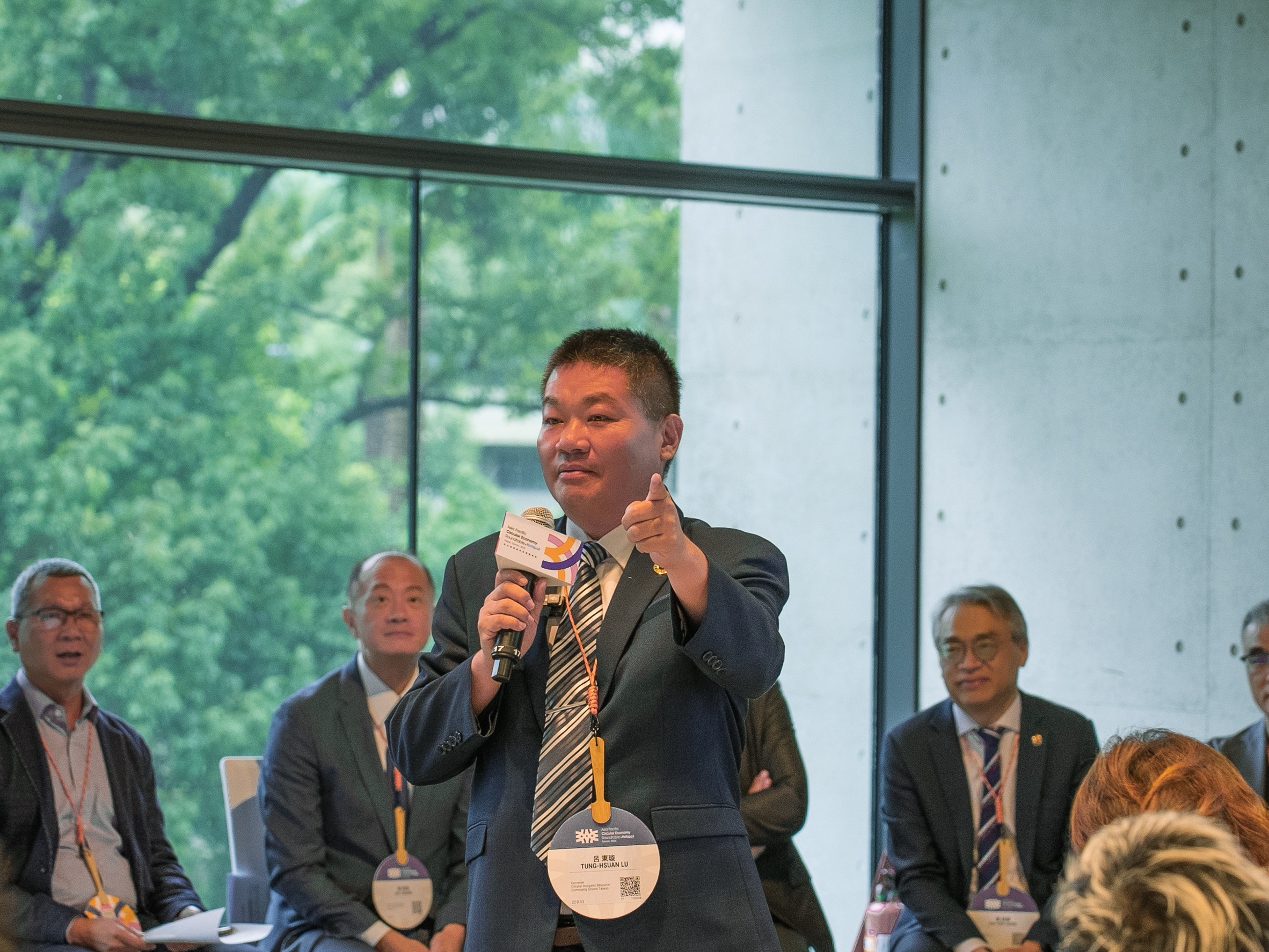
The establishment of CIRCU-Taiwan represents the integration of industry chains. More importantly, it announces Taiwan’s entry into the global circular economy. CIRCU-Taiwan convenor and Re-source Technology general manager Mr. Benjamin Lu shares that “With Taiwan’s unique brand of industrial resilience and innovation, CIRCU-Taiwan will connect with international partners to showcase Taiwan’s technologies and initiative toward green transformation.” In Taiwan, the circular economy goes beyond recycling and reuse. It reshapes industry values from three dimensions: engineering, science, and aesthetics, empowering cities, buildings, and land to become a part of sustainability efforts.

Three Areas of Focus: Taiwan’s Circular Strength Lies in Truth, Kindness & Beauty

One year after its establishment, CIRCU-Taiwan will be moving forward in three key areas of focus under the guiding framework of The Integration of Three Arts: Engineering Art, Scientific Art, and Aesthetic Art. Guided by the principles of TrueTaiwan, CONTaiwan, and Sustainable Taiwan, CIRCU-Taiwan aims to advance technologies, institutions, and culture together to elevate Taiwan’s circular economy to the next level. The three areas of focus include:

1. Building A Low-Carbon Circular Economy Industry Chain (CONTaiwan/Engineering Arts)

CIRCU-Taiwan will facilitate recycling, reuse, and better technologies for inorganic materials in Taiwan and build a circular system from waste to resource to direct resources back into markets and production, and encourage younger generations to return home and revitalize local economies.

2. Connecting Industries, Government Agencies, Academia, and Research Institutions for A National Demonstration Site (TrueTaiwan/Scientific Arts)

    Aligning with the long-term goal of net-zero emissions by 2050, CIRCU-Taiwan will integrate government policies, academic research, and corporate applications to form a national team to facilitate implementation of regulations, accreditation, and standardization.

    3. Encouraging Social Communication and Sustainability Consensus (Sustainable Taiwan/Aesthetics Art)

    Through media and public engagement, CIRCU-Taiwan seeks to raise public awareness of circular industries and the low-carbon transformation to ensure that Truth, Kindness, and Beauty grow beyond ideals and become tangible and applicable cultures for circular industries.

    The three areas of focus synergize and showcase the comprehensive development capacity of Taiwan’s circular economy from engineering to scientific validation to cultural beauty, empowering CIRCU-Taiwan as the sustainability hub connecting industries, policies, and society.

    Three Benchmark Case Studies: Circular Economy Success

    Success stories from CIRCU-Taiwan members:

    • CHC Resources recycled converter slag, a steel production byproduct, into asphalt concrete aggregates. In application, asphalt concrete aggregates can improve the durability of roads by 3.6 times and has already received BS 8001 accreditation.
    • Re-source Technology is evolving from a low-carbon material leader into the CIRCU-Taiwan model of Built Environments Creating Eco-diversity. The company has developed a low-carbon CLSM (Controlled Low-Strength Material) that boasts 80 kilograms fewer carbon emissions per cubic meter of product. The material is third-party certified and has acquired the Ministry of Environment’s Carbon Reduction Label. By translating carbon-reduction results into measurable “sustainability value” via reforestation projects, clients can report these achievements in ESG sustainability disclosures aligned with GRI standards.
    • KEDGE Construction replaced traditional wood molds with aluminum formwork, reducing carbon emissions by 815 MTCO₂e per project and advancing the shift toward sustainable construction management.

    Moving forward, CIRCU-Taiwan will continue to expand on industry cooperation, promote policy connections, and facilitate international exchanges to propel the alliance into the innovative demonstration site for the circular economy in Asia. In Taiwan, we are taking action to prove that circularity is changing the world.

    The issuer is solely responsible for the content of this announcement.

    About Re-source Technology

    Founded in 2002, Re-source Technology believes in creating harmony in the world. Centered on the principles of the circular economy, the company is dedicated to transforming inorganic waste into valuable resources and advancing the green transition through practical, measurable action. Re-source Technology continues to call on businesses to participate in circular collaboration and to help build a sustainable future where resources are no longer wasted.

    Re-source Technology:
    CIRCU-Taiwan:

    Advertisement

    Media OutReach

    XTransfer Joins Forum Ekonomi Malaysia 2026

    Published

    on

    Signals Plan to Make Malaysia Regional Compliance Hub

    KUALA LUMPUR, MALAYSIA – Media OutReach Newswire – 11 February 2026 – XTransfer, the world’s leading B2B cross-border financial platform, was honoured to be invited to join the Malaysia Economic Forum (Forum Ekonomi Malaysia 2026). Bill Deng, Founder and CEO of XTransfer, shared insights on how Malaysia can accelerate technology application and innovation to help micro, small and medium enterprises (MSMEs) scale exports under the 13th Malaysia Plan (13MP), during FEM 2026’s panel discussion, “Made by Malaysia: Accelerating Technology Applications & Innovation”.

    Bill Deng (second from the right), Founder and CEO of XTransfer, joins as a speaker at Forum Ekonomi Malaysia 2026.

    Bill was honoured to join YB Tuan Liew Chin Tong, Deputy Minister of Finance of Malaysia, and Mr Ooi Ching Liang, Senior Director of Engineering at SkyeChip, for a discussion focused on strengthening high-growth, high-value industries, advancing R&D commercialisation, increasing productivity and competitiveness, and supporting MSMEs in global value chains.

    Drawing on XTransfer’s work with MSMEs across markets, Bill noted that many Malaysian businesses are “able to export,” but face persistent barriers to scaling exports. The most common issues are trust, compliance, and scale, which often surface as payment delays, repeated documentation requests, FX uncertainty, and working capital pressure as orders grow.

    “For B2B SMEs in foreign trade, the biggest constraint isn’t demand. It’s the operational complexity behind cross-border payments, foreign exchange, and compliance,” Bill said. “In particular, AML requirements can be difficult for both traditional banks and SMEs to manage efficiently, creating friction that slows down legitimate trade.”

    Bill highlighted a structural shift in global trade flows from a single dominant corridor to non-U.S., intra-Asia, and broader South–South routes. This trend is increasingly clear in real SME transaction patterns. Bill shared, “In 2025, XTransfer’s average collection amount from Asia, Africa, and Latin America grew by 106% year-on-year, with Africa exceeding 270%, Latin America reaching 94%, and ASEAN reaching 82%.” YB Liew noted the trend and thinks it is a direction Malaysia should pursue.

    XTransfer also said it plans to establish Malaysia as its regional compliance centre, citing Malaysia’s strong geographic and time-zone advantages, a mature regulatory environment, availability of talent in compliance and risk operations, and cost efficiency. “Malaysia gives us the talent, governance environment, and regional proximity to scale compliance as intra-Asia and emerging-market trade accelerates,” Bill added.
    Hashtag: #XTransfer #Malaysia #SMEs #13MP #FEM2026


    The issuer is solely responsible for the content of this announcement.

    Continue Reading

    Media OutReach

    CGTN: Little Chinese New Year opens big window to China’s soul

    Published

    on

    BEIJING, CHINA – Media OutReach Newswire – 11 February 2026 – As China marks Xiaonian, or Little Chinese New Year, there is growing evidence of its ancient traditions evolving into global lifestyle trends. CGTN published an article analyzing how this prelude to the Year of the Horse – from the folk ritual of “sweeping the dust” to the cross-cultural fusion of the Spring Festival Gala – illustrates China’s growing global cultural resonance.

    As the lunar calendar turns its final pages, China enters a period of joyful anticipation known as Xiaonian, or Little Chinese New Year. Often celebrated as the Festival of the Kitchen God, it marks the official start of the “busy year” – a traditional term for the intense, joyful period of preparing food, cleaning homes, and shopping for the upcoming Spring Festival.

    The Spring Festival is a deeply significant time for family reunion. In 2024, UNESCO inscribed the “Spring Festival, social practices of the Chinese people in celebration of the traditional Chinese New Year” onto the Representative List of the Intangible Cultural Heritage of Humanity.

    While daily routines continue to evolve, they remain anchored in rituals that provide a sense of normalcy and meaning. It is perhaps no wonder that in a climate of uncertainty, traditional Chinese lifestyles are finding a new audience beyond the country’s borders, with the Spring Festival chief among those unique traditions that are fast becoming a shared human experience.

    Diverse traditions, shared aspirations

    In a prelude to the broader celebrations, Xiaonian, observed on February 10 and 11 this year, kickstarts a focused period of preparation. According to ancient lore, families offer Zaotang, or sticky “Kitchen Candy,” to the Kitchen God to ensure he delivers a favorable report on the household’s conduct before he ascends to the heavens. This lighthearted tradition marks the beginning of several symbolic rituals aimed at welcoming a fresh start.

    A key element of this transition is donning new clothes. In Chinese culture, the New Year represents a moment when “all things are renewed,” and wearing new garments symbolizes shedding the “dust” or misfortunes of the past to embrace auspicious energy for the year ahead. Alongside this personal renewal, families nationwide engage in “sweeping the dust,” a deep-cleaning ritual to purify the home and prepare it for new blessings.

    Whereas these practices are universal, celebratory flavors vary by geography. In the north, families traditionally gather over steaming plates of dumplings, whereas in the south, the menu often features sweet rice cakes (Niangao) and glutinous rice balls (Tangyuan).

    As Mao Qiaohui, a researcher at the Institute of Ethnic Literature at the Chinese Academy of Social Sciences, explains, these variations highlight the inclusive nature of Chinese civilization.

    “Although folk customs differ between different regions across China, this diversity reflects the cultural pluralism within the Spring Festival tradition,” she notes. “Different regional identities contribute to a shared pursuit of harmony and reunion.”

    The vitality of these traditions is also evident in local craftsmanship. In northern regions like Shandong and Henan, artisans are currently making Huamo, decorated steamed buns, featuring horse designs for the upcoming zodiac year. Meanwhile, in Shuozhou, Shanxi Province, intangible heritage inheritors are carving spirited stallions onto traditional gourds. These creations reflect the regional diversity of the festival and a collective desire for progress in the year ahead.

    Cultural dialogue: From global stage to daily life

    The festive atmosphere is reflected further in preparations for the Spring Festival Gala (Chunwan), produced by China Media Group.

    Recent rehearsals show performances meshing traditional Chinese culture with international artistry. One performance piece combines the wooden clog dance of the Hani and Lisu ethnic groups with the rhythmic tap of Spanish Flamenco and Hungarian folk dance. And with global stars like Jackie Chan and Lionel Richie on the bill, the Gala’s stage is set to become a stage for the world to come together.

    The reach of the gala has expanded far beyond a domestic audience. Through the “Spring Festival Gala Prelude” events held in the United States, Russia, France, Italy, and several African nations, the program has become a gateway to Chinese New Year customs and cultural exchange.

    This interest extends beyond art and into the lives of people worldwide, as seen in the #BecomingChinese trend. This phenomenon features international social media users adopting elements of Chinese daily life – such as keeping a thermos of hot water handy, wearing quilted indoor slippers or practicing mindful movement with Baduanjin exercises.

    The festival is no longer a distant event but a gateway to Chinese lifestyle, rooted in ancient wellness wisdom and constantly updated by modern convenience, and the first step to a journey of exploration into a culture that values ritual, safety and hospitality.

    Whether through global broadcasts or shared daily habits, the Spring Festival increasingly strengthens a sense of cultural empathy between China and the rest of the world.

    For more information, please click here:

    https://news.cgtn.com/news/2026-02-10/Little-New-Year-opens-big-window-to-China-s-soul-1KEhJjMX2fe/p.html

    Hashtag: #CGTN

    The issuer is solely responsible for the content of this announcement.

    Continue Reading

    Media OutReach

    De Beers Group and Assouline Celebrate the Launch of “A Diamond Is Forever: The Making of A Cultural Icon 1926-2026”

    Published

    on

    LONDON, UK – Media OutReach Newswire – 11 February 2026 – In the 1930s, De Beers redefined the role of diamonds in society, celebrating them as masterpieces of nature and craftmanship. Before this, diamond jewelry pieces were treasures exchanged discreetly amongst society’s elite, as luxury houses, fearful of diminishing their mystique, fostered only private relationships with their clients. De Beers revealed the wonder of diamonds to a wider audience, shifting the perception of them from luxury item to a gift integral to romantic milestones and aspirational, glamorous lives, as well as a way of marking personal achievement.

    De Beers Group And Assouline Celebate The Launch Of “A Diamond Is Forever: The Making Of A Cultural Icon 1926-2026”

    When copywriter Frances Gerety captured the diamond’s essence with the phrase “A Diamond Is Forever” in 1947, the declaration enshrined the diamond as a promise of love and endurance, a sentiment resonating far beyond the notion of a simple gift. Gerety’s words, seen on archival advertisements, magazine placements, and celebrity endorsements, reflected the deep cultural connection between diamonds and enduring relationships. Commissioned artwork from artists such as Pablo Picasso, Salvador Dalí, and Raoul Dufy draw a direct line between a diamond’s rarity—each one formed deep within the earth over billions of years—and the creative genius of fine art. By sharing these artistic visions with the world, De Beers revealed the wonder of diamonds—nature’s oldest treasure—to a wider audience, elevating their aura and allure while preserving the sense of rarity and significance that sets them apart.

    For a century, the story of diamonds has been one of transformation and continuity. In the 1960s, stars like Elizabeth Taylor and Marilyn Monroe adorned themselves with diamonds, embodying the elegance and glamour associated with the gemstone. The 1990s “Shadows” campaign, with its evocative pairing of diamonds and the neoclassical composition Palladio by Karl Jenkins, captured the essence of the diamond: authentic, unique, and everlasting.

    In recent years, the conversation around diamonds has expanded to include provenance, sustainability, and ethical stewardship, affirming the diamond’s place as a symbol not just of love but of responsibility and conscience. Much like walking through a gallery that traces the evolution of artistic expression, A Diamond Is Forever offers a view into how diamonds have come to embody the shifting ideals and aspirations of society itself.

    Hashtag: #DeBeersGroup #NaturalDiamonds #diamonds #ADiamondIsForever #Assouline


    The issuer is solely responsible for the content of this announcement.

    About De Beers Group

    Established in 1888, De Beers Group is the world’s leading diamond company with expertise in the exploration, mining, marketing and retailing of diamonds. Together with its joint venture partners, De Beers Group employs more than 20,000 people across the diamond pipeline and is the world’s largest diamond producer by value, with diamond mining operations in Botswana, Canada, Namibia and South Africa. Innovation sits at the heart of De Beers Group’s strategy as it develops a portfolio of offers that span the diamond value chain, including its jewellery houses, De Beers Jewellers and Forevermark, and other pioneering solutions such as diamond sourcing and traceability initiatives Tracr and GemFair. De Beers Group also provides leading services and technology to the diamond industry in the form of education and laboratory services via De Beers Institute of Diamonds and a wide range of diamond sorting, detection and classification technology systems via De Beers Group Ignite. De Beers Group is committed to ‘,’ a holistic and integrated approach for creating a better future – where safety, human rights and ethical integrity continue to be paramount; where communities thrive and the environment is protected; and where there are equal opportunities for all. De Beers Group is a member of the Anglo American plc group. For further information, visit .

    Continue Reading

    Trending