

Connect with us

Banking

How FairMoney Is Powering Financial Inclusion for Nigerian Hustlers

Published

on

Financial Inclusion for Nigerian Hustlers
By Margaret Banasko

Urbanization is reshaping Nigeria’s economic landscape, creating new possibilities for millions of young people who relocate each year in search of opportunity. Cities like Lagos, Kano, and Abuja continue to expand as ambitious Nigerians leave their hometowns with the hope of building stable, sustainable livelihoods.

Recent figures highlight the pace of this shift. As of 2024, more than half of Nigeria’s population – around 128 million people – live in urban areas. Many of these individuals are young entrepreneurs and self-employed workers determined to turn their skills, ideas, and hustle into meaningful income. However, navigating the financial requirements needed to sustain and grow a small business is often challenging for those operating in informal or early-stage sectors.

This is where digital financial platforms have become transformational. With only a mobile phone, an internet connection, and a Bank Verification Number (BVN), Nigerians are increasingly able to access a wider range of financial tools designed to support their daily needs and long-term goals. FairMoney is among the institutions driving this progress by offering services that meet people where they are and support their ambition to grow.

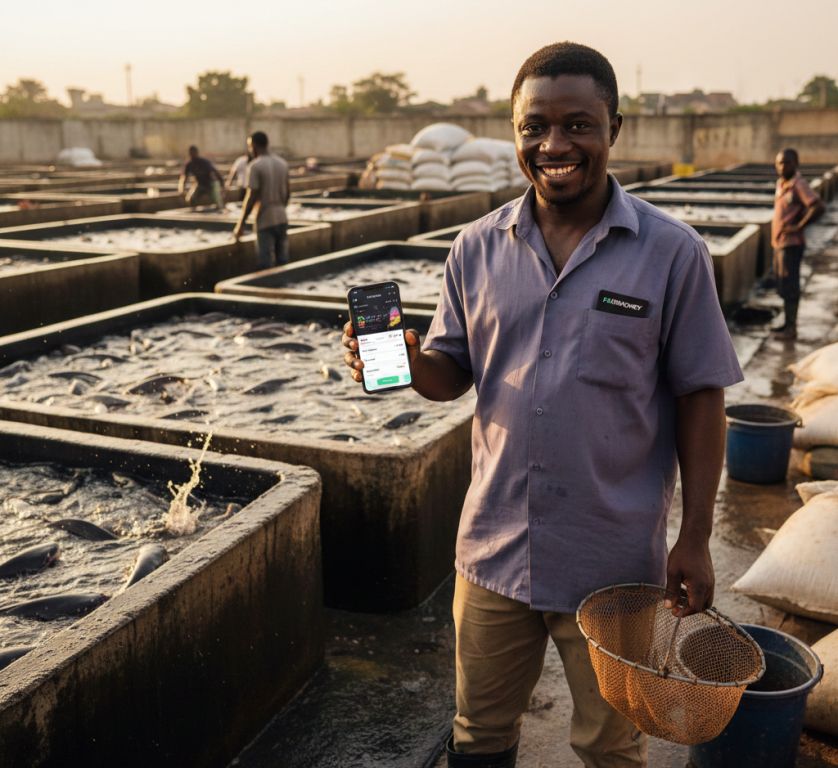
Aigbe Osasere’s experience reflects this evolution. He moved from Benin City to Lagos with the goal of establishing a fish farming business in Ijegun, Alimosho. His vision was clear: create a small, efficient operation that could supply fresh fish to local buyers. Like many small business owners, he needed reliable access to funds to purchase fingerlings, buy feed, replace equipment, and maintain steady production. Managing these cycles required financial tools that matched the fast pace of his operations.

Through the FairMoney app, Aigbe gained access to digital banking services immediately after completing BVN verification. The availability of instant loans provided the flexibility he needed to restock quickly and maintain continuous production. For a business model where timing is central to profitability, this support allowed him to keep his operations consistent and responsive to customer demand.

Opening a FairMoney bank account and receiving a physical debit card further strengthened his business structure. Bulk buyers began paying him directly into his account, giving him clearer financial records and better visibility into his daily revenue. With his debit card, he could purchase supplies, withdraw cash conveniently, and manage his finances in a more organized way.

Aigbe also adopted FairMoney’s savings features to help him preserve and grow his earnings. By setting aside a portion of his daily sales, he is gradually building the capital needed to increase his fish tanks, expand his capacity, and move toward a more scalable operation.

Beyond supporting his business, FairMoney has become part of his everyday life. From the app, he sends money to family members, pays bills, buys airtime and data, and settles electricity tokens quickly and efficiently. This convenience allows him to focus more fully on running and growing his business.

Aigbe’s story is one example of how digital banking is broadening access to financial services across Nigeria. Entrepreneurs, freelancers, traders, and young workers are increasingly leveraging digital platforms to manage money, plan for growth, and participate more actively in the financial system.

As more Nigerians pursue self-employment and urban entrepreneurship, tools that offer accessibility, speed, and flexibility are playing an important role in supporting their progress. With FairMoney, many are finding a dependable partner that aligns with their goals, their pace, and their vision for the future.

Margaret Banasko is the Head of Marketing at FairMoney MFB

Banking

CBN Warns Public Against Increase in Impersonation Scams

Published

on

CBN’s N75trn Credit private sector

By Adedapo Adesanya

The Central Bank of Nigeria (CBN) has issued an alert about the spread of fraudulent messages, emails, and online communications falsely bearing the identity of the bank, to scam unsuspecting members of the public.

The apex bank warned that the fake materials are designed to hack personal accounts and mislead Nigerians on matters of bank leadership, licensing, and policy.

In a notice signed by Mrs Hakama Sidi-Ali, the Acting Director of Corporate Communications, the lender said the fraudulent communications are already in circulation and are prompting recipients to click embedded links, which is the primary mechanism through which the attackers seek to gain unauthorised access to private accounts and personal data.

The bank laid out three clear directives for members of the public. First, Nigerians are advised to refrain from clicking links or providing personal information on any website they cannot confirm as legitimate.

Second, it stated that all communications purporting to come from the CBN must be verified through the bank’s sole official website — www.cbn.gov.ng — or through recognised media organisations.

Thirdly, it warned that anyone who encounters a suspected fraudulent site, email, or message is urged to report it to law enforcement authorities without delay.

“The CBN remains fully committed to safeguarding the Nigerian financial system and continues to strengthen its cybersecurity frameworks in collaboration with relevant agencies to protect the public against digital fraud.”

Continue Reading

Banking

CBN, NCC Set up Committees to Protect Consumers Against Fraud

Published

on

CBN NCC

By Modupe Gbadeyanka

In a bid to ensure consumer safety across the telecommunications and financial services sectors, the Central Bank of Nigeria (CBN) and the Nigerian Communications Commission (NCC) have decided to work together.

On Monday, both organisations sealed a Memorandum of Understanding (MoU) for the establishment of joint committees for the protection of consumers against fraud in the sectors.

The two teams set up by the CBN and the NCC include the Joint Committee on Payment Systems and Consumer Protection, and the Joint Committee on Telecoms Identity Risk Management System (TIRMS) Portal.

Through the TIRMS portal, which aggregates data on churned (recycled) phone numbers, as well as numbers flagged within the financial services sector, it will now have enhanced visibility into the status of phone numbers, one of the most widely utilised resources in the sector, although regulated by the NCC.

With this, according to the chief executive of NCC, Mr Aminu Maida, financial institutions will be able to determine when a line is active, when it has been swapped, when it has been disconnected due to inactivity and reassigned to a new subscriber, and when it has been flagged for suspicious or fraudulent activity. “This ensures that our financial services industry is better equipped with timely and relevant information to effectively combat e-fraud, particularly those perpetuated using phone numbers, in the country,” he stated.

It was stated that the partnership between the two parties will reduce electronic fraud, which has become increasingly pervasive, with significant implications for the integrity of the digital economy.

In his remarks, the Governor of the CBN, Mr Yemi Cardoso, said the MoU will strengthen coordination on approvals, technical standards, and innovation trials, including sandbox testing that supports market-led solutions, while safeguarding stability.

“Going forward, the CBN remains fully committed to working with the NCC to deliver a safer, more resilient, and more inclusive digital financial system that supports national productivity, protects consumers, and strengthens trust in Nigeria’s digital economy,” the central bank chief said.

Continue Reading

Banking

Wema Bank Looks to Deepen Role as Catalyst for Growth, Market Presence

Published

on

wema-bank-logo

By Aduragbemi Omiyale

Mid-level Nigerian lender, Wema Bank Plc, has set its eyes on expanding its market presence and supporting the government in achieving its $1 trillion economy by 2030.

In a statement, the financial institution said it hopes to achieve these and others through its recently recapitalisation exercise, which saw its capital base rise to about N265 billion, well above the N200 billion-threshold set by the Central Bank of Nigeria (CBN) for its category of licence.

Wema Bank operates with a national licence, and based on the regulator’s requirement, the capital base must be at least N200 billion.

Before the March 31, 2026-deadline set be the CBN, banks were required to have at least N25 billion, but to meet up with the 2030 target of the federal government, this threshold was raised, with banks operating branches out the country asked to have at least N500 billion, while regional banks were told to have a minimum of N50 billion.

To comply with the new directive, Wema Bank embarked on a strategic capital raise through the stock market, successfully strengthening its shareholder base and securing the required capital through strong participation from existing investors.

Its N150 billion rights issue, which opened on April 14, 2025, and closed on May 21, 2025, marked a significant step in this journey. This was subsequently complemented by a N50 billion special placement later in the year, ensuring the bank not only met but exceeded the regulatory threshold well ahead of schedule.

“The successful completion of our recapitalisation exercise is a defining moment for Wema Bank. It is a strong validation of our strategy, our performance, and the enduring confidence our shareholders and stakeholders have in our vision.

“We have not only met the CBN’s requirements; we have exceeded them, reinforcing our position as a National Bank with the scale, strength, and stability to compete and lead,” the chief executive of Wema Bank, Mr Moruf Oseni, stated.

“Looking ahead, we remain focused on deepening our market presence, driving customer-centric innovation, and strengthening our role as a catalyst for growth across retail, SME, and corporate segments.

“This is not just about retaining our license; it is about building a bigger, stronger, and more impactful Wema Bank,” the bank executive further stated.

Continue Reading

Trending

