Connect with us

World

Amid Rising Geopolitical Challenges India Prioritizing Global South Under its BRICS Leadership

Published

on

india BRICS Leadership

By Kestér Kenn Klomegâh

By rotational procedures and consensus adopted in Brazil in December, India has taken over the BRICS+ presidency for 2026, underscoring its highly-enriching membership and gracious opportunity to deepen the intergovernmental association as a leading geopolitical force in the Global South. Brazil took over the BRICS presidency from Russia on January 1, 2025. Following its expansion, BRICS+ currently comprises ten countries: Brazil, China, Egypt, Ethiopia, India, Indonesia, Iran, Russia, South Africa and the United Arab Emirates.

Historically, its conceptual origins were articulated by Russian foreign minister Yevgeny Primakov in 1998, and can be traced to series of informal forums and dialogue groups such as RIC (Russia, India, and China) and IBSA (India, Brazil, and South Africa). In addition to that significant aspect of its history, BRIC was originally a term coined by British economist Jim O’Neill, and later championed by his employer Goldman Sachs in 2001, to designate a group of emerging markets.

The bloc’s inaugural summit was held in 2009 (Yekaterinburg summit) and featured the founding countries of Brazil, Russia, India, and China. These four founding members adopted the acronym BRIC and formed an informal diplomatic club where their governments could meet annually at formal summits and coordinate multilateral policies. The following year, South Africa officially became a member after it was formally invited and supported by China, and unreservedly backed by India and Russia.

South Africa joined the organization in September 2010, which was then renamed BRICS, and attended the third summit in 2011 as a full member. The biggest expansion witnessed Iran, Egypt, Ethiopia, and the United Arab Emirates attending the first summit as member states in 2024 in Kazan, the autonomous Republic of Tatarstan, part of the Russian Federation. Later on, Indonesia officially joined in early 2025, becoming the first Southeast Asian member. The acronym BRICS+ or BRICS Plus has been informally used to reflect new membership since 2024.

On 24 October 2024, an additional 13 countries, namely Algeria, Belarus, Bolivia, Cuba, Indonesia, Kazakhstan, Malaysia, Nigeria, Thailand, Turkey, Uganda, Uzbekistan and Vietnam, were invited to participate as “partner countries”. The partner status would allow these countries to engage with and benefit from BRICS initiatives. It is still unclear whether the countries in this tier have received official membership invitations. But there is the high possibility to ascend the association as full-fledged members in future.

Persistent Multiple Differences

Now as India takes on the helm of BRICS+, experts and research analysts are showing deep interest and are discussing possibilities of multilateral cooperation, existing challenges and identifying diverse priorities, the strength and weaknesses of BRICS+. On a more negative note, multiple contradictions keep piling up among the group, including questions about the future of BRICS as anything other than an ineffective growing talk-shop market.

The biggest obstacle being political divergencies and economic development perceptions. Cultures are distinctive different among the members of this informal BRICS+ association, while all are consistently advocating for wholesale reforms, especially of the United Nations Security Council, and multinational financial institution such as the World Bank (WB) and International Monetary Fund (IMF). Some the members have been adamant to undertake internal reforms at their own state institutions.

As a founding member of BRICS, India plans to find a more suitable  path for balancing its non-aligned policy, forge new directions for the development of the Global South under its BRICS+ presidency, while emphasizing trends on the global economic landscape. Arguably, India will definitely act with precision. India is most likely to be non-critical, and moreso with an insight understanding that, not antagonism, but rather ‘cooperation’ must be the underlying basic principle of a multipolar environment.

India’s Rotating BRICS Presidency

Leaders’ meetings (or leaders’ summits) are held once a year on a rotating basis. BRICS has neither a permanent seat nor secretariat. A number of ministerial meetings, for example, between foreign ministers, finance ministers, central bank governors, trade ministers and energy ministers in the country which is presiding BRICS+ association.

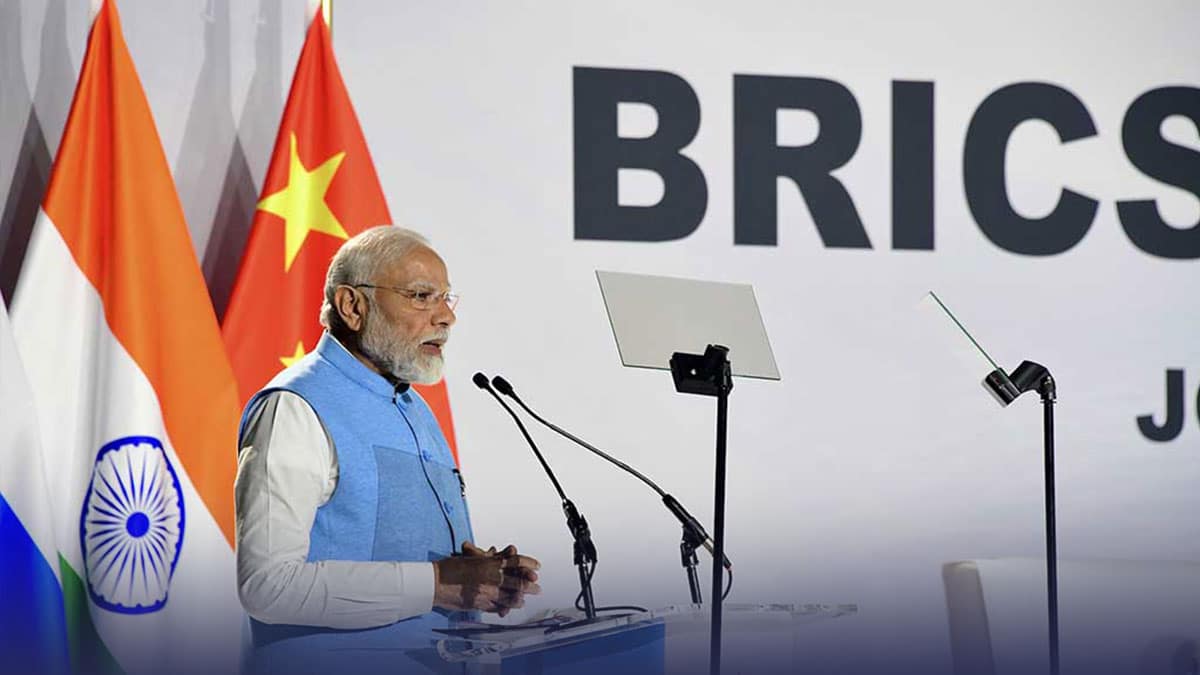
Speaking at the BRICS summit back in 2014, Prime Minister Narendra Modi has assertively said that “reform of institutions of global governance … has been on the BRICS agenda since its inception.”

Later, prior to the Kazan summit, Prime Minister Modi explicitly stated that BRICS was never meant to be against anyone or be anti-western, and that it is only non-western. At the Kazan summit, Prime Minister Modi further stated: “We must be careful to ensure that this organization does not acquire the image of one that is trying to replace global institutions”.

At the 17th BRICS Summit held in Rio de Janeiro on 7 July 2025, Prime Minister Modi stated that India would give a “new form” to the BRICS grouping during its presidency in 2026.

Prime Minister Modi proposed redefining BRICS as “Building Resilience and Innovation for Cooperation and Sustainability” and emphasized a people-centric approach, drawing parallels with India’s G-20 presidency where the Global South was prioritized.

Prime Minister Modi affirmed that India would advance BRICS with a focus on “humanity first” highlighting the need for joint global efforts to address common challenges such as pandemics and climate change.

Prime Minister Modi also called for urgent reform of global institutions to reflect the realities of the 21st century, emphasizing greater representation for the Global South and criticizing outdated structures like the UN Security Council and World Trade Organization.

Clarifying further and clearly BRICS+ position: In a briefing in October 2024, Russian Foreign Ministry stated, on its website, that “BRICS framework is non-confrontational and constructive” and that “it is a viable alternative to a world living by someone else’s, alien rules” and by this functional definition, it reinforces BRICS role in the world. BRICS members has the opportunity to mutually deal with any country in the world. It is not prohibited to forge amicable relations with United States and in Europe.

President Putin quoted Prime Minister Narendra Modi in saying that “BRICS is not anti-western but simply non-western” and even suggested that BRICS countries could be a part of the Ukraine peace process.

There are other classical analysis. For instance, Joseph Nye wrote in January 2025 that BRICS, “as a means of escaping diplomatic isolation, it is certainly useful to Russia” and that the same goes for Iran. Nevertheless, political expert Nye explained that the expansion of the BRICS could bring in more “intra-organizational rivalries” which is limiting the groups’ effectiveness. Yet, BRICS consolidation has turned the group into a potent negotiation force that now challenges Washington’s geopolitical and economic goals.

Despite frequent criticisms against Donald Trump, most of BRICS members are pursuing relations with United States, with Kremlin appointing Chief Executive Officer of Russian Direct Investment Fund (RDIF) Kirill Dmitriev as the Special Representative of the Russian President for Economic Cooperation with Foreign Countries. Since his appointment, returning U.S. business to Russia’s market forms the primary focus in the United States. Russian President Vladimir Putin has tasked him to promote business dialogue between the two countries, and further to negotiate for the return of U.S. business enterprises. Without much doubts, similar trends are not difficult to find as India, Ethiopia and South Africa fix eyes on identifying pragmatic prospects for economic cooperation, further to earn significant revenue from trade, and also including pathways to sustain the huge Diaspora’s financial remittances from the United States.

BRICS+ Financial Architecture

The group is dominated by China, which has the largest share of the group’s GDP, accounting to about 70% of the organization total. The financial architecture of BRICS is made of the New Development Bank (NDB) and the Contingent Reserve Arrangement (CRA). These components were signed into a treaty in 2014 and became active in 2015. The New Development Bank (NDB), formally referred to as the BRICS Development Bank, is a multilateral development bank operated by the five BRICS states.

The bank’s primary focus of lending is infrastructure projects with authorized lending of up to $34 billion annually. South Africa hosts the African headquarters of the bank. The bank has a starting capital of $50 billion, with wealth increased to $100 billion over time. Records show Brazil, Russia, India, China, and South Africa initially contributed $10 billion each to bring the total to $50 billion. As of 2020, it had 53 projects underway worth around $15 billion. By 2024 the bank had approved more than $32 billion for 96 projects. In 2021, Bangladesh, Egypt, the United Arab Emirates and Uruguay joined the NDB.

Future of BRICS+ in Geopolitical World

Last year, several countries began working within the BRICS framework, and many states are planning to join this association. In practical terms, BRICS needs to increase its practical impact of its partnership on the level of qualitative development, not just organizational symbolism and public rhetoric as it has been during the past few years. Time has come to avoid excessive bureaucracy and avoid any undesirable rigid attachment to an organizational structure. BRICS has to enhance its economic potential, develop appropriate mechanisms for financial, trade, and economic cooperation.

With India’s presidency in 2026, which is estimated to be a comprehensive and promising eventful year for BRICS, as India has already outlined its  framework of priorities, as it did during its G20 presidency several years ago. In close-coordination with members and partner-states within the BRICS association, India has to ensure the balance of multifaceted interests, and ensure or establish mutual-trust in the multipolar world system. The goal of transforming into a full-fledged international organization must go beyond addressing current geopolitical challenges, the necessity to develop effective ways of engaging in global development to reflect multipolarity.

Since its inception, BRICS has undergone a transformation and has gone through several stages of qualitative change. The organizers are still touting the expansion as part of a plan to build a competing multipolar world order that uses Global South countries to challenge and compete against the western-dominated world order. There is obvious interest in this consensus-based platform, hundreds of economic and political areas for cooperation, and for collaborating including politics, economic development, education, and scientific research. The New Development Bank finances various projects in member countries: Brazil, Russia, India, China and South Africa.

On January 1, 2024, five new members officially entered BRICS, namely Egypt, Iran, the United Arab Emirates, Saudi Arabia, and Ethiopia. At a BRICS Summit in Kazan, Russia in October 2024, it was decided to establish a category of BRICS partner countries. The first countries to become partners were Belarus, Bolivia, Kazakhstan, Cuba, Malaysia, Thailand, Uganda and Uzbekistan. The expanded BRICS+ generates 36% of global GDP. That however, according to Economist Intelligence Unit, the collective size of the economies of BRICS+ will overtake G7 by 2045. Today, collectively, BRICS comprises more than a quarter of the global economy and nearly half the world’s population.


Advertisement
Click to comment

Leave a Reply

Your email address will not be published. Required fields are marked *

World

Iranian Supreme Leader Ali Khamenei Dies After Air Strikes

Published

on

Ayatollah Ali Khamenei

By Dipo Olowookere

Iranian Supreme Leader, Mr Ayatollah Ali Khamenei, has died after coordinated airstrikes carried out by the United States and Israel on Tehran on Saturday morning.

His death was confirmed on Sunday morning by Iranian state media, which also disclosed that his daughter and grandchild were among those killed in the bombardment, which destroyed his compound.

Mr Khamenei was killed during a meeting with top leaders of the Middle East country yesterday, including the Defence Minister Amir Nasirzadeh and Revolutionary Guard commander Mohammad Pakpour, who reportedly died too.

His elimination has sparked mixed reactions, with some Iranians on the streets celebrating his demise, and others condemning the joint air strikes.

The President of the United States, Mr Donald Trump, described the late Iranian leader as “one of the most evil people in history,” expressing satisfaction at the action, which he said was “successful,” as it represented justice for both Iranians and Americans.

Meanwhile, Tehran has vowed to further respond to the attacks after initially firing missiles at six neighbours, including Qatar, Saudi Arabia, Kuwait, UAE, Bahrain, and Jordan.

Flight operations in the region have been disrupted because of the retaliatory action of Iran over the weekend, though most of the missiles were intercepted.

Continue Reading

World

AfBD, AU Renew Call for Visa-Free Travel to Boost African Economic Growth

Published

on

map of africa

By Adedapo Adesanya

The African Development Bank (AfDB) and the African Union have renewed their push for visa-free travel to accelerate Africa’s economic transformation.

The call was reinforced at a High-Level Symposium on Advancing a Visa-Free Africa for Economic Prosperity, where African policymakers, business leaders, and development institutions examined the need for visa-free travel across the continent.

The consensus described the free movement of people as essential to unlocking Africa’s economic transformation under the African Continental Free Trade Area (AfCFTA).

The symposium was co-convened by AfDB and the African Union Commission on the margins of the 39th African Union Summit of Heads of State and Government in Addis Ababa.

The participants framed mobility as the missing link in Africa’s integration agenda, arguing that while tariffs are falling under AfCFTA, restrictive visa regimes continue to limit trade in services, investment flows, tourism, and labour mobility.

On his part, Mr Alex Mubiru, Director General for Eastern Africa at the African Development Bank Group, said that visa-free travel, interoperable digital systems, and integrated markets are practical enablers of enterprise, innovation, and regional value chains to translate policy ambitions into economic activity.

“The evidence is clear. The economics support openness. The human story demands it,” he told participants, urging countries to move from incremental reforms to “transformative change.”

Ms Amma A. Twum-Amoah, Commissioner for Health, Humanitarian Affairs and Social Development at the African Union Commission, called for faster implementation of existing continental frameworks.

She described visa openness as a strategic lever for deepening regional markets and enhancing collective responses to economic and humanitarian crises.

Former AU Commission Chairperson, Ms Nkosazana Dlamini-Zuma, reiterated that free movement is central to the African Union’s long-term development blueprint, Agenda 2063.

“If we accept that we are Africans, then we must be able to move freely across our continent,” she said, urging member states to operationalise initiatives such as the African Passport and the Free Movement of Persons Protocol.

Ghana’s Trade and Industry Minister, Mrs Elizabeth Ofosu-Adjare, shared her country’s experience as an early adopter of open visa policies for African travellers, citing increased business travel, tourism, and investor interest as early dividends of greater openness.

The symposium also reviewed findings from the latest Africa Visa Openness Index, which shows that more than half of intra-African travel still requires visas before departure – seen by participants as a significant drag on intra-continental commerce.

Mr Mesfin Bekele, Chief Executive Officer of Ethiopian Airlines, called for full implementation of the Single African Air Transport Market (SAATM), saying aviation connectivity and visa liberalisation must advance together to enable seamless travel.

Regional representatives, including Mr Elias Magosi, Executive Secretary of the Southern Africa Development Community, emphasised the importance of building trust through border management and digital information-sharing systems.

Ms Gabby Otchere Darko, Executive Chairman of the Africa Prosperity Network, urged governments to support the “Make Africa Borderless Now” campaign, while tourism campaigner Ras Mubarak called for more ratifications of the AU Free Movement of Persons protocol.

Participants concluded that achieving a visa-free Africa will require aligning migration policies, digital identity systems, and border infrastructure, alongside sustained political commitment.

Continue Reading

World

Nigeria Exploring Economic Potential in South America, Particularly Brazil

Published

on

Uche Uzoigwe Secretary-General of NIDOA-Brazil

By Kestér Kenn Klomegâh

In this interview, Uche Uzoigwe, Secretary-General of NIDOA-Brazil, discusses the economic potential in South America, particularly Brazil, and investment incentives for Brazilian corporate partners for the Federal Republic of Nigeria (FRN). Follow the discussion here:

How would you assess the economic potential in the South American region, particularly Brazil, for the Federal Republic of Nigeria? What investment incentives does Nigeria have for potential corporate partners from Brazil?

As the Secretary of NIDOA Brazil, my response to the questions regarding the economic potentials in South America, particularly Brazil, and investment incentives for Brazilian corporate partners would be as follows:

Brazil, as the largest economy in South America, presents significant opportunities for the Federal Republic of Nigeria. The country’s diverse economy is characterised by key sectors such as agriculture, mining, energy, and technology. Here are some factors to consider:

  1. Natural Resources: Brazil is rich in natural resources like iron ore, soybeans, and biofuels, which can be beneficial to Nigeria in terms of trade and resource exchange.
  2. Growing Agricultural Sector: With a well-established agricultural sector, Brazil offers potential collaboration in agri-tech and food security initiatives, which align with Nigeria’s goals for agricultural development.
  3. Market Size: Brazil boasts a large consumer market with a growing middle class. This represents opportunities for Nigerian businesses looking to export goods and services to new markets.
  4. Investment in Infrastructure: Brazil has made significant investments in infrastructure, which could create opportunities for Nigerian firms in construction, engineering, and technology sectors.
  5. Cultural and Economic Ties: There are historical and cultural ties between Nigeria and Brazil, especially considering the African diaspora in Brazil. This can facilitate easier business partnerships and collaborations.

In terms of investment incentives for potential corporate partners from Brazil, Nigeria offers several attractive incentives for Brazilian corporate partners, including:

  1. Tax Incentives: Various tax holidays and concessions are available under the Nigerian government’s investment promotion laws, particularly in key sectors like agriculture, manufacturing, and technology.
  2. Repatriation of Profits: Brazil-based companies investing in Nigeria can repatriate profits without restrictions, thus enhancing their financial viability.
  3. Access to the African Market: Investment in Nigeria allows Brazilian companies to access the broader African market, benefiting from Nigeria’s membership in regional trade agreements such as ECOWAS.
  4. Free Trade Zones: Nigeria has established free trade zones that offer companies the chance to operate with reduced tariffs and fewer regulatory burdens.
  5. Support for Innovation: The Nigerian government encourages innovation and technology transfer, making it attractive for Brazilian firms in the tech sector to collaborate, particularly in fintech and agriculture technology.
  6. Collaborative Ventures: Opportunities exist for joint ventures with local firms, leveraging local knowledge and networks to navigate the business landscape effectively.

In conclusion, fostering a collaborative relationship between Nigeria and Brazil can unlock numerous economic opportunities, leading to mutual growth and development in various sectors. We welcome potential Brazilian investors to explore these opportunities and contribute to our shared economic goals.

In terms of this economic cooperation and trade, what would you say are the current practical achievements, with supporting strategies and systemic engagement from NIDOA?

As the Secretary of NIDOA Brazil, I would highlight the current practical achievements in economic cooperation and trade between Nigeria and Brazil, alongside the supporting strategies and systemic engagement from NIDOA.

Here are some key points:

Current Practical Achievements

  1. Increased Bilateral Trade: There has been a notable increase in bilateral trade volume between Nigeria and Brazil, particularly in sectors such as agriculture, textiles, and technology. Recent trade agreements and discussions have facilitated smoother trade relations.
  2. Joint Ventures and Partnerships: Successful joint ventures have been established between Brazilian and Nigerian companies, particularly in agriculture (e.g., collaboration in soybean production and agricultural technology) and energy (renewables, oil, and gas), demonstrating commitment to mutual development.
  3. Investment in Infrastructure Development: Brazilian construction firms have been involved in key infrastructure projects in Nigeria, contributing to building roads, bridges, and facilities that enhance connectivity and economic activity.
  4. Cultural and Educational Exchange Programs: Programs facilitating educational exchange and cultural cooperation have led to strengthened ties. Brazilian universities have partnered with Nigerian institutions to promote knowledge transfer in various fields, including science, technology, and arts.

Supporting Strategies

  1. Strategic Trade Dialogue: NIDOA has initiated regular dialogues between trade ministries of both nations to discuss trade barriers, potential markets, and cooperative opportunities, ensuring both countries are aligned in their economic goals.
  2. Investment Promotion Initiatives: Targeted initiatives have been established to promote Brazil as an investment destination for Nigerian businesses and vice versa. This includes showcasing success stories at international trade fairs and business forums.
  3. Capacity Building and Technical Assistance: NIDOA has offered capacity-building programs focused on enhancing Nigeria’s capabilities in agriculture and technology, leveraging Brazil’s expertise and sustainable practices.
  4. Policy Advocacy: Continuous advocacy for favourable trade policies has been a key focus for NIDOA, working to reduce tariffs and promote economic reforms that facilitate investment and trade flows.

Systemic Engagement

  1. Public-Private Partnerships (PPPs): Engaging the private sector through PPPs has been essential in mobilising resources for development projects. NIDOA has actively facilitated partnerships that leverage both public and private investments.
  2. Trade Missions and Business Delegations: Organised trade missions to Brazil for Nigerian businesses and vice versa, allowing for direct engagement with potential partners, fostering trust and opening new channels for trade.
  3. Monitoring and Evaluation: NIDOA implements a rigorous monitoring and evaluation framework to assess the impact of various initiatives and make necessary adjustments to strategies, ensuring effectiveness in achieving economic cooperation goals.

Through these practical achievements, supporting strategies, and systemic engagement, NIDOA continues to play a pivotal role in enhancing economic cooperation and trade between Nigeria and Brazil. By fostering collaboration and leveraging shared resources, we aim to create a sustainable and mutually beneficial economic environment that promotes growth for both nations.

Do you think the changing geopolitical situation poses a number of challenges to connecting businesses in the region with Nigeria, and how do you overcome them in the activities of NIDOA?

The changing geopolitical situation indeed poses several challenges for connecting businesses in the South American region, particularly Brazil, with Nigeria. These challenges include trade tensions, shifting alliances, currency fluctuations, and varying regulatory environments. Below, I will outline some of the specific challenges and how NIDOA works to overcome them:

Current Challenges

  1. No Direct Flights: This challenge is obviously explicit. Once direct flights between Brazil and Nigeria become active, and hopefully this year, a much better understanding and engagement will follow suit.
  2. Trade Restrictions and Tariffs: Increasing trade protectionism in various regions can lead to higher tariffs and trade barriers that hinder the movement of goods between Brazil and Nigeria.
  3. Currency Volatility: Fluctuations in the value of currencies can complicate trade agreements, pricing strategies, and overall financial planning for businesses operating in both Brazil and Nigeria.
  4. Different regulatory frameworks and compliance requirements in both countries can create challenges for businesses aiming to navigate these systems efficiently.
  5. Supply Chain Disruptions: Changes in global supply chains due to geopolitical factors may disrupt established networks, impacting businesses relying on imports and exports between the two nations.

Overcoming Challenges through NIDOA.

NIDOA actively engages in discussions with both the Brazilian and Nigerian governments to advocate for favourable trade policies and agreements that reduce tariffs and improve trade conditions. This year in October, NIDOA BRAZIL holds its TRADE FAIR in São Paulo, Brazil.

What are the popular sentiments among the Nigerians in the South American diaspora? As the Secretary-General of the NIDOA, what are your suggestions relating to assimilation and integration, and of course, future perspectives for the Nigerian diaspora?

As the Secretary-General of NIDOA, I recognise the importance of understanding the sentiments among Nigerians in the South American diaspora, particularly in Brazil.

Many Nigerians in the diaspora take pride in their cultural roots, celebrating their heritage through festivals, music, dance, and culinary traditions. This cultural expression fosters a sense of community and belonging.

While many individuals embrace their new environments, they often face challenges related to cultural differences, language barriers, and social integration, which can lead to feelings of isolation.

Many express optimism about opportunities in education, business, and cultural exchange, viewing their presence in South America as a chance to expand their horizons and contribute to economic activities both locally and back in Nigeria.

Sentiments regarding acceptance vary; while some Nigerians experience warmth and hospitality, others encounter prejudice or discrimination, which can impact their overall experience in the host country. NIDOA BRAZIL has encouraged the formation of community organisations that promote networking, cultural exchange, and social events to foster a sense of belonging and support among Nigerians in the diaspora. There are currently two forums with over a thousand Nigerian members.

Cultural Education and Awareness Programs: NIDOA BRAZIL organises cultural education programs that showcase Nigerian heritage to local communities, promoting mutual understanding and appreciation that can facilitate smoother integration.

Language and Skills Training: NIDOA BRAZIL provides language courses and skills training programs to help Nigerians, especially students in tertiary institutions, adapt to their new environment, enhancing communication and employability within the host country.

Engaging in Entrepreneurship: NIDOA BRAZIL supports the entrepreneurial spirit among Nigerians in the diaspora by facilitating access to resources, mentorship, and networks that can help them start businesses and create economic opportunities.

Through its AMBASSADOR’S CUP COMPETITION, NIDOA Brazil has engaged students of tertiary institutions in Brazil to promote business projects and initiatives that can be implemented in Nigeria.

NIDOA BRAZIL also pushes for increased tourism to Brazil since Brazil is set to become a global tourism leader in 2026, with a projected 10 million international visitors, driven by a post-pandemic rebound, enhanced air connectivity, and targeted marketing strategies.

Brazil’s tourism sector is poised for a remarkable milestone in 2026, as the country expects to welcome over 10 million international visitors—surpassing the previous record of 9.3 million in 2025. This expected surge represents an ambitious leap, nearly doubling the country’s foreign-arrival numbers within just four years, a feat driven by a combination of pent-up global demand, strategic air connectivity improvements, and a highly targeted marketing campaign.

Continue Reading

Trending