World
Lack of Financial Support Holding Back Russia’s Economic Influence in Africa: A Case Study of Missed Opportunities in Nigeria
By Kestér Kenn Klomegâh
For decades, Russia has spoken loudly about its intentions in Africa but acted softly when it comes to real financial commitments. Unlike China, the United States, and even India, Russia has consistently failed to back its diplomatic gestures with the credit lines, concessionary loans, and financing guarantees that drive actual development projects.
Nigeria, Africa’s largest economy and most populous country, provides perhaps the clearest example of Russia’s economic inertia. Despite more than 60 years of diplomatic relations and repeated declarations of “strategic partnership,” Moscow’s presence in Abuja’s economic landscape remains marginal. The absence of real financing has left most Russian-Nigerian agreements as empty communiqués, in sharp contrast to the railways, roads, and ports China has built across the country, or the oil trade and financial services integration offered by the United States.
The Obasanjo Era: A Case Study in Missed Opportunities
When President Olusegun Obasanjo returned to power in 1999, Nigeria was repositioning itself after years of military dictatorship. Abuja sought new economic partnerships beyond its traditional ties with the West. Russia—still recovering from the collapse of the Soviet Union—saw an opportunity to reassert itself in Africa.
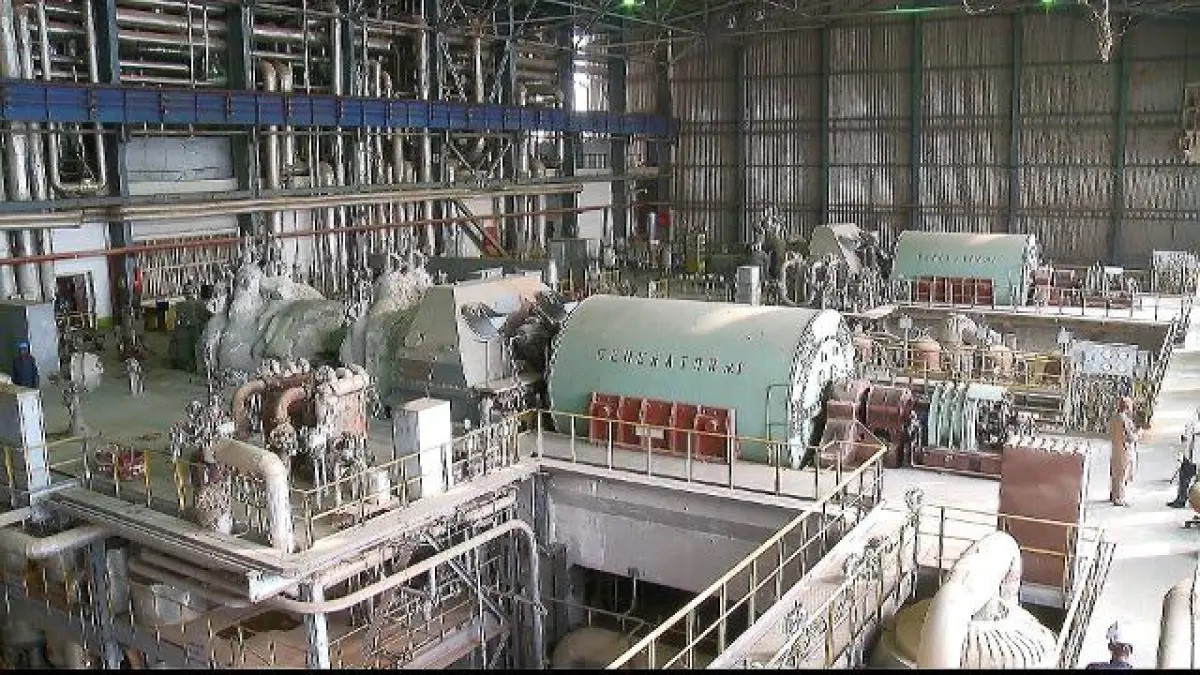
During Obasanjo’s tenure (1999–2007), Moscow pledged sweeping cooperation with Nigeria in energy, steel, and defense. The crown jewel of this diplomatic push was the proposed revival of the Ajaokuta Steel Complex, Nigeria’s most ambitious industrial project, which had stalled for decades despite billions of dollars in investments. Russia, through its state-owned firms and technical experts, promised to provide financing, technology, and training to bring Ajaokuta back to life.
Yet two decades later, Ajaokuta remains in ruins. The Russian commitment never translated into cash, and Abuja was left to restart talks with new partners. Similarly, plans for joint oil exploration ventures and expanded defense cooperation fizzled out after initial memoranda of understanding.
Obasanjo’s government signed a number of documents with Moscow, but few projects ever moved beyond the paper stage. Nigerian officials who participated in those negotiations later admitted that Russia’s biggest weakness was its lack of financing. Unlike China, which came armed with Exim Bank loans and turnkey contractors, Russia offered expertise but no capital.
The lesson was clear: without structured financial support, Russian promises could not compete with the billions China was already pouring into Nigerian infrastructure.
Nigeria’s Trade Reality: Russia as a Minor Player
The absence of financing is not just anecdotal—it shows in the numbers.
Nigeria’s Trade with Russia vs. China and the US
Partner Nigeria’s Exports (USD) Nigeria’s Imports (USD) Balance / Impact
Russia ~$1.5 million (2024) ~$2.09 billion (2024) Negligible exports; deficit, no capital inflows
China ~$2.03 billion (2024) ~$17 billion+ annually Infrastructure-backed deficit (rail, power, ports)
United States ~$4.4 billion (2022) Balanced imports & services More stable, diversified cooperation
Russia accounts for less than 1% of Nigeria’s trade, and the structure of that trade is unbalanced. Nigeria imports wheat, fertilizers, and some machinery from Russia, but exports almost nothing back. By contrast, China has become Nigeria’s largest trading partner, financing and building railways, power plants, and free trade zones. The U.S., though less visible in physical infrastructure, remains Nigeria’s biggest crude oil buyer while providing access to financial services and technology.
Despite Russia’s frequent declarations of friendship, Abuja does not see Moscow among its top ten trading partners.
Why Russia Keeps Missing the Mark
Several factors explain why Russia’s Africa strategy remains symbolic rather than substantive:
- No financial institutions to support deals
- China’s Exim Bank and policy lenders ensure African projects come with credit lines.
- The U.S. offers development financing through agencies like OPIC (now DFC).
- Russia, by contrast, has no institutional mechanism to provide African governments with the capital needed to implement deals.
- Global sanctions and liquidity crunch
- Since 2014, and especially after the 2022 invasion of Ukraine, Russia has faced severe financial sanctions.
- Its banks are largely cut off from the international system, making it difficult to provide long-term credit abroad.
- Legacy of distrust
- The failure to deliver on projects like Ajaokuta has left Nigerian policymakers skeptical.
- Moscow’s record of unfulfilled promises weakens its credibility compared to Beijing or Washington.
- Strong competition
- China and India bring financing, technology, and workers.
- The U.S. leverages its markets and financial systems.
- Russia lacks the same competitive edge, leaving it with little more than symbolic gestures.
Nigeria’s Perspective: Choosing Real Partners Over Rhetoric
From Abuja’s standpoint, the comparison is stark. China may saddle Nigeria with debt, but it also delivers tangible assets: modern railways, airport terminals, and industrial parks. The U.S. offers not just oil trade but also investment in services, banking, and security.
Russia, by contrast, offers friendship, rhetoric, and occasional defense hardware sales. While these may have symbolic value, they do little to advance Nigeria’s long-term development goals.
A Nigerian economist summarized the dilemma bluntly: “Russia brings words; China builds rails; America buys oil. We can’t run an economy on words.”
For policymakers in Abuja, the choice is not ideological but practical. Nigeria needs financing, infrastructure, and technology transfer. Any partner unable to provide those tools risks being sidelined.
Lessons from the Past Two Decades
Looking back, Nigeria’s engagement with Russia since the Obasanjo era highlights three major lessons:
- Agreements must be tied to financing. Without money, MoUs are meaningless.
- Geopolitics without economics is hollow. Russia may seek allies against Western sanctions, but Nigeria’s priority is development.
- Partnerships must deliver measurable outcomes. China’s rail projects may be debt-heavy, but at least they exist. Russia’s projects remain in the realm of rhetoric.
The Broader African Picture
Nigeria is not alone in this experience. Across Africa, Russia has announced major investments in mining, energy, and defense. Yet very few projects have been completed. The exceptions—such as nuclear power cooperation with Egypt or arms deals with Algeria—are driven more by geopolitics than development financing.
In 2023, Russia hosted its second Russia-Africa Summit in St. Petersburg, promising billions in investment. But African leaders quietly noted the absence of clear financing mechanisms. The pledges, like those made to Nigeria, remain aspirational.
By contrast, the U.S.-Africa Leaders Summit and China-Africa Cooperation Forum both provide detailed financing frameworks that African governments can rely on.
Can Russia Still Catch Up?
Despite its current weakness, Russia still has avenues to remain relevant:
- Agriculture: Russia is a key wheat supplier to Nigeria and could expand into broader agribusiness cooperation.
- Energy: With Nigeria seeking to monetize gas reserves, Russia’s expertise in LNG could be valuable—if backed by financing.
- Technology: Russia’s defense and space industries could offer niche partnerships if they include funding.
But without addressing its financing gap, these opportunities will remain out of reach.
Final Thoughts: What Nigeria Must Do
For Nigeria, the key lesson is simple: measure diplomacy by delivery. Symbolic alliances may have value in global forums, but they cannot replace capital, infrastructure, and trade. Abuja must continue to diversify its partners, but prioritize those who provide tangible results.
Two decades after Obasanjo sought to revive Ajaokuta with Russian help, Nigeria must accept a sobering reality: Russia, for now, is more of a rhetorical ally than a financial partner. Unless Moscow restructures its economic diplomacy with real financing instruments, it will remain a marginal player in Africa’s transformation.
As Africa’s largest economy, Nigeria cannot afford another decade of promises without projects. The future of its development lies with partners who not only shake hands and group photographs but also ability to write the checks. Nigeria and many other African States are desirous to partner with potential foreign investors with adequate funds for investment in the continent. The second ‘re-awakening’ must feature noticeable improvement in the living standards of the estimated 1.4 billion people.
World
Russian Researchers Roadmap Africa’s Investment Sectors for Entrepreneurs
By Kestér Kenn Klomegâh
The Centre for Transition Economy Studies of the Institute for African Studies of the Russian Academy of Sciences held a two-day scientific conference under the theme: “Industrial Development Strategies of African Countries” on March 18-19. The conference was opened by Professor Irina Abramova, Director of the Institute for African Studies. More than 40 researchers and experts from Russia, South Africa, Nigeria, Egypt and North Macedonia took part in the event.
The conference focused on a wide range of significant issues related to Africa’s industrial development, the modernisation of the African production base, and the potential for Russian-African cooperation. The in-person part of the conference focused on the development of the manufacturing and extractive industries, special economic zones, energy and transport infrastructure, digitalisation, and the agro-industrial complex. The second day of the conference was conducted as an online discussion in English, featuring African colleagues on the localisation of production chains in Africa, covering both agricultural and mineral processing.
Topics of the Conference included:
- Continental, regional and national programs and plans of industrial development in Africa. Prospects of continental and regional production chains.
- Study of the manufacturing market in African countries: manufacturing and agro-industrial complexes
- Energy, transport, and digitalisation: necessary infrastructure for industrial development.
- Interests of Multinational Corporations in Africa: conditions, forms of activities and geographical distribution. The role of free economic zones.
- Government policy regarding Multinational Corporations and control over export-import flows.
- The role of international organisations and activities of external actors.
- Possible areas and prospects for expanding mutually beneficial cooperation for Russian companies in Africa.
Experts in African studies from Russia, as well as representatives of the Russian government and business circles involved in trade and economic cooperation with African countries, actively participated. One of the significant outputs presented at the plenary session of the conference was the full-text on the African Development Strategy database created by Professors D. A. Degterev and A. D. Novikov, together with the staff of the IAS. The database covers more than 400 official strategic planning documents across 53 countries on the continent for the period 1997–2025. It systematises them under six thematic areas: long-term and medium-term development strategies, industrial policy, ICT, agriculture and the water sector.
The plenary session featured nine reports covering key dimensions of Africa’s industrial development. There were issues of trade and industrial potential of the continent that were highlighted in the report on the export specificity of African machine-building industries: based on ITC Trade Map data (2019–2024) that shows duties of South Africa, Tunisia, and industrial production, including on intracontinental markets.
Institutional mechanisms of Russian-African economic cooperation were reviewed in the report on the activities of Intergovernmental Commissions: the number of these ICC increased from four (4) in 2023 to nine (9) in 2025, and the volume of investment funds to support African projects is planned to increase, at least, to Rouble 5 billion for 2026–2027.
The conceptual dimension of financing industrialisation was presented through a critique of universal Western narratives and the justification for the need for an “application finance strategy”—a country model that takes into account the economy of Africa. Practical aspects of Russia’s investment presence in Africa are characterized on the example of projects in the countries of the Alliance of Sahel States (AES) with an emphasis on the specific risks of the subregion (DM Sinitsyn, VEB.RF). Digitalisation and artificial intelligence development in sub-Saharan African countries were also analysed and presented at the conference.
Russian-African cooperation in the field of technologies and education was covered in the reports on the transfer of agrobiotechnologies through the Afro-Russian Centre for Technology Development in Kampala, within which, in 2025/2026, this period, in which concretely 467 citizens of African countries were trained in Russian universities (NA Goncharova, FGBU “Agroexport”).
The competitive struggle of foreign players for African markets and the possibilities of Russian participation were considered in the reports on the position of the continent on the world energy markets, supplies of ground vehicles, and activities of pharmaceuticals for Africa. The digital dimension of industrialisation was covered by the reports on the cyber potential of West Africa, the formation of data processing centres in the industrial strategy of South Africa, and the digitalisation strategies of Algeria and Morocco.
The theme of most speeches, at the conference, became a reflection on the ‘disconnection’ between the proclaimed goals of industrialisation and the actual structure of African economies: despite the widespread proliferation of pre-national strategic documents, industries in the continent’s total GDP has not exceeded 10–12% for more than two decades, and exports still comprise mainly unprocessed raw materials.
In this regard, a number of reports justify the need to transition from external financial models formed by international organisations to sovereign country strategies based on state political, industrial and human resources. Global South—including, to deepen Russian-African cooperation in the spheres of technology, education and investment.
A collective monograph is, however, planned for publication following the conference. The event included the presentation of the full-text database on African development strategies, prepared by the team of the Institute for African Studies of the Russian Academy of Sciences.
World
Court Finds Lafarge, Eight ex-Employees Guilty of Terrorism Financing
By Aduragbemi Omiyale
A court in Paris, France, has found notable French cement manufacturer, Lafarge, and eight of its former employees guilty of terrorism financing.
Delivering the judgment on Monday, Judge Isabelle Prevost-Desprez held that Lafarge paid some members of the Islamic State (IS or ISIS) in Syria about $6.5 million (€5.59 million; £4.83 million) between 2013 and 2014 to protect its plant operating in northern Syria.
The court said this action provided oxygen for the terror group to operate and carry out its violent acts.
The former chief executive of the company, Mr Bruno Lafont, was also found complicit and has been sentenced to six years.
“It is clear to the court that the sole purpose of the funding of a terrorist organisation was to keep the Syrian plant running for economic reasons. Payments to terrorist entities enabled Lafarge to continue its operations,” the judge said, adding that, “These payments took the form of a genuine commercial partnership with IS.”
The factory in Jalabiya, northern Syria, was bought by Lafarge in 2008 for $680 million and began operations in 2010, months before the civil war began in March 2011, following opposition to then-president Bashar al-Assad’s brutal repression of anti-government protests.
ISIS jihadists seized large swathes of Syria and neighbouring Iraq in 2014, declaring a so-called cross-border “caliphate” and implementing their brutal interpretation of Islamic law.
To keep its plant running and protect its employees, Lafarge, between 2013 and September 2014, paid about €800,000 to secure safe passage and €1.6 million to purchase source materials from quarries under the control of the jihadist groups.
According to the BBC, Lafarge acknowledged the court’s finding, which it said “concerns a legacy matter involving conduct that occurred more than a decade ago and was in flagrant violation of Lafarge’s code of conduct,” describing the decision as an “important milestone” in the company’s actions to “address this legacy matter responsibly.”
World
Afreximbank Grows Assets to $48.5bn as Profit Hits $1.2bn
By Adedapo Adesanya
African Export-Import Bank (Afreximbank) has posted a robust financial performance for the 2025 financial year, with total assets and contingencies climbing to $48.5 billion.
This further shows its growing influence in financing trade and development across Africa and the Caribbean.
The Cairo-based multilateral lender, in its audited results released on April 9, reported a 21 per cent surge in total assets from $40.1 billion in 2024, underscoring sustained balance sheet expansion despite global economic headwinds and rating concerns.
Net loans and advances rose by 16 per cent to $33.5 billion, driven by strong disbursements into critical sectors including manufacturing, infrastructure, food security and climate adaptation, areas seen as pivotal to Africa’s long-term economic resilience.
Profitability remained strong, with net income climbing 19 per cent to $1.2 billion, up from $973.5 million in the previous year. Gross income also edged higher by 6.06 per cent to $3.5 billion, reflecting steady revenue growth supported by the bank’s expanding portfolio of trade finance and advisory services.
Afreximbank maintained solid asset quality, with its non-performing loan (NPL) ratio at 2.43 per cent, broadly stable compared to 2.33 per cent in 2024. This performance highlights disciplined risk management even as lending volumes increased across diverse markets.
Liquidity remained a key strength. Cash and cash equivalents rose significantly to $6.0 billion from $4.6 billion, while liquid assets accounted for 14 per cent of total assets, comfortably above the bank’s internal minimum threshold of 10 per cent.
Shareholders’ funds grew 17 per cent to $8.4 billion, supported by the strong profit outturn and fresh equity inflows of $299.4 million under its General Capital Increase II programme. The bank’s capital adequacy ratio stood at 23 per cent, well above regulatory benchmarks, providing a solid buffer for future growth.
Operating expenses increased to $459.2 million from $367.7 million, reflecting staff expansion and inflationary pressures. However, Afreximbank retained cost discipline, with a cost-to-income ratio of 21 per cent, still significantly below its 30 per cent ceiling.
The bank successfully tapped international capital markets, raising over $800 million through Samurai and Panda bond issuances in Japan and China during the year. The move helped counter concerns raised by some rating agencies and reaffirmed Afreximbank’s strong funding access and credibility.
Commenting on the results, Senior Executive Vice President, Mrs Denys Denya, said the performance reflects resilience and strategic execution amid a challenging global environment.
“Despite continuing global geopolitical challenges and disruptions caused by some rating actions, the Group delivered excellent financial performance in 2025,” he said.
He noted that the results cap a decade of transformative leadership under the erstwhile President, Mr Benedict Oramah, with the bank already ahead of most targets under its Sixth Strategic Plan, which runs through 2026.
Mr Denya added that newer subsidiaries, including the Fund for Export Development in Africa (FEDA) and AfrexInsure, are now profitable, contributing to earnings growth and strengthening the group’s diversified structure.
“The Group’s balance sheet is at its strongest level ever, with liquidity levels and capitalisation well above target and good asset quality,” he said.
Afreximbank said it is entering the 2026 financial year with strong momentum, positioning itself to scale impact, deepen trade integration and drive value addition across “Global Africa.”
Return metrics remained stable, with return on average equity at 15 per cent and return on average assets improving slightly to 3.04 per cent, signalling efficient use of capital.
With a fortified balance sheet, rising profitability and sustained investor confidence, Afreximbank said it is firmly on track to consolidate its role as a key engine of trade-led growth across the continent.
-
Feature/OPED6 years agoDavos was Different this year
-
Travel/Tourism10 years ago
Lagos Seals Western Lodge Hotel In Ikorodu
-
Showbiz3 years agoEstranged Lover Releases Videos of Empress Njamah Bathing
-
Banking8 years agoSort Codes of GTBank Branches in Nigeria
-
Economy3 years agoSubsidy Removal: CNG at N130 Per Litre Cheaper Than Petrol—IPMAN
-
Banking3 years agoSort Codes of UBA Branches in Nigeria
-
Banking3 years agoFirst Bank Announces Planned Downtime
-
Sports3 years agoHighest Paid Nigerian Footballer – How Much Do Nigerian Footballers Earn