Economy
Oyedele Responds to KPMG’s Observations on Nigeria’s New Tax Laws
By Modupe Gbadeyanka
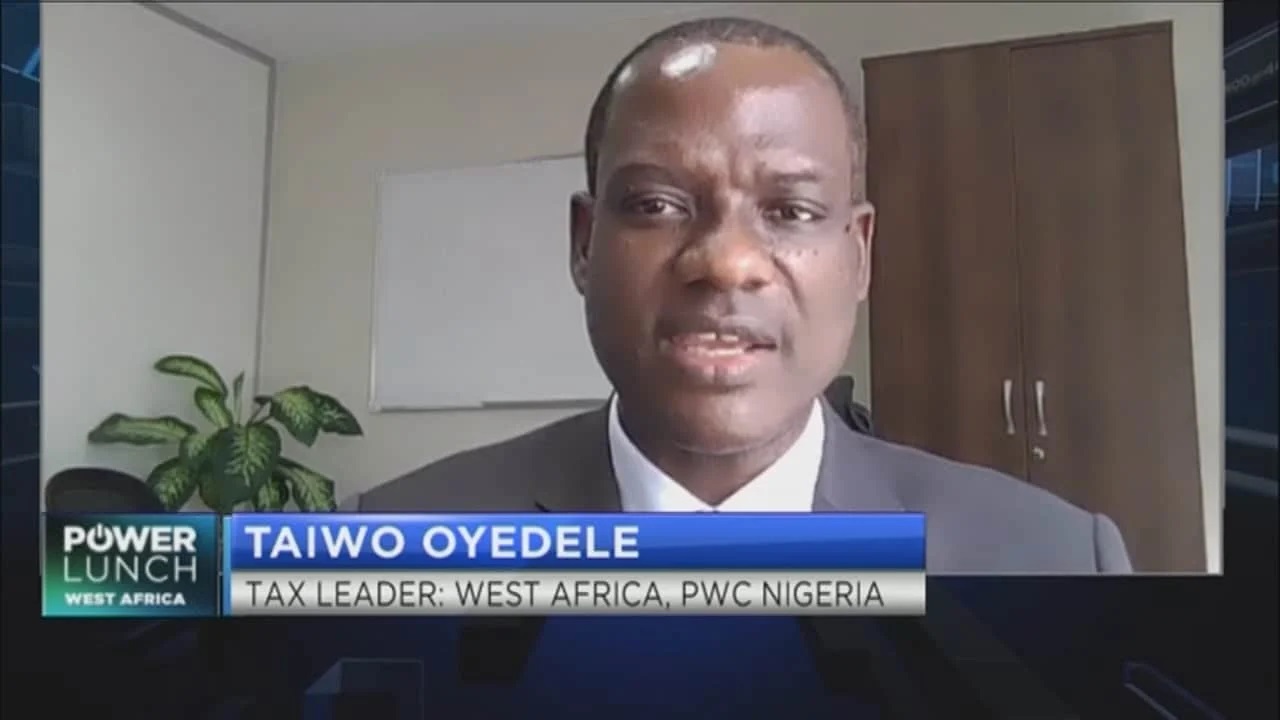
The chairman of the Presidential Fiscal Policy and Tax Reforms Committee, Mr Taiwo Oyedele, has responded to the alleged errors and others observed in the controversial tax laws of Nigeria, which fully became effective January 1, 2026.
In an analysis posted in a newsletter posted on its website, the Nigerian arm of a global consultancy firm, KPMG, highlighted some sections of the laws that look confusing, making some recommendations.
The company disclosed that if the errors were not addressed, they could discourage investors from the country.
But responding to these observations, Mr Oyedele, who acknowledged that a few points raised by KPMG were useful, particularly where they relate to implementation risks and clerical or cross-referencing issues, stressed that the majority of the publication reflected a misunderstanding of the policy intent, a mischaracterisation of deliberate policy choices, and, in several instances, repetitions and presentation of opinion and preferences as facts.
According to him, a significant proportion of the issues described as “errors,” “gaps,” or “omissions” by KPMG are either the firm’s errors and invalid conclusions or the issues are not properly understood by them.
The tax expert also noted that KPMG may have missed context on broader reforms objectives, or are areas where KPMG prefer different outcomes than the choices deliberately made in the new tax laws.
“While it is legitimate to disagree with policy direction, disagreements should not be framed as errors or gaps. KPMG would have been more effective if the firm adopted a similar approach like other professional firms who engaged directly providing the opportunity for clarifications and mutual-learning.
It is equally important to distinguish between policy choices designed to achieve the reform objectives and proposals that merely represent a firm’s preference,” he added.
Speaking on the taxation of shares and the stock market, the former PwC man said, “Contrary to the presumption that the new tax provisions on chargeable gains would trigger a sell-off on the stock market, the fact is that the applicable tax rate on share gains is not a flat 30 per cent. The tax framework is structured from zero per cent to a maximum of 30 per cent, which is set to reduce to 25 per cent. Furthermore, a significant majority of investors (99 per cent) are entitled to unconditional exemption, with others qualifying subject to reinvestment.
“The market’s performance, which is at an all-time high with increased investment flow, demonstrates investors understanding that the tax changes will enhance the fundamentals of firms both in terms of profitability and cash flows. The sell-off narrative is unsubstantiated as any disposals in December 2025 would have benefited from the re-investment exemption or enhanced deductions under the new law.”
He also clarified that the suggestion to set the commencement date as the start of an accounting period (e.g., 1 January 2026) takes a narrow view of the complex transition issues.
“A wholesale reform affects myriad issues beyond the accounting period, spanning multiple periods, different bases of assessment (preceding year, actual year), as well as issues related to audit, deductions, credits, and penalties. Limiting the commencement to a single date for accounting periods would fail to address the intricacies of continuous transactions and other transition matters. KPMG’s proposal is therefore not a “gold standard” to be applied to all new laws as suggested,” he said.
Below are the other areas he clarified in his post;
Indirect Transfer of Shares
The new provision to tax indirect transfer of shares is a policy choice aligned with global best practices and BEPS initiatives. Its objective is to block a long-exploited tax loophole by multinationals and other investors, not to affect competitiveness. This is a common provision in international tax, and the assertion that it may affect the country’s economic stability is disingenuous.
VAT Exemption on Insurance Premium
KPMG’s point regarding a specific VAT exemption on insurance premium is technically unnecessary, as an insurance premium is not a “taxable supply” defined under the Nigeria Tax Act. Insurance relates to risk transfer, not the supply of goods or services subject to VAT. As this has always been the administrative and legal position, a specific amendment for exemption is academic. If it is not broken, don’t fix it.
Inclusion of ‘Community’ in Definition
The concern about the inclusion of “community” in the definition of a ‘person’ but its omission from the charging section does not constitute a gap or ambiguity. In statutory interpretation, definitions provided in the law apply wherever the defined term appears, unless the context requires otherwise. Hence, ‘person’ and ‘taxable person’ are used in the charging section, and both definitions include ‘community.’ This approach is consistent with modern legislative drafting principles, which use comprehensive definitions to streamline operative provisions and avoid redundancy. This is similar to the inclusion of partnerships and executors in the definition but not under the charging section. The use of the word “includes” further signifies that the list of taxable persons is not exhaustive.
Joint Revenue Board (JRB) Composition
The composition and mandate of the Joint Revenue Board (JRB) are intentional. Its policy advisory role is specifically to provide a subnational tax and revenue perspective that complements the fiscal policy mandate of the Ministry of Finance. Its membership is appropriately limited to revenue-focused agencies, which is why it is called the Joint Revenue Board. This is a similar composition under which the former JTB operated effectively, and its functions remain consistent with the need for inter-agency coordination.
Distinction in Dividend Treatment
KPMG’s analysis appears to mix the distinction between a foreign-controlled company and a foreign operation of a Nigerian company. Dividends distributed by a foreign company cannot be “franked” since no Nigerian Withholding Tax (WHT) would have been deducted. Section 162(1)(s) confers exemption on dividend, interest, rent, or royalty derived from outside Nigeria and brought into Nigeria through approved channels. The choice to treat dividends distributed by Nigerian companies differently from foreign companies is a deliberate policy choice, as they are fundamentally different for tax purposes.
Non-Resident Registration and Final Tax
The view that a payment subject to deduction as final tax should automatically exempt the non-resident recipient from tax registration misses a critical distinction. While the law conditionally exempts passive income from registration, the deduction of tax on non-passive income is not synonymous with an exemption from registration or filing of returns. The same way that residents are required to file returns on income such as interest (in the case of individuals) and dividend where WHT is final. Returns serve a broader purpose beyond solely generating tax revenue.
Tax on Foreign Insurance Premiums
The proposal to exempt foreign insurance companies from tax on premiums from insurance written in Nigeria to deepen penetration, while local insurance companies continue to pay tax, would be detrimental to the domestic insurance sector. This would create an unfair and harmful competitive disadvantage for local firms in their own market. The current policy is designed to protect and promote local industry and ensure a level playing field.
Parallel Market Forex Deduction
The new law disallows tax deduction for the difference where a business buys foreign exchange in the parallel market at a premium over the official rate. This is a critical fiscal policy choice designed to complement monetary policy, strengthen, and stabilise the Naira. By removing the tax subsidy for patronage of the parallel market, the policy aims to reduce incentives for round-tripping and redirect legitimate FX demands to the official market. This is policy congruence, not an error.
VAT Compliance-Linked Deductibility
The non-tax deduction for taxable transactions on which VAT has not been charged is a necessary anti-avoidance measure. It removes the advantage that some taxpayers previously enjoyed by patronising suppliers who evade VAT. This is a matter of fairness and is squarely within the control of a business to manage, especially given the provision for the self-charge of VAT. It also ensures that responsible businesses play their part in promoting voluntary tax compliance across the ecosystem.
Progressive Personal Income Tax
While KPMG acknowledges the reform objective of fairness and progressivity, the firm disagrees with a top marginal tax rate of 25% for the highest earners. In reality, the effective tax rate can be as low as 22% for an individual earning billions a year simply by contributing 10% to pension. This rate is competitive when compared to many other countries, including Angola 25%, Egypt 27.5%, Ghana 35%, Kenya 35%, the U.S. (Federal) 37%, South Africa 45%, and the U.K. 45%. So, the rate is not “oppressive” or one that will negatively affect economic growth as claimed, rather it ensures progressivity without compromising competitiveness. From a broader policy objective perspective, the increase in top marginal rate for high income earners and the reduction in corporate tax rate is designed to address the existing higher tax burden associated with business formalisation.
Police Trust Fund
The Police Trust Fund was signed into law on May 24, 2019, with a six-year lifespan under section 2(2) of the Act, which ended in June 2025. Therefore, KPMG’s point that the new tax law should be amended to repeal the taxing section of the Police Trust Fund Act is needless, as the provision no longer exists.
Small Company Verification
The analysis concerning the tax exemptions for small companies affecting large companies’ obligations is not a new issue or an inconsistency in the new law. The small business threshold was introduced via the Finance Act 2021. This issue pre-dates the current tax laws and should not be presented as an error or omission simply by virtue of a higher tax exemption threshold under the new law.
What KPMG Left Out
While acknowledging the objectives of the reform, KPMG could have highlighted the major structural improvements under the new laws, including:
– simplification and tax harmonisation,
– the scope for reduction in corporate tax rate from 30% to 25%,
– expanded input VAT credits for businesses,
– tax exemption for low-income earners and small businesses,
– elimination of minimum tax on turnover and capital, and
– improved investment incentives for priority sectors.
A balanced assessment would have recognised these transformative elements, among others.
Conclusion and Way Forward
The tax reform is the result of an extensive consultation with various stakeholder groups in addition to the legislative process that included widely publicised public hearings, avenues intended for all stakeholders including international firms to provide technical expertise at the formative stage.
In any comprehensive overhaul of a nation’s tax framework, clerical inconsistencies or cross-referencing gaps may occur, and these are already being identified within the government. The tax reform represents a bold step toward a self-sustaining and competitive Nigeria.
An effective review needs to connect identified gaps to clear policy intents and the reality of modern-day tax systems within the context of economic development and global competitiveness.
At this stage, the effectiveness of the tax law depends on administrative guidance, clarifications from the tax authority, and regulations to complement precise statutory provisions where necessary pending future amendments.
We urge all stakeholders to pivot from a static critique to a dynamic engagement model, which allows for clarifications and a productive partnership in the implementation of the new tax laws.
Economy
Run From Any Unregistered Online Investment Platform—SEC Warns Nigerians
By Aduragbemi Omiyale
For the umpteenth time, the Securities and Exchange Commission (SEC) has run to the rooftop to warn Nigerians against putting their hard-earned money in online investment platforms not authorised to operate in the nation’s capital market.
SEC is the apex regulatory agency in the Nigerian capital market. It issues licences to companies operating in the ecosystem.
In a statement on Thursday, the organisation expressed concerns over the rising “promotion of unregistered online investment schemes on social media applications and websites, including WhatsApp, Instagram, Telegram, Facebook, TikTok and other digital platforms.
In the notice, the SEC emphasised that, “Many of these investment schemes exhibit characteristics of Ponzi or Prohibited investment schemes, while some operators of such schemes also provide unauthorised investment services to members of the public.”
In view of these, the commission advised members of the public “to refrain from investing or participating in any unregistered online investment platform or scheme promising unrealistic or guaranteed returns.”
“Members of the public are further advised not to rely on investment advisories circulated through online platforms by persons or entities not registered by the commission, as reliance on such advisories may expose investors to significant financial losses and fraudulent schemes,” it noted.
“The public is reminded that, under the provisions of the Investments and Securities Act, 2025, only entities registered by the commission are authorised to promote investment services, provide investment advisory services or solicit funds from the public in the Nigerian capital market,” another part of the circular signed by the management noted.
The regulator urged the investing public to verify the registration status of any platform, company, or entity offering investment opportunities on its dedicated portal: https://sec.gov.ng/fintech-and-innovation- hub-finport/registered-fintech-operators/ or https://www.sec.gov.ng/cmos before transacting or investing with them.
Economy
Dangote Rejects NNPC Bid to Raise Stake in Soon-to-Be Listed Refinery
By Adedapo Adesanya
Nigerian businessman, Mr Aliko Dangote, has disclosed that he rejected requests by the Nigerian National Petroleum Company (NNPC) Limited to increase its 7.25 per cent stake in the Dangote Petroleum Refinery.
Mr Dangote stated this in a podcast with the Chief Executive Officer of the Norwegian Sovereign Wealth Fund, Mr Nicolai Tangen.
In the podcast interview, the billionaire revealed that the state oil company offered to increase its current 7.25 per cent stake in the 650,000 barrels per day plant.
However, this was rejected because the company is planning to go public and give other Nigerians the opportunity to own shares in the plant.
Recall that the refinery is planning a multi-exchange listing and targeting a valuation of $50 billion. It has appointed a consortium of three financial advisers to manage the offering. Stanbic IBTC Capital to handle international book-building process and lead engagement with foreign portfolio investors; Vetiva Capital Management to manage retail investor distribution within Nigeria; and FirstCap to focus on placements with Nigerian institutional investors, particularly pension funds.
It was reported in 2021 that the NNPC acquired the 7.25 per cent stake in the refinery for $1 billion, with an option to acquire the remaining 12.75 per cent stake by June 2024.
However, the national oil firm reneged on its decision.
During the interview with the Norwegian Sovereign Wealth Fund CEO, Mr Dangote revealed that the state oil company had made attempts to acquire more stakes in the refinery, but this was turned down.
The revelation came while he was responding to questions about what could be the biggest risks to his businesses.
“Actually, if there are civil wars, which is not in the offing at all.
“The other biggest risk is government inconsistencies in policies, and we are addressing that one because if you look at our refinery, the national oil company already owns 7.25 per cent, and they are trying to buy more. We are the ones that said no; we want to now spread it and have everybody be part of it.”
In 2024, Mr Dangote revealed that under the former Group Chief Executive Officer, Mr Mele Kyari, the NNPC reduced its stake in the refinery from 20 per cent to 7.25 per cent. He disclosed that the NNPC had only a 7.2 per cent stake in the refinery and not 20 per cent as many Nigerians believed.
“The agreement was actually 20 per cent, which we had with NNPC, and they did not pay the balance of the money up until last year; then we gave them another extension up until June (2024), and they said that they would remain where they had already paid, which is 7.2 per cent. So NNPC owns only 7.2 per cent, not 20 per cent,” Mr Dangote stated at the time.
Economy
Pathway Asset Management’s Adekunle Alade Unveils Blueprint for Sustainable Wealth, Investment Opportunities
In this interview with Mr Adekunle Alade, Founder and Director of Pathway Asset Management Limited, he discusses the blueprint for sustainable wealth and investment opportunities. Excepts;
Could you please tell us about Pathway Asset Management?
Pathway Asset Management is registered and regulated by the Securities and Exchange Commission (SEC) Nigeria as a fund and portfolio manager company with the main focus of helping individuals, retail, HNIs and institutions make smarter investment decisions and build long-term sustainable wealth. We understand how complex and unpredictable the Nigerian market can be because we operate in it every day. So, we’ve built a firm that is clear, disciplined, and driven by research, not guesswork.
Our offerings cut across Pathway Fixed Deposit Notes, Privately Managed Notes, Fixed Income Notes, Pathway Dollar Notes, Funds/Portfolio Management, Pathway Money Market Fund (coming soon), Pathway Dollar Funds (Coming Soon), and Investment Advisory services, all tailored to each client’s goal. But beyond the products, what really defines us is how we think: deep client understanding, strong governance, and a long-term mindset. That’s what guides every decision we make.
Can you walk us through Pathway Asset Management’s core investment philosophy and how it differentiates the firm in Nigeria’s asset management space?
Our philosophy is simple and profound. We are partners in our clients’ financial success. We create value, but never at the expense of disciplined risk management. Every investment is carefully assessed to ensure the returns justify the risk, helping clients move from speculation to structured, sustainable wealth building.
What sets us apart is our advisory DNA. We don’t just offer investment products; we bring an investment banker’s eye to asset management, combining strategic advice with precise execution.
We combine diversification, deep sector insight, and strong risk discipline to solve wealth preservation challenges, while prioritising transparency, client experience, and long-term outcomes.
Your portfolio includes Fixed Deposit Notes, Privately Managed Notes, and Portfolio Management services. How do these products cater to varying investor risk appetites?
We’ve designed our products to meet clients exactly where they are. For more conservative investors, our Fixed Deposit and Money Market offerings are focused on capital preservation, liquidity, and stable income. For clients looking for higher returns, our Privately Managed Notes, across fixed income, hybrid, equity and dollar structures, offer more optimised yield with a bit more structure.
For more sophisticated or institutional clients, our portfolio management services provide a fully tailored approach. Some clients prefer us to take full discretion, while others want to stay involved. Essentially, we have a vehicle specifically engineered for different investors’ financial goals.
What’s next for Pathway Asset Management? Where are you focusing growth?
With the recent unveiling of our Board of Directors, we’ve strengthened our governance and strategic direction, which is important for where we’re going.
Over the next few months, our focus is on deepening client relationships, expanding our product offerings, especially mutual funds like our upcoming Pathway Money Market Fund and positioning the firm to take advantage of emerging opportunities. For us, growth is not just about scale; it’s about scaling responsibly while maintaining the discipline and trust we’ve built.
What gap in the market is the upcoming Pathway Money Market Fund designed to fill?
For a long time, the Nigerian investment space has had a gap. You either had low-yield savings accounts or high-entry institutional investments. The Pathway Money Market fund is designed to bridge that gap.
With rising inflation, many people are losing value just by keeping money in traditional bank accounts. What we’re doing is opening access, giving everyday investors a simple, regulated way to benefit from high-quality government and corporate instruments with as low as N5,000 to start investing. We want someone with relatively small capital to still participate in opportunities that were previously out of reach. Our focus isn’t just on returns; it’s about providing a liquid, SEC-regulated vehicle where a small saver can get a big-market yield and still have capital preserved.
As a firm regulated by the Securities and Exchange Commission, how do you ensure compliance while maintaining operational efficiency?
At Pathway Asset Management Limited, we view compliance as a competitive advantage, built into how we operate every day. To maintain efficiency while meeting and compliance, we have adopted a ‘Compliance-by-Design’ approach from onboarding clients to tech-enabled reporting and risk management without over-leveraging our resources.
We’ve put in place strong internal controls, invested in the right people, have clear processes, and a culture of accountability across the firm. At the same time, we leverage technology and experienced professionals to ensure compliance is seamless, not a bottleneck.
So, for us, it’s about getting it right from the start; operating efficiently while staying fully aligned with regulatory standards.
How do you assess the impact of Nigeria’s current monetary policy direction on investment portfolios?
We’re in a transition phase, from aggressive tightening to a more stable environment.
For us, that creates opportunity. In fixed income, we’re locking in high yields now, knowing that rates may compress as inflation moderates.
At the same time, improving stability in exchange rates and interest rates creates a better environment for businesses, which supports selective equity exposure.
So, rather than reacting, we’re positioning clients to benefit from both sides: strong yields today and potential upside as the macro environment improves.
What safeguards are in place to protect investor capital across your managed portfolios?
At Pathway Asset Management, the security of investor capital is built into our operations through a multi-layered ‘Triple-Lock’ framework. We operate strictly under the license and oversight of the Securities and Exchange Commission, Nigeria. This means our operations are subject to periodic review, stringent reporting requirements, and minimum capital adequacy standards.
We don’t just follow the rules; we embrace them as a baseline for trust. But beyond that, one key safeguard is that we don’t hold client funds directly; assets (cash and securities) are held by independent SEC-approved custodians. That separation is critical for transparency and protection. We also apply disciplined investment policies. We don’t chase returns at the expense of safety. Every investment goes through a rigorous assessment process.
How does Pathway Asset Management manage downside risks, particularly in a volatile macroeconomic environment marked by inflation and FX instability?
In a market like Nigeria, volatility isn’t an anomaly; it’s a constant. Our approach to managing downside risk is built on dynamic asset allocation and financial discipline. We also hedge against currency risk by giving clients access to dollar-denominated investments, which helps preserve value.
On inflation, we focus on assets that can reprice or deliver returns above inflation over time. Our focus is not just on returns, but on protecting value and delivering consistency.
What is your outlook for Nigeria’s asset management industry over the next five years?
Nigeria’s asset management industry is entering a defining transition period, and the SEC’s recapitalisation directive is the central catalyst. Over the next five years, the industry will move from a fragmented, lightly capitalised landscape to a more consolidated, institutional, and competitive ecosystem.
Many smaller or undercapitalised firms will be unable to comply independently, leading to mergers, acquisitions, or outright exits. Within the first two to three years, the number of asset managers is likely to shrink significantly, leaving behind a smaller group of well-capitalised firms alongside a handful of specialised niche players.
In terms of growth, the outlook is structurally positive but cyclical. Assets under management (AUM) are expected to expand at a solid pace, supported by high domestic interest rates, increased financial savings, and improved macroeconomic reforms.
However, this growth will remain sensitive to macro conditions, particularly FX stability and interest rate cycles. Because a large portion of capital inflows into Nigeria is still short-term and yield-driven, the industry should expect periods of volatility rather than smooth, linear expansion.
-
Feature/OPED6 years agoDavos was Different this year
-
Travel/Tourism10 years ago
Lagos Seals Western Lodge Hotel In Ikorodu
-
Showbiz3 years agoEstranged Lover Releases Videos of Empress Njamah Bathing
-
Banking8 years agoSort Codes of GTBank Branches in Nigeria
-
Economy3 years agoSubsidy Removal: CNG at N130 Per Litre Cheaper Than Petrol—IPMAN
-
Banking3 years agoSort Codes of UBA Branches in Nigeria
-
Banking3 years agoFirst Bank Announces Planned Downtime
-
Sports3 years agoHighest Paid Nigerian Footballer – How Much Do Nigerian Footballers Earn