General
Again, Nigeria’s Electricity Grid Collapses, Triggers Nationwide Blackout
By Adedapo Adesanya
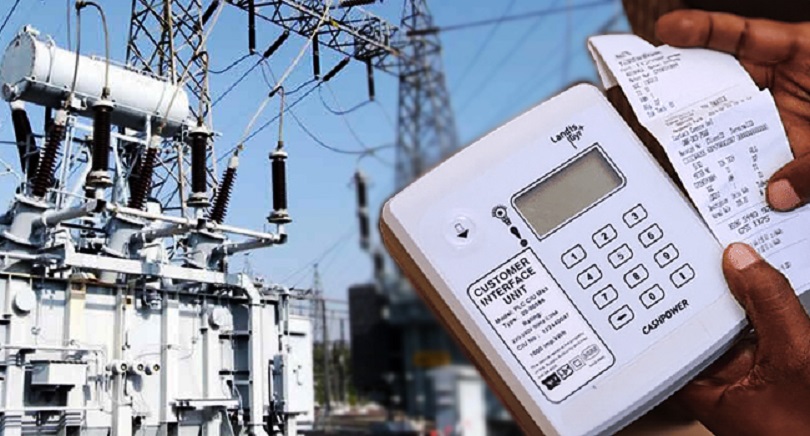
Nigeria’s electricity grid collapsed again on Tuesday morning, cutting power supply nationwide after generation and load allocation dropped to zero across all distribution companies,.
The incident marks the second recorded collapse of the national power grid in 2026, the second as well in five days following last Friday’s inclident.
This also means the third time in one month after a similar failure on December 29, 2025.
The system failure occurred at about 10:50 a.m, when electricity allocation to all electricity distribution companies fell to zero. Data from the grid operator showed that power generation plunged to zero megawatts, triggering a total shutdown of supply across the country.
A review of the national distribution load profile at the time of the incident indicated that all distribution companies, including Abuja, Eko, Benin, Enugu, Ibadan, Ikeja, Jos, Kano, Kaduna, Port Harcourt and Yola, recorded zero load, confirming a nationwide outage.
All 23 power generation plants connected to the national grid reportedly lost output during the incident, resulting in zero power allocation to each of the 11 electricity distribution companies.
As of time of filing this report, no official confirmation has been provided by the government authorities.
General
NDIC Seeks EFCC Enhanced Support on Asset Tracing, Recovery
By Adedapo Adesanya
The Nigeria Deposit Insurance Corporation (NDIC) has sought an enhanced collaboration with the Economic and Financial Crimes Commission (EFCC) in areas including asset tracing, recovery, and management.
This was hinged on a recent visit by the chief executive of the corporation, Mr Thompson Oludare Sunday, to the chairman of the anti-graft agency, Mr Ola Olukoyede.
Speaking at the occasion, Mr Sunday stressed that the visit offered an opportunity for formal engagement with the EFCC for further collaboration between the two organizations.
“We aim to further strengthen our collaboration, deepen institutional synergy and explore additional avenues for mutual support in the pursuit of national financial system stability. The EFCC has been our partner and we want this to continue. We look forward to an expanded and more impactful partnership between our two esteemed institutions,” Mr Sunday said.
Further in his request, he stated that the NDIC sought to leverage on the EFCC’s technical expertise in asset tracing, recovery and management, particularly in cases involving debtors of banks in liquidation.
“Your experience has and will continue to greatly enhance our recovery efforts. Additionally, we have that strategic responsibility for prosecuting individuals whose actions contribute to the failure of banks. We therefore seek closer collaboration with the Commission in this critical area.”
On his part, Mr Olukoyede, remarked that both agencies of government have a longstanding record of collaboration, pledged to amplify the working relationship.
He emphasized that the NDIC and EFCC are like inseparable twins, working together for years. He reminded the NDIC’s boss that the EFCC had been supporting his agency in the area of investigation, while the NDIC had been supporting the EFCC in the area of training.
“So, there has been this mutually beneficial relationship between NDIC and EFCC and we never intend to stop. We’ll continue to take it to a higher level, and continue to strengthen it,” he said.
Mr Olukoyede reiterated that his policy directive was to stimulate the Nigerian economy with the anti-graft war, leverage productive entities and enhance the capacities of other government agencies through needful interventions.
“One of the things I promised when I resumed was to use the instrumentality of this work to stimulate the economy, not just to make noise all over the place; to strengthen and encourage the internal processes of entities that are doing well and design fraud risk assessment for them. That was what necessitated my establishing a new department called Fraud Risk Assessment and Control.
“We don’t have to always wait for money to be stolen. Let us work with you and stakeholders in the economy to fine tune our system and make sure that we clean our financial ecosystem. You’re a key player in that area, and we are always willing to collaborate with you,” he added.
General
Military Confirms Attempt to Overthrow Tinubu, to Arraign Coup Plotters
By Aduragbemi Omiyale
The Nigerian military on Monday, January 26, 2026, confirmed that some of its personnel actually attempted to overthrow the government of President Bola Tinubu in October 2025.
It was earlier speculated that the October 1 parade last year was abruptly cancelled due to an alleged attempt to remove Mr Tinubu from office by some members of the Armed Forces of Nigeria (AFN), with 16 persons arrested over the issue.
Providing an update on the matter today, the Director of Information for the Defence Headquarters in Abuja, Major General Samaila Uba, said investigations have “identified a number of the officers with allegations of plotting to overthrow the government” and would be “formally arraigned before appropriate military judicial panel to face trial.”
“It would be recalled that the Defence Headquarters issued a press statement in October 2025 regarding the arrest of sixteen officers over acts of indiscipline and breaches of service regulations. The Armed Forces of Nigeria (AFN) wishes to inform the general public that investigations into the matter have been concluded and the report forwarded to appropriate superior authority in line with extant regulations.
“The comprehensive investigation process, conducted in accordance with established military procedures, has carefully examined all circumstances surrounding the conduct of the affected personnel. The findings have identified a number of the officers with allegations of plotting to overthrow the government which is inconsistent with the ethics, values and professional standards required of members of the AFN.
“Accordingly, those with cases to answer will be formally arraigned before appropriate military judicial panel to face trial in accordance with the Armed Forces Act and other applicable service regulations. This ensures accountability while upholding the principles of fairness and due process.
“The AFN reiterates that measures being taken are purely disciplinary and part of ongoing institutional mechanisms to preserve order, discipline and operational effectiveness within the ranks. The Armed Forces remain resolute in maintaining the highest standards of professionalism, loyalty and respect for constitutional authority,” the statement read.
General
CNPP, CSOs Describe Rivers Crisis as National Democratic Emergency
By Modupe Gbadeyanka
President Bola Tinubu has been called upon to resolve the escalating political crisis in Rivers State, warning that the situation now constitutes a “national democratic emergency” requiring urgent presidential intervention.
This call was made by the Conference of Nigeria Political Parties (CNPP) and the Coalition of National Civil Society Organisations (CNCSOs).
“Mr President, this is no longer just a Rivers State issue. It is a national democratic emergency,” the organisations declared in a joint statement, stressing that what is unfolding in the state “goes far beyond local politics” and represents “a critical test of Nigeria’s commitment to constitutional governance, separation of powers, and democratic stability.”
The CNPP and CNCSOs warned that failure by the President to act decisively could legitimise what they termed “legislative anarchy” and embolden similar crises across the federation. According to them, “failure to act now risks legitimising legislative anarchy and encouraging similar crises across other states, with dire consequences for national unity and peace.”
They described the Rivers State situation as a deliberate political project rather than a governance issue, insisting that Governor Siminalayi Fubara has not committed any constitutional offence warranting impeachment.
“Let us be clear,” they said, “Governor Siminalayi Fubara has not committed any act that meets the constitutional threshold for impeachment under Section 188 of the 1999 Constitution, as amended. There is no credible allegation of gross misconduct, no paralysis of governance, and no popular uprising demanding his removal.”
According to the groups, the ongoing impeachment threats reflect “the weaponisation of a State House of Assembly as an instrument of political conquest rather than a guardian of democracy,” a development they warned is “not only reckless; it is extremely dangerous to Nigeria’s national peace.”
They cautioned President Tinubu that if the Rivers State model is allowed to persist, Nigeria could slide into a destabilising era where legislatures are used to unseat elected governors for political and financial control. “If the Rivers State template is allowed to stand,” they warned, “then Nigeria risks sliding into a future where state assemblies across the country become battlegrounds for elite power struggles.” They further asked pointedly: “If every governor becomes vulnerable to impeachment at the whim of external political forces, where then is the sovereignty of the people? Where does democratic stability reside?”
The CNPP and CNCSOs also drew the President’s attention to allegations of conditional political settlements linked to the crisis. They cited claims by loyalists of Governor Fubara that the Minister of the Federal Capital Territory, Nyesom Wike, imposed conditions on the governor in exchange for halting impeachment proceedings. “Chief among these alleged conditions,” they said, “was the immediate ratification of a commissioner list reportedly submitted by the FCT Minister upon Governor Fubara’s return to office.”
“These allegations,” the groups added, “strongly suggest that the crisis is not about governance or accountability but about control—control of federal allocations, control of internally generated revenue, and control of political power in Rivers State.” They warned that such claims “strike at the heart of democratic governance and must not be ignored by the Nigerian state.”
On financial matters, the organisations appealed to President Tinubu to order a thorough probe into funds received and expended during the six-month emergency rule in Rivers State. They disclosed that the state “reportedly received no less than N254.37 billion from the Federation Account Allocation Committee between March and August 2025,” averaging about N42.40 billion monthly. They alleged that despite a probe announced by the House of Assembly, there were “strong indications” that the exercise was “merely cosmetic.”
More troubling, they claimed that “state resources were shared during the emergency rule, with lawmakers loyal to the FCT Minister allegedly receiving as much as N350 million each from funds exceeding N360 billion left behind by the suspended Governor.” If true, they said, this would amount to “a betrayal of public trust on a scale that demands urgent national attention.”
Framing their appeal directly to the President, the CNPP and CNCSOs said: “As President of the Federal Republic of Nigeria and leader of the APC, you have both the constitutional authority and moral responsibility to halt this dangerous slide.” They emphasised that Nigeria “cannot consolidate democracy while tolerating legislative blackmail, political extortion, and institutional sabotage.”
Among their key demands to the President are the immediate termination of all impeachment proceedings against Governor Fubara, an independent investigation into the conduct of the Rivers State House of Assembly, a presidentially ordered probe into allegations of conditional political settlements, and a comprehensive forensic audit of all funds received and expended during the emergency rule.
In a strong concluding warning directed at the Presidency, the groups stated that “impeachment without just cause is political banditry” and that the continued weaponisation of legislative institutions is “a direct threat to Nigeria’s democracy and national peace.”
They urged President Tinubu to act swiftly to prevent a dangerous national precedent, declaring: “Governor Siminalayi Fubara must be allowed to govern. Rivers State must be allowed to breathe. Nigeria’s democracy must be protected.”
“Enough is enough,” they concluded. “Let the Governor govern. Let Rivers State develop. Let Nigeria’s democracy survive.”
-
Feature/OPED6 years agoDavos was Different this year
-
Travel/Tourism9 years ago
Lagos Seals Western Lodge Hotel In Ikorodu
-
Showbiz3 years agoEstranged Lover Releases Videos of Empress Njamah Bathing
-
Banking8 years agoSort Codes of GTBank Branches in Nigeria
-
Economy3 years agoSubsidy Removal: CNG at N130 Per Litre Cheaper Than Petrol—IPMAN
-
Banking3 years agoSort Codes of UBA Branches in Nigeria
-
Banking3 years agoFirst Bank Announces Planned Downtime
-
Sports3 years agoHighest Paid Nigerian Footballer – How Much Do Nigerian Footballers Earn