

General
1% Nigerian Content Levy Remittance Still Mandatory—NCDMB

By Adedapo Adesanya
The Nigerian Content Development and Monitoring Board (NCDMB) has reiterated that operators, contractors, and service companies in the upstream sector of their mandatory obligation to remit one per cent (1 per cent) Nigerian Content Development Fund (NCDF) levy into the bank accounts officially designated by the board.
In a statement issued on Wednesday, the General Manager of the Corporate Communications Division, Mr Obinna Ezeobi, the Executive Secretary of NCDMB, Mr Felix Omatsola Ogbe, explained that the NCDF is established under Section 104 of the Nigerian Oil and Gas Industry Content Development (NOGICD) Act, 2010, as a dedicated fund for the development of Nigerian content in the oil and gas industry.
He reiterated that covered entities are bound to remit one per cent of the value of every upstream contract, adding that NCDMB is vested with the exclusive authority for the management and administration of the fund.
According to him, funds generated under the NCDF are deployed to support indigenous oil and gas contractors and service companies, to finance capacity development and training in the industry, to enable access to affordable finance for indigenous participation, and to drive sustainable growth across the oil and gas value chain.
Mr Ogbe clarified further that “the NCDF is a ring-fenced statutory development fund created by a specific Act of the National Assembly,” adding that it is “not classified as Federal Government revenue payable into the Consolidated Revenue Fund and its collection and administration are expressly governed by Section 104 of the NOGICD Act.”
He stressed that all remittances of the levy must be made strictly into the accounts officially designated by the NCDMB, pointing out that “any remittance made outside the accounts formally designated by the NCDMB “shall not be recognised as a valid payment of the one per cent (1%) NCDF Levy under the Act.”
He urged companies to ensure strict compliance and to seek clarification from the Board where necessary prior to effecting any remittance.
The Executive Secretary assured industry stakeholders that the Board remains committed to transparency, accountability, and the effective utilisation of the Fund for the growth and sustainability of Nigerian Content in the oil and gas industry.
“Furthermore, the NCDMB has announced that obtaining the Nigerian Content Development Fund Compliance Certificate (NCFCC) has become a key requirement for accessing the Board’s regulatory services and approvals.
“The NCDF Compliance Certificate is issued to companies to confirm their full compliance with statutory obligation to remit one per cent (1%) of the value of every contract awarded in the upstream sector of the oil and gas industry,” the statement added.
The Board stated that “without a valid NCDF Compliance Certificate, access to regulatory documents, certifications, approvals, and clearances issued by NCDMB shall not be granted.”
It added that some of these include Nigerian Content Equipment Certificate (NCEC), approvals and clearances for projects and contracts, and other regulatory documents issued by the Board.
The agency advised oil and gas industry stakeholders to regularise their NCDF remittance status, apply promptly for the document and ensure continuous compliance to avoid disruptions to operational schedules.
The board said the process of obtaining the NCFCC is fully digital and accessible via the NCDMB online portal. It advised all eligible companies to submit relevant contract and remittance information, upload evidence of NCDF payments, complete verification and compliance review, and obtain the Compliance Certificate upon confirmation.
According to NCDMB, obtaining the NCDF Compliance Certificate matters because it is a validation of a company’s standing with the Board, and serves as a mechanism for promoting transparency, accountability, and sustainable Nigerian content development.



By Dipo Olowookere
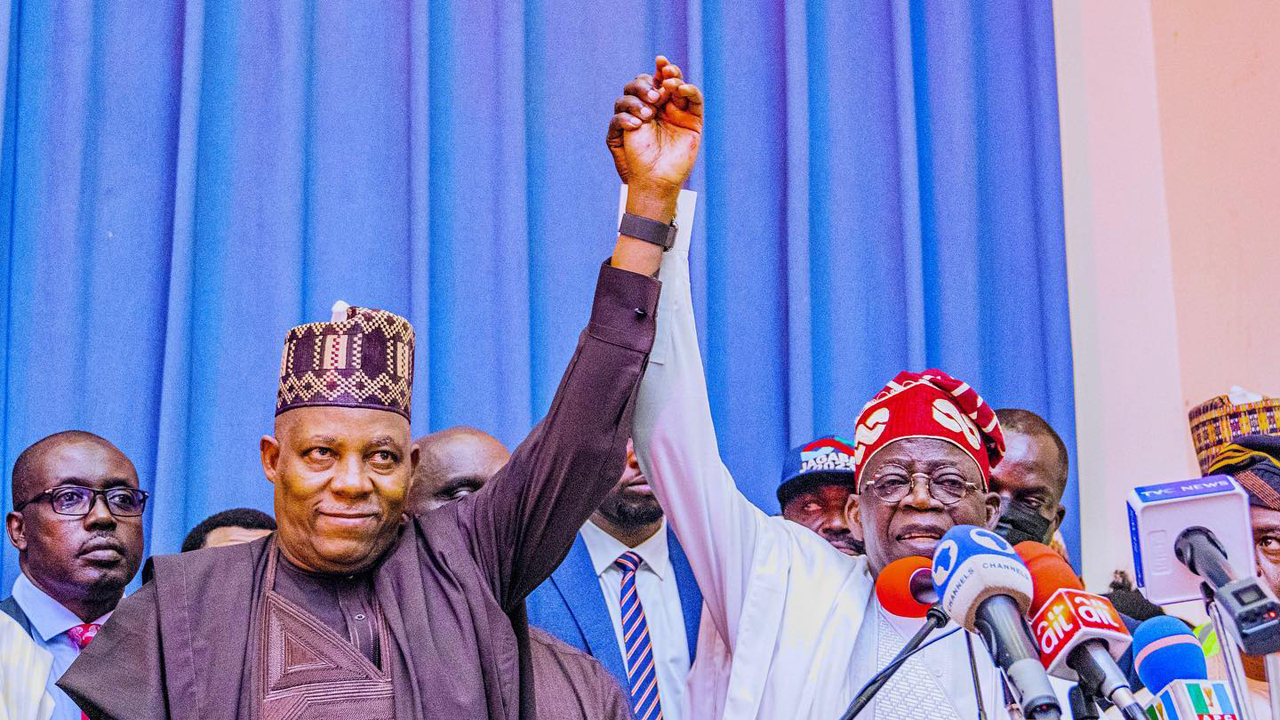
Nigeria’s Vice President, Mr Kashim Shettima, will run as the vice-presidential candidate of the All Progressives Congress (APC) in the 2027 presidential election.
President Bola Tinubu retained Mr Shettima as his running mate for re-election next year, according to the National Chairman of the APC, Mr Nentawe Yilwatda.
In a post on Friday on X, the ruling party chairman described this as “another significant milestone in the journey of our great party.”
He also said it reaffirms the party’s collective resolve to sustain the Renewed Hope Agenda and deepen the progress already being recorded across the country.
It was gathered that Mr Tinubu submitted his presidential nomination forms today through his Special Adviser on Political and Other Matters, Mr Ibrahim Masari.
The submission was done ceremony at the Continental Hotel, Abuja, attended by several party chieftains, including The event brought together an impressive array of leaders of our great party, including the Chairman of the Progressive Governors’ Forum and Governor of Imo State, Mr Hope Uzodimma; Governor Mai Mala Buni of Yobe State, Governor Nasir Idris of Kebbi State, Governor Abba Kabir Yusuf of Kano State, Governor Uba Sani of Kaduna State, Governor Babagana Umara Zulum of Borno State, Governor Ahmadu Umaru Fintiri of Adamawa State, as well as other governors, party executives and critical stakeholders from across the federation.
“The All Progressives Congress remains focused on strengthening its grassroots support, consolidating the achievements of the Renewed Hope Agenda and working together to build a more prosperous, secure and inclusive Nigeria for all,” the party leader stated.
By Adedapo Adesanya
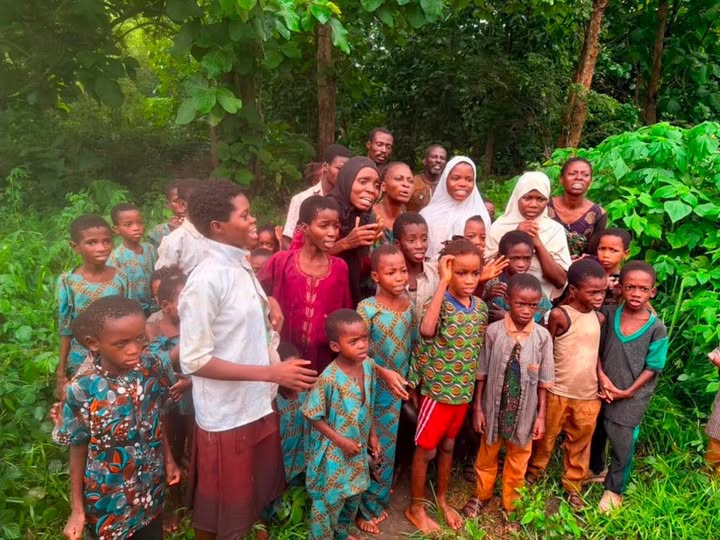
The pupils and teachers abducted in Oriire Local Government Area of Oyo State have regained their freedom after 56 days in captivity.
The development was disclosed on Friday by the Special Adviser to the President on Information and Strategy, Mr Bayo Onanuga, on X. He revealed that eight of the kidnappers have been arrested and are now in the custody of the Department of State Services (DSS), while some others were neutralised during the operation.
“Finally, all the kidnapped pupils and teachers in Oriire, Oyo have been rescued by our security agencies,” he wrote.
He said no concession was made to the terrorists to secure the freedom of the abducted pupils and teachers.
Mr Onanuga explained that the kingpin whose release the kidnappers had demanded was neither freed nor spared, as he remains under prosecution for offences linked to his terrorist activities.
The abductions occurred on May 15, 2026, when armed men attacked three schools: Community Grammar School, Baptist Nursery and Primary School, and L.A. Primary School, in the Esiele and Yawota communities of Oriire Local Government Area.
No fewer than 39 pupils and seven teachers, including a principal, were taken during the attacks. During the attack, a teacher, Mr Joel Adesiyan, was killed while attempting to escape.
Another teacher, Mr Michael Oyedokun, was reportedly beheaded in the kidnappers’ den.
The terrorists holding the victims had reportedly made a four-point demand before agreeing to free the captives, including the release of detained terrorist commanders, payment of ransom, two Hilux vehicles and the implementation of Sharia-related law.
The Oyo State Government had consistently maintained that no ransom would be paid to secure the release of any victims.
The Nigeria Union of Teachers (NUT) embarked on a month-long strike in the state to press for the victims’ rescue before suspending the action in July.
It also drew federal intervention, with military and police authorities repeatedly assuring Nigerians that operations to secure the victims’ freedom were ongoing.
The President’s spokesperson said that security agencies would soon provide a comprehensive account of the operation.
By Adedapo Adesanya
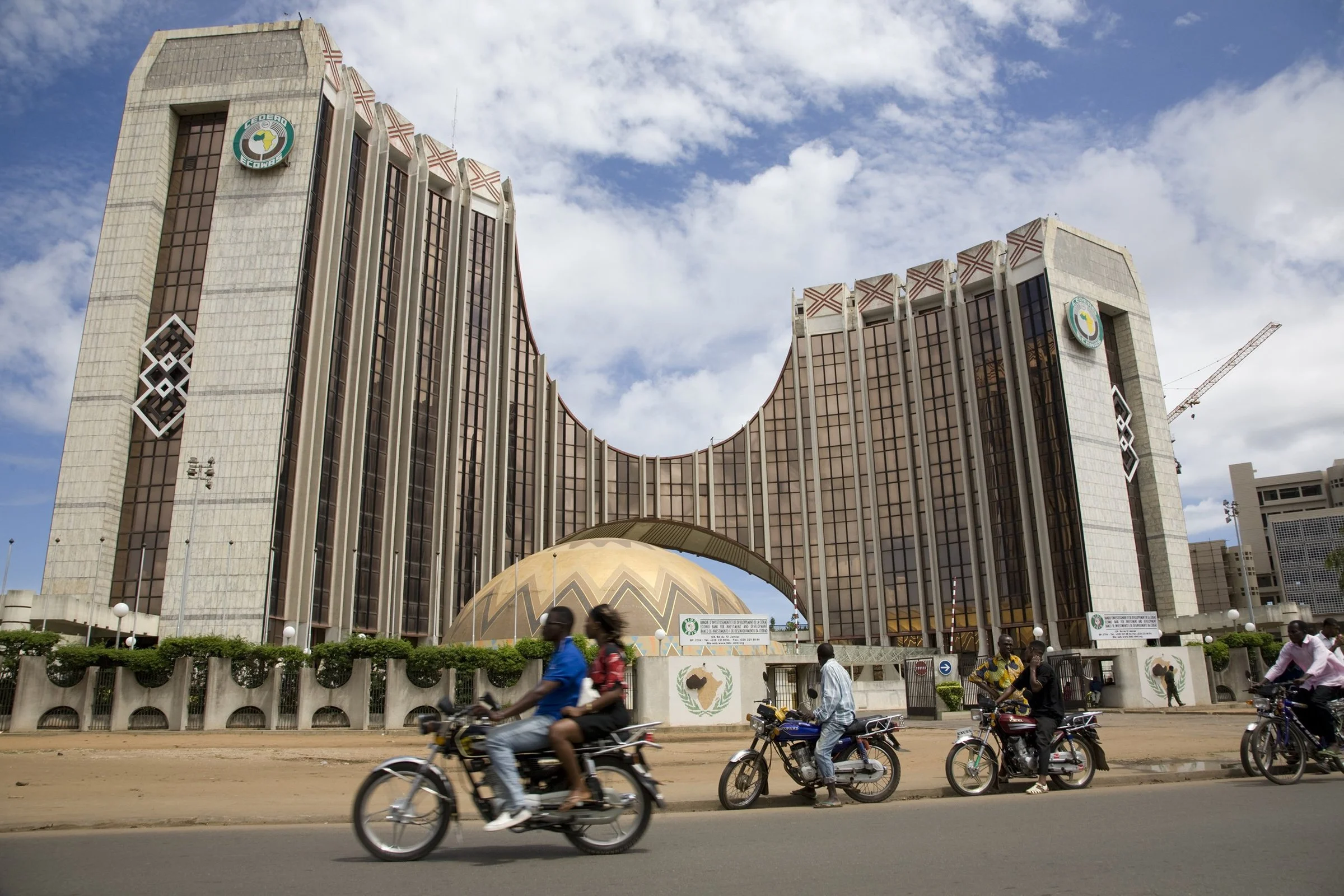
The board of the ECOWAS Bank for Investment and Development (EBID) has approved a $260 million financing package for the construction of a 123-kilometre section of the Trans-Saharan Highway in Nigeria as part of more than $417 million earmarked for strategic projects across West Africa.
The approval was granted during the bank’s 99th Ordinary Session, chaired by its President, Mr George Donkor, according to a statement issued after the meeting. It was noted that the total financing will support five public and private sector projects spanning infrastructure, healthcare, housing, mining, financial resilience and regional connectivity.
EBID said the approved investments underscore its commitment to funding high-impact projects that drive economic growth, create jobs and improve living standards across the sub-region.
“The projects approved during this 99th Board Session demonstrate EBID’s unwavering commitment to financing development solutions that directly improve the lives of West African citizens.
“From clean energy and transport infrastructure to healthcare, housing and financial sector resilience, these investments will strengthen regional competitiveness and support sustainable and inclusive growth across our community,” said Mr Donkor.
That of Nigeria is to improve connectivity, facilitate trade, reduce logistics costs and support economic integration; West African CFA franc (XOF) 10 billion in a line of credit to Banque de l’Habitat de Côte d’Ivoire (BHCI) to expand housing finance and support SMEs operating across the housing and construction value chain; €80 million for the design, construction, equipment and maintenance of the 150-bed Regional Hospital of Ferkessédougou in Côte d’Ivoire under a public-private partnership;
XOF 12.82 billion (West African CFA Franc) for the renovation, operation and maintenance of the Symphonie Building in Abidjan under a public-private partnership and $47.4 million for Azumah Resources Ghana Limited to finance the procurement of long-lead process plant equipment and critical early-stage development activities for the Black Volta Gold Project.
“These approvals advance EBID’s Growth, Resilience and Optimisation (GRO) Strategy, which prioritises transformative infrastructure, human capital development, private sector growth and regional integration. Through these investments, the Bank continues to promote sustainable development and shared prosperity across West Africa,” the statement said.
