Connect with us

Economy

IMF Approves $224m for Sierra Leone to Back Economy

Published

on

imf-office

By Modupe Gbadeyanka

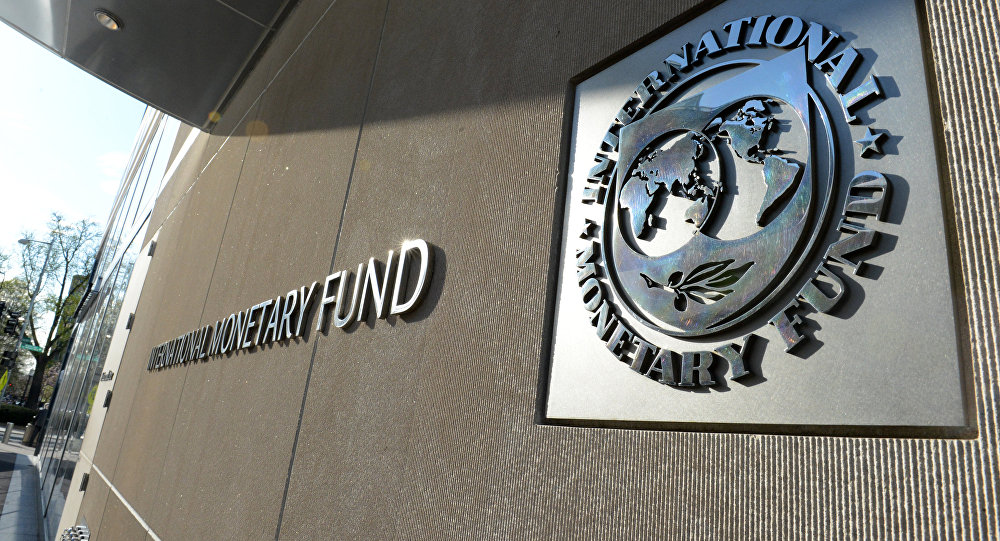
Executive Board of the International Monetary Fund (IMF) has approved a three-year arrangement under the Extended Credit Facility (ECF) for Sierra Leone for $224.2 million in support of the authorities’ economic development efforts.

Growth is expected to reach 7 percent in the medium-term and under the program, inflation is expected to fall to 12 percent by end-2017, further declining to 9.5 percent in 2018 and narrowing by about 0.5 percent each year thereafter.

The program aims at supporting important policies targeted at reducing inflation and significantly increasing domestic revenues, while increasing infrastructure spending and bolstering the social safety net.

It was gathered that the Executive Board’s decision will enable a first immediate disbursement of $54.3 million.

Business Post further gathered that the loan was approved by the board on Monday, June 5, 2017 and the programme will build on the lessons from the previous ECF arrangement.

It will support important policies targeted at reducing inflation and significantly increasing domestic revenues, including by eliminating numerous tax and duty exemptions, while increasing infrastructure spending and bolstering the social safety net.

The ECF program is also expected to play a catalytic role to maintain external support. In the medium-term, the arrangement will provide the framework for structural progress on revenue mobilization, public financial management and financial sector reforms, as well as increased reserves.

Commenting on the development, IMF Deputy Managing Director, Mr Tao Zhang and Acting Chair, noted that, “The new program provides support on three broad fronts: (i) provide financing space in the short-run to fund critical spending; (ii) make a strong contribution to the reduction of poverty; and (iii) support a medium-term structural reform framework, most critically in domestic revenue mobilization, public financial management (PFM), and financial sector reform.

“For the medium-term, the new program focuses on forceful revenue mobilization supported by a medium-term Revenue Mobilization Strategy (RMS), which the authorities will design and implement. On the expenditure front, the authorities are in the process of finalizing the regulatory framework for the recently passed PFM Act. The PFM Act will enhance the efficiency of spending, support medium-term budget planning, and consolidate the cash resources of various ministries, departments and agencies under the roof of the Treasury Single Account (TSA).

“In the short-run, the ECF arrangement will help create fiscal space, which will be used to scale up infrastructure and social spending to support higher and inclusive growth. To further this goal, the authorities’ decision to prioritize public investment, consistent with a moderate risk of debt distress rating, is welcome. The authorities’ efforts to expand the social safety net are also to be commended.

“The authorities’ commitment to implement a fuel subsidy reform no later than the second ECF review is important for a sustainable budget. In the meantime, the alternative actions taken to compensate for the delay in the implementation of this reform are welcome. These measures are the elimination of all import duty and GST exemptions as well as the collection of royalties from mining companies based on published market prices.

“Sierra Leone’s risk of debt distress remains moderate. Financing needs, particularly for large-scale investment projects will need to be covered mostly with grants and concessional loans. In addition, non-debt generating options should be considered for the proposed new airport.

“Monetary policy will remain focused on lowering inflation to single digits. The Bank of Sierra Leone (BSL) shall seek to build reserves, while allowing further exchange rate flexibility and limiting its interventions to smooth exchange rate volatility. The BSL should also take firm action to strengthen the financial system, based on the conclusions of the recently completed diagnostics for the two state-owned banks. The establishment of a civil registry and financial sector reforms, including the move toward risk-based supervision, should help increase credit to private sector.

“Structural reforms aimed at enhancing governance and improving the business environment will help increase support for private sector participation in the economy and promote economic diversification.”


Modupe Gbadeyanka is a fast-rising journalist with Business Post Nigeria. Her passion for journalism is amazing. She is willing to learn more with a view to becoming one of the best pen-pushers in Nigeria. Her role models are the duo of CNN's Richard Quest and Christiane Amanpour.

Economy

NGX Lifts Suspension on Fortis Global Insurance

Published

on

Fortis Global Insurance

By Aduragbemi Omiyale

The suspension placed on trading in the shares of Fortis Global Insurance Plc has been lifted by the Nigerian Exchange (NGX) Limited after six years.

The embargo arose from the company’s violation of Rule 3.1: Rules for Filing of Accounts and Treatment of Default Filing (Default Filing Rules).

The underwriting firm, formerly known as Standard Alliance Insurance Plc, was suspended by the exchange on July 2, 2019, after the board failed to file the necessary financial statements.

Rule 3.1 provides that if an issuer fails to file the relevant accounts by the expiration of the cure period, the exchange will: a) send to the issuer a second filing deficiency notification within two business days after the end of the cure period, b) suspend trading in the issuer’s securities, and c) notify the Securities and Exchange Commission (SEC) and the market within 24 hours of the suspension.

A notice from the bourse last week disclosed that the company has now filed all outstanding financial statements due to the NGX, and in view of this, the embargo has been lifted pursuant to Rule 3.3 of the Default Filing Rules.

This section states that, “The suspension of trading in the issuer’s securities shall be lifted upon submission of the relevant accounts, provided the exchange is satisfied that the accounts comply with all applicable rules of the exchange.

“The exchange shall thereafter also announce through the medium by which the public and the SEC were initially notified of the suspension, that the suspension has been lifted.”

The bourse informed trading license holders and the investing public “that the suspension placed on trading on the shares of Fortis Global Insurance was lifted on Wednesday, February 4, 2026.”

Continue Reading

Economy

Investors Transact 3.860 billion Stocks Worth N128.581bn in Five Days

Published

on

Trading activities NGX

By Dipo Olowookere

Last week, on the floor of the Nigerian Exchange (NGX) Limited, investors transacted 3.860 billion stocks worth N128.581 billion in 240,463 deals versus the 3.087 billion stocks valued at N81.505 billion traded in 222,185 deals in the preceding week.

In the five-day trading week, financial equities led the activity chart with 2.188 billion units valued at N50.459 billion in 94,005 deals, contributing 56.68 per cent and 39.24 per cent to the total trading volume and value, respectively.

Services stocks followed with 466.771 million units worth N4.495 billion in 18,526 deals, and ICT shares sold 377.800 million units for N9.049 billion in 25,653 deals.

Chams, Access Holdings, and Universal Insurance were the most active in the week with 664.942 million units valued at N6.801 billion in 15,161 deals, contributing 17.23 per cent and 5.29 per cent to the total trading volume and value apiece.

Business Post reports that 71 equities appreciated during the week versus 44 equities in the previous week, as 35 stocks depreciated compared with 49 stocks a week earlier, while 42 shares closed flat versus 55 shares in the preceding week.

RT Briscoe was the biggest price gainer with a price appreciation of 60.69 per cent to close at N12.63, Zichis gained 60.38 per cent to trade at N6.72, Abbey Mortgage Bank chalked up 59.04 per cent to settle at N14.95, Union Dicon expanded by 49.14 per cent to N13.05, and Austin Laz grew by 38.46 per cent to N5.40.

Conversely, Deap Capital was the biggest price loser after giving up 27.37 per cent to quote at N6.82, Union Homes REIT lost 26.99 per cent to finish at N69.25, Red Star Express declined by 17.55 per cent to N17.15, UPDC REIT shrank by 12.29 per cent to N7.85, and Cornerstone Insurance tumbled by 12.24 per cent to N5.45.

From the above data, the week was under buying pressure, which raised the All-Share Index (ASI) and the market capitalisation by 3.84 per cent to 171,727.49 points and N110.235 trillion, respectively.

Similarly, all other indices finished higher with the exception of the insurance index, which depreciated by 2.33 per cent due to sell-offs.

Continue Reading

Economy

Dangote Cement Assures African Consumers Sufficient Supply With 90MT Yearly

Published

on

Dangote Cement final dividend

By Aduragbemi Omiyale

Leading cement maker, Dangote Cement Plc, has reaffirmed its commitment to making Africa fully self‑sufficient in cement production by raising its output to 90 million metric tonnes per annum by 2030 from the current 52 million metric tonnes per annum.

The chief executive of the firm, Mr Arvind Pathak, during a strategic briefing on the company’s expansion drive, disclosed that efforts are being made to accelerate investments across African markets to close supply gaps and support the continent’s infrastructural ambitions.

According to him, the organisation is strengthening the continent’s industrial backbone and reducing reliance on imported construction materials, stressing that, “Our vision is clear — to ensure Africa produces enough cement to meet its own needs…Through continuous expansion, operational excellence, and a strong distribution network, we are positioning Dangote Cement to power growth across the continent. We are not just building a business; we are building Africa’s future.”

“Through our collective determination, we have eliminated Nigeria’s dependence on imported cement and transformed the country into a net exporter of cement to several neighbouring nations,” Mr Pathak added.

Dangote Cement currently operates in multiple African countries, with integrated plants, grinding facilities, and distribution hubs strategically located to serve diverse markets.

The company’s ongoing projects include plant upgrades, capacity expansions, and the introduction of advanced energy‑efficient technologies designed to reduce operational costs and carbon footprint.

Reinforcing the company’s long-term vision, its founder, Mr Aliko Dangote, described self-sufficiency as both an economic imperative and a continental responsibility.

“Africa has no reason to depend on cement imports. We have the raw materials, the talent, and the determination. Our goal at Dangote Cement is to unlock Africa’s potential by ensuring that every nation on this continent can access affordable, high‑quality cement produced within Africa. This is how we build prosperity, job opportunities, and sustainable development,” the businessman stated.

Mr Dangote added that the company’s investments reflect its passion for unlocking continental competitiveness and fostering industrialisation across Africa.

With major infrastructural projects rising across African cities — from highways and bridges to housing developments — the demand for cement continues to grow. Dangote Cement’s renewed push toward continental self‑sufficiency is expected to address supply challenges, stabilise prices, and enhance construction reliability in the years ahead.

Continue Reading

Trending