Connect with us

Economy

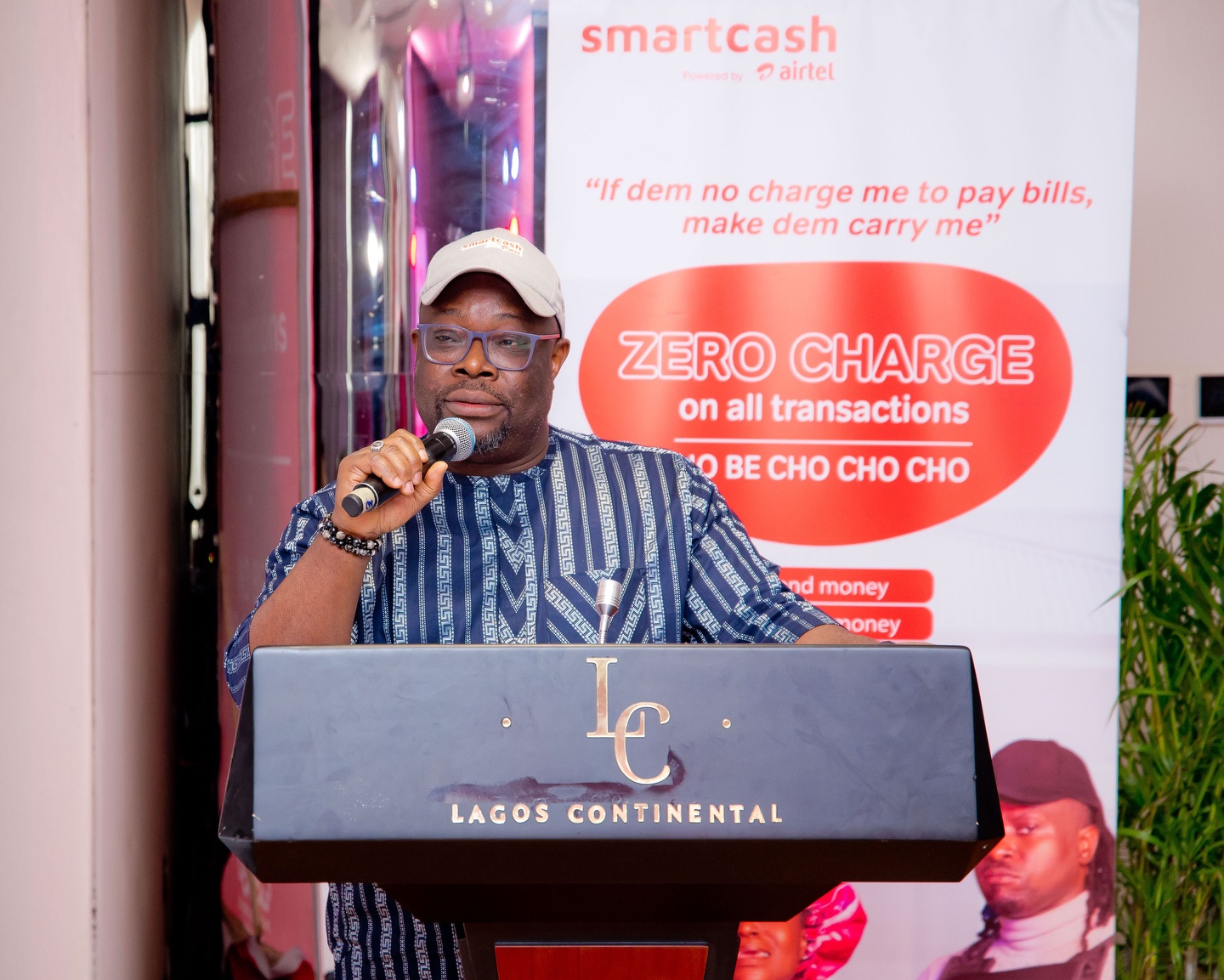
Financial Inclusion Drives Economic Growth—Smartcash CEO

Published

on

ayotunde kuponiyi smartcash

By Dipo Olowookere

The chief executive of Smartcash Payment Service Bank (PSB), Mr Ayotunde Kuponiyi, has stressed the importance of financial inclusion to any nation’s economy.

Speaking with journalists in Lagos on Tuesday, he said the country will always experience economic growth when the majority of its citizens are financially included.

According to him, this is why the Central Bank of Nigeria (CBN) has intensified its efforts to drive financial inclusion in the country to about 80 per cent.

“Financial inclusion is important because when 80 per cent of your population is included financially, it then ensures growth in the economy,” he said at the unveiling of the nationwide marketing campaign of Smartcash titled No Be Cho Cho Cho.

“We have about 40 million or 50 million Small and Medium Enterprises (SMEs) in Nigeria, and a number of them don’t have bank accounts, but when they are included financially, they have access to finance, borrowing, and then grow their income.

“As the industry grows, they employ more hands (job creation), and when this happens, the government earns more revenue from taxes paid by the employed persons, which the government then uses to improve the standard of living of the citizens. Infrastructure will also be provided by the government. This is why financial inclusion is extremely important,” Mr Kuponiyi stated.

Commenting on the new campaign, the Smartcash boss said it reflects a broader philosophy of accountability in digital finance, with the zero-charge model, which eliminates fees on transfers and bill payments.

“Through our flagship zero-charge service, we promise no fees on P2P transfers or bill payments. Furthermore, our savings account offers 15 per cent per annum compounded interest, paid daily without penalties. Unlike conventional banks, we charge you nothing, ensuring your money truly works for you,” he averred, stressing that the zero-fee does not apply to the stamp duty charged by the federal government on transactions above N10,000.

He stated that the initiative centres on the three pillars of reliability, transparency and demonstrable service delivery and addresses what the company describes as a widening trust gap in Nigeria’s digital payments market.

Mr Kuponiyi also revealed that beyond consumer banking, the platform is also expanding its footprint through a nationwide network of agents that facilitate transactions and financial services in underserved communities.

Smartcash is the digital financial services platform of Airtel Nigeria, which is a subsidiary of Africa Plc, operating across 14 countries.


Dipo Olowookere is a journalist based in Nigeria that has passion for reporting business news stories. At his leisure time, he watches football and supports 3SC of Ibadan. Mr Olowookere can be reached via [email protected]

Advertisement
Click to comment

Leave a Reply

Your email address will not be published. Required fields are marked *

Economy

FG Unveils Industrial Policy to Raise Manufacturing Contribution to 25%

Published

on

manufacturing-companies-in-nigeria

By Adedapo Adesanya

The federal government plans to boost the manufacturing sector’s contribution to the Nigerian economy to 15 per cent by 2030 and 25 per cent by 2035, from its current 8.2 per cent.

This was revealed in the newly launched Nigeria Industrial Policy (NIP), which was unveiled by the Federal Ministry of Industry, Trade and Investment (FMITI).

According to data, the sector employs 13 million Nigerians, mainly in food processing, cement production, textiles, pharmaceuticals, and the automotive industry.

The FG stated that the aim of NIP frameworks is “to drive economic growth, reduce dependence on oil exports, and promote sustainable development” and contribute to achieving Nigeria’s aspiration of attaining the $1 trillion economy by 2030.

The government said the plan would “accelerate Nigeria’s industrial transformation by leveraging its natural and human capital to promote inclusive, sustainable, and competitive manufacturing, deepen economic diversification, and generate mass employment through innovation, infrastructure development, investment, and export.”

It explained that the policy direction of its NIP is anchored on the development of four sectors, namely metals and solid minerals, oil and gas, construction, and manufacturing.

Over the past decade, the agro-allied industry has contributed an average of 25 per cent (27 per cent rebased) to Nigeria’s real GDP and currently accounts for 35 per cent of total employment. It serves as a primary source of raw materials for key manufacturing sectors, including food processing, leather goods, and textiles, reinforcing its pivotal role in driving industrial linkages and inclusive economic development.

The report noted, however, that the industry faces challenges such as limited mechanisation and outdated farming techniques, post-harvest losses, and insecurity.

The government assured that relevant legal and institutional frameworks are in place to address key challenges such as inadequate power supply, low access to finance, and competition from cheap imported products, limiting the performance of the sector.

The Minister of State, FMITI, Mr John Owan Enoh, described the NIP as “a comprehensive framework that reaffirms our national resolve to diversify the economy, create inclusive prosperity, and secure Nigeria’s rightful place as a leading industrial hub in Africa and the wider global economy.”

The government said that each of the four sectors comprises multiple sub-sectors that offer strategic opportunities for industrial development.

“These sectors have been prioritised due to strong comparative advantages, potential to generate large-scale employment, and deepen local value addition and expand exports.

“The future outlook for the industry is bright with abundant natural resources, massive investment in the development of Special Economic Zones (SEZs), the growing market size, and participation of Nigeria in AfCFTA and ECOWAS Trade Liberalisation Scheme (ETLS)”, the report added.

Continue Reading

Economy

Oil at $85 Could Boost Nigeria’s External Balance Account—Bloomberg

Published

on

oil production rig

By Adedapo Adesanya

Nigeria has been identified as one of the winners of an oil windfall following the US and Israel’s war on Iran.

According to Bloomberg Economics, the rise in prices will improve the current account balance of just three sub-Saharan African economies.

Bloomberg Economics’ Ms Yvonne Mhango wrote in a report on Thursday that if oil stays at about $85 a barrel, Angola, Nigeria and Ghana will see their current account balance improve, while the Democratic Republic of Congo, South Africa and Kenya will be among the worst-hit.

“For most African economies, higher oil prices mean weaker currencies and renewed inflationary pressure, which could put rate hikes back on the table,” she said.

According to the analyst, Nigeria, which is Africa’s largest oil producer, will not only gain from crude sales but from fuel exports.

Bloomberg Economics data showed that Nigeria’s current account balance could benefit by as much as 2.3 per cent of gross domestic product (GDP), second only to Angola’s 3.3 per cent and Ghana’s 0.2 per cent.

Already, the 650,000-barrel-a-day Dangote oil refinery has raised the prospect of sending more product to Europe if the price is right.

Dangote is ​offering up to 44,000 ​metric tons of jet fuel for loading March 20-22, ​as well as ​at least 40,000 tons of ‌gasoil ⁠with a maximum sulphur content of 50 parts per million ​for ​loading ⁠March 15-30.

However, countries like Africa’s largest economy – South Africa – may face challenges if India and Oman, two of its biggest fuel suppliers, cut down on exports. It may see a -1.0 per cent hit to its current account balance.

South African consumers are bracing for fuel costs to increase in April, according to Central Energy Fund data, while traders moved to price in a chance of an interest-rate hike later this month.

Following US and Israeli strikes on Iran over the weekend and retaliatory moves by the Islamic Republic, global crude prices have adjusted sharply.

The Strait of Hormuz, a narrow shipping lane between Iran and Oman, through which roughly a fifth of global oil supply normally passes, has been blocked completely by Iran.

As of press time, Brent crude, which Nigeria prices its crudes is trading up at 2.3 per cent at $83.23. Nigerian crude grades, Brass River and Qua Iboe, are selling at $87 per barrel.

Continue Reading

Economy

Nigeria’s Gold Holdings Rise to $3.5bn as CBN Diversifies Reserves

Published

on

gold reserves nigeria

By Adedapo Adesanya

The Central Bank of Nigeria (CBN) said it has taken delivery of responsibly sourced gold refined to London Bullion Market Association (LBMA) Good Delivery standards into its foreign reserves, as part of its reserves diversification strategy.

The gold, sourced in Nigeria and aggregated by the Solid Minerals Development Fund (SMDF) through the National Gold Purchase Programme (NGPP), brings the CBN’s total gold holdings to $3.5 billion.

According to the CBN, the programme involves local miners and operates within a responsible sourcing framework aligned with the Organisation for Economic Co-operation and Development (OECD) Due Diligence Guidelines and the World Gold Council’s London Principles.

Speaking at the one-day Workshop on Strategies to Maximise the Economic Benefits of Minerals in Nigeria, the Governor of the apex bank, Mr Yemi Cardoso, disclosed that the lender acquired the monetary-grade gold in Naira at pricing linked to LBMA benchmarks, a structure designed to preserve Nigeria’s foreign exchange holdings while strengthening the nation’s gold reserves.

By purchasing domestically refined gold without deploying foreign currency, he said, the transaction enhances reserve accretion and supports broader macroeconomic stability objectives. Highlighting major shifts in global reserve management strategies, the CBN Governor noted their increasing importance amid rising global economic uncertainties.

He described the event as a reflection of Nigeria’s shared commitment to responsible and strategic management of its mineral resources. He emphasised that the workshop underscores the nation’s readiness to adapt to the realities of an evolving global economy, where resilience, diversification, and prudent governance have become increasingly vital.

He further explained that the session, convened by the CBN’s Corporate Secretariat and Reserve Management Departments, was designed to create a structured platform for engagement with key players in the gold sector and to deepen understanding of the industry’s current landscape, opportunities, and challenges across its value chain.

The governor noted that central banks around the world are prioritising economic resilience amid persistent geopolitical and market uncertainties.

He said gold has regained importance as a hedge against inflation and volatility, while other critical minerals are increasingly shaping global supply chains and advanced industrial development

Mr Cardoso emphasised that Nigeria’s immense natural and human resource potential can only be fully realised through prudence, strategic coordination, and long-term planning. He highlighted the need for strict adherence to internationally recognised standards, stressing that institutional credibility depends on strong governance frameworks.

On her part, the Executive Secretary of the Solid Minerals Development Fund (SMDF), Mrs Fatima Umaru Shinkafi, highlighted that the successful delivery of LBMA standard gold demonstrates the strength of the organisation’s formalisation framework and supply chain due diligence processes.

The World Gold Council’s Director of Central Banks and Public Policy, Ms Kurtulus Taskale Diamondopoulos, commended both the CBN and SMDF for designing the Nigerian Gold Purchase Programme (NGPP) in line with the twelve London Principles for responsible artisanal and small-scale gold sourcing.

She noted that the partnership between the CBN as sole off-taker and the SMDF as fiscal and supply chain manager offers a strong model for other countries seeking to strengthen similar programmes.

The President and CEO of the Africa Finance Corporation (AFC), Ms Samaila Zubairu, reaffirmed AFC’s commitment to financing and formalising Nigeria’s mineral sector, stressing the importance of accurate data and mineral processing infrastructure to attract investment, improve gold recovery, reduce environmental impact and support central bank purchases.

Also speaking, the Executive Vice Chairman of Kian Smith Gold Company, Ms Nere Emiko, underscored the urgent need for Nigeria to build strategic gold reserves and leverage commodity exchanges, noting the country’s low reserve levels relative to peers and calling for greater investment in exploration and transparency.

The Domestic Gold Purchase Programme forms part of the central bank’s broader strategy to enhance reserve quality, reduce external vulnerabilities, and position Nigeria’s mineral wealth as a pillar of long-term economic stability.

Continue Reading

Trending