Connect with us

Economy

Oil at $85 Could Boost Nigeria’s External Balance Account—Bloomberg

Published

on

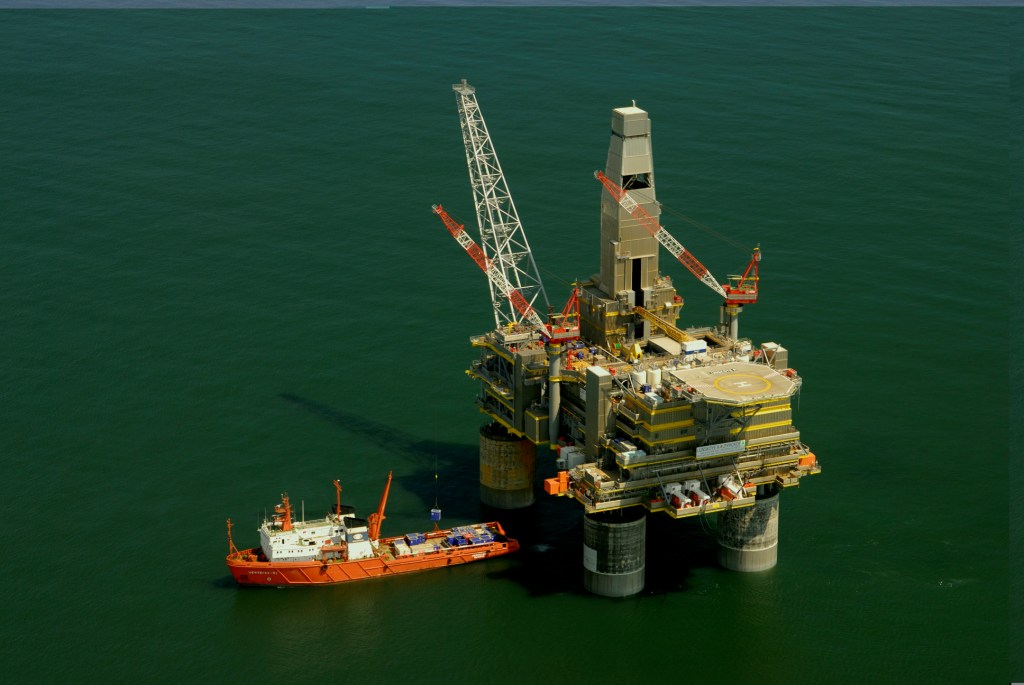
oil production rig

By Adedapo Adesanya

Nigeria has been identified as one of the winners of an oil windfall following the US and Israel’s war on Iran.

According to Bloomberg Economics, the rise in prices will improve the current account balance of just three sub-Saharan African economies.

Bloomberg Economics’ Ms Yvonne Mhango wrote in a report on Thursday that if oil stays at about $85 a barrel, Angola, Nigeria and Ghana will see their current account balance improve, while the Democratic Republic of Congo, South Africa and Kenya will be among the worst-hit.

“For most African economies, higher oil prices mean weaker currencies and renewed inflationary pressure, which could put rate hikes back on the table,” she said.

According to the analyst, Nigeria, which is Africa’s largest oil producer, will not only gain from crude sales but from fuel exports.

Bloomberg Economics data showed that Nigeria’s current account balance could benefit by as much as 2.3 per cent of gross domestic product (GDP), second only to Angola’s 3.3 per cent and Ghana’s 0.2 per cent.

Already, the 650,000-barrel-a-day Dangote oil refinery has raised the prospect of sending more product to Europe if the price is right.

Dangote is ​offering up to 44,000 ​metric tons of jet fuel for loading March 20-22, ​as well as ​at least 40,000 tons of ‌gasoil ⁠with a maximum sulphur content of 50 parts per million ​for ​loading ⁠March 15-30.

However, countries like Africa’s largest economy – South Africa – may face challenges if India and Oman, two of its biggest fuel suppliers, cut down on exports. It may see a -1.0 per cent hit to its current account balance.

South African consumers are bracing for fuel costs to increase in April, according to Central Energy Fund data, while traders moved to price in a chance of an interest-rate hike later this month.

Following US and Israeli strikes on Iran over the weekend and retaliatory moves by the Islamic Republic, global crude prices have adjusted sharply.

The Strait of Hormuz, a narrow shipping lane between Iran and Oman, through which roughly a fifth of global oil supply normally passes, has been blocked completely by Iran.

As of press time, Brent crude, which Nigeria prices its crudes is trading up at 2.3 per cent at $83.23. Nigerian crude grades, Brass River and Qua Iboe, are selling at $87 per barrel.


Adedapo Adesanya is a journalist, polymath, and connoisseur of everything art. When he is not writing, he has his nose buried in one of the many books or articles he has bookmarked or simply listening to good music with a bottle of beer or wine. He supports the greatest club in the world, Manchester United F.C.

Click to comment

Leave a Reply

Your email address will not be published. Required fields are marked *

Economy

Wale Edun’s Claims of 1.8mbpd Crude Output Contrast Official Data

Published

on

wale edun

By Adedapo Adesanya

The Minister of Finance, Mr Wale Edun, says Nigeria’s crude oil production has risen to 1.8 million barrels ​a day, contrasting with available production data.

Speaking in an interview with Reuters on Wednesday on ⁠the sidelines of the International Monetary ​Fund and World Bank Group spring ​meetings in Washington D.C., the Minister said the current oil output would generate fiscal breathing space that will allow the government to support vulnerable ​households as it ploughs ahead with ​reforms.

Nigeria, which is a member of the Organisation of the Petroleum Exporting Countries (OPEC), is Africa’s largest oil producer.

Mr Edun said rising crude production was positive for Nigeria’s revenue, foreign exchange ​and the country’s fiscal situation.

“It gives us that extra fiscal space ‌within ⁠which to look at … helping the vulnerable households at this time,” he told the publication, noting that support would be targeted, adding “there is ​no thought ​of any ⁠return or retardation to broad untargeted subsidies.”

Mr Edun also said the Bola Tinubu-led administration was also ​committed to continuing its reform ​programme.

“Nigeria is in a position where the resilience that has been built in ⁠the ​economy is actually very ​obvious for all to see,” he said.

Despite the 1.8 million barrels per day figure claim, Business Post reports that production data for March 2026 from the Nigerian Upstream Petroleum Regulatory Commission (NUPRC) shows that Nigeria attained 1.546 million barrels per day, made up of 1.382 million barrels per day of crude, 42,809 barrels per day of blended condensate and 120,442 barrels per day of unblended condensate.

The average crude production represents 92 per cent of the OPEC quota, which is fixed at 1.5 million barrels per day.

NUPRC Nigeria crude output March 2026

Continue Reading

Economy

SEC Opens Capital Market to Free Trade Zone Companies

Published

on

SEC Nigeria

By Adedapo Adesanya

The Securities and Exchange Commission Nigeria (SEC) has unveiled a new regulatory framework that would allow companies operating within free trade zones to raise capital from the Nigerian public, subject to strict eligibility and disclosure requirements.

The proposal, titled New Rules for Public Offering of Securities by a Free Trade Zone Entity, is anchored on provisions of the Investments and Securities Act (ISA) 2025 and is designed to integrate free trade zone enterprises into the domestic capital market while strengthening investor protection.

Under the proposed rules, only entities duly licensed by recognised free zone authorities, such as the Nigeria Export Processing Zones Authority and the Oil and Gas Free Zones Authority, will be eligible to issue shares to the public.

The commission clarified that the rules will apply strictly to free trade zone entities (FTZEs), excluding companies operating outside designated zones, even if licensed by zone authorities. It also emphasised that no FTZE will be permitted to offer securities to the public without prior approval from the Commission.

To qualify, an FTZE must demonstrate a minimum of three years’ operating track record immediately preceding its application, with at least two years of independent business activity within a free trade zone. Additionally, such entities are required to have competent senior management and a minimum paid-up share capital of not less than N7.5 billion.

The SEC said FTZEs seeking to access the capital market must subject themselves to Nigeria’s tax laws and comply fully with ongoing disclosure and reporting obligations applicable to publicly listed companies.

The proposed framework also outlines extensive registration requirements. Issuers will be required to submit evidence of licensing by a free zone authority, constitutional documents, and verified details of shareholding structure and board composition.

A “No Objection” letter from the relevant free zone authority will also be mandatory, alongside a commitment to list the offered shares on a registered securities exchange.

The SEC noted that the rules are intended to provide clarity on eligibility criteria and operational conditions for FTZEs seeking to conduct public offerings, thereby deepening the capital market and aligning free zone operations with national financial system standards.

Continue Reading

Economy

Guinness Nigeria Shareholders to Pocket N4.38bn Interim Dividend for Q1’26

Published

on

Guinness Nigeria

By Aduragbemi Omiyale

Shareholders of Guinness Nigeria Plc will share about N4.38 billion as an interim dividend for the first quarter of 2026, the board has disclosed.

This cash reward amounts to N2.00 per share, as the company has shares outstanding of 2,190,382,819 on the floor of the Nigerian Exchange (NGX) Limited.

The brewer stated that the interim dividend would be paid to investors whose names appear on the register of members as of the close of business on April 20, 2026.

The dividend payout is being proposed following the sustained profitability reflected in the unaudited financial results of the company in the first three months of this year and its “strong performance in FY 2025.”

It would be “paid from distributable profits in accordance with Sections 426–428 of the Companies and Allied Matters Act (CAMA) 2020.”

Analysis of the performance of the brewery giant between January and March 2026 showed that revenue grew by 4 per cent on a year-on-year basis to N122.77 billion from N118.34 billion in the same period of last year, while the gross profit contracted to N43.48 billion from N44.52 billion due to prevailing cost pressures within the operating environment.

The company’s operating profit also shrank to N17.18 billion from N18.00 billion in the first quarter of 2025 due to elevated marketing & distribution costs and administrative expenses.

However, the reduction in net finance costs to N1.43 billion from N7.72 billion in Q1 of 2025 helped the organisation to grow its post-tax profit to N10.39 billion in the period under review versus the N7.03 billion recorded in the corresponding period of last year.

Continue Reading

Trending