Banking
Access Bank Chair Seeks Strategic Investment in Women for Economic Growth
By Modupe Gbadeyanka
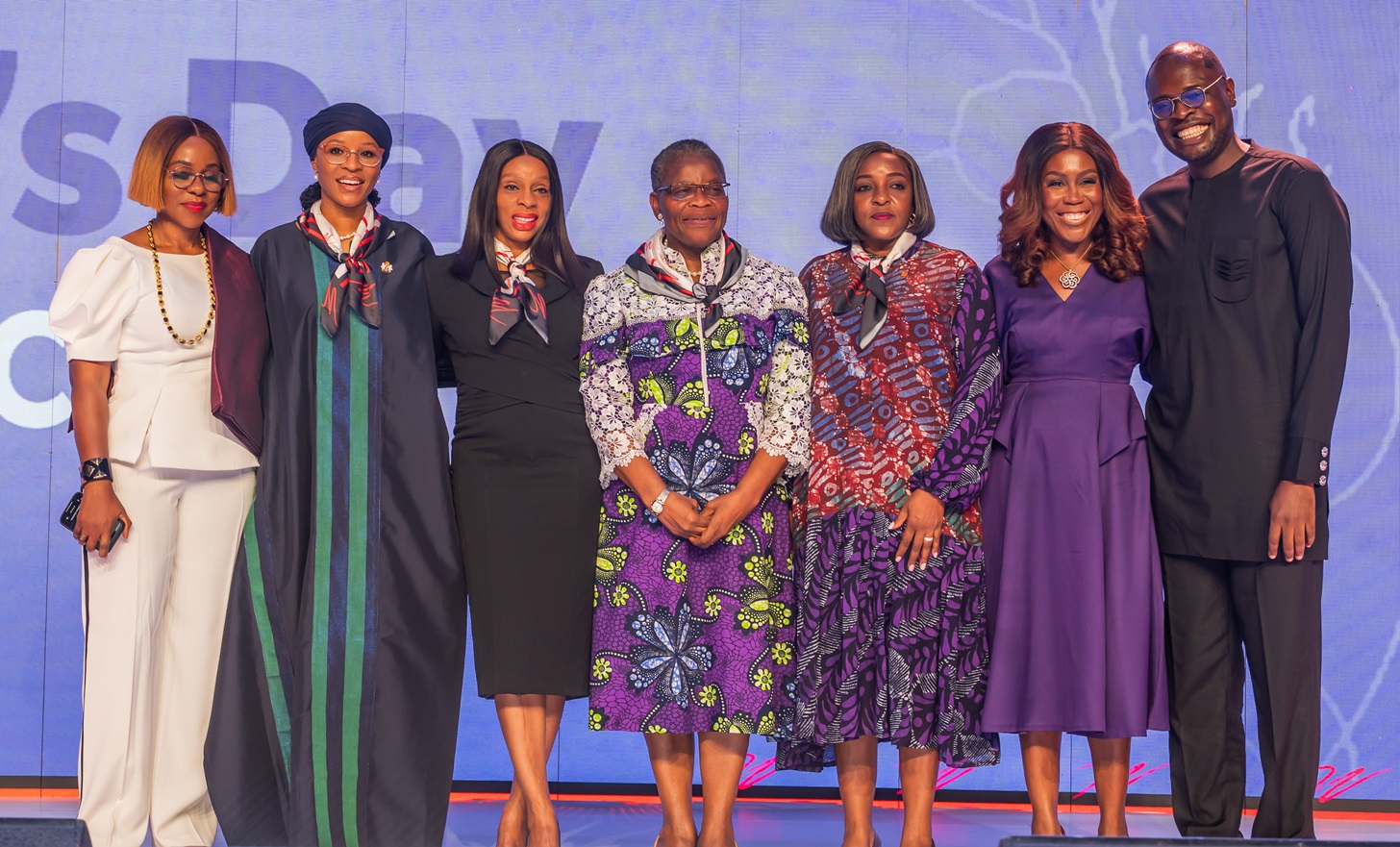
The chairman of Access Bank Plc, Mrs Ifeyinwa Osime, has called for deliberate and strategic investment in women as a catalyst for sustainable economic growth.
According to her, empowering women should be seen as a strategic economic decision rather than charity.
“When we speak of giving, it is about expanding access to finance, markets, knowledge and platforms that enable women to build sustainable businesses,” she said at an International Women’s Day Conference organised by Access Bank.
At the event, which attracted over 5,000 participants both physically and virtually, and attended by stakeholders across the public and private sectors, she noted that women own about 39 per cent of businesses in Nigeria and drive nearly
40 per cent of new enterprises, while small and medium enterprises contribute about 48 per cent of Gross Domestic Product (GDP) and over 80 per cent of employment.
Mrs Osime, however, decried the persistent financing gap facing women, describing it as a major constraint on productivity and economic growth.
“No economy can optimise its potential while underinvesting in half of its population,” she said, highlighting the bank’s interventions through its W Initiative and Womenpreneur Pitch-a-ton programme, which provides financing, training and healthcare support to thousands of women.
Also speaking at the programme, the Minister of Art, Culture, Tourism and the Creative Economy, Ms Hannatu Musawa, reiterated the government’s commitment to empowering women as key drivers of the nation’s creative economy, with a focus on expanding access to finance, skills development and leadership opportunities.
The Minister, represented by the Director-General of the Centre for Black and African Arts and Civilisation (CBAAC), Mrs Aisha Adamu, said women were increasingly taking the lead in building businesses, driving innovation and shaping society.
“Across Nigeria, women have always been the invisible architects of our culture, yet their contributions have been underrepresented and undervalued,” she said.
The Minister said the ministry was repositioning culture as a structured economic sector through creative hubs, skills development and enterprise support programmes targeting women in film, fashion, digital media and tourism.
On financing, Ms Musawa noted that women-owned businesses account for about 40 per cent of small and medium enterprises but continue to face significant funding gaps.
“Too many ideas remain small not because they lack potential, but because they lack access to capital,” she said, adding that the government was working to unlock targeted funding for women, strengthen market access and improve data systems to support women entrepreneurs, while also promoting their inclusion in leadership and policy-making processes.
Also, former Minister of Education, Mrs Oby Ezekwesili, stressed the need to prioritise women’s inclusion in development processes, noting that societies transform when critical issues such as women’s inclusion are deliberately prioritised.
“There is no other way societies have transformed than when people who care make an issue a priority,” she said, stressing that removing structural barriers limiting women’s participation would unlock significant economic potential, adding that agricultural output could increase by up to 30 per cent if women had equal access to inputs as men.
In the same vein, the Group Head for Women Banking at Access Bank, Mrs Nene Kunle-Ogunlusi, said the bank remained committed to supporting women across all segments.
She said the bank recently organised a special Women’s Day programme for market women in Oyingbo, Lagos, offering free health checks, beauty services and financial education.
Banking
CBN Extends PoS Geo-Fencing Compliance Deadline to August 1
By Adedapo Adesanya
The Central Bank of Nigeria (CBN) has extended the deadline for enforcement of its mandatory Point of Sale (PoS) terminal geo-fencing framework to August 1, giving payment service providers an extended compliance window.
The postponement was disclosed in a circular signed by the CBN Director of the Payments System Supervision Department, Ms Rakiya Yusur.
In August 2025, the CBN directed that all PoS terminals in the country be geo-tagged within 60 days as part of measures to curb fraud and strengthen oversight of digital payments under ISO 20022 standards.
The directive requires all players in Nigeria’s payments ecosystem, including Deposit Money Banks (DMBs), Microfinance Banks (MFBs), Mobile Money Operators (MMOs), Super Agents, and switching companies, to adopt the ISO 20022 messaging standard and geo-tag all payment terminals.
The new extension shifted the enforcement date to August 1, giving operators additional time to complete technical and operational requirements.
The apex bank also increased the permissible geo-fence radius for PoS terminals from 10 metres to 70 metres.
Additionally, the CBN postponed the enforcement date for compliance with the geo-fencing requirement as part of adjustments to the framework.
“Further to the Circular with reference number PSS/DIR/PUB/CIR/001/001 dated August 25, 2025, on migration to ISO 20022 standards for payments messaging, mandatory geotagging of payment terminals, and various stakeholders’ engagement on the subject to address the operationalisation of the Circular, the Central Bank of Nigeria has considered and approved the following:
“Geo-fence radius is hereby increased from 10 metres to 70 metres. Enforcement of PoS Terminal Geo-fence is extended to August 1, 2026,” the central bank stated.
Geo-fencing requires PoS terminals to operate only within approved geographic locations linked to registered merchants and agents.
The policy aims to strengthen transaction monitoring, curb abuse of payment channels, and improve the integrity of Nigeria’s payment system.
The central bank also ordered all affected institutions to submit evidence of compliance to the CBN’s Payments System Supervision Department no later than 31 July.
The CBN added that financial institutions are required to resolve all operational issues with the National Central Switch within the stipulated timeline to ease compliance.
“Evidence of compliance with the above should be addressed to the Director, Payments System Supervision Department via [email protected] not later than 31 July, 2026.
“Financial institutions are required to resolve all operational issues with the National Central Switch within the stipulated timeline to ease compliance,” the CBN stated.
Banking
Court Fixes July 20 for Judgment on FCCPC Digital Lending Regulations Legality
By Adedapo Adesanya
A Federal High Court sitting in Lagos has fixed July 20 for judgment in a suit filed by the Wireless Application Service Providers Association of Nigeria (WASPAN) challenging the legality of the Digital, Electronic, Online, and Non-traditional Consumer Lending Regulations (DEON Regulations) issued by the Federal Competition and Consumer Protection Commission (FCCPC).
Justice Ambrose Lewis-Allagoa handed down the date after parties adopted their final written addresses and concluded arguments in the matter marked FHC/L/CS/760/2026.
The proceedings, held at the court’s Ikoyi division on Monday, featured extensive legal arguments over the scope of the FCCPC’s regulatory powers within Nigeria’s digital economy and telecommunications sector.
Although the litigants were absent in court, the Plaintiff, WASPAN, was represented by a team of lawyers led by Mr Kemi Pinheiro SAN, while the FCCPC’s lead counsel was Ms Olufunke Aboyade SAN.
At the commencement of proceedings, counsel informed the court that issues surrounding earlier contempt proceedings had been amicably resolved between the parties.
Following the development, Mr Pinheiro withdrew the Form 49 contempt process previously initiated by the Plaintiff, prompting the court to strike out the application.
The hearing thereafter shifted to the FCCPC’s preliminary objection challenging the competence of the suit.
Arguing the objection, Ms Aboyade contended that the DEON Regulations had existed since July 2025 and questioned the delay in instituting the action.
She further argued that the regulations were introduced as consumer-protection measures and maintained that the Plaintiff failed to comply with mandatory statutory pre-action notice requirements before approaching the court.
But, Mr Pinheiro urged the court to dismiss the objection, arguing that the FCCPC improperly introduced disputed facts without supporting affidavit evidence.
According to him, issues such as delay and alleged non-compliance with procedural requirements could not validly be raised through written submissions alone.
The senior advocate further argued that constitutional provisions guaranteeing access to court override technical objections relating to pre-action notices where a litigant alleges imminent regulatory injury.
He also accused the FCCPC of adopting inconsistent legal positions by simultaneously challenging the jurisdiction of the court while seeking affirmative reliefs from the same court.
On the substantive suit, WASPAN urged the court to invalidate portions of the DEON Regulations on the grounds that the FCCPC exceeded its statutory powers.
The Plaintiff argued that while the FCCPC possesses powers to make regulations under its establishing law, those powers are restricted to consumer protection matters and cannot supersede sector-specific legislation regulating telecommunications and financial services.
Mr Pinheiro specifically argued that the Commission was unlawfully attempting to exercise powers already vested in the Nigerian Communications Commission (NCC) and the Central Bank of Nigeria (CBN).
He further submitted that subsidiary legislation cannot override existing Acts of the National Assembly, insisting that the disputed regulations conflict with provisions of both the Nigerian Communications Act and the Central Bank of Nigeria Act.
In response, the FCCPC defended the validity of the regulations and insisted that its statutory mandate extends across sectors where consumer rights and market competition issues arise.
Ms Aboyade also argued that defendants in originating summons proceedings are entitled to formulate and argue independent legal issues in response to claims brought before the court.
During the final exchanges, the Plaintiff additionally challenged documentary exhibits tendered by the FCCPC, arguing that the materials lacked evidential value and failed to establish any direct connection between alleged “loan shark” activities and members of WASPAN.
After listening to all submissions, Justice Allagoa adjourned the matter till July 20 for judgment.
Banking
Children’s Day: Zenith Bank Renews Commitment to Raising Tomorrow’s Leaders
By Modupe Gbadeyanka
Zenith Bank is championing the narrative that children are the true leaders of tomorrow by deepening its investment in carefully curated initiatives that elevate kids across education, financial literacy, health, digital inclusion, and social protection, building a generation equipped to thrive and lead.
For Zenith Bank, much more than commemorating the annual Children’s Day marked every May 27, every child matters, and the bank’s footprint reflects a deliberate, pan-African strategy to nurture potential from the earliest age.
Zenith Bank has been the financial institution partner to Kiddies Corner on Inspiration 92.3FM Lagos for over three years, anchoring the Tuesday edition and the Zenith Financial Literacy Friday show. The programme blends spelling bee contests with financial literacy questions, creating awareness and onboarding children into the Zenith Children’s Account (ZECA). This partnership came alive at the Inspiration FM Children’s Day Carnival on Saturday, May 23, 2026, where Zenith Bank hosted over 1,000 children and their parents, celebrating ZECA winners with games, skits, and Zenith Bank-branded gifts.
The company’s Zenith Financial Literacy Week, held quarterly, takes this mission into select schools across all 36 states and the FCT. Students are trained on savings, budgeting, basic investments, and their retail products, with the top performer in each school awarded N50,000. Complementing this is the Bank’s nationwide Financial Literacy Program under the CBN-mandated Global Money Week, which in 2025 alone reached 3,622 students across 22 LGAs, deploying 137 bank employee volunteers as educators.
In alignment with the United Nations’ (UN) Sustainable Development Goal (SDG) 4 on Quality Education, Zenith Bank has donated state-of-the-art ICT centres and computer systems to schools and universities nationwide, including a Computer Centre to Bamaina Academy, Dutse, Jigawa State. Its transformative interventions include fully equipped libraries, vocational facilities, and large-scale school renovations, from Ojota Secondary School and Victoria Island Secondary School in Lagos to Hugallawa Primary School in Jigawa. Targeted financial support further breaks barriers with a N1 million cash donation to Louisville Girls High School, Ijebu-Itele, supporting girl-child education; infrastructure upgrades at Maryland Comprehensive Secondary School; a N1 million scholarship endowment for St. Francis Catholic Secondary School; and support for the North-East Children’s Fund to aid education in conflict-affected communities.
Through its Primary Healthcare Centre Initiative across all 774 LGAs, Zenith Bank educates parents on early childhood savings during routine visits, linking health and financial well-being. The “PAD-A-QUEEN” Initiative commemorates the International Day of the Girl Child, reaching 5,000 girls in 10 schools with sanitary pads, hygiene kits, and menstrual health education to keep girls in school and promote SDGs 3, 4, and 5.
The lender’s compassion extends to the most vulnerable. At Bethesda Home and School for the Blind, Idi Oro, Lagos, Zenith donated braille materials, food, and toiletries. For the 2026 International Day for Street Children, it partnered with Bosco Child Protection Centre on medical check-ups, food, clothing, and counselling. Annual Christmas Charity Visits to orphanages deliver cash, toys, and essential supplies, while support for the Smile and Shine Children Foundation’s Strive Conference empowers over 2,000 adolescents with life skills and leadership training.
“At Zenith Bank, we are deliberate about initiatives that elevate children because they are not just our future, they are our present responsibility. As Whitney Houston so poignantly sang, ‘I believe the children are the future, teach them well and let them lead the way.’ That is the philosophy driving our investments in education, financial literacy, health, and digital inclusion. From Kiddies Corner to ICT centres, from PHCs to orphanages, we are teaching them well, equipping them early, and giving them the tools to lead. Zenith Bank renews its commitment to every Nigerian child, to nurture their dreams, protect their dignity, and secure their tomorrow,” the chief executive of Zenith Bank, Ms Adaora Umeoji, commented.
Championing youth expression, the Zenith Annual Youth Parade, hosted by the Bank for 19 years, stands as a flagship Corporate Social Responsibility initiative. Bringing together thousands of children and teenagers in a vibrant showcase of unity and discipline, the parade has remained dedicated since its inception to the vital mission of supporting, nurturing, and empowering the Nigerian child, reinforcing the Bank’s belief that leadership is learned early through teamwork, confidence, and celebration of young Nigerian identity.
For Zenith Bank, Children’s Day is more than a date on the calendar. It is a daily pledge to empower, protect, and prepare Nigeria’s children for leadership. From classrooms to communities, the Bank’s initiatives are teaching them well and letting them lead the way because the future belongs to children who are equipped today.
-
Feature/OPED6 years agoDavos was Different this year
-
Travel/Tourism10 years ago
Lagos Seals Western Lodge Hotel In Ikorodu
-
Showbiz3 years agoEstranged Lover Releases Videos of Empress Njamah Bathing
-
Banking8 years agoSort Codes of GTBank Branches in Nigeria
-
Economy3 years agoSubsidy Removal: CNG at N130 Per Litre Cheaper Than Petrol—IPMAN
-
Banking3 years agoSort Codes of UBA Branches in Nigeria
-
Banking3 years agoFirst Bank Announces Planned Downtime
-
Sports3 years agoHighest Paid Nigerian Footballer – How Much Do Nigerian Footballers Earn