Connect with us

Banking

Access Bank Chair Seeks Strategic Investment in Women for Economic Growth

Published

on

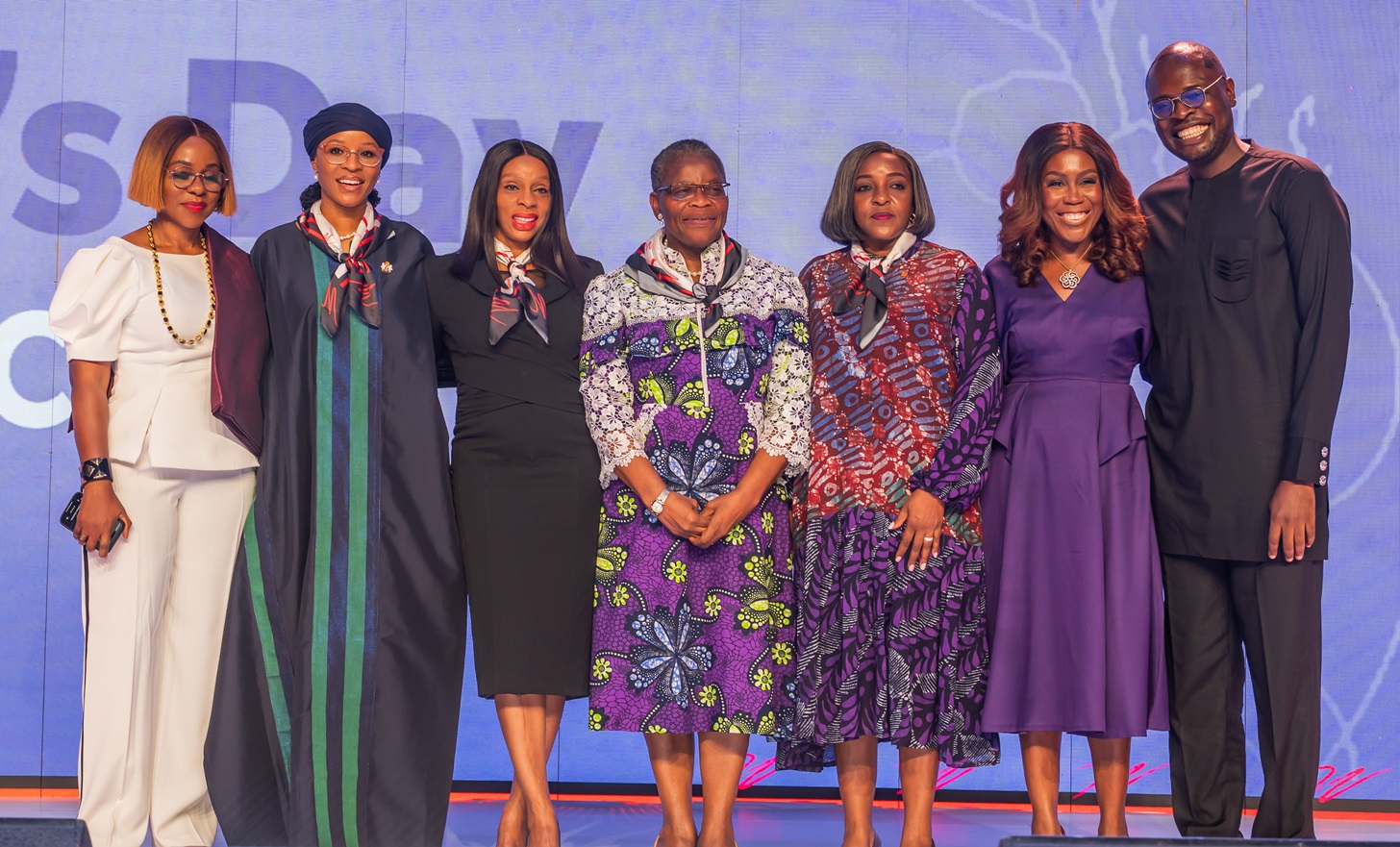
Access Bank chairman Osime

By Modupe Gbadeyanka

The chairman of Access Bank Plc, Mrs Ifeyinwa Osime, has called for deliberate and strategic investment in women as a catalyst for sustainable economic growth.

According to her, empowering women should be seen as a strategic economic decision rather than charity.

“When we speak of giving, it is about expanding access to finance, markets, knowledge and platforms that enable women to build sustainable businesses,” she said at an International Women’s Day Conference organised by Access Bank.

At the event, which attracted over 5,000 participants both physically and virtually, and attended by stakeholders across the public and private sectors, she noted that women own about 39 per cent of businesses in Nigeria and drive nearly

40 per cent of new enterprises, while small and medium enterprises contribute about 48 per cent of Gross Domestic Product (GDP) and over 80 per cent of employment.

Mrs Osime, however, decried the persistent financing gap facing women, describing it as a major constraint on productivity and economic growth.

“No economy can optimise its potential while underinvesting in half of its population,” she said, highlighting the bank’s interventions through its W Initiative and Womenpreneur Pitch-a-ton programme, which provides financing, training and healthcare support to thousands of women.

Also speaking at the programme, the Minister of Art, Culture, Tourism and the Creative Economy, Ms Hannatu Musawa, reiterated the government’s commitment to empowering women as key drivers of the nation’s creative economy, with a focus on expanding access to finance, skills development and leadership opportunities.

The Minister, represented by the Director-General of the Centre for Black and African Arts and Civilisation (CBAAC), Mrs Aisha Adamu, said women were increasingly taking the lead in building businesses, driving innovation and shaping society.

“Across Nigeria, women have always been the invisible architects of our culture, yet their contributions have been underrepresented and undervalued,” she said.

The Minister said the ministry was repositioning culture as a structured economic sector through creative hubs, skills development and enterprise support programmes targeting women in film, fashion, digital media and tourism.

On financing, Ms Musawa noted that women-owned businesses account for about 40 per cent of small and medium enterprises but continue to face significant funding gaps.

“Too many ideas remain small not because they lack potential, but because they lack access to capital,” she said, adding that the government was working to unlock targeted funding for women, strengthen market access and improve data systems to support women entrepreneurs, while also promoting their inclusion in leadership and policy-making processes.

Also, former Minister of Education, Mrs Oby Ezekwesili, stressed the need to prioritise women’s inclusion in development processes, noting that societies transform when critical issues such as women’s inclusion are deliberately prioritised.

“There is no other way societies have transformed than when people who care make an issue a priority,” she said, stressing that removing structural barriers limiting women’s participation would unlock significant economic potential, adding that agricultural output could increase by up to 30 per cent if women had equal access to inputs as men.

In the same vein, the Group Head for Women Banking at Access Bank, Mrs Nene Kunle-Ogunlusi, said the bank remained committed to supporting women across all segments.

She said the bank recently organised a special Women’s Day programme for market women in Oyingbo, Lagos, offering free health checks, beauty services and financial education.


Modupe Gbadeyanka is a fast-rising journalist with Business Post Nigeria. Her passion for journalism is amazing. She is willing to learn more with a view to becoming one of the best pen-pushers in Nigeria. Her role models are the duo of CNN's Richard Quest and Christiane Amanpour.

Banking

CBN, NCC Set up Committees to Protect Consumers Against Fraud

Published

on

CBN NCC

By Modupe Gbadeyanka

In a bid to ensure consumer safety across the telecommunications and financial services sectors, the Central Bank of Nigeria (CBN) and the Nigerian Communications Commission (NCC) have decided to work together.

On Monday, both organisations sealed a Memorandum of Understanding (MoU) for the establishment of joint committees for the protection of consumers against fraud in the sectors.

The two teams set up by the CBN and the NCC include the Joint Committee on Payment Systems and Consumer Protection, and the Joint Committee on Telecoms Identity Risk Management System (TIRMS) Portal.

Through the TIRMS portal, which aggregates data on churned (recycled) phone numbers, as well as numbers flagged within the financial services sector, it will now have enhanced visibility into the status of phone numbers, one of the most widely utilised resources in the sector, although regulated by the NCC.

With this, according to the chief executive of NCC, Mr Aminu Maida, financial institutions will be able to determine when a line is active, when it has been swapped, when it has been disconnected due to inactivity and reassigned to a new subscriber, and when it has been flagged for suspicious or fraudulent activity. “This ensures that our financial services industry is better equipped with timely and relevant information to effectively combat e-fraud, particularly those perpetuated using phone numbers, in the country,” he stated.

It was stated that the partnership between the two parties will reduce electronic fraud, which has become increasingly pervasive, with significant implications for the integrity of the digital economy.

In his remarks, the Governor of the CBN, Mr Yemi Cardoso, said the MoU will strengthen coordination on approvals, technical standards, and innovation trials, including sandbox testing that supports market-led solutions, while safeguarding stability.

“Going forward, the CBN remains fully committed to working with the NCC to deliver a safer, more resilient, and more inclusive digital financial system that supports national productivity, protects consumers, and strengthens trust in Nigeria’s digital economy,” the central bank chief said.

Continue Reading

Banking

Wema Bank Looks to Deepen Role as Catalyst for Growth, Market Presence

Published

on

wema-bank-logo

By Aduragbemi Omiyale

Mid-level Nigerian lender, Wema Bank Plc, has set its eyes on expanding its market presence and supporting the government in achieving its $1 trillion economy by 2030.

In a statement, the financial institution said it hopes to achieve these and others through its recently recapitalisation exercise, which saw its capital base rise to about N265 billion, well above the N200 billion-threshold set by the Central Bank of Nigeria (CBN) for its category of licence.

Wema Bank operates with a national licence, and based on the regulator’s requirement, the capital base must be at least N200 billion.

Before the March 31, 2026-deadline set be the CBN, banks were required to have at least N25 billion, but to meet up with the 2030 target of the federal government, this threshold was raised, with banks operating branches out the country asked to have at least N500 billion, while regional banks were told to have a minimum of N50 billion.

To comply with the new directive, Wema Bank embarked on a strategic capital raise through the stock market, successfully strengthening its shareholder base and securing the required capital through strong participation from existing investors.

Its N150 billion rights issue, which opened on April 14, 2025, and closed on May 21, 2025, marked a significant step in this journey. This was subsequently complemented by a N50 billion special placement later in the year, ensuring the bank not only met but exceeded the regulatory threshold well ahead of schedule.

“The successful completion of our recapitalisation exercise is a defining moment for Wema Bank. It is a strong validation of our strategy, our performance, and the enduring confidence our shareholders and stakeholders have in our vision.

“We have not only met the CBN’s requirements; we have exceeded them, reinforcing our position as a National Bank with the scale, strength, and stability to compete and lead,” the chief executive of Wema Bank, Mr Moruf Oseni, stated.

“Looking ahead, we remain focused on deepening our market presence, driving customer-centric innovation, and strengthening our role as a catalyst for growth across retail, SME, and corporate segments.

“This is not just about retaining our license; it is about building a bigger, stronger, and more impactful Wema Bank,” the bank executive further stated.

Continue Reading

Banking

Nigeria to Invest $75m in Flutterwave’s IPO Drive

Published

on

flutterwave IndusInd Bank India

By Adedapo Adesanya

President Bola Tinubu has given approval for the investment of $75 million in Flutterwave, as part of the payments company’s efforts to raise $250 million through an Initial Public Offering (IPO).

The investment is expected to be executed through the Ministry of Finance Incorporated (MoFI), according to reports on Monday.

Since its founding in 2016, Flutterwave has rapidly expanded and now has a presence in about 30 African countries. The company’s valuation is at $3 billion.

According to the reports, the fintech company approached the federal government last year to participate in the offer, which has been in motion since it was first touted as far back as 2022.

Flutterwave’s IPO has been delayed by its lack of sustained profitability, earlier governance and misconduct scandals, and unfavourable global market conditions.

It was gathered that MoFI engaged two of the Big Four global accounting and auditing firms to carry out a detailed review of the company’s financial statements and operations, in a move aimed at ensuring due diligence and strengthening investor confidence.

Citing sources, the newspaper said Flutterwave brought Nigerian government participation to secure sovereign backing and reinforce confidence in Nigeria’s growing technology sector.

According to the sources, the move was also intended to project Nigeria’s potential on the global stage, adding that the company is also using the IPO to widen ownership and allow more Nigerians to invest in its growth.

The paper also reported that the IPO would expand ownership, giving more Nigerians the opportunity to invest in one of Africa’s leading fintech companies.

Market interest in the offer is said to be strong, with existing investors indicating plans to increase their stakes, while new institutional players are also positioning to participate.

This development is coming after the Central Bank of Nigeria (CBN) granted Flutterwave a license to operate microfinance banking services in Nigeria. The license enables the company to hold funds and deposits directly, strengthening its financial infrastructure across its largest market and enabling more efficient financial services and settlement flows for consumers, businesses and enterprises.

Continue Reading

Trending