Economy
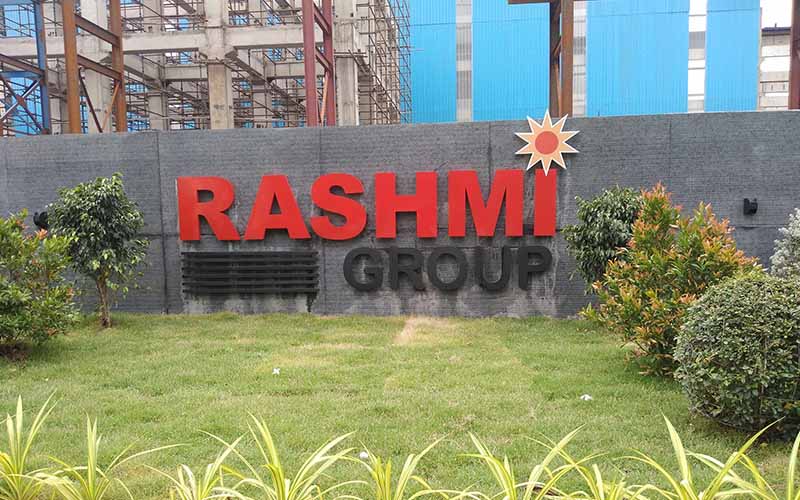
Nigeria Inks $1bn Steel Investment Deal with India’s Rashmi Metaliks
By Adedapo Adesanya
The federal government has signed a Memorandum of Understanding (MoU) with an Indian conglomerate, Rashmi Metaliks Group, to boost Nigeria’s steel production.
The agreement, signed by the Minister of Steel Development, Mr Shuaibu Abubakar Audu, on Tuesday in Kolkata, India, was for a projected investment of $1 billion over three years.
This followed the Minister’s tour of the steel plant in Kolkata, where he commended the scale of the operations and advanced technology deployed at the facility.
He also lauded the company’s integrated operations — spanning Direct Reduced Iron (DRI), pig iron, billets, and finished ductile iron pipes — describing them as a strong example of industrial efficiency and excellence in modern steel production.
According to the Minister, Nigeria’s proactive investment drive is already attracting significant global capital.
He noted that the MoU signed with the company represents a major milestone in Nigeria’s efforts to reposition the steel sector, reaffirming President Bola Tinubu’s commitment to revitalising the industry, creating employment opportunities, and conserving foreign exchange through strategic import substitution.
He added that the efficiency of the facility underscored the importance of value addition, innovation, and sustainability in modern steel production, emphasising that the visit further reflected the strengthening economic ties between Nigeria and India in the areas of steel, mining, and manufacturing.
In signing the MoU, Audu highlighted Nigeria’s vast steel potential, noting that the country is transitioning from a raw minerals exporter to a value-adding industrial economy.
He disclosed that Nigeria possesses well over 3 billion tonnes of iron ore reserves, with some deposits grading as high as approximately 67 per cent iron content (Fe), while domestic steel consumption is estimated at about $10 billion annually.
He said that Nigeria aims to become a leading steel hub in Africa under President Tinubu’s Renewed Hope Agenda, which targets crude steel production of approximately 10 million tonnes per annum by 2030.
This is evidenced by recent Foreign Direct Investments in the sector, including a $400 million Stellar Steel plant in Ewekoro, Ogun State and a Chinese-Nigerian joint venture for a modern hot-rolled coil steel plant scheduled to commence operations by November 2026.
Also, African Industries Group (AIG) is completing a fully integrated iron-and-steel plant at Gujeni in Kaduna State. The company has invested $300 million in the Direct Reduced Iron (DRI) and steel unit of the project, and the galvanising and fabrication plant in Ikorodu, Lagos, which was recently commissioned by the Minister.
Energy infrastructure is also being developed to support the growth of the industry. The Nigerian National Petroleum Company (NNPC) Limited, the Ministry of Steel Development, and their partners recently broke ground on five mini-LNG plants in Ajaokuta, Kogi State — a $500 million project aimed at boosting gas supply to the steel industry, with a combined capacity of approximately 97 million standard cubic feet per day.
Mr Audu used the visit to invite additional Indian investors to explore opportunities within Nigeria’s steel sector.
He highlighted prospects for establishing integrated steel plants in Nigeria, deploying Direct Reduced Iron and electric-arc furnace technologies, and developing full value chains for automotive, construction, and infrastructure steel.
He further assured prospective investors that the Nigerian Government remains committed to providing an enabling environment through policy stability, fiscal incentives, and ongoing ease-of-doing-business reforms aimed at protecting investments.
“We are open to credible investors willing to partner with us for mutual growth,” the Minister said.
On his part, the Vice Chairman of Rashmi Metaliks Group, Mr Sunil Kumar Patwari, on behalf of the company, expressed appreciation to the Nigerian delegation for the successful visit to their facilities in Kolkata.
He emphasised that the visit reflects the priority placed on the partnership by the Nigerian Government and assured that, with the necessary support from the Nigerian government, Rashmi Group is committed to delivering on the projects envisioned in the MoU.
Economy
Nigeria Mulls 5% Revenue Fines for Anti-Competitive Midstream, Downstream Operators
By Adedapo Adesanya
The Nigerian Midstream and Downstream Petroleum Regulatory Authority (NMDPRA) could impose fines of up to five per cent of the annual turnover of petroleum operators found guilty of serious anti-competitive practices in the midstream and downstream sectors.
This was contained in the draft regulations of the proposed Midstream and Downstream Petroleum Prevention of Anti-Competitive Practices and Behaviour Regulations, 2026.
According to the proposal, errant companies of serious offences such as price-fixing, bid-rigging, market allocation, abuse of market dominance and other conduct capable of causing significant harm to competition could be fined between three and five per cent of their annual turnover.
It further proposed that persistent or serious offenders may also have their licences suspended or revoked, while the NMDPRA may impose daily penalties on operators that fail to comply with its orders or continue prohibited conduct after being directed to stop.
The draft regulation stated: “Where the Authority determines, after investigation and due process, that a licensee or any other person has engaged in anti-competitive conduct or breached any provision of this Regulation or the Act, it may impose administrative fines as provided herein.
The maximum administrative fine shall not exceed five per cent of the annual turnover of the offending undertaking for the preceding financial year.
“For purposes of these regulations, ‘annual turnover’ means gross revenues or sales derived from the regulated business activities in Nigeria. Where multiple entities or group structures are involved, the Authority may consider the turnover of the group, subsidiary, or segment most directly involved in the infringement.”
“Where a licensee or person fails to comply with an order or directive of the Authority, a daily penalty may be imposed for each day the violation continues.
“Where a prohibited practice continues after a final order, the daily penalty could rise to between N10m and N50m. Before imposing a fine, the NMDPRA would issue a Notice of Intention to Fine setting out the facts and findings, the nature of the infringement, the basis for calculating the proposed fine and the proposed deadline for payment,” it proposed.
Economy
Otedola Acquires Fresh 147.7 million First HoldCo Shares Worth N20.7bn
By Adedapo Adesanya
Nigerian billionaire, Mr Femi Otedola, the chairman of First HoldCo, has acquired an additional 147.74 million shares of the financial services group through his investment vehicle, Calvados Global Services Limited.
According to a regulatory filing obtained from the Nigerian Exchange (NGX) Limited on Monday, Mr Otedola purchased the stocks valued at N20.68 billion.
The notice said the investor purchased about 147,737,699 ordinary shares at N140 per share on August 14.
The transaction increases Mr Otedola’s stake in the financial services group from 11.99 billion shares (26.1 per cent) to 12.13 billion shares (26.4 per cent).
The acquisition comes less than two weeks after the billionaire bought 138.04 million ordinary shares for about N18.11 billion.
Prior to that, Mr Otedola had said he had invested more than N600 billion of his personal wealth in the bank, describing the investment as a “long-term generational commitment” rather than a turnaround play.
Responding to speculation about increasing his stake, Mr Otedola said his investment philosophy favours majority control.
“My investment threshold is always over and above 51 per cent,” the billionaire had said.
“One of my key investment principles is that firm shareholder control, with due regard for minority interest, is a key ingredient to executing reforms and restructuring to deliver value to all stakeholders.”
The bank’s share price had recently risen to an all-time high of N140 per share, pushing its market capitalisation to N6.37 trillion.
In recent months, Mr Otedola has also made other high-profile investments outside the banking sector, including the acquisition of a luxury residence in London’s exclusive Mayfair district, further expanding his international real estate portfolio.
He is also believed to have participated in a financing arrangement involving the Dangote Refinery, providing funds to support its working capital needs as the facility scaled up operations.
Economy
FrieslandCampina, CSCS Tumble NASD Exchange by 0.89%
By Adedapo Adesanya
The duo of FrieslandCampina Wamco Nigeria Plc and Central Securities Clearing System (CSCS) Plc pulled down the NASD Over-the-Counter (OTC) Securities Exchange by 0.89 per cent on Monday, August 17.
The price of FrieslandCampina went down by N9.85 to N160.00 per unit from N169.85 per unit, and CSCS Plc depreciated by 96 Kobo to N98.50 per share versus N99.46 per share.
As a result, the market capitalisation further lost N23.90 billion to end at N2.656 trillion, in contrast to the preceding session’s N2.68 trillion, and the NASD Security Index (NSI) dropped 39.81 points to close at 4,426.02 points from 4,465.83 points.
During the trading session, the share price of Industrial and General Insurance (IGI) Plc was up by 1 Kobo to 55 Kobo per unit from 54 Kobo per unit.
Yesterday, the volume of securities transacted by market participants decreased by 79.3 per cent to 652,081 units from 3.2 million units, the value of securities slid by 78.2 per cent to N10.7 million from N375.7 million, and the number of deals went south by 54.4 per cent to 21 deals from 46 deals.
Great Nigeria Insurance (GNI) Plc remained the most traded stock by value on a year-to-date basis, with 3.4 billion units worth N8.4 billion, followed by Infrastructure Credit Guarantee (Infracredit) Plc with 2.3 billion units valued at N6.5 billion, and CSCS Plc with 79.6 million units transacted for N5.8 billion.
GNI Plc also ended the session as the most traded stock by volume on a year-to-date basis, with 3.4 billion units exchanged for N8.4 billion, followed by Infracredit Plc with 2.3 billion units traded for N6.5 billion, and Resourcery Plc with 1.1 billion units sold for N415.7 million.


Pingback: Nigeria Inks $1bn Steel Investment Deal with India’s Rashmi Metaliks – Simply Invest Asia