Technology
Can Nigeria Build Enough Solar Panels? TechCartel Breaks Down the New Taxes on Imported Tech
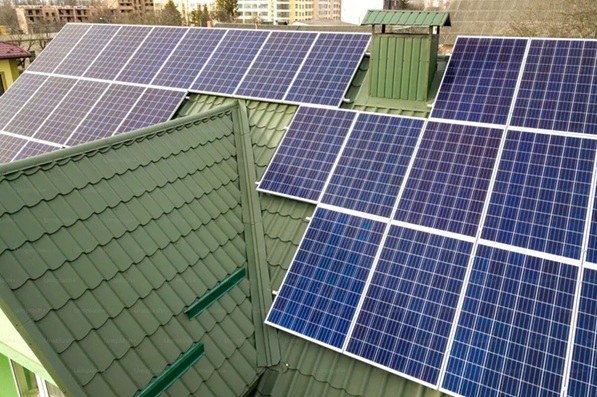
There was a time when a solar panel on a Nigerian rooftop was a luxury, the kind of thing you saw at a hotel or a church with generous donors. That time has passed. Across the country, solar panels have become a defining feature of the skyline, appearing on rooftops and office blocks in nearly every neighborhood. Once viewed as a luxury, solar has transitioned into a fundamental necessity for millions of households and businesses. For many, it serves as the foundation of their daily power needs.
The Federal Government has now moved to change how those panels get into the country, and the implications are landing on an energy market that has quietly built its entire informal infrastructure around imported solar hardware.
According to a detailed breakdown published by TechCartel, one of Nigeria’s most closely watched tech publications for consumer technology, the government is not staging an overnight ban. What it is staging is a structured financial squeeze: higher import taxes on finished solar panels, lower duties on raw materials for local manufacturers, and a 2036 target for 100 percent local production.
The policy timeline started earlier than most people noticed. In March 2025, the Minister of State for Technology, Uche Nnaji, announced a Solar Import Phase-out Roadmap. The stated motivation was the import bill, which crossed ₦200 billion in a single year. By January 2026, the Rural Electrification Agency reported that local manufacturing capacity had grown from 120 MW to 300 MW. On April 1, 2026, the Minister of Finance signed the 2026 Fiscal Policy Measures, formally introducing Import Adjustment Taxes on finished solar goods. A Green Tax Surcharge follows on July 1, 2026.
For anyone who opened an import Form M before April 1, there is a 90-day window to clear goods at the old rate. After that, the new cost structure kicks in. The Secure Energy Project estimates a 15 to 25 percent rise in solar panel prices by late 2026.

Can Nigerians Still Afford to Power Themselves?
To understand why this policy lands differently in Nigeria than it would elsewhere, you have to understand what the grid has done to Nigerian electricity habits. Years of erratic supply, multi-hour daily outages, and voltage fluctuations that destroy electronics did not produce a population waiting patiently for the government to fix things. It produced a population that fixed things itself.
First came generators, petrol then diesel then gas. Then came inverters with lead-acid batteries, then lithium batteries, and then solar panels added on top to charge them without spending on fuel. The 1 kWh solar generator, once considered a niche product, is now a completely ordinary fixture in small households and one-room businesses. Some call them power stations, and that name has started to feel accurate. Provisions shops, phone repair kiosks, tailoring studios, and barbing salons run on them every single day. They are small enough to sit on a balcony, affordable enough for a two-month savings plan, and powerful enough to run lights, DC fans, and a phone charger without touching a NEPA bill.
The scale goes well beyond individual homes. Petrol stations that once ran generators round the clock have converted their canopy roofs into solar arrays, running hybrid systems where solar handles daytime load and the generator only kicks in at night. Pharmacies, internet cafés, printing shops, and cold rooms powering perishables now run on solar. The solar transition in Nigeria has been market-driven and it has moved fast.
That context is what makes the arithmetic in TechCartel’s breakdown so pointed. Nigeria’s local solar manufacturing capacity stands at 300 MW as of April 2026. The country’s estimated demand for energy stability is 3.7 GW. The gap is over 3,400 MW. Local manufacturers currently price their panels about 16 percent above imported alternatives. As import taxes rise, that gap will narrow, but the timeline is vital. If local capacity grows faster than analysts expect, the transition could be orderly.
The government’s $425 million commitment to eight new manufacturing plants, and the 150 percent capacity growth achieved in a single year, suggest the industrial ambition is real. Nigerian-assembled panels are already being exported to Ghana and Burkina Faso, which signals a manufacturing base serious enough to serve regional demand. The 2036 target is a decade away, but the trajectory is being built now.
For Nigerians planning a solar installation in the coming months, the window is clear. The Form M grace period runs 90 days from April 1. The Green Tax Surcharge begins July 1. Any installation completed before that first wave of cost increases arrives will avoid the opening price shock. After that, the cost of running your own power in Nigeria, already a choice made out of necessity, gets a little harder to justify on a budget.
Technology
Damage to Fibre Networks Carries Significant Economic Consequences—NCC
By Modupe Gbadeyanka
The Executive Vice Chairman of the Nigerian Communications Commission (NCC), Mr Aminu Maida, has reemphasised the need to protect the nation’s telecommunications infrastructure, especially fibre networks, noting that damage to fibre networks carries significant economic consequences.
Speaking virtually at the Association of Telecommunications Companies of Nigeria (ATCON) Critical Conversation Forum on Fibre-to-the-Home (FTTH) in Lagos recently, he described FTTH as a critical enabler of Nigeria’s digital future.
“FTTH is uniquely positioned to meet Nigerians' next phase of data demand. The quality of our broadband will increasingly shape the competitiveness of our businesses, the growth of our digital industry and the opportunities available to our citizens,” the NCC chief stated.
“We must uphold deployment standards. Nigeria needs fibre that is properly installed, properly documented, and properly protected,” Mr Maida further said at the event themed Fibre to the Home in Nigeria: Addressing Challenges, Strengthening Standards and Ensuring Sustainable Deployment.
During a panel discussion titled Policy, Governance and Regulatory Alignment, the Deputy Director of Strategic Business Initiatives at ipNX, Mr Segun Okuneye, highlighted the need for stronger collaboration across the telecommunications ecosystem to unlock the full potential of fibre broadband in Nigeria.
According to him, sustainable fibre deployment extends beyond technology and investment to include policy consistency, stakeholder alignment, infrastructure protection, and shared responsibility.
“Achieving universal fibre connectivity requires more than deploying infrastructure; it requires sustained collaboration between operators, regulators, government agencies and host communities.
“When policies are aligned, deployment standards are consistently enforced, and critical infrastructure is protected, we create an environment where investment thrives and more Nigerians can enjoy reliable, high-speed broadband.
“At ipNX, we remain committed to working with all stakeholders to build resilient digital infrastructure that will support Nigeria’s economic growth for generations to come.”
Earlier in his welcome address, ATCON President, Mr Tony Emoekpere, underscored the strategic importance of FTTH in achieving the country’s broadband penetration targets while calling for greater public awareness around protecting communications infrastructure.
“This forum is critical because Fibre-to-the-Home is the technology that will enable the country to achieve full broadband penetration. We all depend on communication infrastructure, and it must be protected,” he declared.
Drawing a comparison with power infrastructure in the country, he added, “If somebody comes to your neighbourhood to tamper with your transformer or power cables, everybody will come out. The same thing needs to apply for communications infrastructure. When we see people damaging fibre cables, we should raise an alarm.”
Technology
Financial Services Professionals Discuss Meeting Rising Customer Expectations
By Modupe Gbadeyanka
Thursday, July 23, 2026, provided an opportunity for financial services professionals to converge on Landmark Event Centre, Lagos, to brainstorm on ways to meet the rising customers’ expectations.
The platform used for this purpose was Core by Interswitch. It is part of the company’s broader commitment to strengthening Africa’s digital payments ecosystem by fostering collaboration, knowledge sharing and operational excellence across the financial services value chain.
At the event, participants, numbering over 400, also highlighted the growing importance of operational excellence in sustaining resilient payment infrastructure.
As digital financial services continue to expand across Africa, closer collaboration among financial institutions, fintechs and payment service providers will be essential to improving responsiveness, resolving operational challenges more effectively and delivering consistently reliable customer experiences.
The Executive Vice President for Operations and Technology at Interswitch, Mr Babafemi Ogungbamila, said the forum reflects the company’s belief that exceptional customer experiences are built not only on innovative technology but also on the expertise, collaboration and commitment of the professionals who keep payment systems running every day.
“Every successful digital transaction is powered by professionals whose work often goes unseen but is fundamental to building trust in digital payments. Core by Interswitch was created to recognise their contribution, strengthen collaboration across the industry and create opportunities for shared learning that ultimately benefit financial institutions and the customers they serve.
“As digital payments continue to evolve, investing in the people and processes that power the technology is just as important as investing in the technology itself,” Mr Ogungbamila said.
Beyond recognising the professionals whose work often goes unnoticed, the programme underscored the value of creating stronger connections across the payments ecosystem.
By creating a dedicated platform for knowledge sharing, collaboration and professional development, Core by Interswitch aims to build a more connected community of payments operations professionals equipped to respond to the evolving demands of the digital economy.
Technology
WhatsApp Introduces Web Calling, Call Transfer, QuickHD Features
By Aduragbemi Omiyale
WhatsApp has been updated with a web calling feature, allowing users to now make and receive audio and video calls, both one-on-one and group, directly from WhatsApp Web.
A notice from the Meta-owned messaging platform disclosed that this feature works without the need to download any app.
It was disclosed that this update was made to WhatsApp to make it easier for users to make calls wherever they are and on whatever device, phone or laptop.
Users will have access to features available on their other devices, including screen sharing, reactions, and a dedicated Calls tab with full call history and favourites, all from their browsers.
WhatsApp noted that calls from this feature are end-to-end encrypted, with no time limits and at no cost, as it is the same private experience they expect from the platform.
WhatsApp has also been embedded with easy call transfer, enabling the movement of an active group call from one device to another without hanging up. Users can seamlessly transfer calls to WhatsApp Web or Desktop when they arrive home to collaborate on a larger screen – or vice versa.
The platform further said it now has QuickHD, which allows for an improved video experience at the beginning of a call. With QuickHD, users can now enjoy high-definition video immediately in the very first few seconds of the call.
In addition, it has launched noise suppression to remove the background noise around callers so their voices come through clearly to the person on the other end, even in loud or busy environments. This can be managed at any time in in-call settings.
WhatsApp said these features are rolling out gradually and will be available to everyone soon, expressing its desire to make WhatsApp calling simpler to use.