Connect with us

Technology

Can Nigeria Build Enough Solar Panels? TechCartel Breaks Down the New Taxes on Imported Tech

Published

on

New Taxes on Imported Tech

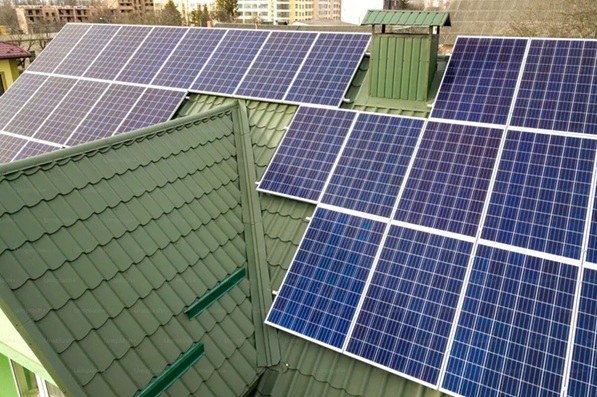
There was a time when a solar panel on a Nigerian rooftop was a luxury, the kind of thing you saw at a hotel or a church with generous donors. That time has passed. Across the country, solar panels have become a defining feature of the skyline, appearing on rooftops and office blocks in nearly every neighborhood. Once viewed as a luxury, solar has transitioned into a fundamental necessity for millions of households and businesses. For many, it serves as the foundation of their daily power needs.

The Federal Government has now moved to change how those panels get into the country, and the implications are landing on an energy market that has quietly built its entire informal infrastructure around imported solar hardware.

According to a detailed breakdown published by TechCartel, one of Nigeria’s most closely watched tech publications for consumer technology, the government is not staging an overnight ban. What it is staging is a structured financial squeeze: higher import taxes on finished solar panels, lower duties on raw materials for local manufacturers, and a 2036 target for 100 percent local production.

The policy timeline started earlier than most people noticed. In March 2025, the Minister of State for Technology, Uche Nnaji, announced a Solar Import Phase-out Roadmap. The stated motivation was the import bill, which crossed ₦200 billion in a single year. By January 2026, the Rural Electrification Agency reported that local manufacturing capacity had grown from 120 MW to 300 MW. On April 1, 2026, the Minister of Finance signed the 2026 Fiscal Policy Measures, formally introducing Import Adjustment Taxes on finished solar goods. A Green Tax Surcharge follows on July 1, 2026.

For anyone who opened an import Form M before April 1, there is a 90-day window to clear goods at the old rate. After that, the new cost structure kicks in. The Secure Energy Project estimates a 15 to 25 percent rise in solar panel prices by late 2026.

New Taxes on Imported Tech

Can Nigerians Still Afford to Power Themselves?

To understand why this policy lands differently in Nigeria than it would elsewhere, you have to understand what the grid has done to Nigerian electricity habits. Years of erratic supply, multi-hour daily outages, and voltage fluctuations that destroy electronics did not produce a population waiting patiently for the government to fix things. It produced a population that fixed things itself.

First came generators, petrol then diesel then gas. Then came inverters with lead-acid batteries, then lithium batteries, and then solar panels added on top to charge them without spending on fuel. The 1 kWh solar generator, once considered a niche product, is now a completely ordinary fixture in small households and one-room businesses. Some call them power stations, and that name has started to feel accurate. Provisions shops, phone repair kiosks, tailoring studios, and barbing salons run on them every single day. They are small enough to sit on a balcony, affordable enough for a two-month savings plan, and powerful enough to run lights, DC fans, and a phone charger without touching a NEPA bill.

The scale goes well beyond individual homes. Petrol stations that once ran generators round the clock have converted their canopy roofs into solar arrays, running hybrid systems where solar handles daytime load and the generator only kicks in at night. Pharmacies, internet cafés, printing shops, and cold rooms powering perishables now run on solar. The solar transition in Nigeria has been market-driven and it has moved fast.

That context is what makes the arithmetic in TechCartel’s breakdown so pointed. Nigeria’s local solar manufacturing capacity stands at 300 MW as of April 2026. The country’s estimated demand for energy stability is 3.7 GW. The gap is over 3,400 MW. Local manufacturers currently price their panels about 16 percent above imported alternatives. As import taxes rise, that gap will narrow, but the timeline is vital. If local capacity grows faster than analysts expect, the transition could be orderly.

The government’s $425 million commitment to eight new manufacturing plants, and the 150 percent capacity growth achieved in a single year, suggest the industrial ambition is real. Nigerian-assembled panels are already being exported to Ghana and Burkina Faso, which signals a manufacturing base serious enough to serve regional demand. The 2036 target is a decade away, but the trajectory is being built now.

For Nigerians planning a solar installation in the coming months, the window is clear. The Form M grace period runs 90 days from April 1. The Green Tax Surcharge begins July 1. Any installation completed before that first wave of cost increases arrives will avoid the opening price shock. After that, the cost of running your own power in Nigeria, already a choice made out of necessity, gets a little harder to justify on a budget.


Click to comment

Leave a Reply

Your email address will not be published. Required fields are marked *

Technology

NITDA Warns of Dangerous AI Malware Targeting Banks, Government Agencies

Published

on

DeepLoad

By Adedapo Adesanya

The National Information Technology Development Agency (NITDA) has warned of an active, Artificial Intelligence (AI)-powered malware named DeepLoad targeting financial institutions and government agencies

The organisation warned that the new harmful malware is targeting Nigerian government agencies, financial institutions, businesses,  and individuals.

In a tweet on its verified X handle, NITDA revealed that once the virus is executed, DeepLoad silently installs itself, harvests stored user credentials and sensitive data from browsers, evading antivirus software by leveraging AI.

NITDA further stated that upon infection, the malware can result in unauthorised access to bank accounts, mobile money services, and payment cards.

It reiterated that the malware also steals saved passwords, personal information, and documents.

It explained that these thefts enable criminals to impersonate victims for financial gains, disruption of public/private organisations’ workflow via document theft, and ultimately a threat to national security via the compromise of classified governance networks.

The agency outlined that the malware targets public and private institutions, Banks and Financial institutions, Critical infrastructure operators, and individual citizens using online banking and email.

The agency cautioned against pasting links and commands from untrusted websites into your computer or phone’s browser, as legitimate websites do not ask for such.

Continue Reading

Technology

Meta Strengthens Teen Safety Online

Published

on

Meta FG ARCON

By Modupe Gbadeyanka

The parent company of Facebook, WhatsApp, and Instagram, Meta, has strengthened its teen safety online with an expansion of its AI-powered age assurance measures.

This is part of efforts to create safer, age-appropriate experiences for young people across its platforms. Through a combination of AI, product design, and parental support tools, Meta continues to strengthen how it identifies teens, protects them by default, and supports families in navigating digital environments.

Strengthening underage enforcement with advanced AI

Meta requires users to be at least 13 years old to use its platforms and continues to invest in advanced technologies to uphold this policy at scale. As part of these efforts, the company is further enhancing its AI-driven systems to more effectively identify and take action on accounts that may belong to underage users.

These advancements include:

Contextual AI analysis across profiles: Meta’s systems analyse a wide range of signals—including posts, comments, bios and captions—to identify contextual indicators such as references to school environments or age-related milestones. This capability is being expanded across additional surfaces within Meta’s apps, strengthening enforcement more consistently and proactively.

Advanced visual analysis technology: Meta is introducing AI that can interpret general age-related cues within photos and videos. This technology estimates age ranges based on broad characteristics and does not use facial recognition or identify individuals. When combined with behavioural and textual signals, it significantly enhances detection accuracy.

Expanded enforcement and verification processes: Accounts identified as potentially underage are subject to age verification requirements. Where age cannot be confirmed, accounts may be removed to maintain platform integrity.

Improved reporting and flagging tools: Meta is making it easier for people to report suspected underage accounts through simplified reporting flows available both in-app and via the Help Centre, helping surface potential violations more efficiently.

AI-supported review systems: To improve consistency and speed, Meta is supplementing human review teams with AI models that apply standardised evaluation criteria to reports, enabling faster and more reliable enforcement outcomes.

Stronger circumvention safeguards: Meta is also enhancing its ability to detect and prevent repeat attempts by users who may try to bypass age restrictions by creating new accounts.

While many of these AI-driven systems are already in use globally, certain advanced capabilities continue to be rolled out progressively across additional markets.

Expanding Teen Account protections

Meta continues to expand its Teen Account framework, which is designed to provide built-in protections that limit unwanted contact and reduce exposure to inappropriate content. Since its introduction, hundreds of millions of teens have been enrolled in these protections across Instagram, Facebook, and Messenger.

These protections include automatically placing teens under 18 into age-appropriate experiences, including a default 13+ content setting designed to limit exposure to sensitive content.

Building on this progress, Meta is further scaling its proactive detection technology that identifies users who may be teens—even if they have entered an adult birthdate—and automatically places them into age-appropriate settings. This technology, already rolled out in several markets, is being expanded to additional regions to make these protections available more broadly over time.

Supporting parents with tools and guidance

Meta continues to support parents as key partners in helping teens navigate online experiences safely. The company is introducing new notifications and guidance designed to help parents better understand how to verify their teen’s age and encourage open conversations about the importance of providing accurate information online.

These efforts build on existing resources available through Meta’s Family Centre, which provides tools and educational materials to help families manage their digital experiences more effectively.

Meta also maintains age verification requirements for users who attempt to change their age in ways that may bypass protections, using a combination of ID verification and facial age estimation tools.

Advocating for industry-wide solutions

Meta continues to emphasise that age assurance is a complex, industry-wide challenge that requires broader collaboration. The company supports approaches where age verification is conducted at the operating system or app store level, enabling developers to deliver consistent, age-appropriate experiences across apps.

In addition to AI-based detection, Meta uses age estimation based on user activity and signals, as well as user reports, to help determine whether someone may be misrepresenting their age.

Continue Reading

Technology

Interswitch Inducts New Interns into Developer Academy to Fortify Tech Talent Pipeline

Published

on

Interswitch’s Developer Academy

By Aduragbemi Omiyale

A cohort of developer interns has been inducted into the Developer Academy of Interswitch as part of efforts to deepen Africa’s tech talent pipeline.

The new cohort emerged through a rigorous multi-stage process involving technical assessments and interviews. They were chosen from over 20,000 applications.

The talents were sourced from across key engineering tracks, including Backend Development, DevOps, Mobile Development, Frontend Engineering, and Quality Assurance.

Their induction highlights both the scale of interest in software engineering opportunities in Nigeria and Interswitch’s role in nurturing the next generation of highly skilled technology professionals.

During the 9-month programme, participants will benefit from mentorship by experienced professionals, exposure to enterprise-grade systems, and the development of workplace readiness skills essential for today’s dynamic work environment.

Designed as an intensive and structured learning experience, the Developer Academy combines theoretical instruction with real-world application, equipping participants with the skills required to thrive in an increasingly global and competitive technology landscape.

At the end of the programme, top-performing interns may be offered full-time roles within Interswitch, while others are well-positioned to pursue opportunities across the broader technology landscape.

“At Interswitch, we have always believed in the capacity to see beyond the immediate challenges and focus on long-term impact. While the migration of skilled talent remains a reality, our approach is to actively shape the outcomes by building a strong and sustainable pipeline of technology professionals,” the chief executive of Interswitch, Mr Mitchell Elegbe, said.

“We are therefore committed to equipping individuals with the capabilities to contribute meaningfully to the broader technology ecosystem, locally and globally, not just for our own needs at Interswitch. In doing so, we are not only strengthening the industry but also reinforcing Nigeria’s position as a source of globally competitive engineering talent,” he added.

Also commenting, the Human Resources Officer, Mr Franklin Ali, said, “The Developer Academy reflects our long-term commitment to building talent at scale. We are equipping these young professionals not just with technical skills, but with the mindset, discipline, and adaptability required to thrive in diverse environments.

“Whether they build their careers within Interswitch, contribute to the local ecosystem, or explore global opportunities, they represent the strength and potential of Nigerian talent and carry forward the standard of excellence we are committed to building.”

Beyond its immediate training objectives, Interswitch’s Developer Academy is anchored on a broader strategic vision, one that addresses the ongoing migration of skilled talent from Nigeria and other developing economies.

As global demand for software engineers continues to rise, many highly skilled professionals are increasingly recruited by international organisations.

Interswitch’s approach reframes this trend, positioning talent development both as a means of local capacity building and as an opportunity to strengthen Nigeria’s reputation as a global hub for technology expertise.

Continue Reading

Trending