Connect with us

Sports

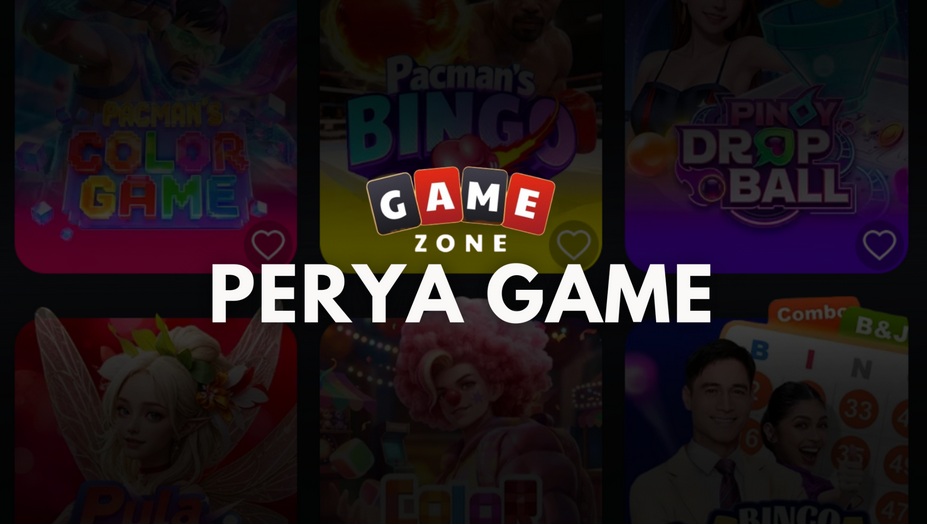
Connecting Filipino Cultural Perya Game to Today’s GameZone Platform

Published

on

perya game

Perya game have been a vibrant and enduring element of Filipino tradition, commonly featured at town fiestas, carnivals, and communal events. These games transcend mere amusement, embodying shared cultural experiences, fostering social bonds, and offering the delight of uncomplicated gameplay. Over the years, the traditional form of perya entertainment has transitioned into modern digital platforms such as GameZone. This evolution highlights how Filipino entertainment adapts to technological progress while maintaining its unique cultural identity.

Origins and Essence of Traditional Perya Games

The essence of Perya games lies in local fairs called peryahan, which are staple gatherings during festivals and town celebrations. These lively venues serve as hubs for lighthearted fun, presenting a variety of quick and simple games designed to entertain a broad audience. The environment is often energetic, filled with vibrant color schemes, enthusiastic crowds, and the sounds of anticipation and enjoyment radiating from countless booths.

A classic example is the Color Game, a favorite among fairgoers for its simplicity and excitement. Success depends on predicting the next color outcome, creating an engaging mix of chance and thrill. Alongside this, games such as Bingo hold a prominent place in the perya lineup. These games are readily accessible to people of all ages and skill levels due to their straightforward rules and reasonable winning odds. They contribute significantly to the inclusive atmosphere that characterizes peryahan game gatherings.

The bustling perya environment acts as a backdrop that magnifies the excitement. Families and friends drift from one colorful booth to another, sharing laughs, testing luck, and connecting socially. This dynamic blend of simple gameplay and social interaction forms the core of the traditional Perya culture.

Why Perya Games Became a Filipino Tradition

Perya games secured their place in Filipino culture because of two key elements: accessibility and community engagement. The uncomplicated nature of the games lowers barriers for participation, allowing anyone, regardless of age or background, to join in with ease.

The festive setting encourages socialization, where people meet, bond, and celebrate together. Interactions grow naturally from the shared joy of playing, generating strong community ties anchored in cultural practice. Such social interactivity ensures the continuation and relevance of Perya games, blending pastime with tradition.

Even as entertainment options widened in the Philippines, the appeal of Perya games endures. Their ability to combine simple gameplay with meaningful social gathering sustains their popularity in contemporary times.

The Digital Shift: From Fairgrounds to Screens

As global lifestyles shifted toward digital consumption of entertainment, Filipino traditional games experienced a similar evolution. Though technology prompted new habits, the core enjoyment of Perya games didn’t fade but transformed into online formats.

GameZone represents this transformation by reimagining perya classics in a digital context. This platform captures the vibrant excitement of traditional games while enhancing accessibility, enabling a broader audience to engage anytime, anywhere. The convenience of digital interaction suits today’s fast-paced life, where mobile and internet access prevail.

Players now find familiar perya-style games on GameZone’s platform, presented in an organized and user-friendly manner that preserves the spirit of celebration and friendly competition synonymous with the original fairs.

GameZone: Digital Hub for Perya-Inspired Entertainment

GameZone stands out as a major platform translating the perya experience into the digital era. It replaces physical carnival booths with an interactive online interface optimized for mobile devices. Through immersive graphics, intuitive gameplay flows, and easily navigable design, the lively atmosphere of Perya games is replicated for digital audiences.

As a PAGCOR-licensed operator, GameZone ensures compliance with regulation standards, reinforcing trust and transparency. Its structured environment provides players with a consistent, secure, and fair gaming experience, bridging traditional culture with modern entertainment expectations.

This platform’s design supports both casual players seeking nostalgia and new participants eager to explore Filipino cultural games in a convenient form.

Tradition Meets Innovation: The Evolving Perya Experience

The relationship between traditional Perya games and GameZone is evolutionary rather than substitutive. Foundational traits such as simplicity, fast gameplay, and excitement remain central. Meanwhile, digital enhancements add new layers of accessibility and interaction.

Instead of physically visiting peryahan venues, players can instantly connect via smartphones. This transition exemplifies how entertainment adapts to contemporary lifestyles, making cultural heritage available without geographical or temporal constraints.

GameZone effectively acts as a cultural and technological bridge, preserving the essence of perya while embracing the affordances of digital innovation.

Appeal of GameZone to Contemporary Gamers

Modern users gravitate towards GameZone’s blend of familiarity and convenience. Traditional perya games become accessible anytime across devices, removing the need for physical attendance or coordination.

With popular games like Color Game perya and Bingo offered in a digital format, players retain cultural connections while enjoying enhanced usability. The platform’s structured setup also appeals to those seeking orderly, safe gameplay environments, alongside social features that echo the communal nature of traditional fairs.

This digital accessibility combined with cultural preservation creates a compelling draw for players balancing heritage and modern preferences.

Sustaining Filipino Gaming and Cultural Heritage Digitally

GameZone plays a critical role beyond entertainment, acting as a guardian of Filipino gaming culture. By digitizing traditional Perya games, the platform facilitates the transmission of cultural identity to current and future generations.

Structured online presentations maintain the communal spirit intrinsic to perya experiences, making cultural games relevant in a technology-driven world. Younger players, accustomed to digital media, find in GameZone a way to experience Filipino traditions aligned with their contemporary lifestyles.

Thus, GameZone links the past and present, ensuring tradition remains alive, albeit in an updated form that resonates with today’s audiences.

perya game GameZone

Frequently Asked Questions

Q1. What are Perya games in Filipino culture?
Traditional fair games commonly played during festivals and community events, characterized by simple rules and social interaction.

Q2. How does GameZone relate to traditional Perya games?
GameZone adapts these cultural games into digital versions, increasing accessibility for modern players through online platforms.

Q3. Which types of games are associated with Perya culture?
Games such as Color Game and Bingo that feature straightforward mechanics and quick, engaging play are staples of Perya entertainment.


Dipo Olowookere is a journalist based in Nigeria that has passion for reporting business news stories. At his leisure time, he watches football and supports 3SC of Ibadan. Mr Olowookere can be reached via [email protected]

Click to comment

Leave a Reply

Your email address will not be published. Required fields are marked *

Sports

CANAL+ Brings Biggest-Ever WAFCON Morocco 2026 to SuperSport

Published

on

WAFCON Morocco 2026

CANAL+ has confirmed that the TotalEnergies CAF Women’s Africa Cup of Nations Morocco 2026 (WAFCON) will be broadcast live on SuperSport across Sub-Saharan Africa.

The tournament, which runs from 26 July to 16 August across five venues in Rabat and Casablanca, will see all 34 matches broadcast live on DStv, DStv Stream, GOtv and GOtv Stream. In Nigeria, coverage will be available on DStv and GOtv through MultiChoice.

The 2026 edition is the largest in the tournament’s history, following its expansion by the Confédération Africaine de Football (CAF) from 12 to 16 teams. It will also serve as a qualifying tournament for the 2027 FIFA Women’s World Cup in Brazil, with the four semi-finalists qualifying automatically and two additional teams advancing to an intercontinental qualifying playoff.

CANAL+ Africa and MultiChoice Group CEO, David Mignot, said: *”CANAL+ is delighted to confirm that the TotalEnergies CAF Women’s Africa Cup of Nations Morocco 2026 will be broadcast on our SuperSport channels on DStv and GOtv throughout Sub-Saharan Africa.

“This event marks our third major football tournament since our merger with the MultiChoice Group. We look forward to bringing another major football event to our subscribers and football fans across Africa, following the FIFA World Cup 2026 and the Men’s TotalEnergies CAF Africa Cup of Nations earlier this year.”

DStv and GOtv subscribers will be able to watch the tournament live on SS Football Plus (DStv Ch. 202). Match updates and highlights will also be available on SuperSport Blitz and SuperSport.com.

Continue Reading

Sports

WAFCON 2026: Super Falcons Lead Hunt for 11th Title, World Cup Qualification

Published

on

Super Falcons WAFCON 2026

By Adedapo Adesanya

The Super Falcons of Nigeria will begin their quest for a record-extending 11th Women’s Africa Cup of Nations (WAFCON) title when the 2026 tournament kicks off in Morocco on Sunday, with qualification for the 2027 FIFA Women’s World Cup and a record $2 million winners’ prize also at stake.

Nigeria has been drawn in Group C with Egypt, Zambia and Malawi for the defence of their WAFCON title in March, which will be hosted again in Morocco.

Last year, the Nigerian team won the record 10th tournament after defeating the host nation, Morocco, 3-2 in a spectacular final after going down 2-0.

The 2026 edition will once again be played in Morocco from July 26 to August after the earlier March 17-April 3 date was shifted.

The Confederations of African Football (CAF) cited “unforeseen circumstances” for the delay, but the late change has afforded more time for the newly expanded 16-team tournament, which will feature 34 matches and culminate in the final on Sunday, August 16.

Nigeria’s preparations

As part of preparations, the Super Falcons defeated Tanzania’s Twiga Stars  2-1 on Thursday in Casablanca.

The team debuted an iconic Nike jersey featuring 10 stars, which symbolises the number of victories at the continental tournament.

Nigeria will begin the defence of their title against tournament debutants Malawi at the Al Madina Stadium in Rabat on Tuesday, July 28, then face Zambia and Egypt.

Nigeria coach Justine Madugu told reporters the priority for the Falcons is reaching the semi-finals and clinching one of four World Cup places automatically reserved for Africa.

“Our second goal is to defend the trophy and bring it back to Nigeria. We know it will not be easy because every other nation wants to depose us,” he said.

“We have in our possession something precious that everybody else wants. However, we will remain resolute and focused and try to achieve both objectives.”

Squad

Goalkeepers: Chiamaka Nnadozie (Brighton & Hove Albion, England), Comfort Erhabor (Portsmouth Ladies, England), Fatima Oloko (Abia Angels)

Defenders: Osinachi Ohale (Pachuca Tuzas, Mexico), Michelle Alozie (Chicago Stars FC, USA), Shukurat Oladipo (AS Roma, Italy), Rofiat Imuran (London City Lionesses, England), Glory Ogbonna (FC Kiryat Gat, Israel), Oluwatosin Demehin (Galatasaray, Turkey), Sikiratu Isah (Bnot Netanya, Israel), Christy Ucheibe (SL Benfica, Portugal)

Midfielders: Rasheedat Ajibade (Paris Saint-Germain, France), Halimatu Ayinde (BK Hacken, Sweden), Deborah Abiodun (Washington Spirit, USA), Toni Payne (Everton Women, England), Jennifer Echegini (Paris Saint-Germain, France)

Forwards: Asisat Oshoala (Al Hilal, Saudi Arabia), Gift Monday (Washington Spirit, USA), Esther Okoronkwo (AFC Toronto, Canada), Joy Omewa (BK Hacken, Sweden), Francisca Ordega (Ittihad Ladies, Saudi Arabia), Folashade Ijamilusi (Liaoning Shenyang Shenbei Hefeng, China), Omorinsola Babajide (AS Roma, Italy), Chinwendu Ihezuo (Pachuca Tuzas, Mexico), Uchenna Kanu (Cruz Azul Femenil, Mexico).

Teams

Of the 16 qualified teams, nine had taken part in the 2024 edition, while Botswana, DR Congo and Tunisia missed out, having qualified in 2024. Cape Verde and Malawi both will make their first appearance in the final tournament.

Group A: Algeria, Kenya, Morocco, Senegal

Group B: Burkina Faso, Ivory Coast, South Africa, Tanzania

Group C: Egypt, Malawi, Nigeria, Zambia

Group D: Cameroon, Cape Verde, Ghana, Mali.

Schedule and Final 

The kick-off times will be at 6 p.m. and 9 p.m. throughout the tournament except the final.

Quarter-finals will take place on August 8 and 9, with both semi-finals following on August 12.

The final will be on Sunday, August 16, at 8 pm at either the Moulay Hassan Stadium or the Prince Moulay Abdellah Stadium in Rabat, which hosted the scandalous AFCON 2025 final.

Continue Reading

Sports

Football Talent Investment Across West Africa

Published

on

Football Talent Investment

Football talent systems have become one of the most attractive investment areas in West African sport. Investors no longer focus only on stadiums, sponsorships, or broadcasting rights. They increasingly direct capital toward player development systems that can produce long-term financial returns.

The logic is straightforward. A successful talent system can develop players, generate transfer income, attract sponsors, and strengthen club performance. As a result, investment in player pathways now influences football analysis, player markets, and betting interest across the region.

West Africa remains one of the world’s most productive football talent hubs. Players from Ghana, Senegal, Côte d’Ivoire, Mali, and other countries continue to move into top European leagues. Many of those careers started in local talent programs that received steady investment and professional management.

Football audiences increasingly consume content through digital platforms. Many supporters follow player development, transfer news, and performance statistics in one place. Entertainment options often appear alongside sports content, and features such as online slots on 1xBet form part of the broader group of digital services that many football fans use throughout the season.

Why football talent systems attract investor attention

Football talent programs offer something many sports projects cannot provide. They create assets that can appreciate in value over time.

A promising player may arrive with little commercial value. Several years later, that same player can generate a transfer fee worth millions of dollars. Clubs understand this equation. Investors understand it as well.

The region already provides strong evidence. Transfer records show that footballers developed in West African talent systems continue to secure contracts with clubs across Europe, North America, and the Middle East. Those transfers create revenue streams that help finance future development programs.

Three factors continue to attract investors:

  1. Lower development costs compared to many global markets.
  2. Strong supply of athletic and technically gifted players.
  3. Growing international demand for emerging football talent.

Some talent program operators compare player development to venture capital. Many players may never reach elite level. One successful transfer can still justify years of investment.

The business model behind talent development

Investment in player development systems involves much more than coaching sessions and training pitches. Modern development centers operate like professional businesses.

Investors fund facilities, medical support, performance analysis, scouting networks, and player support services. Clubs seek efficiency at every stage because player development requires patience. Returns rarely appear overnight.

A single successful transfer can transform a development center’s financial position, yet sustainable projects depend on producing quality players year after year. Consistency matters more than one breakthrough star.

Several West African talent programs maintain partnerships with clubs abroad. These relationships help players gain exposure, create pathways toward professional contracts, and increase potential returns.

Investors increasingly favor structured development programs over short-term spending. They want systems that continue producing talent long after individual players leave.

How regional talent systems changed the football economy

Football development in West Africa looked very different twenty years ago. Many talented players relied on informal pathways to reach professional clubs.

Today, organized talent systems play a much larger role. Better facilities, qualified coaches, and stronger recruitment systems have changed the process.

The transformation has influenced local football economies in several ways:

  1. Higher transfer revenues for clubs.
  2. Greater international scouting activity.
  3. Stronger commercial partnerships.

These changes created more structured club operations . Clubs can now plan for long-term growth rather than relying only on matchday income.

The economic impact extends beyond football itself. Talent programs generate employment for coaches, analysts, medical staff, administrators, and facility managers. They also attract sponsors seeking exposure within football communities.

Some observers describe talent development as the region’s most valuable football export. The statement may sound bold, yet transfer activity supports that argument.

Real-world examples illustrate the scale of investment in player development systems. Senegal’s Generation Foot has built one of the most successful development models in African football. The organization helped produce players who later joined major European clubs and national teams. Ghana’s Right to Dream followed a similar path, combining player development with long-term commercial planning. In Côte d’Ivoire, ASEC Mimosas developed a reputation for producing professional footballers who moved to leading leagues abroad. These projects demonstrate how structured investment can create both sporting and financial returns.

Data, analytics, and modern recruitment

Football recruitment no longer relies solely on traditional scouting. Data now plays a larger role in identifying prospects and evaluating performance.

Investors pay attention because data reduces risk. Better information helps clubs decide where to allocate resources.

Modern talent programs track physical performance, match statistics, and technical development. Coaches use this information to refine training programs and monitor progress.

One development program director described football data as “a second set of eyes.” The phrase reflects how clubs evaluate talent more efficiently.

A growing number of clubs also use video analysis software. Scouts can review matches from different regions without extensive travel costs. This approach improves efficiency and expands recruitment networks.

Why investors view talent as a long-term asset

Football often rewards patience. Some players progress quickly, while others require additional years before reaching professional standards.

Financial reports from football organizations worldwide show that player trading remains a major source of revenue. West African clubs want a larger share of that market. Investment in talent systems represents one route toward achieving that goal.

A few projects already demonstrate encouraging results. Several regional talent programs have produced players who later competed in major European competitions. Those success stories attract fresh investment and strengthen confidence in the model.

One long-term trend appears especially interesting. International investors increasingly look for football projects that combine sporting success with commercial sustainability, and well-managed talent systems often satisfy both objectives.

How talent development growth influences betting interest

Statistics, domestic competitions, and transfer rumors generate discussion throughout the season.

The betting audience increasingly follows football through multifunctional digital platforms. Many users combine match analysis, player research, and entertainment features within the same digital ecosystem. Games such as Chicken Road 2 1xBet often appear alongside football content, reflecting how sports and digital entertainment continue to attract overlapping audiences across the region.

Analysts frequently study players emerging from talent systems when assessing future team performance. This information becomes part of broader football research that betting audiences also consume.

Several trends connect talent development with betting interest:

  1. Greater attention to player statistics and performance data.
  2. Increased coverage of football talent and transfers.
  3. More detailed analysis of club development strategies.

The connection remains indirect but clear. Better information creates more informed football discussions. Betting markets often respond to the same information that attracts scouts, journalists, and analysts.

For experienced football followers, understanding talent systems can provide useful context when evaluating future team strength. Clubs with productive development programs often maintain stronger squad depth over time.

The next stage of football investment

Investment in football talent systems is receiving greater attention across West Africa. Clubs, private investors, and international partners increasingly view talent development as a strategic priority.

The region already supplies players to many of the world’s leading leagues. Stronger infrastructure may increase that influence even further.

Competition between talent programs continues to intensify. Clubs seek better facilities, stronger coaching staffs, and more efficient recruitment systems to strengthen their development structures.

Football remains a results-driven business. Yet some investors focus on what happens long before matchday. They understand a simple truth: successful teams often begin with successful development systems. Investment in talent systems may not deliver instant rewards, but many believe it offers one of football’s most reliable long-term opportunities.

Continue Reading