

Economy
Nigeria Introduces New Security Framework to Curb Oil Theft

By Adedapo Adesanya
Nigeria has unveiled a new security framework to tackle crude oil theft, pipeline vandalism and illegal refining activities threatening the country’s oil and gas production.
The National Security Adviser (NSA), Mr Nuhu Ribadu, unveiled the framework on Monday in Abuja, during an event attended by representatives of government security agencies, petroleum industry operators, regulators and other stakeholders.
Known as the Standard Operating Procedure (SOP) for the Nigerian Oil and Gas Industry-Wide Security Architecture, the framework is designed to establish uniform security procedures, clarify operational responsibilities and improve coordination among security agencies, private surveillance contractors and oil companies.
Speaking at the unveiling, Mr Ribadu said persistent security challenges in the petroleum industry had undermined Nigeria’s production capacity, damaged the environment and threatened national security.
He said the framework establishes common procedures for surveillance operations, arrests, detention and the evacuation of recovered petroleum products, while defining the responsibilities of participating security agencies and private contractors.
According to him, the SOP was developed through consultations involving the Armed Forces, intelligence agencies, the Nigerian National Petroleum Company (NNPC) Limited, industry regulators and private surveillance operators.
Also speaking, Mr Dahiru Gwarzo, who represented NNPC’s chief executive, Mr Bayo Ojulari, said improved security was critical to sustaining oil production, protecting government revenue and strengthening investor confidence in the petroleum sector.
Mr Gwarzo said security was fundamental to national revenue, investor confidence, continuity of operations, environmental protection and the welfare of communities hosting oil and gas infrastructure.
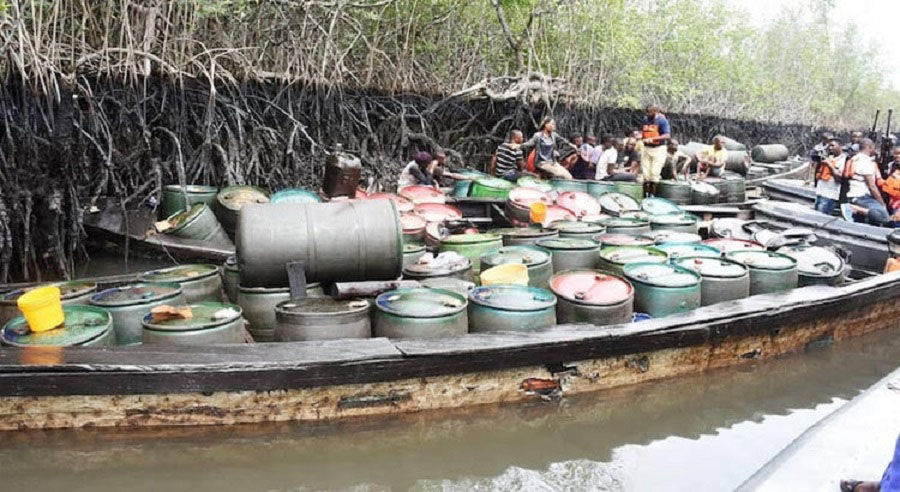
The framework comes amid ongoing efforts by the federal government via the military and private contractors to curb crude oil theft and other forms of economic sabotage, particularly in the Niger Delta, where much of Nigeria’s petroleum production infrastructure is located.