Economy
Governors Quickened Nigeria’s Economic Recovery—NGFS
By Modupe Gbadeyanka
The Nigeria Governors’ Forum Secretariat (NGFS) has disclosed that the contributions of Governors in the country have been tremendous.
A statement signed by the Head, Media & Public Affairs of the NGFS, Mr Abulrazque Barkindo, quoted an Economist at the NGFS, Mr David Nabena, as saying during a meeting of the Fiscal Sustainability Plan (FSP) committee in Abuja that, “Thanks to governors and their reforms at the sub-national level, there is a 69 percent success in Public Expenditure Reforms being implemented by governments at the sub-national level.”
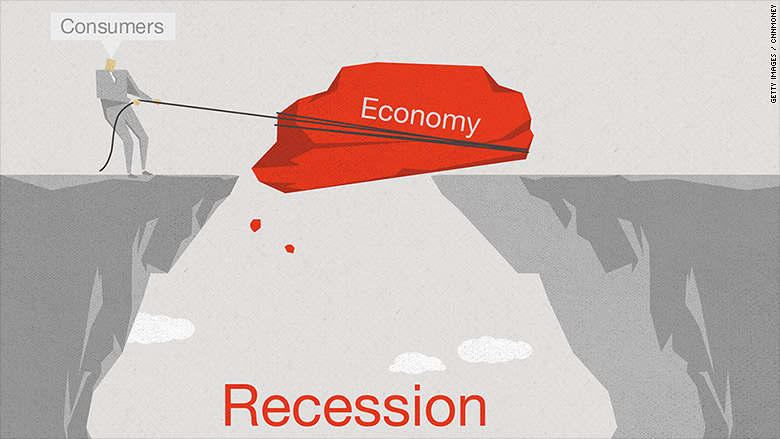
It was disclosed that this may have contributed immensely to the quick turnaround of the national economy which wriggled itself out of recession much faster than the public had expected.
The FSP committee comprises officials of the NGF, and Federal Ministry of Finance.
The FSP, the framework for the sustenance of state governments in Nigeria, which is a product of an agreement between federal and state governments, has been hailed as a strategic game-changer for fiscal governance at the state level.
The FSP seeks to improve transparency and accountability, increase public revenue, rationalize public expenditure, improve public finance management and facilitate sustainable debt management. The meeting was to review the 22 core action points of the FSP from its last workshop held in April.
According to the NGFS findings, “the action point with the highest percentage of implementation is that of Public Expenditure Reform, which recorded 69% success,” the NGFS Economist, Nabena disclosed.
Several economists have argued that since most economic activities take place in the states, they might have indirectly assisted the economic recovery that the nation is now celebrating.
However, Nabena still believes more can be done by states to get the country out of the doldrums. Others with encouraging results according to him were public revenue reforms 63% and 54% for debt management reforms.
These are laudable goals, according to many economists, but above all it shares a very special affinity with the Open Government Partnership OGP which carries with it huge financial relief for governments that are able to meet its conditions.
A consultant at the Kaduna Business School concludes that the first point to note is that states are in dire financial straits today because of poor management of fiscal and other resources that occurred in the years preceding the report.
Funds meant for development have been stolen outright and laws and policies, where they exist, have been ignored. In some states, there is an absence of good fiscal laws, according to the findings.
Nabena noted that the purpose of the meeting was to share findings of the 22 core action points of the FSP from the workshop held in April, as well as acquaint the ministry of the plans of the NGF Secretariat going forward.
During his presentation, Nabena noted that around 15 out of the 22 action points of the FSP have been implemented by most States, stating however that, this finding was contained in the states’ self-assessment reports.
He also highlighted the actions with the weakest implementation status, among which Nabena lamented were those targeted at accountability and transparency.
Even here, Nabena explained, there is light at the end of the tunnel because there is a 44% success in implementation despite the fact that many states find the adoption of IPSAS cumbersome, expensive and challenging.
In conclusion, the NGF Economist regretted that the picture is not all rosy for governance at the subnational level.
In many states that work was conducted Nabena stated that there is no consolidated debt service account or sinking fund, 9 states do not have an active and functional website, seven states have not yet concluded their biometric staff audit, and up to 31 states have recorded success in the internal audit of their accounts. “Only sixteen states” Nabena added, “have an efficiency unit.”
Responding, the Director, Home Finance at the Finance Ministry Mrs Olubunmi Siyanbola congratulated the Forum for the brilliant and thorough work that they had done and also added that the figures given by the Forum is not far from that of the Consultants they deployed for the same reason.
Olubunmi Siyanbola also disclosed that 6 Consultants have been sent to the different geo-political zones to make a report on the activities of the states around the 22 action points of the FSP and their success stories so far.
She added that the way forward will be determined when all the consultants are back from the field with the complete report.
However, at a glance, the consultants recorded a 42% level of implementation across the 36 states, other percentages are 60% for Public expenditure reforms as against 69% from the NGF, 56% for PFM which is the same with what the Forum recorded and 35% level of implementation for public debt as against 54% recorded by the NGF.
Economy
NASD Index Rises 0.16% on Renewed Investors’ Appetite
By Adedapo Adesanya
The NASD Over-the-Counter (OTC) Securities Exchange rose by 0.16 per cent on Monday, December 22 as investors showed hunger for unlisted stocks.
Trading data showed that the volume of securities traded at the session surged by 532.9 per cent to 12.6 million units from the previous 1.9 million units, as the value of transactions jumped by 64.3 per cent to N713.6 million from N80.3 million, though the number of deals moderated by 13.5 per cent to 32 deals from the 37 deals recorded in the previous trading session.
Infrastructure Credit Guarantee Company (InfraCredit) Plc ended the day as the most traded stock by value on a year-to-date basis with 5.8 billion units sold for N16.4 billion, followed by Okitipupa Plc with 178.9 million units worth N9.5 billion, and MRS Oil Plc with 36.1 million units transacted for N4.9 billion.
InfraCredit Plc also finished the trading day as the most traded stock by volume on a year-to-date basis with 5.8 billion units traded for N16.4 billion, trailed by Industrial and General Insurance (IGI) Plc with the sale of 1.2 billion units for N420.7 million, and Impresit Bakolori Plc with a turnover of 537.0 million units valued at N524.9 million.
The unlisted securities market printed a price loser, FrieslandCampina Wamco Nigeria Plc, which dropped 20 Kobo to sell at N53.80 per share versus last Friday’s closing price of N54.00 per share.
However, the loss was offset by the trio of NASD Plc, Golden Capital Plc, and UBN Property Plc.
NASD Plc gained N5.00 to close at N60.00 per unit versus N55.00 per unit, Golden Capital Plc appreciated by 77 Kobo to N8.45 per share from N7.68 per share, and UBN Property Plc improved by 22 Kobo to N2.43 per unit from N2.21 per unit.
As a result, the market capitalisation increased by N3.38 billion to N2.125 billion from N2.121 trillion, and the NASD Unlisted Security Index (NSI) grew by 5.65 per cent to 3,552.06 points from 3,546.41 points.
Economy
Nigeria’s Stock Exchange Sustains Bull Run by 0.26%
By Dipo Olowookere
The bulls remained on the floor of the Nigerian Exchange (NGX) Limited on Monday, rallying by 0.26 per cent at the close of transactions.
This was buoyed by the gains recorded by 34 equities on Nigeria’s stock exchange, which outweighed the losses posted by 20 equities, indicating a positive market breadth index and strong investor sentiment.
Aluminium Extrusion gained 9.72 per cent to quote at N13.55, International Energy Insurance improved by 9.69 per cent to N2.49, Mecure Industries rose by 9.64 per cent to N60.30, Royal Exchange expanded by 9.60 per cent to N1.94, and Austin Laz grew by 9.50 per cent to N2.65.
On the flip side, Custodian Investment depleted by 10.00 per cent to N35.10, ABC Transport crashed by 10.00 per cent to N3.15, Prestige Assurance weakened by 7.41 per cent to N1.50, and Guinea Insurance slipped by 7.38 per cent to N1.13.
During the session, investors traded 451.5 million shares worth N13.0 billion in 33,327 deals compared with the 1.5 billion shares valued at N21.8 billion transacted in 25,667 deals in the preceding session, showing spike in the number of deals by 29.84 per cent, and a decline in the trading volume and value by 69.90 per cent and 40.37 per cent apiece.
The first trading session of the Christmas week had Tantalizers as the most active with 50.2 million units sold for N127.5 million, First Holdco transacted 32.6 million units worth N1.5 billion, Access Holdings exchanged 27.3 million units valued at N562.3 million, Custodian Investment traded 22.1 million units for N857.8 million, and Chams transacted 21.3 million units valued at N71.1 million.
When the closing gong was struck at 2:30 pm to end trading activities, the All-Share Index (ASI) was up by 401.69 points to 152,459.07 points from 152,057.38 points and the market capitalisation went up by N256 billion to N97.193 trillion from N96.937 trillion.
Economy
Naira Appreciates to N1,456/$1 at Official FX Market
By Adedapo Adesanya
The Naira opened the week stronger against the US Dollar in the Nigerian Autonomous Foreign Exchange Market (NAFEX) by N7.93 or 0.54 per cent on Monday, December 22, trading at N1,456.56/$1 compared with last Friday’s value of N1,464.49/$1.
The local currency also appreciated against the Euro in the same market window yesterday by N4.04 to close at N1,710.59/€1 versus the preceding session’s N1,714.63/€1, but depreciated against the Pound Sterling by 3 Kobo to finish at N1,957.33/£1 compared with the previous session’s N1,957.30/£1.
At the GTBank FX counter, the Nigerian Naira lost N3 against the greenback during the session to end at N1,470/$1 versus N1,467/$1 and remained unchanged in the parallel market at N1,485/$1.
Despite the market facing seasonal pressure, the Central Bank of Nigeria (CBN) conducted FX intervention sales, which have significantly reduced but not remove pressure from the Naira. The lender sold $150 million to authorised dealers and banks to absorb pressures from increasing demand for Dollar.
Meanwhile, Nigeria’s foreign exchange (FX) reserves have recorded the first decline in 25 weeks, falling by $263.151 million to $45.21 billion as of December 17, 2025, according to new data from the apex bank.
This marks a reversal of a long-running accumulation trend that pushed reserves to their highest level in six years. The contraction ended a sustained build-up that had peaked at $45.472 billion on December 12.
As for the cryptocurrency market, the bears dominated, with traders remaining cautious about a significant recovery with the market facing exhaustion.
While the total crypto market capitalization has surpassed $3 trillion, analysts warn that the market outcomes in the next few weeks may be driven by exhaustion rather than renewed confidence.
Ripple (XRP) depreciated by 1.9 per cent to $1.88, Ethereum (ETH) slid by 1.8 per cent to $2,971.28, Bitcoin (BTC) went down by 1.4 per cent to sell at $87,599.57, and Solana (SOL) slumped by 1.1 per cent to $124.89.
Further, Litecoin (LTC) declined by 0.9 per cent to close at $76.84, Dogecoin (DOGE) shrank by 0.7 per cent to $0.1310, Binance Coin (BNB) lost 0.6 per cent to sell for $852.09, and Cardano (ADA) fell by 0.1 per cent to $0.3655, while the US Dollar Tether (USDT) and the US Dollar Coin (USDC) remained unchanged at $1.00 each.
-
Feature/OPED6 years agoDavos was Different this year
-
Travel/Tourism9 years ago
Lagos Seals Western Lodge Hotel In Ikorodu
-
Showbiz3 years agoEstranged Lover Releases Videos of Empress Njamah Bathing
-
Banking7 years agoSort Codes of GTBank Branches in Nigeria
-
Economy3 years agoSubsidy Removal: CNG at N130 Per Litre Cheaper Than Petrol—IPMAN
-
Banking3 years agoFirst Bank Announces Planned Downtime
-
Banking3 years agoSort Codes of UBA Branches in Nigeria
-
Sports3 years agoHighest Paid Nigerian Footballer – How Much Do Nigerian Footballers Earn