Connect with us

Education

We’ll Sustain Growth of Science Education—NNPC

Published

on

girls education science

By Modupe Gbadeyanka

Group Managing Director of the Nigerian National Petroleum Corporation (NNPC), Mr Maikanti Baru, has expressed the commitment of the corporation to the growth of science education in the country.

The state-owned oil firm chief made this pledge at the grand finale of the NNPC 2017 National Quiz Competition held on Tuesday in Abuja.

He disclosed that the corporation’s stand was informed by the critical role of Science, Technology, Engineering and Mathematics (STEM) education in the quest for nation building.

“To ensure that best standards are maintained when it comes to the quality and integrity of the quiz competition, NNPC has also gone into partnership with the West African Examinations Council (WAEC), the Junior Engineering Technical Society (JETS), as well as the Science Teachers Association of Nigeria (STAN),” Mr Baru stated.

At the end of the annual contest which began on Monday 13, November, Delta State carried the day with 75 points after breaking a tie with Abia State which came second with 70 points.

Ondo State came third scoring 65 points.

Mr Baru disclosed that beginning from this year’s series, the Corporation would commence offering a one-off educational grant of N100, 000 each to all State winners of the competition, adding that a scholarship award of N300, 000 would be granted the overall winner per session, while the second and third place winners would receive a scholarship award of N250, 000 and N200, 000 respectively per session for the duration of their tertiary education.

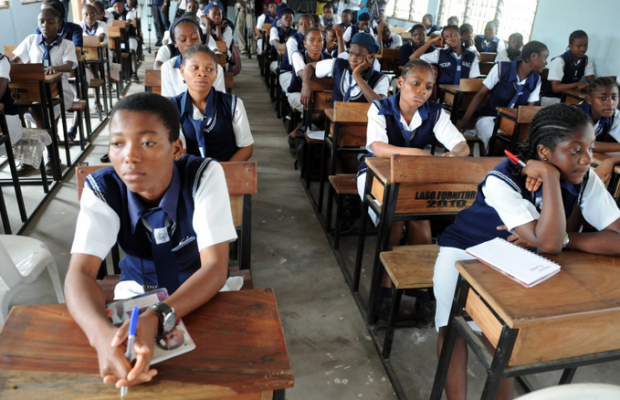
“I am very happy to see that three of the contestants are female, contrary to the notion that science education is primarily for males. These three females battled with their counterparts and came out victorious. Despite this feat by the female contestants, I want to throw up a challenge to teachers and parents alike across the country: The girl child should be encouraged to excel in core science, technology and engineering subjects,” Mr Baru enjoined.

Speaker of the House of Representatives, Mr Yakubu Dogara, represented by the House Committee Chairman on Downstream, Mr Joseph Akinlaja, applauded the NNPC for sustaining the programme in the past 17 years and for grooming the leaders of tomorrow through the Quiz Competition.

He stated that the House of Representatives stood with the contestants and the NNPC for the event which he described as epoch making event.

“Education makes the people to be easily governed, but makes it difficult to enslave them. I urge the students to remain focused and wish them all the best in the contest,” Mr Dogara submitted.

In his goodwill message, Governor of Sokoto State, Mr Aminu Tambuwal, commended the management of the NNPC for sustaining the quiz competition in the last 17 years, noting that the Corporation has not only ensured the survival of the competition but has made it a pan-Nigerian contest.

“It is really a national event and has the characteristic of a football match in Nigeria whereby all sections of the country are represented. For instance Master Sunday Enokela that represented Sokoto State is not an indigene of the State but we are very proud of him and we came all the way to support him. So, I commend the initiative of the NNPC and I am very satisfied with the outcome and organization of the competition,” Governor Tambuwal observed.

Edo State Governor, Mr Godwin Obaseki, who also spoke at the event, congratulated NNPC for its support to the education of the youths in the country.

Mr Obaseki stated that he was proud of the representative of his State, Master Hassan David, of Word of Faith Secondary School, Benin.

Minister of State for Petroleum Resources, Mr Ibe Kachikwu, congratulated the participants for excelling in their academics by emerging champions of their various states and zones and urged the Governors to continue to serve as fatherly figure to them by encouraging the contestants in their educational pursuit.

Mr Kachikwu stated that the essence of the event in the lives of the contestants might not be apparent now, disclosing that in future, it would add up to their curriculum vitae.

Speaking in similar vein, the Minister of Education, Mr Adamu Adamu, represented by the Director, Research and Planning of the Federal Ministry of Education, Dr Chioma Nwadei, applauded the NNPC for promoting STEM education, stressing that the competition promised to put the country in a good stead among the comity of nations.

Other dignitaries who spoke at the event including the Head of WAEC, Nigeria, Mr Olu Adenipekun and Registrar of National Examinations Council (NECO), Prof. Charles Uwakwe, commended and identified with the NNPC for promoting excellence amongst the youths, stressing that they are the leaders of tomorrow and that the investment in their education was in the right direction.

Mr Adenipekun advised other corporate bodies to invest in the education of the youth in the country.

On his part, pioneer winner of the NNPC quiz competition, Mr Sunday Aliu, applauded the NNPC for giving him the platform to excel in his educational pursuit, adding that the rare opportunity has made him to contribute to the Egina Floating Production Storage and Offloading (FPSO) project which is the deepest offshore project in the country.

He encouraged the participants to take advantage of the exposure the quiz competition had afforded them, by excelling in their academics, describing himself as a testimony to the success of the Nigerian Content in the Oil and Gas Industry.

Mr Aliu works with Total Upstream Nigeria Limited as Integrated Control and Safety Systems Engineer (ICSS).

In his victory speech, the overall winner of this year’s competition, Isioma Nelson Ifeanyichukwu, who is a student of the Federal Government College, Warri, thanked the NNPC for giving back to the society through its annual quiz competition, pledging that he would remain a good ambassador of the competition.

The 2017 edition is the sixteenth in the competition’s history. The first edition in 2000 was limited to the Niger Delta.

However, in recognition of the strategic importance of the Quiz to NNPC Corporate Social Responsibility (CSR) goals, the competition went nationwide in 2001.


Modupe Gbadeyanka is a fast-rising journalist with Business Post Nigeria. Her passion for journalism is amazing. She is willing to learn more with a view to becoming one of the best pen-pushers in Nigeria. Her role models are the duo of CNN's Richard Quest and Christiane Amanpour.

Click to comment

Leave a Reply

Your email address will not be published. Required fields are marked *

Education

11 Poetry Collections Vie for 2026 Nigeria Prize for Literature

Published

on

Nigeria Prize for Literature

By Adedapo Adesanya

The Nigeria Prize for Literature has unveiled an 11-title longlist for its 2026 edition, selecting the outstanding poetry collections from a record 223 submissions received for the competition.

This was contained in a press statement signed by General Manager, External Relations & Sustainable Development, Mrs Sophia Horsfall.

The announcement, by the chairman of the Advisory Board for the Prize, Professor Akachi Adimora-Ezeigbo, marks a significant milestone in this year’s competition and reflects the exceptional quality, creativity and diversity of contemporary poetry.

The longlisted titles, arranged alphabetically, are:

1. Adult Love by Tanure Ojaide
2. Bakandimiya by Saddiq Dzukogi
3. Black Passport by Paul Akpomuje
4. 2000 Blacks by Ajibola Tolase
5. Ceremony for The Nameless by Theresa Lola
6. Corpus: Animistic Verses by Ayo Oyeku
1. Floral’s Love Colony by Tares Oburumu
2. The Origin of Wounds by Malik Gbolahan
3. The Years of Blood by Adebayo Agarau
4. Unbind Me Now by James Ugwu Eze
5. Why Does God Need a Gun by Ogaga Ifowodo

Professor Adimora-Ezeigbo described the announcement as an important stage in the 2026 edition of arguably Africa’s biggest and most prestigious literary Prize.

She noted that the collections demonstrate the remarkable capacity of poetry to illuminate human experience through thoughtful reflection, cultural memory and artistic expression.

The academic added that the works revisit history while interrogating dominant historical narratives and exposing the forces that shape collective identities and social relations.

She stated that despite their varied emphases, the books share a commitment to exploring the endurance of individuals and communities in the face of violence, oppression, and social fragmentation.

Commenting on style and language, she said the books display an impressive diversity of poetic techniques marked by lyrical intensity, symbolic depth, and artistic innovation.

“Many employ densely poetic, allegorical, and elegiac modes that invite multiple layers of interpretation, while others draw extensively on folklore, oral traditions, and contemporary realities to create a compelling fusion of past and present. Their language is generally fluid, evocative, and aesthetically refined, relying on vivid imagery, emotional resonance, and intellectual sophistication to communicate complex ideas. These works demonstrate how poetic language can illuminate social realities, challenge established perspectives, and give voice to both individual and collective experiences.

“The next stage will demand a closer reading of each work, with attention to language, form, originality and lasting literary value,” she stated.

She also commended the judges for their work and reaffirmed the Advisory Board’s commitment to a credible process, literary excellence and the promotion of a strong reading culture.

The announcement of the 11-title longlist formally opens the next phase of the shortlist of three in August and the possible announcement of the winner in October.

The Nigeria Prize for Literature, sponsored by NLNG, carries a cash award of $100,000 for the author of the winning book. In its 22nd year, the prize rotates annually across four genres – prose fiction, poetry, drama and children’s literature – with the 2026 edition devoted to poetry.

Continue Reading

Education

FG Slashes Textbook Ranking Fees to Support Publishers, Policy Rollout

Published

on

Textbook Ranking System

By Adedapo Adesanya

The federal government has slashed the fees for the assessment and ranking of textbooks ahead of the implementation of the National Textbook Ranking Policy scheduled to commence in September 2026.

The reduction, approved through the Nigerian Educational Research and Development Council (NERDC), was aimed at easing the financial burden on publishers and authors while facilitating compliance with the new national textbook quality assurance framework.

The decision comes ahead of the implementation of the National Textbook Ranking Policy introduced by the Minister of Education, Mr Tunji Alausa, to improve the quality and standardisation of instructional materials used in schools across the country.

Announcing the development in a statement on Wednesday, the Executive Secretary of NERDC, Mr Salisu Shehu, said the assessment fee had been reduced from N2,000 to N1,500 per page, while the ranking fee for each textbook title had been cut from N1 million to N750,000.

He said the revised fees take immediate effect and apply to all publishers and authors submitting textbooks for assessment and ranking.

Mr Shehu also disclosed that publishers who had already paid the previous assessment fee of N2,000 per page would receive refunds of the excess payments, adding that details of the refund process would be announced in due course.

He urged all stakeholders in the publishing industry to comply with the new fee regime.

“Under the policy, only textbooks that have been assessed, approved and ranked by NERDC will be approved for use in Nigerian classrooms from September 2026, while unranked textbooks will no longer be permitted,” he said.

Meanwhile, the minister explained that the initiative was designed to tackle the proliferation of textbooks in schools and ensure that teachers and learners have access to high-quality, curriculum-compliant instructional materials.

The minister restated that NERDC will continue to exercise its statutory responsibility of approving textbooks for use in schools, but that approval alone would no longer be sufficient under the new policy.

“Instead, every approved textbook will undergo a structured national evaluation and ranking process by expert committees to determine the most suitable and highest-quality books for each subject and level of education,” he said.

The minister was optimistic that the National Textbook Ranking Policy will strengthen quality assurance in education by providing schools, teachers and parents with reliable guidance on the best instructional materials for teaching and learning.

Continue Reading

Education

Firm, Bank Organise Free Innovators’ Camp for Children in Lagos

Published

on

STEM subjects

By Aduragbemi Omiyale

A free educational initiative to equip children with practical Science, Technology, Engineering and Mathematics (STEM) skills needed to grow, thrive and prosper in a rapidly evolving world has been put together in Lagos.

The programme, Young Innovators Camp, commenced on Monday in the Lekki area of Lagos State. It is organised by MONAT, with Fidelity Bank as the sponsor.

Participating children, who must be between 4 and 10 years, will have a hands-on learning experience focused on creativity, innovation, problem-solving and critical thinking. They will be introduced to age-appropriate STEM concepts, guided build sessions and other engaging activities designed to stimulate curiosity and encourage practical learning.

The camp will also feature small group learning with facilitators, financial literacy sessions, creative activities, and other interactive experiences that support confidence-building among participants.

Every participant will also receive a specially curated gift pack filled with educational resources and STEM learning materials to encourage continued exploration and learning at home, making the camp both a memorable and transformative experience.

The Young Innovators Camp reinforces Fidelity Bank’s ongoing investment in initiatives that prepare children and young people for the future. It builds on the bank’s education-focused interventions, including initiatives such as SWEETA, which supports children, and the lender’s broader CSR agenda, which prioritises youth empowerment, education, skills development and access to opportunities that can improve long-term outcomes for individuals and communities.

“The future will be shaped by those who can solve problems, think creatively, and harness technology to improve lives.

“At Fidelity Bank, we believe these abilities should be nurtured from an early age.

“Through the Young Innovators Camp, we are giving children the opportunity to explore science, technology, engineering and mathematics in a fun, practical and engaging way that inspires curiosity, builds confidence, and encourages innovation.

“We want every child who participates to leave believing that they have the potential not just to succeed in the future, but to help create it,” the Divisional Head of Brand and Communications at Fidelity Bank, Mr Meksley Nwagboh, said.

“As a bank committed to helping people grow, thrive and prosper, we see education, particularly STEM education, as a strategic investment in Nigeria’s future.

“Today’s young innovators will become tomorrow’s engineers, scientists, entrepreneurs, inventors and technology leaders.

“By partnering with Monat, we are investing in a generation equipped with the skills, mindset and confidence to solve real-world challenges, create opportunities, and contribute meaningfully to national development.

“This is more than a summer camp; it is about unlocking potential and inspiring the next generation of innovators,” he added.

Continue Reading