Travel/Tourism
Ethiopian Airlines Breeding Thieves? Victims Narrate Horrible Ordeal
By Dipo Olowookere
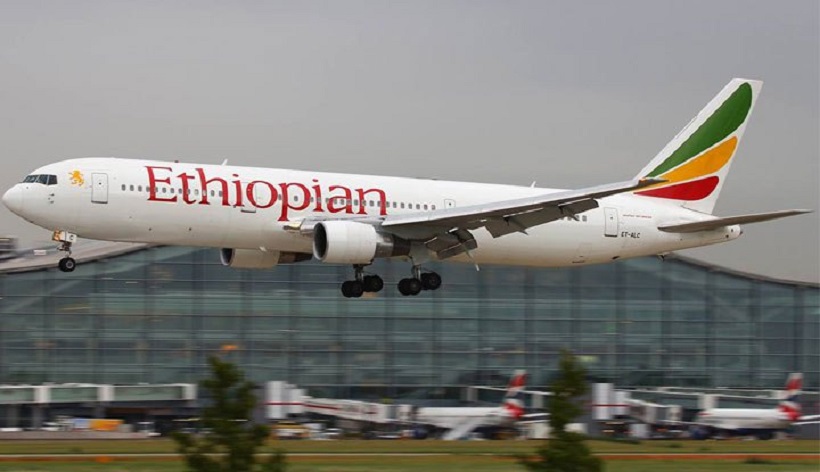
Ethiopian Airlines is regarded by many as pride of Africa because of its growth and successes in the aviation industry.
However, those things that have made the airline operator a darling of many are at risk because of some elements working with the company.
In fact, those who have experienced these horrible incidents have now had to ask if Ethiopian Airlines is now breeding thieves.
Here is an account of a top Nigerian journalist, ‘Fisayo Soyombo, with Ethiopian Airlines some days ago:
In life, never say never. Nothing, really, is finite. On Tuesday November 14, I was discussing with a very senior journalist about why opinion writing space should be strictly devoted to public matters, how the columnist should focus on public issues rather than himself, how, after writing every piece, I deliberately re-read to rephrase all expressions bearing the First Person Singular Pronoun “I”.
That conversation held during an Ethiopian Airlines flight from Abuja to Johannesburg via Addis Ababa; little did I know that the return trip would be laced with an incident that would make me break this rule. What would you do if you were wronged and the offender looked you in the eye and said there was nothing you could do about it? Use all possible avenues to seek retribution!
WHEN ‘SECURITY GUARDS’ ARE THE THIEVES
The return Ethiopian Airlines Flight ET911 arrived Nnamdi Azikiwe International Airport, Abuja — via Flight ET 858 from Johannesburg to Addis Ababa — around noon on Monday November 20. Tired after a journey — counting from the hotel — that lasted 18 hours, I dragged my checked-in luggage straight home. Next morning when I opened it, I discovered that my expensive Nikon AF-S DX Nikkor 18-105mm f/3.5-5.6G ED VR camera had been stolen. The thief stole the camera and left the pouch, battery and manual for me! Straightaway, I embarked on some Formula One driving to the Abuja Airport and promptly located the Ethiopian Airlines office. I still haven’t got over the nightmare that followed.
When I told the Nigerian Aviation Handling Company (NAHCO) official in that office that I needed to speak with an Ethiopian Airlines official to complain about my stolen property, his reply was curt: “They are at the tarmac; go there if you want to see them.” By the time I started reminding him that I couldn’t be allowed anywhere near the tarmac since I wasn’t travelling, it was his back I was seeing, hands on the door, ready to abandon me in that office.
Luckily — no, unluckily, — a tall, dark and well-built Ethiopian Airlines official walked in just as the NAHCO official was exiting. When I narrated to him how I discovered that my property had been stolen, and my decision to lodge a formal complaint about it, he muttered some imperceptible words and said he had work to do. Before I could say Jack Robinson, Mr Ethiopian Airlines Official was on his way out as well, leaving the door ajar and me inside. Never ever had I seen such blithe insouciance by a service renderer to a customer. At that point, I remembered the words of a NAHCO official in Lagos whom I phoned the moment I discovered the theft. “Theft of travellers’ belongings is common at Nigerian airports; the airlines know about it, and NAHCO officials are a big part of it,” he had said. “Once they see it in the scanner that there are valuables in your checked-in luggage, they find a way to pilfer it. However, if you mount serious pressure on them, they will bring out your property.”
At that point, I became agitated and opted to launch a one-man protest. Within five minutes of my creating a scene at the airport lobby, a second NAHCO official fished out a complaint form, and it was handed over to me by the first NAHCO official. I was shocked to see this first NAHCO official calmly ask me questions about my travel and fill the answers on a separate form of his.
Then there was trouble. I filled the form and was already leaving when I realised I had no proof of ever filing a complaint. I asked to make a photocopy but the official said it was impossible. Then I asked to take shots of the form with my phone; this angered him. As I was taking a shot of it, he looked sternly at me and said: “You’re just stressing yourself. You see all these things you’re doing, filling form and snapping photos, nothing will come out of it. And there is nothing you can do about it!” That was after the Ethiopian Airlines staff had told me: “We’re just trying to help you.”
ETHIOPIAN AIRLINES’ LONG-RUNNING HISTORY OF LUGGAGE THEFT
I was so distraught by the airport experience that I put up a Facebook post to vent my frustrations. Within 24 hours, five victims of property theft by Ethiopian Airlines showed up. The reaction from the airline has been the same: make them fill complaint forms, then cover the matter up. The examples are all similar. Apparently, Ethiopian Airlines has been stealing from its customers for years and getting away with it.
Seun Oduloye arrived Lagos on June 6, 2017, via an Ethiopian Airlines flight that connected Nigeria from Dublin via Addis Ababa, to the discovery that an entire luggage had vanished. In that big bag were, among others, three pairs of suit, 13 pieces of shoes, perfumes, wristwatches, ladies’ handbags, dresses and packs of chocolate. In the six months that have followed, what Ethiopian Airlines has done is to dribble her like Lionel Messi from one office to another. The airline also failed to reply all three letters from her lawyer.
In December 2014, when Temitayo Odusolu travelled from Bangui, Central African Republic (CAR), to Douala, Cameroon, with Asky Airlines, and then flew Ethiopian Airlines from Douala to Addis Ababa and also the same airline to Lagos, one of her three bags went missing. In that bag were close to 10 books, clothes, camera, and an expensive cloth gift from Ecobank CAR. In a few days, it will be exactly three years since the incident occurred; and despite filling a claims form and following up with different Ethiopian Airlines officials for many months, Odusolu has received neither a formal apology nor compensation from the airline.
On December 17, 2016, Oluwaseun Adepoju arrived Lagos from Hong Kong on an Ethiopian Airlines flight to the discovery that his bag had been opened and baby wears removed from it. Thinking that he encouraged the thieves by trusting Ethiopian Airlines enough not to padlock his bags, Adepoju decided to start padlocking his bags from then on.
However, when he flew Ethiopian Airlines (Flight No ET 901) again on November 5, 2017, from Hong Kong to Lagos, having been collected from a Cathay Pacific plane arriving Hong Kong from South Korea, the thieves struck again. He had two brown bags — one big, the other medium-size — both locked with a mini blue-coloured code. The code locks were forced out of the zipper handles, while the trolley handle of the small bag was forced out beyond repairs. Three shirts were missing from a stack of nine new shirts arranged in a white mall gift cellophane in the big luggage.
On July 17, 2017, a Nigerian who asked not to be named — because it was a business trip and his company policy forbids talking to the media — connected Nairobi via an Ethiopian Airlines flight from Addis Ababa. Upon landing, he discovered that his locked checked-in bag had been broken, and $750 stolen from it. He promptly lodged a complaint, but six months after Ethiopian Airlines has not refunded the money to him.
THE DAMAGE, THE DEMAND
Incidentally, as I was complaining at the Abuja airport, aviation stakeholders were holding an ICAO World Aviation Forum (IWAF) meeting in Abuja, where five obstacles slowing down aviation and air transport in Africa were listed as: safety, market access, high fares and costs, infrastructure, and availability of finance. A sixth needs to be added: poor customer service. And for all the government’s noise about ease of doing business, nobody wants to travel to a country where checked-in luggage is unsafe or where, due to human errors/failings, theft or damage to luggage cannot be punished and the victim compensated.
This is a public call to the Consumer Protection Council (CPC) and the Nigerian Civil Aviation Authority (NCAA) to pay more attention to widespread customer dissatisfaction with the aviation industry. It is not just the manner of delay and cancellation of flights that is worrisome, it is the I-don’t-give-a-hoot attitude to passengers. In 2015, I lodged a complaint with the NCAA over a premeditated six-hour postponement of a trip, without even a text notification, by Aero Airlines. Maybe tomorrow, after more than two years, someone at NCAA will call just to acknowledge it!
Finally, this is a public appeal to Ethiopian Airlines to return my stolen property, and also compensate Seun Oduloye, Temitayo Odusolu, Oluwaseun Adepoju and the anonymous passenger for their stolen items/luggage. It is not enough for my matter to be treated; all four others must be compensated.
‘Fisayo Soyombo is Editor of the International Centre for Investigative Reporting (ICIR) and tweets @fisayosoyombo
Travel/Tourism
Radisson Hotel Introduces ChatGPT Hotel Bookings
By Aduragbemi Omiyale
To help travellers move from trip intent to search, comparison and planning through natural conversation, Radisson Hotel Group has partnered with Accenture to introduce an AI-powered hotel discovery app in ChatGPT.
The launch marks an important step in Radisson Hotel Group’s move toward agentic commerce, a shift from traditional, channel-based booking journeys to AI-led experiences where discovery, comparison, and decision-making happen through conversation.
As travellers increasingly turn to AI to ask questions, narrow down options, and plan trips, hospitality brands need to be visible, accurate, and actionable at the moment of intent.
Available as @RadissonHotels in ChatGPT, the app enables users to search for Radisson Hotels properties across over 100 countries and more than 1,000 hotels through natural conversation.
By starting a new ChatGPT conversation with @RadissonHotels at the start of the prompt, travellers can ask for advice to plan a family-friendly weekend stay in Amsterdam, or a hotel in Paris with a gym and spa near the Eiffel Tower.
The app will respond with relevant Radisson Hotels properties with live inventory and rates, location context, amenities, hotel details, and interactive map-based results. When ready, travellers are directed to complete the reservation through the Radisson Hotels website.
Commenting on the development, the chief commercial officer of Radisson Hotel Group, Gianni Di Fede, said, “AI is radically transforming how people search for and book hotel stays, and we are committed to being at the forefront of this shift.
“With Accenture, we are reimagining hotel discovery for the next generation of travellers—meeting guests in the planning moment with a branded experience that makes it easier to find, compare, and book Radisson Hotels properties.”
Also commenting, the chief executive of Accenture, Ndidi Oteh, said, “Agentic commerce is fundamentally changing how people discover and choose brands. As journeys become more conversational and intent-driven, companies have to rethink how they show up — not just to be found, but to be chosen, and to deliver value in that moment.
“Radisson Hotel Group is taking a step in that direction, creating a more direct and meaningful way to connect with travellers when decisions are being made.”
The senior managing director and global Travel lead for Accenture, Emily Weiss, said, “With travel, planning is becoming easier for consumers, but more competitive for brands.
“Travellers want to compare options quickly, narrow down choices and book with confidence, often in a single journey. That puts pressure on brands to show up with accurate, up-to-date, and easy-to-navigate information at every step.
“With Radisson Hotel Group, the focus was on making hotel content more accessible, so travellers can find what they need, explore options, and move to booking more seamlessly.”
Travel/Tourism
Why More Nigerians Are Looking Beyond London and Paris to Greece
As traditional travel and second-residency destinations like London and Paris become increasingly restrictive and expensive, forward-thinking African investors are shifting their gaze, with Greece quietly emerging as the most strategic, high-value decision a Nigerian traveller or wealth-builder can make.
There is a version of Europe that Nigerians have been selling for decades, which is London, Paris and maybe Amsterdam. They are familiar, expensive and are becoming increasingly difficult to get into. Greece is the counter-argument. Older than all of them, more beautiful than most and, right now, quietly becoming one of the smartest moves an African traveller or investor, can make.
Greece: The Country
Greece is one of the few places in the world that earns every photograph taken of it. The Aegean in full summer light is genuinely that colour. The ruins are genuinely that old. The food is genuinely good. What makes Greece remarkable as a destination, however, is not a single thing, but a range of things.
Athens is a capital city carrying the full weight of Western civilisation on its back, and somehow still functioning as a modern, energetic place to actually live. The Acropolis sits above a neighbourhood of rooftop bars, vinyl record shops and restaurants where you eat well for a fraction of what you would spend in Rome. Santorini delivers on every expectation; Mykonos runs at a different frequency entirely. It is unapologetically cosmopolitan, built for people who want the Mediterranean and the party in the same week. Crete, the largest island, holds its own world: ancient Minoan ruins, dramatic gorges, a food culture distinct from the rest of Greece and enough coastline to spend a fortnight without repeating a beach.
Beyond the names, there are another two hundred inhabited islands. Some of the best experiences in Greece happen on the ones nobody has heard of.
Why It Works for Nigerians Specifically
Greek food is generous and deeply flavoured: grilled seafood, slow-cooked lamb, and wine that costs almost nothing. For a Nigerian palate, it lands. The country is safe, the English penetration in tourist areas is high, and the culture has genuine warmth toward visitors rather than a transactional tolerance of them.
Practically, Greece is also better value than the European destinations Nigerians typically default to. A week in Athens and one of the islands costs significantly less than an equivalent week in London or Paris, with a better climate and more to actually see.
Getting There and Getting In
There are no direct flights from Lagos or Abuja to Athens. Connections run through Istanbul on Turkish Airlines, Dubai on Emirates, or Addis Ababa on Ethiopian, with total journey times from around ten hours. Turkish Airlines tends to offer the most competitive fares on this corridor. Nigerian passport holders require a Schengen visa, which covers up to 90 days across the entire Schengen zone, implying that a Greece trip can roll into Italy or France on the same document.
The Bigger Play: Residency Through Property
For Nigerians who have spent years watching London prices climb past £500,000 and US investor visas demand upwards of $800,000 in complex, job-creating commitments, Greece quietly offers something the others have stopped offering: a clear, property-linked path to EU residency that actually works.
The Golden Visa programme is the mechanism. With a minimum real estate investment starting from €250,000, the Greek Golden Visa provides the lowest entry point, compared to other European residency schemes. Invest in qualifying Greek real estate, and you receive a five-year renewable EU residence permit for yourself, your spouse, your children and both sets of parents. No minimum stay or points system or lottery. It is simply ownership. And after seven years of continuous residency, a Greek and, therefore, EU passport becomes a genuine possibility.
The investment returns are real too. Athens property prices rose 8.5% in 2024 alone. Rental yields average 4–5% annually in the city, with stronger returns during peak tourism periods. New-build properties currently carry an exemption from the standard 24% VAT, reducing upfront costs considerably. For Nigerians looking to move wealth out of naira exposure and into a hard currency, income-generating asset in a stable EU market, the numbers are not incidental; they are the point.
But here is where most people get stuck: the fear of getting it wrong. Stories of fraudulent intermediaries, unclear property titles, and lost investments have made many Nigerians hesitant about putting serious money into foreign real estate. That hesitation is legitimate.
It is also exactly what MIBS Group was built to resolve. With over 50 years of experience as a real estate developer in Greece and deep expertise in the Golden Visa process, MIBS Group handles the full journey for African investors, from identifying and acquiring the right property through the visa application itself to rental management once the investment is in place. They understand both the Greek market and the specific concerns of Nigerian and African buyers. With the recent opening of their Lagos office, MIBS Group has strengthened its presence in Nigeria, offering face-to-face support and serving as a reliable local partner for Nigerian investors throughout their investment journey. That combination- high-end properties and end-to-end trusted guidance- is what turns a complicated cross-border investment into a straightforward, protected transaction.
Where other destinations keep raising the bar, Greece keeps the door open. And with MIBS Group, Nigerians can walk through it with confidence.
The Case Closed
Greece earns the attention it is getting. It is beautiful in a way that requires no filter and no curation. It is historically significant in a way that makes everywhere else feel recent. And right now, it is one of the few European countries offering Africans a genuinely accessible path, not just to visit, but to belong.
Travel/Tourism
Obi Demands Probe into Enugu Air Runway Mishap
By Adedapo Adesanya
The presidential candidate of the Nigeria Democratic Congress (NDC), Mr Peter Obi, has called for a comprehensive investigation into the runway excursion of an Enugu Air aircraft during landing at the Benin Airport on Thursday.
He also expressed relief, describing the safe evacuation of all passengers and crew as a cause for gratitude in a statement on X on Friday.
Mr Obi said he received the news of the incident “with profound relief,” noting that all 68 passengers and crew members on board disembarked safely without injuries or fatalities.
Business Post reports that Flight 4264 (registration 5N-ENR) from Lagos (LOS) to Benin (BNI) got involved in the runway excursion after overrunning the end of Runway 05 during landing.
Also, the Nigerian Safety Investigation Bureau (NSIB) has commenced an investigation into the incident involving the Embraer E170 aircraft at the Benin Airport.
“I join all Nigerians in thanking God Almighty that all 68 passengers and crew members on board disembarked safely, with no injuries or fatalities recorded. The preservation of human life must always remain our highest priority,” he said.
Mr Obi commended the pilot, cabin crew, and airport emergency response teams for their swift and professional response, saying their actions helped prevent a more serious outcome.
“I commend the pilot, the flight crew, and the airport emergency response teams at Benin Airport for their swift, professional, and coordinated handling of the situation, which helped avert what could have been a far more serious incident. Their composure and decisiveness under pressure deserve the highest commendation,” he stated.
While expressing gratitude for the safe outcome, Mr Obi described the incident as a reminder of the need to strengthen aviation safety measures across the country.
“The incident serves as a sobering reminder of the importance of unwavering adherence to aviation safety protocols, rigorous aircraft maintenance, and sustained investment in airport infrastructure and operational standards across the country,” he said.
The former Anambra State governor also called on the Nigerian Civil Aviation Authority and the Nigerian Safety Investigation Bureau to carry out a thorough, transparent, and timely investigation into the circumstances surrounding the runway excursion.
“I urge the relevant regulatory and investigative authorities, particularly the NCAA and the NSIBo, to conduct a thorough, transparent, and timely investigation into the circumstances surrounding this incident and to make their findings and recommendations public,” Mr Obi said.
He added that every aviation incident should be treated as an opportunity to improve safety standards and reinforce public confidence in Nigeria’s aviation sector.
“Every aviation occurrence presents an opportunity to strengthen our safety systems. Learning from this incident will further reinforce public confidence in Nigeria’s aviation sector and help ensure that our skies remain among the safest possible,” he added.


4 Comments