

Travel/Tourism
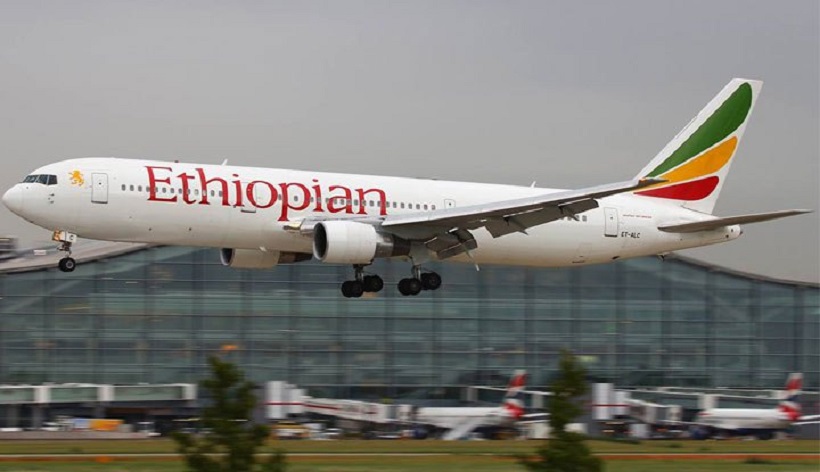
Ethiopian Airlines Breeding Thieves? Victims Narrate Horrible Ordeal

By Dipo Olowookere
Ethiopian Airlines is regarded by many as pride of Africa because of its growth and successes in the aviation industry.
However, those things that have made the airline operator a darling of many are at risk because of some elements working with the company.
In fact, those who have experienced these horrible incidents have now had to ask if Ethiopian Airlines is now breeding thieves.
Here is an account of a top Nigerian journalist, ‘Fisayo Soyombo, with Ethiopian Airlines some days ago:
In life, never say never. Nothing, really, is finite. On Tuesday November 14, I was discussing with a very senior journalist about why opinion writing space should be strictly devoted to public matters, how the columnist should focus on public issues rather than himself, how, after writing every piece, I deliberately re-read to rephrase all expressions bearing the First Person Singular Pronoun “I”.
That conversation held during an Ethiopian Airlines flight from Abuja to Johannesburg via Addis Ababa; little did I know that the return trip would be laced with an incident that would make me break this rule. What would you do if you were wronged and the offender looked you in the eye and said there was nothing you could do about it? Use all possible avenues to seek retribution!
WHEN ‘SECURITY GUARDS’ ARE THE THIEVES
The return Ethiopian Airlines Flight ET911 arrived Nnamdi Azikiwe International Airport, Abuja — via Flight ET 858 from Johannesburg to Addis Ababa — around noon on Monday November 20. Tired after a journey — counting from the hotel — that lasted 18 hours, I dragged my checked-in luggage straight home. Next morning when I opened it, I discovered that my expensive Nikon AF-S DX Nikkor 18-105mm f/3.5-5.6G ED VR camera had been stolen. The thief stole the camera and left the pouch, battery and manual for me! Straightaway, I embarked on some Formula One driving to the Abuja Airport and promptly located the Ethiopian Airlines office. I still haven’t got over the nightmare that followed.
When I told the Nigerian Aviation Handling Company (NAHCO) official in that office that I needed to speak with an Ethiopian Airlines official to complain about my stolen property, his reply was curt: “They are at the tarmac; go there if you want to see them.” By the time I started reminding him that I couldn’t be allowed anywhere near the tarmac since I wasn’t travelling, it was his back I was seeing, hands on the door, ready to abandon me in that office.
Luckily — no, unluckily, — a tall, dark and well-built Ethiopian Airlines official walked in just as the NAHCO official was exiting. When I narrated to him how I discovered that my property had been stolen, and my decision to lodge a formal complaint about it, he muttered some imperceptible words and said he had work to do. Before I could say Jack Robinson, Mr Ethiopian Airlines Official was on his way out as well, leaving the door ajar and me inside. Never ever had I seen such blithe insouciance by a service renderer to a customer. At that point, I remembered the words of a NAHCO official in Lagos whom I phoned the moment I discovered the theft. “Theft of travellers’ belongings is common at Nigerian airports; the airlines know about it, and NAHCO officials are a big part of it,” he had said. “Once they see it in the scanner that there are valuables in your checked-in luggage, they find a way to pilfer it. However, if you mount serious pressure on them, they will bring out your property.”
At that point, I became agitated and opted to launch a one-man protest. Within five minutes of my creating a scene at the airport lobby, a second NAHCO official fished out a complaint form, and it was handed over to me by the first NAHCO official. I was shocked to see this first NAHCO official calmly ask me questions about my travel and fill the answers on a separate form of his.
Then there was trouble. I filled the form and was already leaving when I realised I had no proof of ever filing a complaint. I asked to make a photocopy but the official said it was impossible. Then I asked to take shots of the form with my phone; this angered him. As I was taking a shot of it, he looked sternly at me and said: “You’re just stressing yourself. You see all these things you’re doing, filling form and snapping photos, nothing will come out of it. And there is nothing you can do about it!” That was after the Ethiopian Airlines staff had told me: “We’re just trying to help you.”
ETHIOPIAN AIRLINES’ LONG-RUNNING HISTORY OF LUGGAGE THEFT
I was so distraught by the airport experience that I put up a Facebook post to vent my frustrations. Within 24 hours, five victims of property theft by Ethiopian Airlines showed up. The reaction from the airline has been the same: make them fill complaint forms, then cover the matter up. The examples are all similar. Apparently, Ethiopian Airlines has been stealing from its customers for years and getting away with it.
Seun Oduloye arrived Lagos on June 6, 2017, via an Ethiopian Airlines flight that connected Nigeria from Dublin via Addis Ababa, to the discovery that an entire luggage had vanished. In that big bag were, among others, three pairs of suit, 13 pieces of shoes, perfumes, wristwatches, ladies’ handbags, dresses and packs of chocolate. In the six months that have followed, what Ethiopian Airlines has done is to dribble her like Lionel Messi from one office to another. The airline also failed to reply all three letters from her lawyer.
In December 2014, when Temitayo Odusolu travelled from Bangui, Central African Republic (CAR), to Douala, Cameroon, with Asky Airlines, and then flew Ethiopian Airlines from Douala to Addis Ababa and also the same airline to Lagos, one of her three bags went missing. In that bag were close to 10 books, clothes, camera, and an expensive cloth gift from Ecobank CAR. In a few days, it will be exactly three years since the incident occurred; and despite filling a claims form and following up with different Ethiopian Airlines officials for many months, Odusolu has received neither a formal apology nor compensation from the airline.
On December 17, 2016, Oluwaseun Adepoju arrived Lagos from Hong Kong on an Ethiopian Airlines flight to the discovery that his bag had been opened and baby wears removed from it. Thinking that he encouraged the thieves by trusting Ethiopian Airlines enough not to padlock his bags, Adepoju decided to start padlocking his bags from then on.
However, when he flew Ethiopian Airlines (Flight No ET 901) again on November 5, 2017, from Hong Kong to Lagos, having been collected from a Cathay Pacific plane arriving Hong Kong from South Korea, the thieves struck again. He had two brown bags — one big, the other medium-size — both locked with a mini blue-coloured code. The code locks were forced out of the zipper handles, while the trolley handle of the small bag was forced out beyond repairs. Three shirts were missing from a stack of nine new shirts arranged in a white mall gift cellophane in the big luggage.
On July 17, 2017, a Nigerian who asked not to be named — because it was a business trip and his company policy forbids talking to the media — connected Nairobi via an Ethiopian Airlines flight from Addis Ababa. Upon landing, he discovered that his locked checked-in bag had been broken, and $750 stolen from it. He promptly lodged a complaint, but six months after Ethiopian Airlines has not refunded the money to him.
THE DAMAGE, THE DEMAND
Incidentally, as I was complaining at the Abuja airport, aviation stakeholders were holding an ICAO World Aviation Forum (IWAF) meeting in Abuja, where five obstacles slowing down aviation and air transport in Africa were listed as: safety, market access, high fares and costs, infrastructure, and availability of finance. A sixth needs to be added: poor customer service. And for all the government’s noise about ease of doing business, nobody wants to travel to a country where checked-in luggage is unsafe or where, due to human errors/failings, theft or damage to luggage cannot be punished and the victim compensated.
This is a public call to the Consumer Protection Council (CPC) and the Nigerian Civil Aviation Authority (NCAA) to pay more attention to widespread customer dissatisfaction with the aviation industry. It is not just the manner of delay and cancellation of flights that is worrisome, it is the I-don’t-give-a-hoot attitude to passengers. In 2015, I lodged a complaint with the NCAA over a premeditated six-hour postponement of a trip, without even a text notification, by Aero Airlines. Maybe tomorrow, after more than two years, someone at NCAA will call just to acknowledge it!
Finally, this is a public appeal to Ethiopian Airlines to return my stolen property, and also compensate Seun Oduloye, Temitayo Odusolu, Oluwaseun Adepoju and the anonymous passenger for their stolen items/luggage. It is not enough for my matter to be treated; all four others must be compensated.
‘Fisayo Soyombo is Editor of the International Centre for Investigative Reporting (ICIR) and tweets @fisayosoyombo



4 Comments