General
Nigeria, Others Lose $20b Yearly to Corrupt Officials—World Bank
By Dipo Olowookere
The fight against corruption is no doubt a global one and efforts are being made to ensure the menace is defeated or at best curbed to the barest minimum.
Since the inception of the administration of President Muhammadu Buhari in 2015, he has devoted much of his time to go after corrupt officials.
However, his government has sought the assistance of international community in giving corruption a hard fight.
According to the World Bank, over $20 billion is stolen annually by corrupt officials from African, Asian, South American and European countries.
As the world marks the International Anti-corruption Day on Saturday, December 9, 2017, the United States said it was glad to co-host the December 4-6 inaugural Global Forum on Asset Recovery (GFAR) with the United Kingdom, as a demonstration of its continued commitment to preventing and combatting corruption globally.
The US said the over $20 billion lost to corruption should have been used for sustainable development of these countries for essential services such as schools, hospitals, and roads. Rather than lining the pockets of corrupt officials, these funds should help grow economies and improve the well-being of the people of these countries.
To help prevent and combat kleptocracy, US assistance helps strengthen transparency and accountability within government institutions.
Since fiscal year (FY) 2016, the Department of State and US Agency for International Development (USAID) have dedicated more than $115 million annually to a wide range of foreign assistance efforts to counter corruption, including capacity building of foreign governments to create stronger laws and more effective institutions; investigate, prosecute, and secure convictions for corruption offenses; and put in place measures to prevent corruption, foster oversight, and promote government integrity and transparency.
US support of global efforts to recover stolen assets and ensure corrupt actors cannot benefit from their ill-gotten gains is an important part of this work.
The United States contributed $1 million to the World Bank and United Nations Office on Drugs and Crime’s (UNODC) Stolen Asset Recovery Initiative (StAR) to organize GFAR and provide technical assistance to support country-level capacity building and coordination on asset recovery cases. GFAR provides a platform to enable the four focus countries: Nigeria, Sri Lanka, Tunisia, and Ukraine, to make tangible progress on significant asset recovery cases in connection with financial centers and other jurisdictions.
In addition to co-hosting GFAR, the United States has provided significant technical assistance to the four focus countries to strengthen anticorruption and asset recovery efforts. Several bilateral and regional multi-year programs, including support for the United Nations Convention Against Corruption (UNCAC) and UNCAC mentors and for the Global Focal Points Network supported by INTERPOL and StAR, have bolstered anticorruption mechanisms necessary to recover stolen assets, helping to ensure countries continue progress achieved through participation in GFAR.
Nigeria
Since FY 2013, the U.S. government has provided foreign assistance to increase the Nigerian government’s capacity to investigate and prosecute corruption and financial crime cases, including asset forfeiture and anti-money laundering. Programs also seek to bolster Nigerian civil society’s capacity to ensure transparency and accountability in government.
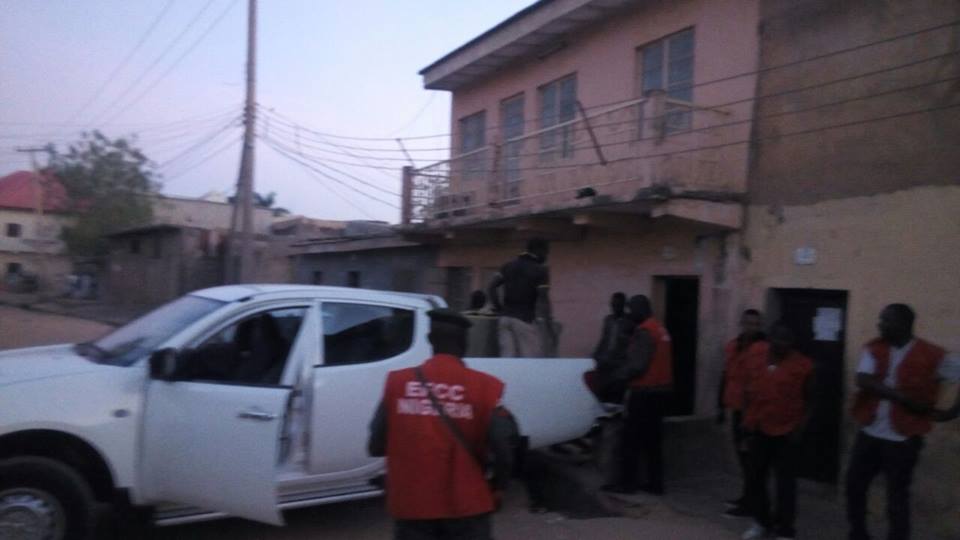
Over the past three years, the United States has funded a project with the Economic and Financial Crimes Commission (EFCC) to mentor officials investigating and prosecuting money laundering crimes, including on asset forfeiture and counter financing of terrorism, in addition to providing technical assistance to the Nigerian judiciary. We will continue to work with the EFCC to further strengthen EFCC institutional development.
The U.S. government funds the Open Government Partnership’s (OGP) Support Unit through a joint grant between the Department of State and USAID to work with civil society and governments to develop commitments aimed at countering corruption and promoting transparency. The United States also funded a project which led to the drafting of Nigeria’s OGP National Action Plan through collaboration with EFCC, the Independent Corrupt Practices and Other Related Offenses Commission (ICPC), Nigeria Police Force (NPF), and several civil society organizations.
U.S. foreign assistance also supported outreach efforts through infographics and social media on corruption-related issues, making public data from Nigerian anti-corruption agencies more accessible, and training Nigerian journalists on best investigative journalism practices.
Sri Lanka
Since FY 2016, the U.S. government has provided foreign assistance for anti-corruption efforts in Sri Lanka to improve the functioning of Sri Lanka’s legal system and civil society, and to enhance good governance.
Programs include the provision of a Resident Legal Advisor to provide anti-corruption and asset recovery training, and support to the Commission to Investigate Allegations of Bribery and Corruption.
Tunisia
Since FY 2013, the U.S. government has provided foreign assistance for anti-corruption efforts in Tunisia, including strengthening rule of law and Tunisia’s law enforcement sector. Technical assistance programs improved public financial management; capacity building through the Open Government Partnership (OGP) helped Tunisia’s government and civil society to establish the necessary tools to bolster transparency and accountability in the public sector.
The Department of State is funding a grant to increase the capacity of the Tunisian Financial Judicial Police, the body responsible for prosecuting complex financial corruption cases.
Ukraine
Since FY 2013, the U.S. government has enhanced Ukraine’s anti-corruption efforts by strengthening Ukraine’s legal system, law enforcement investigations, civil society, and customs enforcement.
U.S. foreign assistance contributed to Ukraine’s seizure of roughly $1.3 billion in cash, with the discovery of more than $3.24 billion in stolen public funds. U.S. law enforcement professionals are embedded in Ukraine’s National Anti-Corruption Bureau (NABU) to help build anti-corruption and asset recovery capacity and strengthen Ukraine’s overall anticorruption efforts. U.S. support has contributed to 333 criminal proceedings, 207 notices of suspicion, and the finalization of 108 indictments in cases related to corruption. Ongoing programming will continue to build on these achievements.
The United States also provides funding through a Fiscal Transparency Innovation Fund, which works with civil society organizations to collect, analyze, and publicly disseminate energy-related information; works with the legislature, media, and civil society to promote transparency; promotes the accounting of quasi-fiscal activities within the budget; creates an energy sector discussion platform; and supports sub-grants to local civil society groups to promote transparency at city or local levels.
General
Deep Blue Project: Mobereola Seeks Air Force Support
By Adedapo Adesanya
The Director General of the Nigerian Maritime Administration and Safety Agency (NIMASA), Mr Dayo Mobereola, is seeking enhanced cooperation between the agency and the Nigerian Air Force (NAF) with the aim of strengthening tactical air support within the Deep Blue project.
During a courtesy visit last week, Mr Mobereola told the Chief of Air Staff, Air Marshall S. K. Aneke at the NAF Headquarters in Abuja, that the Air Force was a strategic partner in enhancing maritime security in Nigeria and sustaining the momentum of the Deep Blue Project’s success.
According to the DG, “We are here to seek the Air Force’s support, given the importance of tactical air surveillance to the Deep Blue Project. Nigeria is the only African country with a record of zero piracy within the last 4 years. The Deep Blue Project platforms have been used to achieve zero piracy and sea robberies in the Gulf of Guinea, and we need your collaboration to sustain this momentum”.
He further emphasised that international trade depends on security, which is why vessels prefer to go to or transit through countries where they are secured. “With the traffic we have now, we need to show more security might through collaboration to strengthen our trade viability because of the risks attached to our route. We need these collaborations to sustain what we have achieved so far with the Deep Blue Project”.
The NIMASA DG expressed hope that the collaboration with the Nigeria Air Force will reduce response time.
On his part, the Chief of Air Staff, Air Marshall S.K. Aneke, noted that the Air Force desires to be “a very supportive and collaborative partner with NIMASA and is ready to match the Agency step by step and side by side to achieve the desired results.”
He noted that “collaboration between NIMASA and the Nigerian Air Force under the Deep Blue Project can be strengthened through a joint strategic framework, integrated command structures, and a standing steering committee to ensure shared objectives and accountability.
“Establishing a joint maritime domain awareness fusion cell will enable real-time intelligence sharing, synchronised surveillance, and faster response to maritime threats and ensure sustained operational effectiveness across Nigeria’s territorial waters and exclusive economic zone,” he said, according to a statement.
The Air Force Chief added that the Air Force can also support NIMASA outside the Deep Blue Project operations by providing its own ISR platforms, tactical air support, and rapid airborne deployment for interdictions and search and rescue missions.
While thanking the NIMASA DG for the basic trainings the Agency has provided the aircraft pilots under the Deep Blue Project, Air Marshall Aneke also highlighted areas of operational challenges needing NIMASA’s attention to include bridging the communication gap between NAF operators and NIMASA, higher level and in-depth maintenance trainings, readily available fueling of aircrafts to avoid delays on missions, and provision of flying kits among others.
He therefore pledged the Air Force’s collaboration and assured that the request by NIMASA has been noted and that things will begin to move at thrice its speed going forward.
General
Nigeria’s Democracy Suffocating Under Tinubu—Atiku
By Modupe Gbadeyanka
Former Vice President, Mr Atiku Abubakar, has lambasted the administration of President Bola Tinubu for the turnout at the FCT Area Council elections held last Saturday.
In a statement signed by his Media Office, the Adamawa-born politician claimed that the health of Nigeria’s democracy under the current administration was under threat.
According to him, “When citizens lose faith that their votes matter, democracy begins to die. What we are witnessing is not mere voter apathy. It is a direct consequence of an administration that governs with a chokehold on pluralism. Democracy in Nigeria is being suffocated slowly, steadily, and dangerously.”
He warned that the steady erosion of participatory governance, if left unchecked, could inflict irreversible damage on the democratic fabric painstakingly built over decades.
“A democracy without vibrant opposition, without free political competition, and without public confidence is democracy in name only. If this chokehold is not released, history will record this era as the period when our hard-won freedoms were traded for fear and conformity,” he stressed.
Mr Atiku said the turnout for the poll was below 20 per cent, with the Abuja Municipal Area Council (AMAC) recording 7.8 per cent.
He noted that such civic participation in the nation’s capital, the symbolic heartbeat of the federation, is not accidental, as it is the predictable outcome of a political environment poisoned by intolerance, intimidation, and the systematic weakening of opposition voices.
The presidential candidate of the People’s Democratic Party (PDP) in the 2023 general elections stated that the ruling All Progressives Congress (APC) under Mr Tinubu has pursued a deliberate policy of shrinking democratic space, harassing dissenters, coercing defectors, and fostering a climate where alternative political viewpoints are treated as threats rather than contributions to national development.
He called on opposition parties and democratic forces across the country to urgently close ranks and forge a united front, declaring, “This is no longer about party lines; it is about preserving the Republic. The time to stand together to rescue and rebuild Nigeria is now.”
General
Nigeria Eyes Full Entry into Council of Palm Oil Producing Countries
By Adedapo Adesanya
Nigeria is set to validate a technical committee report geared towards transitioning the country from observer status to full membership of the Council of Palm Oil Producing Countries (CPOPC) in April.
Mr Abubakar Kyari, Minister of Agriculture and Food Security, said this when the council’s mission visited him over the weekend in Abuja, noting that the ministry had constituted a technical committee to consider how the country would seamlessly transit from observer country to membership in CPOPC based on its strategic importance in palm oil production.
“We are conscious of the fact that the palm oil value chain is very strategic for us and identified it as an export crop that can drive foreign exchange for the country and ensure good health in terms of consumption.
“We are conscious of the fact that we need the support of CPOPC countries to provide the country with a new variety of seeds that are climate-smart and resistant so that they can be produced by farmers in the country,” he said.
Mr Alphonsus Inyang, President, National Palm Produce Association of Nigeria (NPPAN), said being a member of CPOPC Nigeria would target over 10 million tonnes of oil palm between 2026 and 2050.
“We are also targeting 2.5 million hectares from among Nigeria households who are out to produce one hectare each, geared towards a N20 trillion annual economy within this period from among Nigeria households.
“We are working side by side with the big players who will be developing plantations,” he said.
The Secretary-General of CPOPC, Ms Izzana Salleh, said the council’s mission to Nigeria was to see how the country could transit from observer status to full membership, among others
She said that the status of the country as an observer nation since 2024 would expire by November.
Ms Salleh assured the country of the council’s readiness to support its vision to strengthen domestic production, enhance food security and build a competitive and sustainable palm oil supply chain.
The official emphasised that being a member of the council would strategically position Nigeria for a greater future regarding oil palm production.
According to her, the visit is to strengthen the council’s engagement with Nigeria, including potential membership in CPOPC.
She said: “The council’s mission to Nigeria aims to advance both Nigeria’s national ambitions and Africa’s collective voice in global agricultural discussions.
“CPOPC was established to promote cooperation among producing nations, empower smallholders, advance sustainability, and ensure fair, science-based global dialogue on vegetable oils.
She emphasised that being a member of the council would strategically position the country for greater future prospects regarding oil palm production and the value chain, as well as export.
“We are ready to support Nigeria’s vision to strengthen domestic production, enhance food security, and build a competitive and sustainable palm oil supply chain,” she said.
-
Feature/OPED6 years agoDavos was Different this year
-
Travel/Tourism10 years ago
Lagos Seals Western Lodge Hotel In Ikorodu
-
Showbiz3 years agoEstranged Lover Releases Videos of Empress Njamah Bathing
-
Banking8 years agoSort Codes of GTBank Branches in Nigeria
-
Economy3 years agoSubsidy Removal: CNG at N130 Per Litre Cheaper Than Petrol—IPMAN
-
Banking3 years agoSort Codes of UBA Branches in Nigeria
-
Banking3 years agoFirst Bank Announces Planned Downtime
-
Sports3 years agoHighest Paid Nigerian Footballer – How Much Do Nigerian Footballers Earn