Connect with us

General

BNI Nigeria Joins Global Celebration of 2018 International Networking Week

Published

on

By Dipo Olowookere

From February 5-9, 2018, representatives from government, business, community, and the general public will all join together to positively impact the Nigerian economic landscape through the celebration of business networking and the role it plays in the growth and success of business in every part of the world.

International Networking Week, occurring February 5- 9, 2018, is a week centred around helping businesses in every part of the world, including Nigeria, achieve growth and success through effective networking.

An initiative of BNI, the world’s largest business networking organization, the Week presents an opportunity for networking groups, companies, organizations, and individuals across the globe to start 2018 by taking proactive steps to strategically use networking to promote business growth.

This year’s theme is all about the importance of having a diverse personal network.

International Networking Week 2018 will be observed worldwide through hundreds of events, large and small, in areas such as Australia, Austria, Brazil, Canada, Cyprus, England, Finland, France, Germany, Ireland, Nigeria, Poland, Singapore, South Africa, Sweden, the United  States, and more.

These celebratory events will feature presentations by respected networking experts, provide participants with powerfully effective networking tips and strategies for achieving long-term business growth, and give attendees plenty of opportunities to network with like-minded business professionals and entrepreneurs.

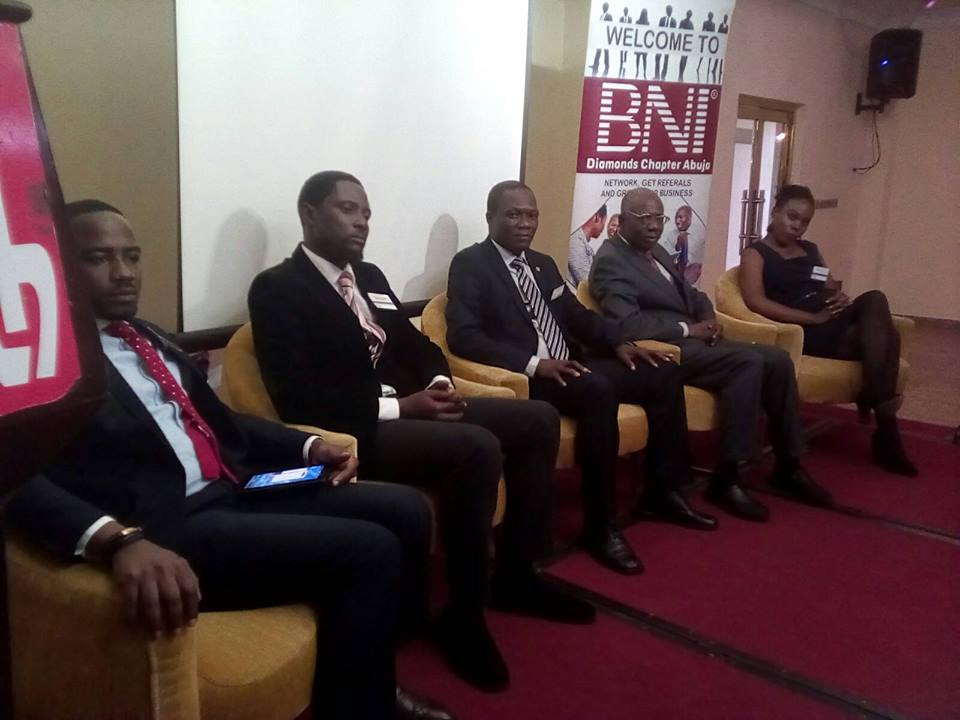
In Nigeria, activities for the 2018 International Networking Week will include press conference, seminar, open networking events for business owners, executives and professionals to be held on Thursday February 8th in Lagos, Abuja and Abeokuta respectively. Also lined up are business visits to media houses and interactions with corporate organizations.

Since the inaugural International Networking Week in 2007, the annual event, which is always held during the first full week in February, has gained momentum each year and has been repeatedly recognized by many organizations and governmental agencies around the world.

Says Ivan Misner, Founder of BNI and the Referral Institute, “Different countries, different cultures, different races, different religions, different people, different places–we are all united by one thing. We all speak the language of referrals. We all want to do business with people we know and trust. Relationship networking is not only a great way to get business, it’s an even better way to do business; I urge people worldwide to utilize International Networking Week to focus on doing something to improve their own networking efforts because there really is no better time than now to start strengthening your business relationships.”

International Networking Week is about celebrating the important role that networking plays in the development and success of businesses around the world; it is also about creating an awareness relating to the process of relationship networking, an approach to doing business based on building long-term successful relationships with other people.


Dipo Olowookere is a journalist based in Nigeria that has passion for reporting business news stories. At his leisure time, he watches football and supports 3SC of Ibadan. Mr Olowookere can be reached via [email protected]

Advertisement
Click to comment

Leave a Reply

Your email address will not be published. Required fields are marked *

General

NNPC, Chinese Firm in Talks over Nigeria’s Moribund Refineries

Published

on

NNPC Crude Cargoes pricing

By Adedapo Adesanya

The Nigerian National Petroleum Company (NNPC) Limited is in talks with a Chinese company over one of the state-owned oil firm’s refineries, the chief executive of the state oil company, Mr Bashir Bayo Ojulari, said.

He said the company was seeking experienced operators as equity partners to revive its four refineries after years of losses and underperformance.

The NNPC chief said an internal review carried out shortly after assuming his role last April showed the refineries were running at huge losses, with high operating costs and heavy spending on contractors while processing volumes remained low.

Mr Ojulari said that the board of the state oil company has approved a strategy to bring in refinery operators with proven expertise rather than contractors, adding it was in advanced talks with several interested parties.

“I’m just coming from a meeting with one of the potential investors,” Mr Ojulari said, without giving a name. “They are going to the refinery tomorrow to inspect. It’s a Chinese company that has one of the biggest petrochemical plants in China.”

The NNPC head stated that operations in the refineries had been put on hold to give time to evaluate potential restoration solutions.

This coincided with the opening of the Dangote Refinery, which provided “breathing space” for the supply of domestic petroleum.

For the past two years, the NNPC has unsuccessfully attempted to fully reactivate the state oil refineries in Warri, Kaduna, and Port Harcourt, which have a combined processing capacity of 445,000 barrels per day but have remained idle for decades.

These endeavors to restore the facilities to operational status have resulted in both public controversy and shifts in strategic direction.

The government initially sought to rehabilitate these refineries, primarily in response to the commissioning of Dangote’s 650,000-barrel-per-day oil refinery; however, this effort proved unsuccessful, necessitating an exploration of potential public-private partnerships.

In October 2025, the NNPC announced its search for new technical private equity partners to facilitate the revival of its long-dormant refineries.

Continue Reading

General

Senate Passes Electoral Act Amendment Bill, Blocks Electronic Transmission of Results

Published

on

Godswill akpabio Senate President

By Modupe Gbadeyanka

The Senate on Wednesday passed the bill to amend the Electoral Act of 2022 after delays, which almost pitched the institution against several Nigerians.

Last week, the upper chamber of the National Assembly headed by the Senate President, Mr Godswill Akpabio, set up a panel to look into the matter, with the directive to submit its report yesterday, Tuesday, February 3, 2026.

However, after the report was submitted yesterday, the red chamber of the parliament said it was going to take an action on it on Wednesday.

At the midweek plenary, the Senate eventually passed the Bill for an Act to Repeal the Electoral Act No. 13, 2022 and Enact the Electoral Act, 2025.

However, some critical clauses were rejected, including the proposed amendment to make is mandatory for the Independent National Electoral Commission (INEC) to transmission election results electronically from polling units to the INEC Result Viewing (IReV) portal.

The clause was to strengthen transparency and reduce electoral malpractice through technology-driven result management.

It also rejected a proposed amendment under Clause 47 that would have allowed voters to present electronically-generated voter identification, including a downloadable voter card with a unique QR code, as a valid means of accreditation.

The Senate voted to retain the existing 2022 provisions requiring voters to present their Permanent Voter’s Card (PVC) for accreditation at polling units, and upheld the provision mandating the use of the Bimodal Voter Accreditation System (BVAS) or any other technological device prescribed by the electoral umpire for voter verification and authentication, rather than allowing alternative digital identification methods as proposed in the new bill.

The Senate also reduced the notice of election from 360 days to 180 days, with the timeline for publishing list of candidates by INEC dropped from 150 days to 60 days.

Continue Reading

General

Amupitan Says 2027 Elections Timetable Ready Despite Electoral Act Delay

Published

on

Incorruptible INEC Chairman

By Adedapo Adesanya

The Independent National Electoral Commission (INEC) has completed its timetable and schedule of activities for the 2027 general election, despite pending amendments to the Electoral Act by the National Assembly.

INEC Chairman, Mr Joash Amupitan, disclosed this on Wednesday in Abuja during a consultative meeting with civil society organisations.

Mr Amupitan said the commission had already submitted its recommendations and proposed changes to lawmakers, noting that aspects of the election calendar might still be adjusted depending on when the amended Electoral Act is passed.

He, however, stressed that the electoral umpire must continue preparations using the existing legal framework pending the conclusion of the legislative process and presidential assent to the revised law.

According to him, the commission cannot delay critical preparatory activities given the scale and complexity involved in conducting nationwide elections.

The development highlights INEC’s commitment to early planning for the 2027 polls, even as stakeholders await legislative clarity that could shape parts of the electoral process.

Yesterday, the Senate again failed to conclude deliberations on the proposed amendment to the Electoral Act after several hours in a closed-door executive session. The closed session lasted about five hours.

Lawmakers dissolved into the executive session shortly after plenary commenced, to consider the report of an ad hoc committee set up to harmonise senators’ inputs on the Electoral Act Amendment Bill.

When plenary resumed, the Senate President, Mr Godswill Akpabio, did not disclose details of the discussions on the bill.

Despite repeated executive sessions, the upper chamber has yet to pass the bill, marking the third unsuccessful attempt in two weeks.

The Senate, however, said it will not rush the bill, citing the volume of post-election litigation after the 2023 polls and the need for careful legislative scrutiny.

Last week, the red chamber of the federal parliament constituted a seven-member ad hoc committee after an earlier three-hour executive session to further scrutinise the proposed amendments.

Continue Reading

Trending