Health
NEWMAP Seeks Additional Financing to Tackle Erosion
By Dipo Olowookere
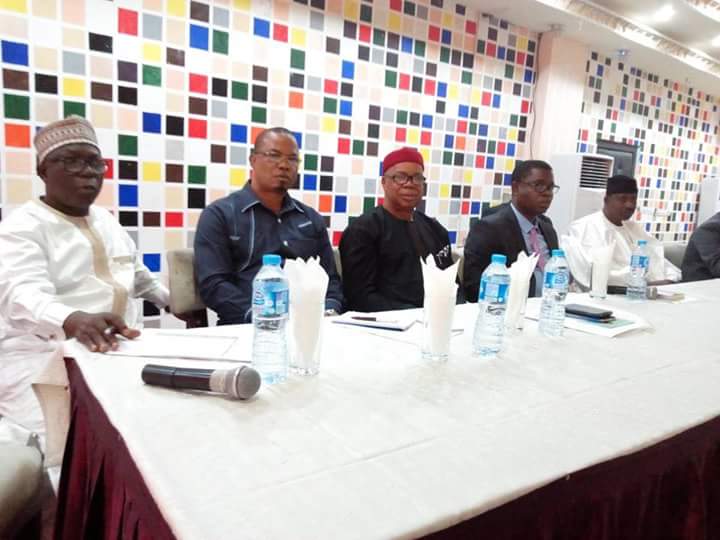
A joint World Bank/FAO Appraisal Mission to the Nigeria Erosion and Watershed Project (NEWMAP) for Additional Financing (AF) is currently ongoing in Abuja. The mission is to ascertain readiness for implementation, agree on a clear implementation timeline and prepare for negotiations.
The 19 NEWMAP participating states and their Commissioners of states Ministries of Environment, States Newmap Project Coordinators and their key personnel are currently in Abuja working with the Supervising Ministry of Environment and Federal Project Management Unit (FPMU) on the modalities and specific project activity plans for the additional financing.
The multi-sectoral and multi-scale program having the project Development Objective (PDO) to reduce vulnerability to soil erosion in targeted sub-watersheds came into effectiveness in September 2013 with an initial 7 south- eastern states of Abia, Anambra, Cross River, Ebonyi, Edo, Enugu and Imo (now referred to as first mover states), with acute gully Erosion and took in 21 active gully sites across this first mover states for remediation.
The progress recorded by these initial seven states, led to the attraction of other states and in September 2015, additional 7 states; Delta, Gombe, Kogi, Kano, Plateau, Oyo and Sokoto joined the project having met the necessary selection criteria. Presently, the third phase of states includes; Akwa Ibom, Borno, Katsina, Nasarawa, and Niger, States; thus making a total number of 19 states in the project.
Five years thereafter, these 21 sites is about 85 percent completion and about 682 ha targeted land treated for erosion with selected measures in targeted sub-watershed have been recovered. New sites have been prioritized and ranked based on risk to human life, catchment area, ease of maintenance, current structural defects, and proximity to vital infrastructure (major road, water, gas, electricity, etc.).
Alhaji Ibrahim Usman Jibril Federal Minister of state Environment could agree less that, “the Project is doing very well.” It’s a flagship project with significant impact across the country,” he said.
For a Project designed not to exceed 11 states in its lifetime now having 19 states and still under pressure by other states, the project must be doing something right, agreed Salisu Dahiru the National Project Coordinator.
In few years of NEWMAP, “14 sub-catchment management plans have been developed in Abia, Anambra and Cross-River States. Approximately 582 hectares (ha) have been rehabilitated in the seven initial project States.
“Also, one of the newer states (Kano) has already re-vegetated about 100 ha of degraded land. While under Income Generating Activities (IGA), grants have been disbursed to 5,137 members of communities. Beneficiaries are now engaged in businesses such as livestock farming, honey production, trading (small shops), horticulture, etc.
“Also, about 2,035 Project Affected Persons (PAPs) have been compensated (58 percent female) and with nearly half of the approved funding for sub-grants now disbursed.”
Truly the project has achieved great milestones as acknowledged by Ambassador Fidel Ayogu, Arc. Michael Okonkwo and Chief Donatus Njoku participating states commissioners Enugu, Anambra and Ebonyi respectively. They all believed that this category “A” project has achieved tremendous evidence based results mostly across the first seven states.
Speaking on this appraisal mission Dr. Amos Abu, the Task Team Leader of NEWMAP enjoined participants to look at the cost and agree on what is realistic and obtainable. He commended the team for preparing NEWMAP Additional Financing and stressed that NEWMAP is a flagship project and has achieved great milestones!
NEWMAP is predicated on an 8-year Strategic Investment Loan (SIL) of $508.59M, consisting of a $500M International Development Association (IDA) concessional loan, blended with Global Environment Facility (GEF) Trust Fund, and Special Climate Change Fund (SCCF) grants totalling $8,59M. The Government of Nigeria’s contribution would amount to approximately $150M (the Federal Government 60% and participating states 40%).
Health
SUNU Health Named Most Customer Focused HMO of the Year
By Modupe Gbadeyanka
The decision of the management of SUNU Health Nigeria Limited to adopt the strategy of placing the enrollee and customer at the heart of its operations has started to pay off.
The company was recently announced as Most Customer-Focused Health Insurance Company of the Year at the Customer Service Standard Magazine Awards 2025.
The recognition underscored the company’s success in translating its dedication into tangible enrollee satisfaction and superior market service at the Nigerian Health Maintenance Organisation (HMO) landscape.
It also highlights the organisation’s dedicated efforts in streamlining claims processing, enhancing access to quality healthcare providers, and maintaining transparent, responsive communication channels with its diverse client base across Nigeria.
The accolade further serves as a powerful testament to the successful integration of digital solutions and human-centric service models at SUNU Health.
It positions the firm as a leader not only in providing robust health plans but also in delivering the supportive, personalized care that enrollees truly value.
“Clinching the Most Customer-Focused Health Insurance Company of the Year award is not just an honour; it is a validation of the core philosophy that drives every member of the SUNU Health team.
“We believe that healthcare is fundamentally a service industry, and our success is measured by the well-being and satisfaction of our enrollees,” the chief executive of SUNU Health, Mr Patrick Korie, commented.
“This award reinforces our resolve to continuously innovate and set new benchmarks for customer experience in the Nigerian health insurance sector.
“Our commitment to providing accessible, high-quality, and seamless healthcare solutions remains our top priority as we move into the new year (2026),” he added.
Health
Nigeria Launches First National Antimicrobial Resistance Survey
By Adedapo Adesanya
Nigeria has launched its first nationally representative survey on antimicrobial resistance to generate critical data to guide evidence-based policies, improve patient outcomes, and strengthen health system resilience.
Antimicrobial resistance occurs when bacteria, viruses, fungi, and parasites evolve to resist treatment, making infections harder to cure.
As a result, surveillance is essential to track resistance patterns, identify priority pathogens, and guide targeted interventions and with support from the World Health Organization (WHO) and other partners, the initiative marks a milestone in the country’s public health response.
Nigeria becomes the third country globally to partner with WHO on a national antimicrobial resistance survey. having been selected based on the country’s strong commitment to AMR surveillance, its updated WHO Nigeria NAP 2.0, and readiness to expand laboratory and data systems.
Africa’s most populous country ranks 20th globally for age-standardized mortality due to antimicrobial resistance . In 2019, an estimated 263,400 deaths in Nigeria were linked to it—more than the combined deaths from enteric infections, tuberculosis, respiratory infections, maternal and neonatal disorders, neglected tropical diseases, malaria, and cardiovascular diseases.
Globally, resistant infections in tertiary care settings cost between $2,371 and $29,289 per patient episode, extend hospital stays by an average of 7.4 days, and increase mortality risk by 84 per cent.
The survey will see the establishment of a national baseline on antimicrobial resistance prevalence to monitor interventions, assess the distribution, burden (morbidity, mortality, DALYs, cost), and diversity of AMR across regions and populations, as well as contribute to the global target of reducing AMR deaths by 10 per cent by 2030, in line with the political declaration endorsed at the 79th United Nations General Assembly in 2024.
It also seeks to strengthen routine antimicrobial resistance surveillance, including diagnostics, sample referral systems, and laboratory capacity.
Using WHO’s standardized methodology, the survey will run for 12–15 months and cover 40–45 randomly selected health facilities nationwide. Patients with suspected bloodstream infections (BSIs) will be identified using standard case definitions, and blood samples will be analysed in quality-assured laboratories.
Data will be collected across all age groups, covering clinical, demographic, laboratory, financial, and outcome indicators. Follow-up will occur at discharge, 28 days, and three months post-infection. The survey will sample approximately 35,000 patients suspected of BSIs to obtain around 800 isolates of the most common pathogens.
Dr Tochi Okwor, Acting Head, Disease Prevention and Health Promotion, Nigeria Centre for Disease Control and Prevention (NCDC) said, “With WHO’s support, we are confident the survey will generate the evidence needed to protect public health.”
WHO Representative in Nigeria, Dr Pavel Ursu, reaffirmed WHO’s commitment stating that ,“Nigeria is taking a decisive step toward combating AMR with an approach grounded in data, science, and measurable impact. This survey will provide the clarity needed to drive smarter policies, stronger surveillance, and better patient outcomes. Nigeria is laying the foundations for a resilient health system, one that protects lives, strengthens trust, and ensures that essential medicines remain effective for future generations.”
Adding her input, Dr Laetitia Gahimbare, Technical Officer at WHO Regional Office for Africa, added:“Strengthening surveillance enhances Nigeria’s capacity to detect and respond to AMR threats, supporting better patient outcomes, reinforcing health security, and building a resilient system.”
Professor Babatunde Ogunbosi, Paediatric Infectious Diseases Specialist at University College Hospital, Ibadan, highlighted the broader impact:, “This survey is about more than data. It’s about building national capacity for research, diagnostics, and policy. It integrates science into public health decision-making.”
Health
Our Vision Extends Beyond Offering Health Insurance Packages—SUNU Health
By Modupe Gbadeyanka
One of the leading Health Maintenance Organisations (HMOs) in Nigeria, SUNU Health, has said its philosophy is proactive wellness, noting that this was why it recently partnered with The Divine Physician and St. Luke Catholic Chaplaincy Centre for a community health initiative.
The chief executive of the company, Dr Patrick Korie, said, “SUNU Health’s vision extends far beyond merely offering health packages and insurance.”
“We are fundamentally interested in proactive wellness—preventing illness rather than just treating it. This annual exercise is a crucial part of that commitment, and we will continue to champion it for as long as we exist,” he stressed.
The medical practitioner led the company’s annual Health Walk in Lagos on Saturday, November 8, 2025. The event drew hundreds of health enthusiasts, including the Chaplain of the centre, Rev Fr. John Okoria SJ.
His active participation reinforced the spiritual and moral commitment to holistic well-being, proving crucial in mobilizing staff and community members, thereby ensuring the vital wellness message reached a broad and deeply engaged audience.
The health walk covered several major streets in Lagos, starting from Ishaga Road and navigating through Itire Road, Randle Avenue, Akerele, Ogunlana Drive, and Workers Street before concluding back at the starting point. Following the vigorous walk, participants engaged in a session of high-energy aerobics and other outdoor exercises, reinforcing the day’s focus on fitness.
“We are delighted to champion this vital health initiative alongside the Catholic Chaplaincy Centre LUTH/CMUL. The turnout was truly delightful, reflecting the community’s deep desire to embrace wellness.
“Collaborations like this amplify our message and commitment to the Nigerian community,” the Brand and Corporate Communications Lead at SUNU Health, Mr Samuel Olayemi, stated.
-
Feature/OPED6 years agoDavos was Different this year
-
Travel/Tourism9 years ago
Lagos Seals Western Lodge Hotel In Ikorodu
-
Showbiz3 years agoEstranged Lover Releases Videos of Empress Njamah Bathing
-
Banking7 years agoSort Codes of GTBank Branches in Nigeria
-
Economy3 years agoSubsidy Removal: CNG at N130 Per Litre Cheaper Than Petrol—IPMAN
-
Banking3 years agoFirst Bank Announces Planned Downtime
-
Banking3 years agoSort Codes of UBA Branches in Nigeria
-
Sports3 years agoHighest Paid Nigerian Footballer – How Much Do Nigerian Footballers Earn