Connect with us

Economy

Currency Swap Deal: CBN Lacks Transparency—Vitafoam Boss

Published

on

Vitafoam Nigeria

By Dipo Olowookere

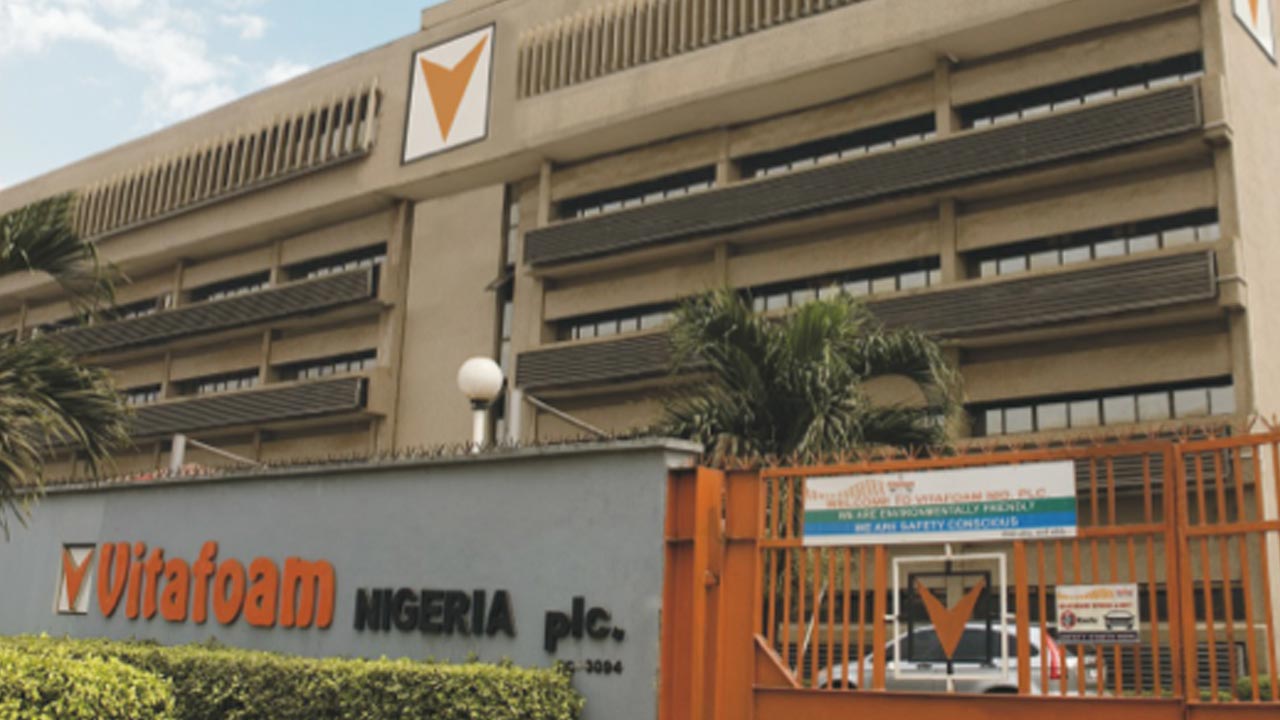
Managing Director of Vitafoam Nigeria Plc, Mr Taiwo Adeniyi, has accused the Central Bank of Nigeria (CBN) of not being transparent in its dealings with stakeholders in the industry.

Mr Adeniyi was quoted by Daily Sun as saying that the apex bank sometimes shows partiality when carrying out its policies.

He was reacting to the announcement made by the CBN Governor, Mr Godwin Emefiele, of the bank’s readiness to buy Commercial Paper (CP) from large companies in order to lend to them at single digit interest rate.

According to Daily Sun, some companies were still waiting for the policy document from the CBN on this.

When asked for his opinion of the issue, the Vitafoam chief said, “When they (CBN) are taking such decisions, they have certain companies they are working with. So, they know what they are doing. When they are taking such decisions they know which organizations can issue commercial paper.

“They know the people they want to use it to help. Even the Yuan they are talking about; has it started? Is it operational?

“The news has gone all over the world that we are doing currency swap. Who and who are benefiting from it? They should tell us.

“Even the commercial banks that know how to operate it, you will hear them say they are still waiting for CBN.

“And yet, it is in the news that they have started the currency swap. So, when they are taking decisions, they know the companies they are targeting to help. So they just push it under the guise of every one of us,” Mr Adeniyi was quoted as saying.

But reacting to the allegation of being biased and not transparent, spokesman of the central bank, Mr Isaac Okorafor, when he contacted by Business Post, said the apex bank has always been plain in its operations.

“Which aspect of the deal (currency swap) does he feel we are not transparent? Is it in the amount of the deal or the rate or the trading?

“On the former, anyone doubting us can crosscheck with the PBoC. On the latter, trading is open and transparent and dealers are allowed to quote whatever they like.

“However as in the rules of the market, anyone who makes an unreasonable quote will be punished by the extent of his or her deviation from the rate that we feel should clear the market.

“It is done to ensure that speculation is put at bare. We have just started this process and with time, we will perfect it,” Mr Okorafor told Business Post in a text message.

Also commenting on the intention of the CBN to buy CP from firm, Managing Director of Afrinvest Securities Limited, Mr Ayodeji Ebo, said the development was a form of quantitative easing and advised the apex bank to come up with structures that will make SMEs participate in it.

“This is a form of quantitative easing. The only reservation is that this will be mainly enjoyed by the blue chip companies due to the SMES inability to issue Commercial Paper. The CBN may need to come up with structures that will enable the SMEs take part in the quantitative easing as this segment is more critical to the growth of the economy,” he said.

The CBN Governor had said at the end of the last Monetary Policy Committee (MPC) meeting in Abuja that the apex bank would buy commercial paper from large companies to lend to them at single digit interest rate.

“The MPC deliberated extensively on what can be done to encourage banks to lend to the private sector because of the numbers we looked at during the main meeting. The MPC was concerned that credit to the real sector was sliding and there was need to incentivise the banks to lend to the private sector.

“At this meeting, we saw improvement which was gratifying, but we feel we must still do what we want to do. In order to achieve lowering interest rate especially to agriculture and manufacturing sectors, we will encourage large corporates to issue CP into the market. In order to complement the banks, we expect that the CP will come in single-digit of 9 percent or below 10 percent, and for a long tenor, as high as five years or seven years, with a two-year moratorium, and for specific purposes.

“If the CBN sees those kinds of notes in the market, we will complement the efforts of the banks through any mechanism to support that by lending to that corporate at that single-digit rate. It is not meant to be in competition with the banks, it is meant to complement their efforts. We want to see that our objective to see to it that we achieve lower interest rate of a single digit can come through this means.

“If a bank lends such money for new projects or plant expansion and it is verifiable, not for refinancing, a project for seven years inclusive of two years moratorium at 9 percent. That bank providing those evidence and verified by the CBN, we will go into bank’s Cash Reserve Ratio and we will release cash of the equivalent sum to that bank at zero cost. In which case, that bank will earn its spread of 9 per cent of that money.

“We feel this is novel. It is something that we should give a chance. In the past, we had reduced CRR and released liquidity into the market, but the liquidity was not channelled into the high-impact, employment-generating sectors and productivity sectors of the economy.

“That is why we feel we should approach it through this means. We believe this will work. We will, from time to time, monitor the level of liquidity in the market and we feel that rather than the banks using their monies to buy Treasury Bills, they can put money into these sectors. And we will provide the liquidity to fund these transactions, as long as they meet these specified terms and conditions.”

A commercial paper (CP) is an unconditional promise by a person to pay to the order of another person a certain sum at a future date.


Dipo Olowookere is a journalist based in Nigeria that has passion for reporting business news stories. At his leisure time, he watches football and supports 3SC of Ibadan. Mr Olowookere can be reached via [email protected]

Click to comment

Leave a Reply

Your email address will not be published. Required fields are marked *

Economy

Senate Seeks Stronger Financial Sector Collaboration for Economic Stability

Published

on

Godswill akpabio Senate President

By Adedapo Adesanya

The Senate Committee on Banking, Insurance and Other Financial Institutions has called for stronger collaboration among financial sector regulators and other stakeholders to strengthen Nigeria’s financial system and support sustainable economic growth.

The committee made the call during an expanded stakeholders’ engagement in Lagos, attended by the leadership of the Central Bank of Nigeria (CBN), Nigeria Deposit Insurance Corporation (NDIC), Asset Management Corporation of Nigeria (AMCON), National Insurance Commission (NAICOM) and Nigeria Export-Import Bank (NEXIM), among other industry stakeholders and financial experts.

Chairman of the committee, Mr Adetokunbo Abiru (Lagos East), who was represented by Mr Osita Izunaso (Imo West), said stronger legislative reforms and regulatory collaboration were necessary to reposition Nigeria’s financial architecture for long-term economic prosperity.

Mr Abiru said the financial sector remained critical to investment, job creation, business expansion and macroeconomic stability, stressing that its ability to mobilise savings, channel credit to productive sectors, facilitate investment and manage risks was fundamental to sustainable economic growth.

He said the current economic realities required closer collaboration between the legislature and financial regulators, noting that challenges confronting the sector were interconnected and could not be effectively addressed through isolated interventions.

The lawmaker identified inflationary pressures, global economic uncertainties, cybersecurity threats, low insurance penetration and the need to diversify Nigeria’s export base as some of the challenges requiring coordinated policy responses.

He said the engagement was aimed at generating practical solutions to strengthen the country’s financial architecture and support sustainable economic growth.

According to him, monetary policy, financial safety nets, banking institutions, the insurance industry and export finance were interdependent components of a stable financial system and must therefore be strengthened collectively.

The Commissioner for Insurance and Chief Executive Officer of the National Insurance Commission (NAICOM), Mr Olusegun Ayo Omosehin, said the Nigeria Insurance Industry Reform Act (NIIRA) 2025 had contributed significantly to stabilising and repositioning the insurance sector.

Mr Omosehin disclosed that 43 insurance companies had successfully recapitalised, describing the development as a major milestone for the industry.

He commended Abiru and members of the committee for their role in advancing insurance sector reforms and urged the House of Representatives to expedite action on the relevant insurance reform bill to enable it to receive presidential assent and become operational.

Representatives of the CBN Governor and the Managing Directors of AMCON, NEXIM and NDIC also commended the Senate committee for its oversight and legislative support, saying its interventions had strengthened the agencies’ capacity to discharge their statutory mandates.

The engagement, held under the theme, Strengthening Financial System Architecture for Sustainable Economic Growth and Stability in Nigeria, also featured presentations by Professor Uche Uwaleke, President of Capital Market Academics of Nigeria (CMAN); Professor Biodun Adedipe, Chief Consultant, B. Adedipe Associates Limited; and Dr Tilewa Adebajo, Chief Executive Officer of CFG Advisory.

The experts presented policy recommendations on key issues affecting Nigeria’s financial system, with emphasis on financial stability, investment and sustainable economic growth.

Mr Abiru said the Senate would continue to engage financial regulators and other stakeholders to deepen financial inclusion, strengthen public confidence in financial institutions and improve regulatory effectiveness.

He said the broader objective was to position Nigeria’s financial system to compete more effectively in the global economy while remaining resilient and responsive to the country’s economic transformation agenda.

Continue Reading

Economy

Caverton Declares N8.7bn Half-Year Loss Amid 10.9% Shrink in Revenue

Published

on

Caverton

By Aduragbemi Omiyale

The first six months of 2026 were not too good for Caverton Offshore Support Group Plc, as it suffered an N8.7 billion loss compared with the N2.1 billion net profit it recorded in the same period of 2025.

This occurred as the company posted a 10.91 per cent decline in earnings between January and June 2026, according to its financial statements for the period ended June 30, 2026.

Analysis of the results showed that the revenue generated in the period under review stood at N14.7 billion versus the N16.5 billion printed in the corresponding period of last year.

Business Post observed that the revenue was negatively impacted by a decline in earnings from helicopter charter and helicopter/airplane contract.

Further analysis of the financial results indicated that operating profit went down by 22.34 per cent to N7.3 billion from N9.4 billion, with administrative expenses jumping to N7.9 billion from N4.7 billion.

But Caverton believes things will get better, noting that the clearest driver of the recovery is Caverton Marine.

Through its relationship with Stena Bulk, one of the world’s leading tanker operators, the organisation now participates in three Suezmax tankers trading a rare source of foreign-currency revenue for a Nigerian-listed company.

It noted that the relationship is being deepened through Unity Shipping Worldwide, a joint venture with the Nigerian National Petroleum Company (NNPC) Limited and Stena Bulk that pairs the state-owned oil firm’s national position and Stena Bulk’s fleet with Caverton’s indigenous operating platform

Closer to home, the firm’s OMIBUS platform, developed with Shanghai-based electric-propulsion OEM Explomar, is bringing battery-electric passenger ferries to Lagos waterways. A prototype is already in service, and Caverton holds a firm order from Lagos State for ten vessels, an early-mover position in clean inland-water transport that the group believes can be replicated across other states as the fleet enters service and ferry operations mature into steady, recurring revenue.

In aviation, the institution said the recovery is anchored on its partnership with NHV, a Belgium-based international helicopter operator, with the restructuring of charter operations targeted for the second half of 2026.

“The first half of the year tested us, but the direction of travel is now visible in the numbers.

“Quarter on quarter, we are working to build up our revenue to narrow losses. Our marine business units, from international tankers to electric ferries, are scaling.

“Meanwhile, our aviation relaunch is on track for the second half, and our cost base is tighter than it has been in years. There is distance still to travel, but Caverton is moving from stabilisation to recovery, and we intend to finish 2026 with that momentum intact,” the chief executive of Caverton, Mr Olabode Makanjuola, stated.

Continue Reading

Economy

NRS, JRB Issue Guidelines for Taxation of Virtual Assets

Published

on

virtual assets taxation

By Adedapo Adesanya

The Nigeria Revenue Service (NRS) and the Joint Revenue Board (JRB) have issued new guidelines clarifying the taxation of virtual assets in Nigeria.

The guidelines provide an administrative framework for the taxation of virtual assets and specify the tax obligations of individuals and businesses operating in the sector.

According to a public notice issued by the two agencies, the framework covers registration, reporting and record-keeping requirements, valuation principles and the tax treatment of virtual asset transactions.

It applies to taxpayers, Virtual Asset Service Providers (VASPs), peer-to-peer (P2P) marketplace operators, tax practitioners and other persons engaged in virtual asset-related activities.

The NRS and JRB said the guidelines were developed in line with the provisions of the Nigeria Tax Act 2025 and the Nigeria Tax Administration Act 2025.

The two bodies said the release was aimed at providing clarity, certainty and consistency in the administration of Nigeria’s tax laws as the country’s virtual asset ecosystem continues to evolve.

The agencies added that the framework would promote voluntary compliance, enhance transparency and support the development of a fair and efficient tax system for digital asset transactions.

They urged all affected taxpayers and stakeholders to familiarise themselves with the guidelines and ensure compliance with the applicable tax obligations.

The guidelines are available on the official websites of the two agencies.

Continue Reading