Connect with us

General

BPRS Suggests Effective Bail System to Nigeria Police

Published

on

By Dipo Olowookere

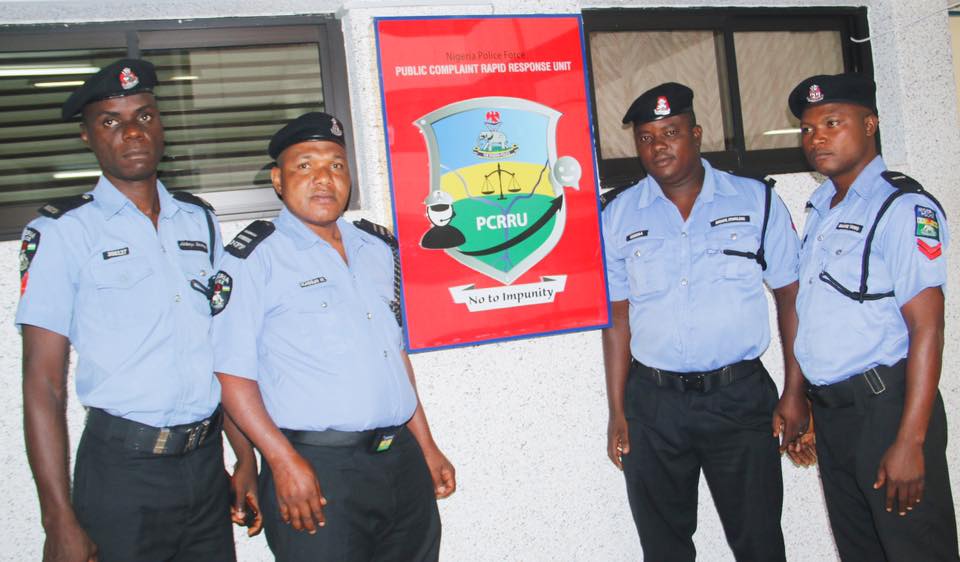
Ways to effectively manage internal complaints mechanism and the process for obtaining bail at police stations across the country have been recommended to the Inspector General of Police (IGP), Mr Ibrahim Idris.

The suggestions were contained in a report presented by the Acting Director General of Bureau of Public Service Reforms (BPRS), Mr D.I Arabi, recently.

Mr Arabi hinted that the exercise was conducted between October 2017 to February 2018 across the six geo-political zones and FCT, selecting one state each from the zones in line with the approval of the police chief given earlier in September 2017, for BPSR request to conduct two research studies on the Nigeria Police Force.

The studies were: Institutional Assessment of the Police internal complaints mechanism; and mapping the process of obtaining bail at the Nigeria police stations.

The assessments were carried out in six States Police Command Formations selected from the Zones, they include: Akwa-Ibom, Borno, Edo, Enugu, Kano and Lagos; and the FCT.

According to the BPSR chief, the main objective of the study was to identity the challenges that have hindered the effectiveness of the police internal complaints mechanism; to identify the specific barriers and bottle necks in the bail process that hampers the effectiveness and efficiency of the process and to provide evidence based recommendations for reforms to improve efficiency in the internal complaints mechanism and the bail process.

For an effective assessment, BPSR adopted some approaches which include meetings and interviews with senior police officers at the Force Headquarters, Abuja, the State Commissioners of Police and other police personnel that were available at the selected States Police Commands and Formations in those zones.

Other approaches were the group discussions with diverse stakeholders, enabling them to collate diverse perspectives on the issues at stake. The studies identified gaps and also designed scenarios for improvements in structure, manpower deployment and the bail process mapping.

The highlight of the research studies was the presentation of the three key findings and the recommendations in each of the report. The first report explains clearly that there was no strategic plan or a strategic planning process that guides the activities of the force and the operations of the internal complaints mechanism towards attaining its mandate, consequently, work plans are either non-existent or are not linked to long term operational and strategic goals.

Among other findings are the PCB complaints desks that are poorly manned in terms of staffing and skills, especially in Kano where there was a great challenge on skills sets. There is also lack of requisite skills among majority of police officers manning public complaints desks at all levels.

Mr Arabi said that training the officers will equip them with intelligence gathering, data collection and analysis and human rights observances in order to display high sense of human relations and mediations.

Speaking on the bail process, Mr Arabi emphasized the need for uniform guidelines and standard operating procedure which according to him will minimize if not remove all forms of hindrances that had hitherto exposed the bail process to abuses.

On the recommendations; he emphasized that the NPF should standardize the operating procedure which will remove all forms of hindrances that had exposed the bail process to abuses.

The acting DG also advocated that the NPF should have standardized practices regarding arrest, detention and bail of suspects in the 36 states in the country and the FCT.

This would help design a functional referral system for civil cases between police and conflicts resolution agents such as courts and traditional rulers. He further reiterated the need for funding and resourcing mechanism for policing and police welfare. This will enable the Force to develop and implement strategies for creating awareness about the internal complaints mechanism.

According to the DG, if the recommendations are faithfully implemented, the NPF will become more effective and the IGP would have succeeded in putting in place an appropriate system for the Force which would further strengthen basic management capacity within the Nigeria Police Force.

Mr Arabi thanked Mr Idris for the opportunity afforded BPSR on this remarkable exercise and equally expressed profound gratitude to the Commissioners of Police in Akwa-Ibom, Borno, Edo, Enugu, Kano and Lagos for their diligence and support.


Dipo Olowookere is a journalist based in Nigeria that has passion for reporting business news stories. At his leisure time, he watches football and supports 3SC of Ibadan. Mr Olowookere can be reached via [email protected]

Click to comment

Leave a Reply

Your email address will not be published. Required fields are marked *

General

Adelabu’s Sister, Twin Nephews Regain Freedom as Police Kill Kidnappers

Published

on

Mrs. Olaide Busayo Adegoke John-Paul

By Dipo Olowookere

The younger sister of the former Minister of Power, Mr Adebayo Adelabu, Mrs Olaide Busayo Adegoke John-Paul, has been rescued by officials of the Nigeria Police Force (NPF).

The woman was freed from her kidnappers along with her twin sons, Peter and Paul, on Saturday evening.

They were abducted on Wednesday morning while the former employee of the Central Bank of Nigeria (CBN) was taking her children to school in Ibadan, Oyo State.

The unfortunate incident reportedly occurred at about 7:30 am on June 3, 2026, throwing residents of the area into panic. The 43-year-old mother was taken from her vehicle by the gunmen and driven away with her 12-year-old twin sons.

This evening, in an operation by security operatives, the victims were rescued, while two of the suspected kidnappers were fatally shot in a gun duel, and two firearms were recovered from the gang.

The police are now combing the area where the rescue operation took place to apprehend some of the fleeing kidnappers, who are believed to have escaped with gunshot wounds.

The news of the rescue of the kidnapped victims has thrown the family of the former Minister into a frenzy.

Continue Reading

General

FG, Honeywell Explore Sustainable Development Opportunities

Published

on

honeywell group

By Modupe Gbadeyanka

The federal government and the Honeywell Group are strengthening a partnership aimed at achieving sustainable development in Nigeria.

The company on Thursday held a meeting with the Minister of Interior, Mr Olubunmi Tunji-Ojo, in Abuja. Both parties explored ways to promote economic development, reaffirming the importance of public-private sector cooperation in advancing Nigeria’s development agenda and improving service delivery for citizens.

The Senior Adviser to the Honeywell Group, Mrs Oduwaye Nsidi-Sakiri, reaffirmed the organisation’s commitment to supporting national development through constructive engagement and collaboration.

“We commend the remarkable progress that has been made. These achievements are a reflection not only of leadership but also of the dedication and hard work of the entire team within the Ministry,” she said.

She explained that the visit reflected Honeywell Group’s longstanding tradition of maintaining proactive and constructive relationships with government institutions, regulatory agencies, and other key public-sector stakeholders. She further expressed the group’s willingness to explore opportunities for collaboration in support of government initiatives and national development objectives.

Also speaking, Honeywell Group Chief Operating Officer, Mrs Tomi Ayo-Tugbo, commended the Ministry for reforms that are delivering tangible improvements in the lives of Nigerians, reiterating the firm’s commitment to supporting the country’s growth and prosperity.

On his part, Mr Tunji-Ojo praised the company for its longstanding contributions to Nigeria’s economy and acknowledged the critical role of the private sector in driving economic growth, creating jobs, and supporting national development.

He further assured the delegation of the Ministry’s readiness to engage with stakeholders and collaborate with responsible corporate organisations in advancing initiatives that promote economic development, innovation, and improved service delivery.

The Minister emphasised that the reforms being implemented across the Ministry and its agencies are designed not only to improve operational efficiency but also to strengthen national security and enhance public confidence in government institutions.

“Our goal is to build institutions that work efficiently for the people. We are committed to creating systems that are transparent, technology-driven, and capable of delivering services in a manner that reflects the aspirations of a modern Nigeria,” he stated.

“The government cannot achieve sustainable development alone. Strong partnerships between the public and private sectors are essential to building a prosperous nation. We value organisations such as Honeywell Group that have consistently invested in Nigeria and contributed to the country’s growth over several decades,” Mr Tunji-Ojo added.

Continue Reading

General

FG Orders MDAs to Secure Funding Before Awarding Contracts

Published

on

project funding

By Adedapo Adesanya

The federal government has directed that no new public contracts should be awarded without first getting the funds, as part of efforts to improve project delivery across the country.

Director-General of the Bureau of Public Procurement (BPP), Mr Adebowale Adedokun, disclosed this on the sidelines of the Inaugural Hosting of The Procurement Evolution in Abuja on Thursday.

Mr Adedokun said President Bola Tinubu had approved measures to raise resources needed to settle outstanding obligations to contractors, describing timely payment as critical to an efficient procurement system.

“Mr President has given a directive on when funds should be raised to address the concerns of contractors who are yet to be paid. With this, procurement processes will be much better because payment is now tied to procurement.

“Meaning that no award will be further issued without resources or funding available. So these are the things that the President has asked us to do.”

The BPP boss said the government was also implementing 23 procurement reforms aimed at improving transparency, efficiency and value for money in public spending.

According to him, committees to drive the reforms will soon be inaugurated by the Secretary to the Government of the Federation (SGF).

He said the reforms were designed to ensure that Nigerians benefit directly through improved infrastructure, healthcare, education and better living conditions.

“The president wants Nigerians to feel the effects of this transformation by having good roads, good hospitals, good educational institutions, and a good living wage for all workers.”

The Secretary to the Government of the Federation (SGF), Mr George Akume, said public procurement remained central to the Tinubu administration’s Renewed Hope Agenda.

Mr Akume noted that ongoing reforms, including proposed amendments to the Public Procurement Act 2007, the Nigeria First Policy, Nigeria e-Marketplace initiative, community-based procurement and affirmative procurement programmes, were intended to strengthen local industries and promote economic inclusion.

The SGF, represented by Mr Abubakar Kana, Permanent Secretary, General Services Office, Office of the SGF, added that the reforms would enhance transparency, simplify procurement processes and leverage technology to improve service delivery and national development.

“As we move forward, our collective responsibility is very clear.

“We must ensure that procurement processes are simplified. without compromising accountability, that technology is fully leveraged to eliminate inefficiencies and that all stakeholders work collaboratively to achieve shared national goals.

“The federal government remains fully committed to supporting the Bureau of Public Procurement in driving these reforms and ensuring that public procurement becomes a catalyst for economic growth, infrastructure development and improved quality of life for all our citizens.”

Continue Reading

Trending