Connect with us

Economy

Low Insurance Penetration in Nigeria not Good for Economy—Expert

Published

on

By Dipo Olowookere

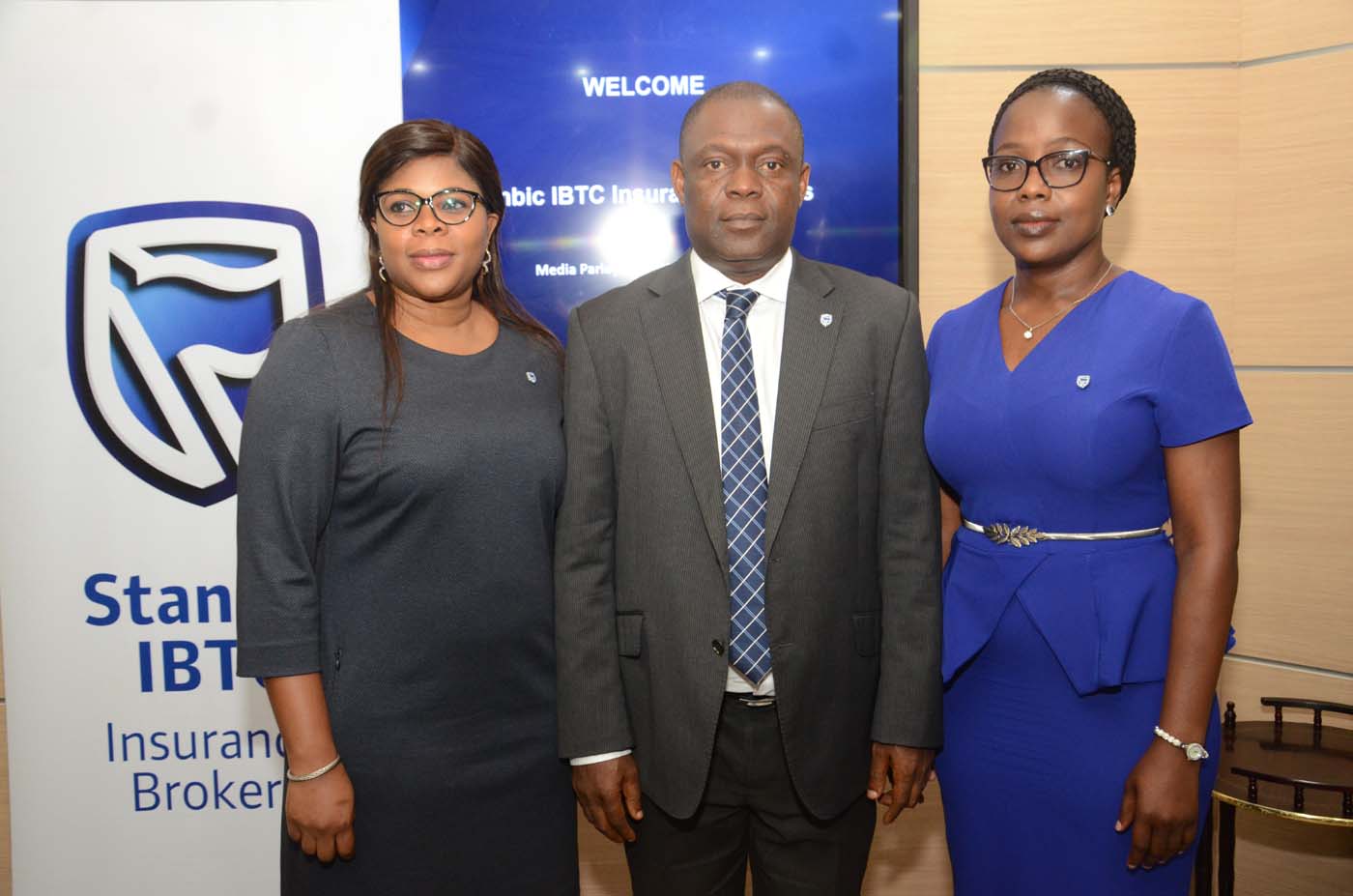
Chief Executive of Stanbic IBTC Insurance Brokers Limited, Mr Anselem Igbo, has expressed worry over the low penetration of insurance in Nigeria, saying this does not augur well for the wellbeing of individuals, businesses and the economy.

He therefore urged Nigerians to protect themselves against unforeseen mishaps by investing in insurance products.

Speaking recently in his office in Lagos, Mr Igbo said the insurance business is a unique one, which has been set up to help clients effectively manage their risks, including theft, accidents, robbery, injuries, manmade and natural disasters, and even death, thereby ensuring peace of mind through risk transfer and efficient insurance claims.

“Insurance is an essential part of everyday life. Contrary to what currently obtains, where insurance penetration in the country is low, every adult Nigerian ought to see insurance as a necessity, one that helps them mitigate all forms of unfortunate situations such as theft, accidents, robbery, manmade and natural disasters, and even death by taking on these risks so that they can have peace of mind knowing that someone is there to assume the risks for them,” Mr Igbo said.

“The insurance industry has numerous bespoke products and services to cater for the insurance needs of all strata of society, including individuals, families, groups, associations, businesses, and large organizations. I therefore urge Nigerians to protect themselves, their families and valuables by investing in insurance coverage,” Mr Igbo urged.

The insurance chief stated that one of the reasons the Stanbic IBTC Group established the Stanbic IBTC Insurance Brokers was to fill this perceived gaps in the industry and ensure Nigerians are adequately protected.

Mr Igbo said the company commenced full operations sequel to the granting of a licence by the National Insurance Commission (NAICOM) in January 2016, paving the way for the firm to offer the full spectrum of insurance brokerage services, a development that will help in deepening insurance penetration in the country.

According to the chief executive, Stanbic IBTC Insurance Brokers, building on the brand strength of the Standard Bank Group, to which Stanbic IBTC Holdings belongs, will continue to adopt global best practice in its operations, including exceptional quality of service and facilitating prompt payment of claims for clients.

“Our services apply to individuals and corporate entities, existing customers and non-customers of the Stanbic IBTC Group.

“As insurance professionals with a vast knowledge of the workings of the insurance market, we are able to arrange the most suitable policies for our individual and corporate clients. We proffer advice on the management of risk, secure protection against such risk and reduce exposure to the risks of business disruption, injury and death.

“We also deliver creative risk management solutions that enable our clients create, protect and preserve wealth,” Mr Igbo restated.

Stanbic IBTC Insurance Brokers Limited is a subsidiary of Stanbic IBTC Holdings Plc, a member of Standard Bank Group, a full-service financial services group with a clear focus on three main business pillars – Corporate and Investment Banking, Personal and Business Banking and Wealth Management.

Standard Bank Group, to which Stanbic IBTC Holdings belongs, is the largest African bank by assets and market capitalization. It is rooted in Africa with strategic representation in 20 countries on the African continent, including South Africa.

Standard Bank has been in operation for over 155 years and is focused on building first-class, on-the-ground financial services institutions in chosen countries in Africa and connecting other selected emerging markets to Africa and to each other, applying sector expertise, particularly in natural resources, globally.


Dipo Olowookere is a journalist based in Nigeria that has passion for reporting business news stories. At his leisure time, he watches football and supports 3SC of Ibadan. Mr Olowookere can be reached via [email protected]

Advertisement
Click to comment

Leave a Reply

Your email address will not be published. Required fields are marked *

Economy

Tinubu Okays Extension of Ban on Raw Shea Nut Export by One Year

Published

on

Raw Shea Nut Export

By Aduragbemi Omiyale

The ban on the export of raw shea nuts from Nigeria has been extended by one year by President Bola Tinubu.

A statement from the Special Adviser to the President on Information and Strategy, Mr Bayo Onanuga, on Wednesday disclosed that the ban is now till February 25, 2027.

It was emphasised that this decision underscores the administration’s commitment to advancing industrial development, strengthening domestic value addition, and supporting the objectives of the Renewed Hope Agenda.

The ban aims to deepen processing capacity within Nigeria, enhance livelihoods in shea-producing communities, and promote the growth of Nigerian exports anchored on value-added products, the statement noted.

To further these objectives, President Tinubu has authorised the two Ministers of the Federal Ministry of Industry, Trade and Investment, and the Presidential Food Security Coordination Unit (PFSCU), to coordinate the implementation of a unified, evidence-based national framework that aligns industrialisation, trade, and investment priorities across the shea nut value chain.

He also approved the adoption of an export framework established by the Nigerian Commodity Exchange (NCX) and the withdrawal of all waivers allowing the direct export of raw shea nuts.

The President directed that any excess supply of raw shea nuts should be exported exclusively through the NCX framework, in accordance with the approved guidelines.

Additionally, he directed the Federal Ministry of Finance to provide access to a dedicated NESS Support Window to enable the Federal Ministry of Industry, Trade and Investment to pilot a Livelihood Finance Mechanism to strengthen production and processing capacity.

Shea nuts, the oil-rich fruits from the shea tree common in the Savanna belt of Nigeria, are the raw material for shea butter, renowned for its moisturising, anti-inflammatory, and antioxidant properties. The extracted butter is a principal ingredient in cosmetics for skin and hair, as well as in edible cooking oil. The Federal Government encourages processing shea nuts into butter locally, as butter fetches between 10 and 20 times the price of the raw nuts.

The federal government said it remains committed to policies that promote inclusive growth, local manufacturing and position Nigeria as a competitive participant in global agricultural value chains.

Continue Reading

Economy

NASD Bourse Rebounds as Unlisted Security Index Rises 1.27%

Published

on

Alternative Bourse NASD Securities

By Adedapo Adesanya

The NASD Over-the-Counter (OTC) Securities Exchange expanded for the first session this week by 1.27 per cent on Wednesday, February 25.

This lifted the NASD Unlisted Security Index (NSI) above 4,000 points, with a 50.45-point addition to close at 4,025.25 points compared with the previous day’s 3,974.80 points, as the market capitalisation added N30.19 billion to close at N2.408 trillion versus Tuesday’s N2.378 trillion.

At the trading session, FrieslandCampina Wamco Nigeria Plc grew by N5.00 to trade at N100.00 per share compared with the previous day’s N95.00 per share, Central Securities Clearing System (CSCS) Plc improved by N4.18 to sell at N70.00 per unit versus N65.82 per unit, and First Trust Mortgage Bank Plc increased by 14 Kobo to trade at N1.59 per share compared with the previous day’s N1.45 per share.

However, the share price of Geo-Fluids Plc depreciated by 27 Kobo at midweek to close at N3.27 per unit, in contrast to the N3.30 per unit it was transacted a day earlier.

At the midweek session, the volume of securities went down by 25.3 per cent to 8.7 million units from 11.6 million units, the value of securities decreased by 92.5 per cent to N80.7 million from N1.2 billion, and the number of deals slipped by 33.3 per cent to 32 deals from the preceding session’s 48 deals.

At the close of business, CSCS Plc remained the most traded stock by value on a year-to-date basis with 34.1 million units exchanged for N2.0 billion, trailed by Okitipupa Plc with 6.3 million units traded for N1.1 billion, and Geo-Fluids Plc with 122.0 million units valued at N478.0 million.

Resourcery Plc ended the trading session as the most traded stock by volume on a year-to-date basis with 1.05 billion units valued at N408.7 million, followed by Geo-Fluids Plc with 122.0 million units sold for N478.0 million, and CSCS Plc with 34.1 million units worth N2.0 billion.

Continue Reading

Economy

Investors Lose N73bn as Bears Tighten Grip on Stock Exchange

Published

on

Nigeria's stock exchange

By Dipo Olowookere

The bears consolidated their dominance on the Nigerian Exchange (NGX) Limited on Wednesday, inflicting an additional 0.09 per cent cut on the market.

At midweek, the market capitalisation of the domestic stock exchange went down by N73 billion to N124.754 trillion from the preceding day’s N124.827 trillion, and the All-Share Index (ASI) slipped by 114.32 points to 194,370.20 points from 194,484.52 points.

A look at the sectoral performance showed that only the consumer goods index closed in green, gaining 1.19 per cent due to buying pressure.

However, sustained profit-taking weakened the insurance space by 3.79 per cent, the banking index slumped by 2.07 per cent, the energy counter went down by 0.24 per cent, and the industrial goods sector shrank by 0.22 per cent.

Business Post reports that 25 equities ended on the gainers’ chart, and 54 equities finished on the losers’ table, representing a negative market breadth index and weak investor sentiment.

RT Briscoe lost 10.00 per cent to sell for N10.35, ABC Transport crashed by 10.00 per cent to N6.75, SAHCO depreciated by 9.98 per cent to N139.35, Haldane McCall gave up 9.93 per cent to trade at N3.99, and Vitafoam Nigeria decreased by 9.93 per cent to N112.50.

Conversely, Jaiz Bank gained 9.95 per cent to settle at N14.03, Okomu Oil appreciated by 9.93 per cent to N1,765.00, Trans-nationwide Express chalked up 9.77 per cent to close at N2.36, Fortis Global Insurance moved up by 9.72 per cent to 79 Kobo, and Champion Breweries rose by 5.39 per cent to N17.60.

Yesterday, 1.4 billion shares worth N46.2 billion were transacted in 70,222 deals compared with the 1.1 billion shares valued at N53.4 billion traded in 72,218 deals a day earlier, implying a rise in the trading volume by 27.27 per cent, and a decline in the trading value and number of deals by 13.48 per cent and 2.76 per cent, respectively.

Fortis Global Insurance ended the session as the busiest stock after trading 193.7 million units for N152.7 million, Zenith Bank transacted 120.7 million units worth N11.1 billion, Japaul exchanged 114.8 million units valued at N407.0 million, Ellah Lakes sold 98.4 million units worth N999.2 million, and Access Holdings traded 63.1 million units valued at N1.7 billion.

Continue Reading

Trending