Connect with us

General

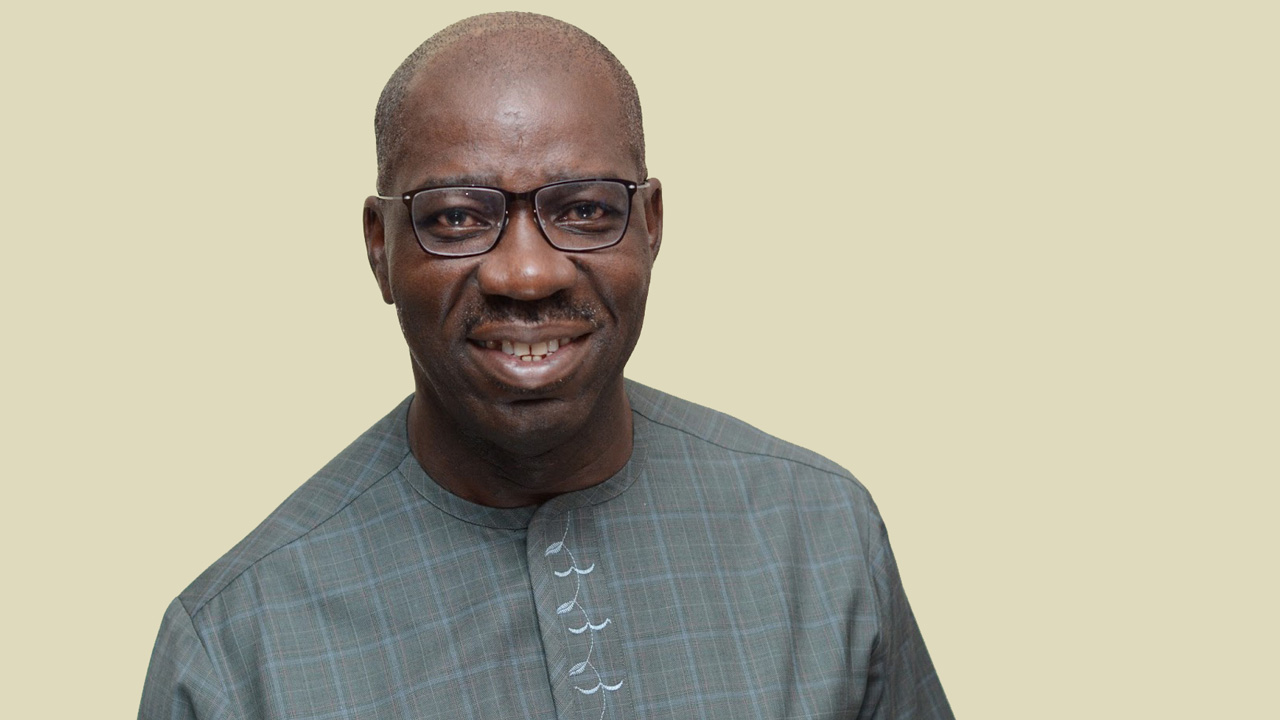
Obaseki Raises Edo Monthly IGR to N2b

Published

on

godwin obaseki edo state

By Modupe Gbadeyanka

Efforts being made by Governor Godwin Obaseki of Edo State to make the Heartbeat of Nigeria financial strong are already yielding results.

The Mr Obaseki administration has raised the monthly internally generated revenue (IGR) of the state from N1.55 billion in 2016 when he assumed office to N2 billion.

Executive Chairman of Edo Internal Revenue Service (EIRS), Mr Igbinudu Inneh, informed reporters on Monday that the number of verified and unverified persons in the state government tax net has also increased in the period under review from 120,000 in 2016 to 250,000 in 2018.

According to him, the state government expects the IGR to rise in the last quarter of 2018 when the newly developed Edo Revenue Administration System (ERAS) is fully implemented this month.

Mr Inneh noted that the state government developed ERAS to help create jobs and distribute wealth, adding that the policy has mobile revenue collection components that would allow collectors to use revenue scratch cards.

“We started out in trying to develop an Edo Revenue Administration System which relies on technology, but technology on its own will not do it for you, you need human intervention.

“We now want to make sure we know those in the informal sector and know how much they have paid.

“For once, they will have a citizen identity that the government can relate with. The discount on the cards is the wealth that will trickle down, and those collecting money illegally before will have opportunity to buy the cards and sell to make money.

“We have done enumeration in the local government and we have all the buildings and their GPS coordinates.

“Vehicle owners will now be getting alerts on the anniversary of their vehicle renewal, because we have their house address. We can send notices to your house that you need to renew your vehicle so we don’t need to do stop and search because we have the data base.

“Expanding the tax net is some of the features the automation will help us to do. “Each tax payer has a tax profile on the system, so you can ask for a single tax assessment view,” he said.

The EIRS also said that 50 persons were currently undergoing training with a view to sending them out to confirm the status of additional 140,000 people that were biometrically captured within the last two years.

Mr Inneh identified six critical success factors for revenue generation at the inception of his administration. He listed the factors as technology, data, human capital development, stakeholders engagement, public enlightenment and man power development.


Modupe Gbadeyanka is a fast-rising journalist with Business Post Nigeria. Her passion for journalism is amazing. She is willing to learn more with a view to becoming one of the best pen-pushers in Nigeria. Her role models are the duo of CNN's Richard Quest and Christiane Amanpour.

General

Be Watchful of Economic Hardship in 2026–Primate Ayodele Tasks FG

Published

on

Primate Ayodele 2026 prophecies

By Adedapo Adesanya

Popular Nigerian prophet and founder of INRI Evangelical Spiritual Church Lagos, Primate Elijah Ayodele, has called on the Nigerian government to be careful and watchful of economic hardship in the new year.

He made this warning and others at his End of the Year 2025 Press Conference, where he gave prophecies for Nigeria and the world.

According to the man of God, the government will do its utmost best to stabilize things but the balancing will be very difficult.

“The country will face so many political upheaval that will frustrate the efforts of the government in all fronts. I foresee the government in the process will take a lot of wrong steps. There will be wrong pieces of advice,” he said.

“The Lord revealed to me that the efforts of the President will be frustrated with wrong pieces of advice. These are the words of the Lord,” he added.

Primate Ayodele noted that “The spirit of God says in the year 2026, the President must be watchful for what is tagged political nemesis in the country. He needs fervent prayers in this regard.”

He warned President Bola Tinubu to be wary of several advices from different quarters, noting that Nigeria’s opposition groups will frustrate all his efforts unless he is able to take decisive steps to scuttle and scatter the plans, particularly that of the African Democratic Congress (ADC).

“I foresee the ADC members are ready to fight in order to wrestle for the political control of the country from the ruling APC. The main obstacle will be if the ADC is fielding a weak candidate. The ADC will want to use all the apparatus at its command to achieve what they want to do in order to achieve victory at the polls.”

On the 2027 polls, he said the ruling All Progressives Congress (APC) would do everything possible to make sure they use the Independent National Electoral Commission (INEC) and other things within their powers to secure victory.

“The ADC as a political party must watch carefully the unfolding drama. I foresee that all areas where the ADC can have an upper hand during polls will be blocked.”

The prophet as part of his prophecies also foresaw the crude oil from the Nigeria not being of quality grades expected in the international oil and gas market in the next 20 years from now.

On the tax reforms due to start in the new year, Primate Ayodele said this would cause misconceptions and the government needs to explain.

“I foresee our budget will not be properly implemented. They will use budget to fight inflation and hunger yet Tinubu will still borrow surplus money. People will be frustrated,” he said in the prophecies.

Continue Reading

General

QNET’s Global Reach in 100+ Countries: What International Access Means for Local Distributors

Published

on

QNET

Global scale means market access and international supply chains. For individual distributors in direct selling, it can shape everything from product availability to income stability and long-term opportunity.

QNET, the multinational wellness and lifestyle direct selling company, positions its business model around that idea: connecting locally based independent distributors to an international operating platform. With activity spanning more than 100 countries, the company sits within a direct selling industry that, according to the World Federation of Direct Selling Associations (WFDSA), has stabilized after several relatively volatile post-pandemic years.

Global Reach Within a Stabilizing Industry

The WFDSA’s latest global report estimates worldwide direct selling retail sales at roughly $163.9 billion in 2024, essentially flat year over year. That flat performance, however, masks gradual improvement beneath the surface. Nearly half of reporting markets showed growth in 2024, and average market growth rates rebounded to positive territory.

The report estimates more than 104 million independent sales representatives globally in 2024, a figure that has remained largely stable year over year.

This stabilization sets a backdrop for companies like QNET. A global footprint is no longer about rapid expansion alone; it is increasingly tied to resilience: operating across regions with different economic cycles, consumer behaviors, and growth trajectories.

For distributors, this matters because opportunities extend beyond individual effort. They are often shaped by the health of the company’s broader channel and product reach.

A Platform Designed for Distributed Entrepreneurship

QNET’s model centers on local execution supported by centralized infrastructure. Products—ranging from nutritional supplements and wellness devices to home and lifestyle solutions—are sold through the company’s proprietary e-commerce platform. Independent distributors do not manage warehouses, shipment logistics, or customer service systems.

As Ramya Chandrasekaran, who heads communications at QNET, explained in a recent interview, the company views direct selling as a form of accessible “micro-entrepreneurship.” The idea is to reduce the operational burden typically associated with starting a business, allowing distributors to focus on product education, customer relationships, and market development.

Why Global Scale Changes the Distributor Equation

One practical benefit of international reach is product continuity. WFDSA data shows that wellness products account for roughly 29% of global direct selling sales, making it the largest category worldwide. In the Asia-Pacific region, the largest direct selling region by sales, wellness represents more than 40% of total category share.

QNET’s emphasis on wellness and lifestyle products places distributors in line with the strongest demand segments globally. Instead of relying on narrow local trends, distributors operate within product categories that have shown consistent global interest.

International scale also supports consistency in training, compensation structures, and digital tools. Distributors in different countries access identical back-end systems, tracking referrals, commissions, and orders through the same platform. This standardization reduces friction and uncertainty, particularly for individuals operating in markets where informal commerce is common.

Workforce Shifts

The WFDSA’s report highlights notable shifts in the global direct selling workforce. Women continue to make up more than 70% of participants worldwide, and representation among individuals aged 35 to 54 remains the largest cohort.

Independent Distributors increasingly value flexibility, long-term viability, and support systems that allow them to operate sustainably rather than aggressively scale. QNET’s emphasis on digital access, centralized operations, and gradual business building reflects those priorities.

For many participants, especially those balancing work with caregiving or other responsibilities, direct selling infrastructure offers a way to stay engaged at their own pace.

Training, Exposure, and Cross-Market Learning

QNET’s international conventions and training programs connect distributors across regions, creating informal networks for peer learning. Events that draw participants from dozens of countries expose distributors to varied approaches to sales, customer engagement, and market adaptation.

This mirrors one of WFDSA’s broader conclusions: direct selling increasingly functions as a global learning ecosystem, with companies providing tools and education that help individuals navigate uncertain economic conditions.

For distributors, exposure to cross-border experiences can recalibrate expectations, reinforcing that success often comes from steady engagement rather than rapid recruitment or short-term activity.

International Access, Interpreted Locally

Despite its global scale, QNET’s business ultimately plays out in local communities. Distributors adapt messaging around wellness, home quality, and lifestyle enhancement to cultural norms and household priorities. The international platform provides reach and structure, but relevance is built locally.

That balance, global systems supporting local relationships, defines much of modern direct selling. The WFDSA describes the industry not as a single growth story, but as a framework that can scale proportionally with economic conditions across regions.

For QNET distributors, international presence does not guarantee income or uniform outcomes. What it offers is access: to resilient product categories, standardized systems, training resources, and a global marketplace that extends beyond any single region. For local distributors navigating today’s uncertain global economic environment, that is an important foundation to maintain.

Continue Reading

General

FCCPC Unseals Ikeja Electric Headquarters

Published

on

Ikeja Electric

By Adedapo Adesanya

The Federal Competition and Consumer Protection Commission (FCCPC) has unsealed the headquarters of Ikeja Electric Plc in the Lagos State capital after a week under lock and key.

According to a statement on Friday, the electricity distribution company committed to a binding undertaking to comply with the remedial process following consumer rights violations.

The statement signed by Mr Ondaje Ijagwu, Director of Corporate Affairs at the commission, Ikeja Electric undertook to resolve all consumer complaints referred to it by the FCCPC within agreed timelines

The headquarters was earlier sealed on December 11, 2025, because Ikeja Electric allegedly failed to comply with a directive by the Nigerian Electricity Regulatory Commission (NERC) to unbundle a Maximum Demand account into 20 individual accounts for a customer who had been without power for over two and half years.

The FCCPC noted that following the resolution, any breach of the undertaking would expose it to renewed and escalated enforcement action under the Federal Competition and Consumer Protection Act.

Reacting, the Executive Vice Chairman and Chief Executive Officer of the FCCPC, Mr Tunji Bello, said the Commission’s intervention was necessary to enforce the provisions of the FCCPA (2018).

“Our responsibility is to ensure that consumers are treated fairly and that service providers comply with lawful decisions and directives. Enforcement is not an end in itself. Where compliance is achieved and credible commitments are made, the Commission will respond appropriately,” he said.

Clarifying further, Mr Bello said the outcome reflects the commission’s balanced approach to regulation.

“We intervene decisively where consumer harm persists, and we de-escalate where enforceable compliance is secured. What remains constant is our duty to protect consumers and uphold regulatory accountability,” he said.

Continue Reading

Trending