Connect with us

Economy

Nigerian Stock Market Closes for Independence Day Celebration

Published

on

Nigerian Stock Market

By Dipo Olowookere

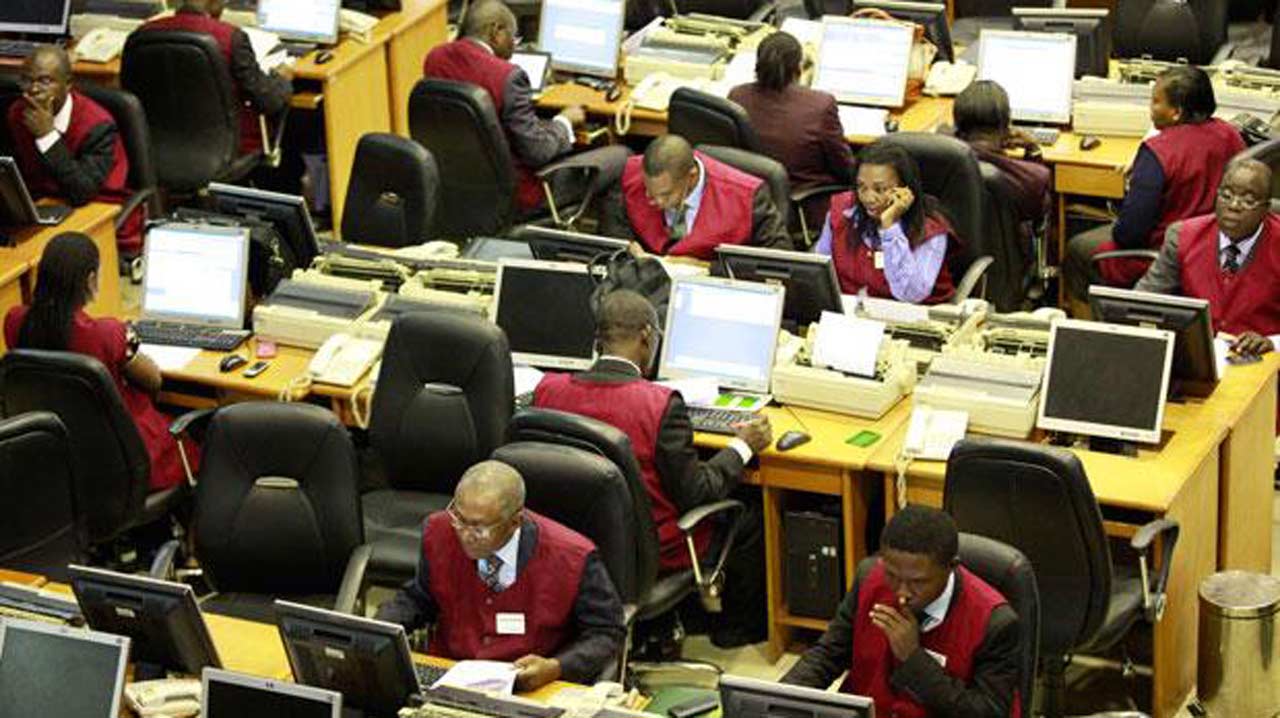
Activities are closed on the floor of the Nigerian Stock Exchange (NSE) today as a result of the public holiday declared by the federal government to market the country’s Independence Day remembrance.

On October 1, 1960, Nigeria gained independence from the British government and since then, the day is celebrated across the country.

At the close of market last Friday, the management of the NSE released a statement to inform investors that its doors would not be opened today for business.

“The Federal Government of Nigeria has declared Monday, October 1, 2018, as Public Holiday to mark 2018 Independence Day celebration.

“In light of this development, all Exchange’s facilities nationwide will be closed for business to observe the holiday,” the statement said.   ​

However, the stock market regulatory agency said normal activities would resume tomorrow.

“We will resume normal business operations on Tuesday, October 2, 2018,” the statement released last Friday said.


Dipo Olowookere is a journalist based in Nigeria that has passion for reporting business news stories. At his leisure time, he watches football and supports 3SC of Ibadan. Mr Olowookere can be reached via [email protected]

Economy

Oil Prices Rise 1% Ahead US, Iran Nuclear Talks

Published

on

crude oil prices

By Adedapo Adesanya

Oil prices moved up on Monday as investors weighed the implications of the forthcoming US-Iran talks aimed at de-escalating tensions against a backdrop of expected supply increases by the Organisation of the Petroleum Exporting Countries and allies (OPEC+).

Brent crude futures appreciated by 90 cents or 1.33 per cent to trade at $68.65 a barrel, while the US West Texas Intermediate (WTI) crude futures gained 86 cents or 1.37 per cent to close at $63.75 a barrel.

Fears of supply disruption from the US-Iran tensions have helped keep oil prices stable. The two countries are due to hold a second round of talks in Geneva, Switzerland, on Tuesday over Iran’s nuclear programme.

Iran has repeatedly threatened to close the Strait of Hormuz in retaliation against any attack, which would choke a fifth of global oil flows and send crude prices sharply higher.

Comments from US President Donald Trump that it could make a deal with Iran over the next month with US Secretary of State Marco Rubio emphasizing that the Trump administration prefers diplomacy with Iran, though military options remain implicitly on the table.

Iran signaled willingness to dilute 60 per cent enriched uranium but insists sanctions relief must be part of any agreement.

This comes ahead of new US-Iran talks in Geneva on February 17. The US delegation will include envoys Mr Steve Witkoff and Mr Jared Kushner, with representatives from Oman acting as mediators. Oman hosted indirect talks between Iran and the US earlier in February.

Ahead of the meeting, Iran’s foreign minister met with Mr Rafael Grossi, the head of the International Atomic Energy Agency (IAEA), the UN nuclear watchdog, on Monday.

Market analysts have warned that increased Iranian tension could drive Brent to $80 a barrel, while fading tension would drop it back to $60 a barrel.

OPEC+ is dampening oil prices as it appears the alliance is leaning toward a decision at their March 1 meeting to resume output increases from April after a three-month halt.

Oil prices also were supported by China’s continued strong crude imports and by some disruptions in oil exports.

China’s imports of Russian oil are set to climb for a third straight month in February, hitting a new record, after India slashed purchases following US pressure.

Continue Reading

Economy

NCSP, NACCIMA Move to Unlock SME-led Industrial Growth

Published

on

SMEs

By Adedapo Adesanya

The Nigeria–China Strategic Partnership (NCSP) has reaffirmed its commitment to consolidate engagements with the Organised Private Sector while strengthening strategic collaboration to accelerate Nigeria’s industrial expansion, following a high-level meeting with the leadership of the Nigerian Association of Chambers of Commerce, Industry, Mines and Agriculture (NACCIMA).

The dialogue focused on aligning institutional efforts to deepen Nigeria–China economic cooperation and position Small and Medium Enterprises (SMEs) as primary beneficiaries of trade, manufacturing, and investment initiatives.

The Director-General of NCSP, Mr Joseph Tegbe, stated that the Partnership was established as a structured coordination platform to drive Nigeria’s strategic economic engagement with China in a disciplined and result-oriented manner.

He outlined its core mandates, including oversight of FOCAC-related initiatives, advancement of priority economic initiatives, and the facilitation of catalytic industrial projects across priority sectors.

Mr Tegbe emphasised that the next phase of engagement will prioritize harmonization of ongoing initiatives, stronger inter-agency coordination, and clearer execution frameworks to ensure Nigerian businesses, particularly SMEs, benefit more directly and sustainably from bilateral trade and investment initiatives.

According to a statement, NSCP said the meeting reviewed existing collaborations and investment pipelines, with both parties agreeing on the need to streamline coordination across federal and subnational levels to improve policy coherence, enhance implementation efficiency and eliminate fragmentation to take advantage of scale.

Mr Tegbe further highlighted the strategic importance of leveraging landmark trade instruments like China’s Zero-Tariff Agreement with African countries as a pathway to scale-up domestic manufacturing, deepen value addition, and strengthen Nigeria’s export competitiveness.

On his part, the President of NACCIMA and Chairman of the Organised Private Sector of Nigeria (OPSN), Mr Jani Ibrahim, commended NCSP’s structured engagement model and its deliberate focus on SMEs as drivers of inclusive industrial growth.

He reaffirmed the readiness of the organised private sector to collaborate closely with NCSP in mobilising enterprises, providing structured policy feedback, and ensuring measurable enterprise-level outcomes from Nigeria–China economic engagements.

Both sides identified practical pathways to integrate SMEs into manufacturing value chains linked to Chinese partnerships; expand agro-processing and value-added production; strengthen technical and vocational education collaborations to close industrial skills gaps; and promote the development of geo-cluster industrial parks capable of anchoring regional manufacturing ecosystems.

They agreed to establish a formal working interface to translate strategic alignment into measurable results, with defined focus areas including investment facilitation, SME capacity development, industrial cluster formation, and export-oriented growth.

The meeting underscores NCSP’s resolve to convert diplomatic goodwill into tangible economic gains, expand opportunities for Nigerian businesses and strengthen productive capacity, leveraging NACCIMA’s network, the statement added, saying this aligns with President Bola Tinubu’s Renewed Hope Agenda, which seeks to achieve sustained and inclusive growth anchored on industrial productivity and private-sector dynamism.

Continue Reading

Economy

Nigeria’s Inflation Eases Further to 15.1% in January 2026

Published

on

Nigeria’s Headline Inflation

By Adedapo Adesanya

Nigeria’s headline inflation rate eased further to 15.10 per cent in January 2026, down from 15.15 per cent in December 2025, continuing the moderation that started in the latter months of 2025.

According to the National Bureau of Statistics (NBS), Consumer Price Index (CPI) declined to 127.4 points in January 2026, reflecting a 3.8-point decrease from the preceding month of December 2025, which came in as 131.2 points.

The data, which is the first of the year, beat analysts’ expectations, which had expected an 18 per cent growth. Instead, the January 2026 print showed a decrease of 0.05 per cent compared to the December 2025 Headline inflation rate.

On a year-on-year basis, the inflation rate was 12.51 per cent lower than the rate recorded in January 2025 (27.61 per cent). This shows that the Headline inflation rate (year-on-year basis) decreased in January 2026 compared to the same month in the preceding year.

On a month-on-month basis, the Headline inflation rate in January 2026 was -2.88 per cent, which was 3.42 per cent lower than the rate recorded in December 2025 (0.54 per cent). This means that in the review month, the rate of increase in the average price level was lower than the rate of increase in the average price level in December last year.

The percentage change in the average CPI for the twelve months ending January 2026 over the average for the previous twelve-month period was 21.97 per cent, showing a 4.37 per cent increase compared to 17.59 per cent recorded in January 2025.

Nigeria’s food inflation rate in January 2026 was 8.89 per cent on a year-on-year basis. This was 20.73 percentage points lower compared to the rate recorded in January 2025 (29.63 per cent).

On a month-on-month basis, the Food inflation rate in January 2026 was -6.02 per cent, down by 5.66 per cent compared to December 2025 (-0.36 per cent).

The decline can be attributed to the rate of decrease in the average prices of water yams, eggs, green peas, groundnut oil, soya beans, palm oil, maize (corn) grains, guinea corn, beans, beef meat, melon (egusi) unshelled, cassava tuber, and cow peas (white).

The NBS data showed that the average annual rate of food inflation for the twelve months ending January 2026 over the previous twelve-month average was 20.29 per cent, which was 18.18 percentage points lower compared with the average annual rate of change recorded in January 2025 (38.47 per cent).

Continue Reading

Trending