Economy
FSD Africa Provides Funds to Boost SEC Nigeria’s Operations
By Dipo Olowookere
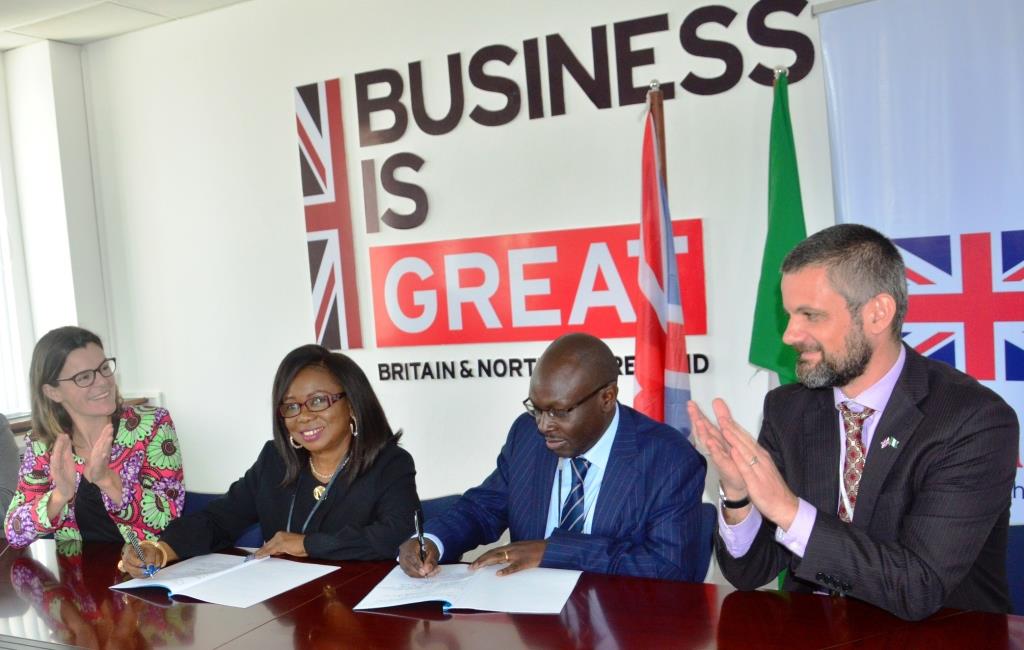
An agreement has been entered into between Nigeria’s Securities and Exchange Commission (SEC) and a UK Aid funded non-profit company, FSD Africa, to provide funding for an institutional capacity audit to identify strengths and areas of improvement in the operations of SEC Nigeria.
However, SEC is not the only regulator to enjoy this benefit as other capital regulators in Africa will also get this funding package.
According to FSD Africa, the aim is build the capacity of capital market regulators across the continent, providing world-class technical assistance, encouraging closer collaboration among regulators and conducting research to support the development of new policies and regulations.
The initiative will encourage greater collaboration and knowledge management sharing between SEC and other African capital market regulators.
At the signing of the deal last weekend, Acting Director General of SEC Nigeria, Ms Mary Uduk, stated that, “SEC Nigeria is excited about the cooperation with FSD Africa and the tremendous potential the various programs hold in complementing our efforts to enhance capacity and further strengthen our ability to regulate the capital market.”
She said, “This collaboration will no doubt contribute to the continued development of our market by facilitating access to capital by both the private and public sectors and enhance the competitiveness of the Nigerian capital market as a global investment destination.”
On his part, Director of FSD Africa, Mr Mark Napier, disclosed that, “Well-functioning capital markets can play a vital role in support of inclusive economic growth by channelling long term finance into infrastructure and other large-scale projects that create jobs and improve access to markets.
“Strengthening regulatory capacity in capital markets is an essential pre-condition for building investor confidence.”
Also speaking at the ceremony in Lagos, Deputy High Commissioner, British Deputy High Commission Lagos, Laure Beaufils, noted that, “Capital markets have an essential role to play to help unlock capital that can be invested in the real economy and that can contribute to job creation and inclusive growth.
“I am delighted that the SEC Nigeria and FSD Africa will be signing a new partnership agreement today.
“It is a testament to the importance we attach to this issue and to our commitment to deepen and broaden our trade and investment relationship with Nigeria. I very much look forward to working with the SEC on this in the future.”
Business Post reports that apart from Nigeria, other nations to enjoy the programme include Ghana, Kenya, Mozambique, Rwanda, Tanzania, Uganda, Zambia and Zimbabwe.
Economy
Dangote, GCL Seal 25-year Gas Supply Deal for Ethiopian Fertiliser Plant
By Modupe Gbadeyanka
A $4.2 billion gas deal aimed to power a fertiliser project in Ethiopia has been signed between Nigeria’s Dangote Industries Limited and China’s GCL Group.
The Chinese firm is expected to supply stable natural gas to Dangote Group’s upcoming 3‑million‑tonne‑per‑year urea fertiliser production complex in Ethiopia for 25 years.
The natural gas supplied by GCL will be sourced from the Calub Gas Field in Ethiopia’s Ogaden Basin and delivered via a dedicated 108‑kilometre pipeline directly to the Dangote fertiliser complex in Gode, Somali Region.
The initiative aligns with Africa’s broader objective of establishing an integrated energy‑to‑food value chain, leveraging local resources to drive industrial autonomy.
The fertiliser plant, valued at $2.5 billion, is being developed under a 60:40 equity structure between Dangote Group and Ethiopian Investment Holdings (EIH), respectively, and is scheduled to begin operations in 2029.
Once commissioned, it will become East Africa’s largest modern fertiliser production hub, fully meeting Ethiopia’s current urea import demand while supplying neighbouring regional markets.
The project is expected to significantly reshape East Africa’s fertiliser landscape, reducing reliance on imports and strengthening agricultural self‑sufficiency.
“Africa’s energy industry cannot continue indefinitely exporting raw materials while importing finished products. We must pursue a new path of highly autonomous development.
“Through seamless integration and strategic cooperation with GCL, we will achieve an efficient closed‑loop value chain from natural gas extraction to fertiliser production, taking a crucial step toward enabling Africa to secure greater autonomy over its food security,” Mr Aliko Dangote said at the signing ceremony in Lagos.
The Chairman of GCL Group, Mr Zhu Gongshan, also reaffirmed the company’s confidence in the partnership, noting that the agreement was made possible through the facilitation and support of the Ethiopian government.
“This cooperation will enable both sides to expand new frontiers in Ethiopia’s energy, chemical, and food security sectors while transitioning from a business going global model toward a mutually beneficial ecosystem‑based framework.
“Leveraging GCL’s integrated oil and gas operations in Ethiopia and Dangote Group’s extensive industrial footprint across Africa, the partnership will significantly enhance our service capabilities and market reach across the continent.”
Economy
Tinubu Tasks Oyedele with Fiscal Reforms as Minister of State for Finance
By Adedapo Adesanya
President Bola Tinubu has sworn in Mr Taiwo Oyedele as the new Minister of State for Finance, tasking him with fiscal reforms aimed at improving government revenue and strengthening Nigeria’s economic management framework.
He took his oath of office before the President at the Presidential Villa, Abuja, on Monday.
President Tinubu nominated Mr Oyedele for the new role on March 3, 2026, to replace Mrs Doris Uzoka-Anite, who was moved to serve as the Minister of State for Budget and National Planning.
On March 11, the Senate confirmed him after a screening session, where the tax expert pledged to pursue fiscal reforms aimed at improving government revenue, ensuring realistic budgeting, and strengthening Nigeria’s economic management framework.
He was cleared by the lawmakers through a voice vote at the Committee of the Whole, after hours of screening.
Mr Oyedele, the former chairman of the Presidential Committee on Fiscal Policy and Tax Reforms, described his nomination as a call to serve Nigeria.
“With over two decades of experience working with national governments, multilateral institutions, and global corporations, my journey across the private sector, academia, and public policy has focused on fiscal governance and economic transformation.
“However, this moment is not about personal accomplishments; it is a call to serve at a critical time when Nigeria faces significant fiscal challenges and remarkable opportunities,” the 50-year-old said in the upper chamber.
He said his decades-long experience working on “global reforms regarding the ease of doing business and taxation across 180 countries” had prepared him for the role.
“I feel my background has prepared me to help my country by understanding what works globally and how to apply those lessons to our unique context,” Mr Oyedele added.
The public policy expert, accountant, and economist was appointed by the President to chair the tax reform committee in July 2023.
This led to the creation of four bills: the Nigeria Tax Bill, the Nigeria Tax Administration Bill, the Nigeria Revenue Service (Establishment) Bill, and the Joint Revenue Board (Establishment) Bill were passed by the National Assembly last year after months of extensive debates and controversies, and assented to by Tinubu on June 26, 2025.
The former fiscal policy partner and Africa tax leader at PriceWaterhouseCoopers (PwC) attended Yaba College of Technology and bagged a Higher National Diploma (HND) in Accountancy and Finance.
Mr Oyedele also earned a BSc in applied accounting from Oxford Brookes University.
His academic journey saw him study at the London School of Economics, Yale University, the Gordon Institute of Business Science, and the Harvard Kennedy School, where he completed executive education programmes.
The ministerial nominee worked for decades with PWC, having started his career at the organisation in 2001.
He is a professor at Babcock University in Ogun State as well as a visiting scholar at the Lagos Business School.
Economy
Fears Over Impact on African Nations if Iran War Drags on
CNN’s Larry Madowo reports that oil price spikes triggered by the war with Iran could have a catastrophic impact on African nations. Even Africa’s most advanced economy, South Africa, is exposed to the oil price shocks, which could cause higher fuel costs, rising inflation and renewed pressure on currencies.
The government in Kenya is reassuring citizens that there are no immediate fears of a fuel shortage, and prices have not spiked. Many Governments across Africa are reassuring their citizens that they have stocks to last them for the time being. But they can’t make long-term guarantees because many African nations depend on imported refined petroleum from the Gulf.
This conflict just crossed the 12-day mark, and economist Kwame Owino tells Madowo that African nations should start preparing for a catastrophic scenario, “while no African countries are directly involved in the conflict, we still suffer quite substantially. Governments need to adjust. So, for instance, the government of Kenya has some of the highest taxes globally on fuel prices, so adjusting fiscal policy to allow for greater affordability is important, even if it means that the government will have a lower take.”
Africa’s most advanced economy, South Africa, is one of those exposed to the oil price shocks. One South African airline, Flysafair, announced it would be adding a temporary dynamic fuel surcharge after jet fuel prices rose by 70% in one week at South African airports. Other airlines, including national carrier South African Airways, said they were monitoring prices.
Nigeria is Africa’s most populous nation and one of the largest economies. It is also a crude oil producer, so it’s likely to cash in on the increase in global oil prices. But Nigeria still imports refined petroleum, so it is not immune to the shocks that the global markets are seeing.
The bigger picture here is that African economies are more fragile than stronger, more advanced economies. Owino says, “These economies are small and fragile. They are dependent on those imports. So, when there’s a global conflict, it affects these economies. And African economies also tend to recover slowly, much slower to have a slower path of recovery.”
Fuel prices are holding steady right now. But if the conflict with Iran drags on, just about everything here in Kenya and across the African continent will get more expensive, adding more pain for African consumers.
-
Feature/OPED6 years agoDavos was Different this year
-
Travel/Tourism10 years ago
Lagos Seals Western Lodge Hotel In Ikorodu
-
Showbiz3 years agoEstranged Lover Releases Videos of Empress Njamah Bathing
-
Banking8 years agoSort Codes of GTBank Branches in Nigeria
-
Economy3 years agoSubsidy Removal: CNG at N130 Per Litre Cheaper Than Petrol—IPMAN
-
Banking3 years agoSort Codes of UBA Branches in Nigeria
-
Banking3 years agoFirst Bank Announces Planned Downtime
-
Sports3 years agoHighest Paid Nigerian Footballer – How Much Do Nigerian Footballers Earn