Economy
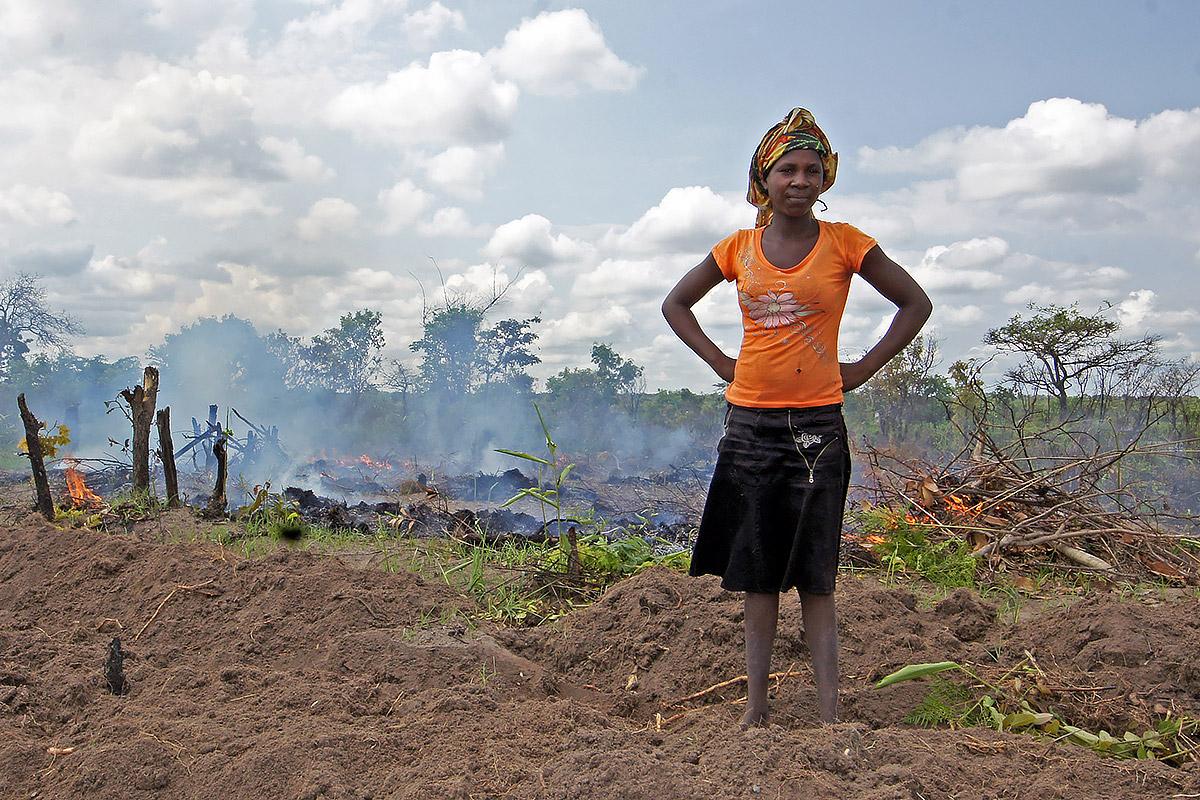
Fitch Lowers Angola’s 2018 GDP Growth Forecast to 1.5%
By Dipo Olowookere
Consulting company, Fitch Solutions, has disclosed that the Gross Domestic Product (GDP) of Angola will drop to 1.5 percent from the 2.8 percent it earlier projected for the year 2018. The firm attributed this to the growing tendency for the declining trend witnessed in oil production.
“We have now updated our estimates of Angolan GDP growth to 1.5 percent in 2018, a representative difference from the previous 2.8 percent we had anticipated, and we expect GDP to grow by 2.3 percent in 2019, instead of the previous 2.6 percent estimate, whereas for 2020 we’ll estimate it to hit 2.6 percent, which is higher than the previous estimate of 2.2 percent for that year”, Fitch Solutions announced.
On a memo sent to investors, some other Fitch analysts from the consulting company, which have no ties to the analysis in question, have said that “although Angola will be most likely out of the recession trend for the next few quarters, the economic recovery will be weaker than expected previously, mostly due to the decline in oil production in the country.”
The government had estimated GDP growth to arrive at a 2.2 percent threshold, in comparison to the 4.6 percent estimate they’d announced previously, whereas the IMF predicted GDP to get to 2.3 percent this year.
Private consumption and public investment are adding up to the economy and “they shall make the economic growth move positively in the following years, with great potential coming from foreign investment and international financial aid”, said the analysts, referring to a programme being negotiated in October with the International Monetary Fund, which will add €1.5 billion to the state’s treasury.
However, they alert that “in the long-term, the high exposure of Angola to the volatility of the oil sector will put the country under pressure and could induce the GDP growth estimates to go lower.”
The decreasing trend in GDP estimations emerged after “the announcement, by the Office for National Statistics, of data that shows the GDP had decreased by 2.2 percent in the first quarter of the year, after it had already registered a negative growth of 2.6 percent in 2016 and 2.5 percent in 2017”, the analysts also noted.
Data has been updated also to accompany the changes in terms of estimates of oil production, which Fitch announced would go down over the next few years: “A big increase in production is no longer expected, given that the oil wells ready for exploitation will not be as much as desired” they concluded, stating that production is expected to go down by 1.9 percent.
Economy
Dangote Sues FG Over Fuel Import Licences
By Adedapo Adesanya
Dangote Petroleum Refinery has filed a new lawsuit against the federal government over the fuel import licences issued to marketers and the Nigerian National Petroleum Company (NNPC) Limited.
Last week, the Nigerian Midstream and Downstream Petroleum Regulatory Authority (NMDPRA) issued licences to six marketers for the importation of 720,000 metric tonnes of Premium Motor Spirit, known as petrol.
The marketers are NIPCO, AA Rano, Matrix, Shafa, Pinnacle, and Bono. The development comes amid claims by the NMDPRA that the Dangote Petroleum Refinery now supplies over 90 per cent of Nigeria’s daily petrol consumption.
Dangote said in the filing that the licences issued undermine its operations and contravene the law, which it argues allows imports only when domestic supply falls short.
Named in the suit against the country is the Attorney General and Minister of Justice, Mr Lateef Fagbemi. The federal government can only be sued via his office.
The case signals renewed tensions almost a year after Dangote withdrew an earlier lawsuit challenging similar licences. That case sought to nullify import permits issued to the NNPC and several traders.
The new filing asks the Federal High Court in Lagos to set aside import permits issued or renewed by the NMDPRA, arguing they breach an earlier order to maintain the status quo.
Dangote ended the earlier lawsuit in July 2025 without explanation, leaving unresolved questions over competition and supply in one of Africa’s largest fuel markets.
Nigeria has long relied on petrol imports due to underperforming state refineries. However, Dangote’s 650,000 barrels per day capacity refinery was touted to end that dependence.
Despite the presence of the facility, imports have continued to cover supply gaps as the refinery ramps up output.
The NMDPRA did not issue a single import licence in the first quarter of 2026 because the Dangote refinery had the capacity to meet Nigeria’s petrol demand.
Business Post gathered that only upon intervention by President Bola Tinubu were the licenses granted for the second quarter by the NMDPRA.
Economy
Nigeria’s Inflation Rises to 15.69% in April as Middle East Crisis Persists
By Adedapo Adesanya
The Nigeria Bureau of Statistics (NBS) has revealed that Nigeria’s headline inflation rate in April 2026 rose to 15.69 per cent, beating analysts’ expectations of 15.95 per cent, as the fallout from the Iran war continued to affect the global economy.
The statistical office on Friday showed the headline inflation rate for April on a month-on-month basis was 2.13 per cent, while the food inflation rate in the review month was 16.06 per cent on a year-on-year basis.
The rise in prices comes as an energy price shock stemming from the continued conflict in the Middle East, which stoked food prices and affected relative exchange rate stability.
According to the NBS, “this can be attributed to the rate of change in the average prices of the following products: Millet whole grain, yam flour, ginger (Fresh), beef, garri, tam tuber, pepper (Fresh), cray fish, cassava tuber, Beans, Irish Potatoes, tomatoes (fresh), wheat grain (Sold loose), soya beans, guinea corn, plantain, carrots (Fresh) etc.”
“The average annual rate of food inflation for the twelve months ending April 2026, relative to the previous twelve-month average, was 17.55%, which was 17.05% points lower than the average annual rate of change recorded in April 2025 (34.60%),” the NBS said.
Analysts at Coronation Research had earlier projected that the inflation rate in Nigeria would be at 15.95 per cent on a year-on-year basis in April 2026. It added that the expected inflation rate signals a return toward the underlying disinflation trajectory and could be a pivotal data point in shaping Monetary Policy Committee (MPC) deliberations at the next policy meeting.
It also expects food inflation to further ease, as food and non-alcoholic beverages remain the dominant contributor to headline CPI, accounting for about 40 per cent of the Consumer Price Index (CPI) basket.
The MPC of the Central Bank of Nigeria (CBN) will meet this month, the first since the Iran War started in late February, to review core monetary policies and possibly make adjustments.
The committee reduced the Monetary Policy Rate (MPR) by 50 basis points from 27.0 per cent to 26.5 per cent at its 304th Monetary Policy Committee (MPC) meeting in February.
Economy
Dangote Refinery Crude Intake Hits 635,000b/d in April, Receives 21 Cargoes
By Adedapo Adesanya
Nigeria’s 650,000 barrels-per-day Dangote Refinery hit its highest-ever monthly crude intake in April 2026, taking in about 635,000 barrels per day of crude oil, according to Argus tracking data.
Deliveries in the review month rose from 565,000 barrels per day in March, bringing the refinery close to its full installed capacity.
The increase followed the completion of maintenance work on one of the refinery’s crude distillation units earlier this year.
This indicates that the Dangote Refinery is steadily ramping up operations toward full capacity after a gradual start since late 2023.
The refinery received 21 separate crude cargoes in April — a record since operations began.
All supplies came from West Africa, mainly Nigerian crude grades, with one cargo from Cameroon.
Nigerian grades delivered included Bonny Light, Escravos, Qua Iboe, Bonga, Forcados, Brass River, Amenam, and others.
Cameroon’s Ebome crude was supplied to the refinery for the first time.
April receipts comprised 160,000 barrels per day of Bonny Light, 65,000 barrels per day each of Escravos, Qua Iboe and Bonga, 50,000 barrels per day of CJ Blend, then 25,000-35,000 barrels per day each of Nigerian Utapate, EA, Jones Creek, Amenam, Forcados, Brass River, plus 25,000 barrels per day of Cameroon’s Ebome.
The strong rise in local and regional crude supply could also reduce the refinery’s dependence on imported crude grades and strengthen Nigeria’s domestic fuel production capacity.
The Argus report said that no US crude was delivered in April, despite the US West Texas Intermediate (WTI) crude previously being a major feedstock for the plant in 2025.
The refinery relied heavily on Suezmax tankers, with some vessels making multiple shuttle trips between offshore terminals and the refinery.
Average crude receipts in the first four months of 2026 climbed to 495,000 barrels per day, significantly above last year’s average of 375,000 barrels per day.
The data assessed Dangote’s April receipts at a weighted average of 35.1°API and 0.2 per cent sulphur content, compared with 37.2°API and 0.2 per cent sulphur in March. Receipts averaged 37.1°API and 0.15 per cent sulphur in January-April, compared with 36.8°API and 0.2 per cent sulphur across 2025.
The report also added receipts for May appear good as the refinery should get a cargo each of Qua Iboe and Odudu this week.
-
Feature/OPED6 years agoDavos was Different this year
-
Travel/Tourism10 years ago
Lagos Seals Western Lodge Hotel In Ikorodu
-
Showbiz3 years agoEstranged Lover Releases Videos of Empress Njamah Bathing
-
Banking8 years agoSort Codes of GTBank Branches in Nigeria
-
Economy3 years agoSubsidy Removal: CNG at N130 Per Litre Cheaper Than Petrol—IPMAN
-
Banking3 years agoSort Codes of UBA Branches in Nigeria
-
Banking3 years agoFirst Bank Announces Planned Downtime
-
Sports3 years agoHighest Paid Nigerian Footballer – How Much Do Nigerian Footballers Earn