Connect with us

Economy

Digital Financial Inclusion, Poverty, Hawkers, Daddy Freeze & Tithe

Published

on

By Nneka Okumazie

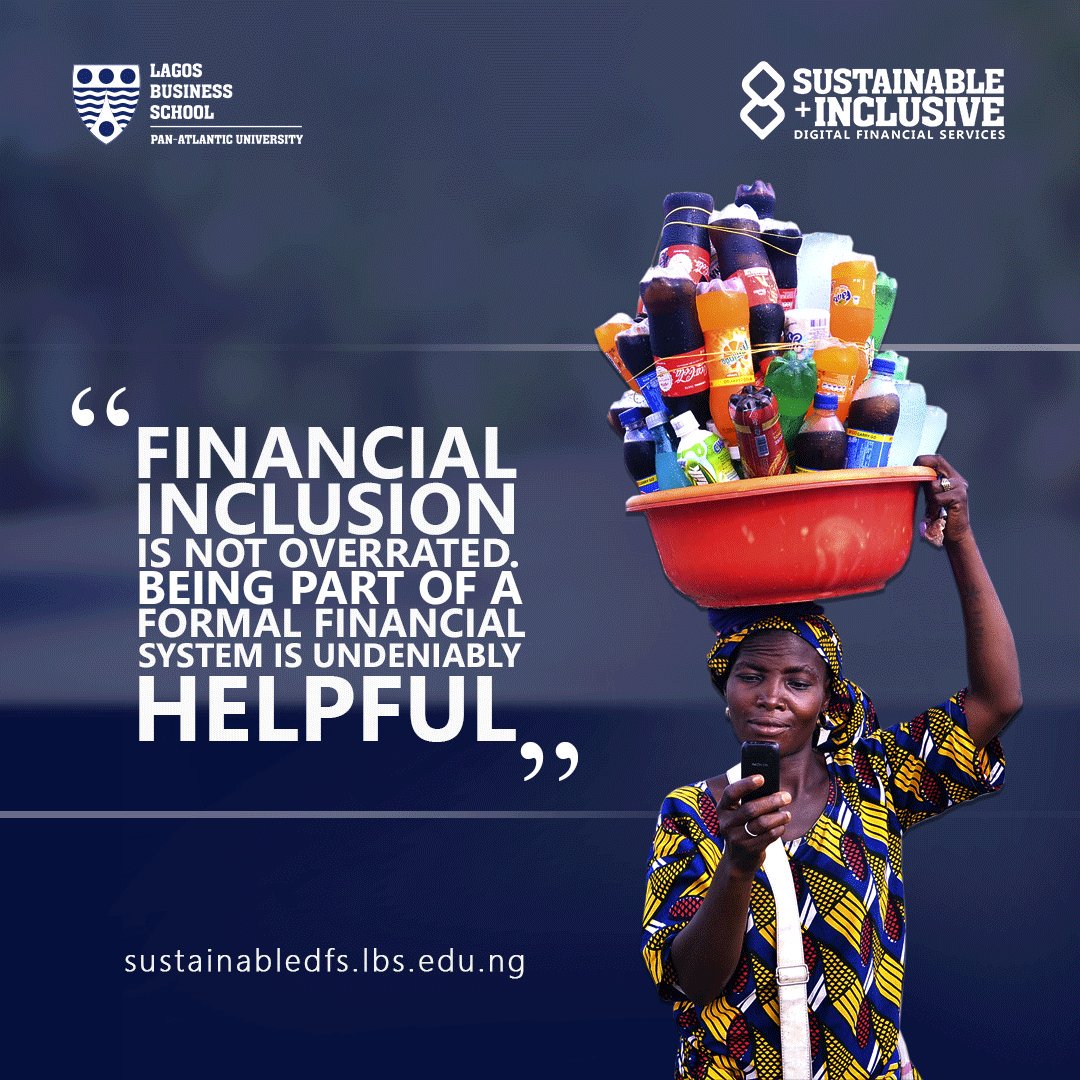
If an individual hawks stuff around, who is responsible for that situation, and whose responsibility is it to lift that individual out of poverty?

Factors responsible for poverty may include income, purchasing power, conditions of living, trade and monetary policies. There are some who are impoverished but aren’t hawking. What drives people to hawk and how much has Africa done to find solutions to hawking?

Poverty in Africa is super complicated. The whole thing may be onerous to extricate, but fragments of it could find solutions if massive studies and efforts are thrown at it.

There are telecom companies who branded poor retailers of their products, with umbrellas, clothes, chairs, tables, etc. There are beverage and fast moving consumer goods companies who have also given branded boards, posters, merchandises to poor retailers as well. There are often promos, offers, credit services, microfinance, etc. for many of these retailers. Sometimes, it doubles as marketing or for social optics.

However, most of these are palliatives for poverty, not structures for economic elevation. Financial inclusion, can also – simply – be described as a way of providing banking services for the poorest. It is helpful and necessary.

But where does financial inclusion fit for majority of poor people: palliative or elevator? Some may argue that most poor traders have found a way around saving from time, while others may argue that there has been no other time in Africa, where direct financial services are provided to the poor.

Africa is buzzing with new stuff especially platforms that technology enabled. But where are the solutions? Where are the studies? Where is the activism, or rage against hawking? How many University centers are there to study and prevent hawking? How many corporations are making efforts to reduce the amount of hawkers of their product, to have more shop-based or stationary retailers?

Hawkers are ignored, seen as normal and forsaken, except when there is something to benefit from them. Hawking is abnormal, horrific and should be discouraged enough that it should be the impossible option. But, nothing is done, by those who have knowledge, or by those whose products they sell – directly or indirectly, or by those who can make the policies to help them collectively.

Often people give one answer to poverty, or hawking, saying do this, then that, etc. But NO, the complexities of Africa’s hardship require multiple studies, tests, models and experimentation – consistently – towards solution.

Christianity, Poverty and Taxes

Sometimes, the necessity of reviewing issues of poverty is because of the growing amount of people who blame Christianity for poverty in Nigeria, or in Africa.

Christianity is hated more than hawking, by those who have no value to improve the society except vague to-dos.

They have said people are brainwashed by Christianity. Meaning that for them all their opinions and views of everything they do is a hundred percent original, nothing from anywhere was ever accepted, so whoever accepts anything they didn’t create, or invent is brainwashed. No interest in genuine Christianity or in the Way does not mean those who have are brainwashed.

They also said Christianity is false hopes. But if there is no hope in hawking, where someone hawking had seen folks who hawked through life, or stayed poor through life, is it not better to have hope that may mean joy or that may mean endurance and ability to be strong, or have a sound mind?

True Churches are not the problem of the country, or the continent, no matter what statement is brandished by enemies of the Church.

Giving in a true Church is also not a scam, no matter the giving. It is optional, voluntary and in accordance with faith. No need to give if there is doubt of its use, or if feeling cheated.

Also, if there are questions about Christianity and the Power of GOD that aren’t satisfactorily answered, it does not invalidate the Truthfulness of the Word. Christianity is not the only thing that has unanswered questions. There are tons of unanswered question – in spite of all the advances – in psychology, neuroscience, oncology, astronomy, atmospheric science, etc.

Christ said, “Pay therefore to Caesar the things that are due to Caesar, and pay to God the things that are due to God.” This means that if you believe you – may – give, as part of your faith, to GOD. The Scriptures did not tell us how the Churches in the Epistles gave during their services, or their general order of service but it is possible, they gave collectively for Church projects, for the welfare of the poor, for gospel witnessing, etc.

Taxes are important for any economy. There are all kinds of taxes for all categories of income and expenditures. Taxes well spent are like a great pillar for building and maintaining a society.

Poverty

The poverty in Africa is painful. Yes, it is not an excuse for laziness or for vices or for risky desperations, or for harm, or for lawlessness. But there are many, trying much to be lawful and good, but the failures of the society has precipitated them. It is so unfortunate and it doesn’t seem there are massive active efforts for poverty solutions in Africa, but who knows?


Modupe Gbadeyanka is a fast-rising journalist with Business Post Nigeria. Her passion for journalism is amazing. She is willing to learn more with a view to becoming one of the best pen-pushers in Nigeria. Her role models are the duo of CNN's Richard Quest and Christiane Amanpour.

Economy

Tinubu to Present 2026 Budget to National Assembly Friday

Published

on

N6.2trn Supplementary Budget

By Adedapo Adesanya

President Bola Tinubu will, on Friday, present the 2026 Appropriation Bill to a joint session of the National Assembly.

The presentation, scheduled for 2:00 pm, was conveyed in a notice issued on Wednesday by the Office of the Clerk to the National Assembly.

According to the notice, all accredited persons are required to be at their duty posts by 11:00 am on the day of the presentation, as access into the National Assembly Complex will be restricted thereafter for security reasons.

The notice, signed by the Secretary, Human Resources and Staff Development, Mr Essien Eyo Essien, on behalf of the Clerk to the National Assembly, urged all concerned to ensure strict compliance with the arrangements ahead of the President’s budget presentation.

The 2026 budget is projected at N54.4 trillion, according to the approved 2026–2028 Medium-Term Expenditure Framework (MTEF) and Fiscal Strategy Paper (FSP).

Meanwhile, President Tinubu has asked the National Assembly to repeal and re-enact the 2024 appropriation act in separate letters to the Senate and the House of Representatives on Wednesday and read during plenary by the presiding officers.

The bill was titled Appropriation (Repeal and Re-enactment Bill 2) 2024, involving a total proposed expenditure of N43.56 trillion.

In a letter dated December 16, 2025, the President said the bill seeks authorisation for the issuance of a total sum of N43.56 trillion from the Consolidated Revenue Fund of the Federation for the year ending December 31, 2025.

A breakdown of the proposed expenditure shows N1.74 trillion for statutory transfers, N8.27 trillion for debt service, N11.27 trillion for recurrent (non-debt) expenditure, and N22.28 trillion for capital expenditure and development fund contributions.

The President said the proposed legislation is aimed at ending the practice of running multiple budgets concurrently, while ensuring reasonable – indeed unprecedentedly high – capital performance rates on the 2024 and 2025 capital budgets.

He explained that the bill also provides a transparent and constitutionally grounded framework for consolidating and appropriating critical and time-sensitive expenditures undertaken in response to emergency situations, national security concerns, and other urgent needs.

President Tinubu added that the bill strengthens fiscal discipline and accountability by mandating that funds be released strictly for purposes approved by the National Assembly, restricting virement without prior legislative approval, and setting conditions for corrigenda in cases of genuine implementation errors.

The bill, which passed first and second reading in the House of Representatives, has been referred to the Committee on Appropriations for further legislative action.

Continue Reading

Economy

Nigeria Bans Wood, Charcoal Exports, Revokes Licenses

Published

on

wood charcoal

By Adedapo Adesanya

The federal government has imposed an immediate nationwide ban on the export of wood and allied products, revoking all previously issued licenses and permits to exporters.

The announcement was made on Wednesday by the Minister of Environment, Mr Balarabe Lawal, during the 18th meeting of the National Council on Environment in Katsina State.

Mr Lawal said the directive, outlined in the Presidential Executive Order titled Presidential Executive Order on the Prohibition of Exportation of Wood and Allied Products, 2025, became necessary to curb illegal logging and deforestation across the country.

“Nigeria’s forests are central to environmental sustainability, providing clean air and water, supporting livelihoods, conserving biodiversity, and mitigating the effects of climate change,” the Minister said, warning that the continued exportation of wood threatens these benefits and the long-term health of the environment.

The order, published in the Extraordinary Federal Republic of Nigeria Official Gazette No. 180, Vol. 112 of 16 October 2025, relies on Sections 17(2) and 20 of the 1999 Constitution (as amended), which empower the state to protect the environment, forests, and wildlife and prevent the exploitation of natural resources for private gain.

Under the new policy, security agencies and relevant ministries are expected to enforce a total clampdown on illegal logging activities nationwide.

On his part, the Katsina State Deputy Governor, Mr Faruk Lawal Jobe highlighted the state’s history of pioneering socio-economic policies that have influenced national policy. He emphasized the importance of collaboration in addressing environmental challenges across the country.

“Environmental sustainability is critical to achieving growth and improving the quality of life of our people,” he said. “Our administration has prioritised initiatives aimed at combating desertification and promoting afforestation.”

The ban reflects the government’s commitment to safeguarding Nigeria’s shrinking forest cover and addressing climate change, while ensuring sustainable use of natural resources for future generations.

Continue Reading

Economy

Unlisted Securities Bourse Appreciates 0.24% Midweek

Published

on

unlisted securities index

By Adedapo Adesanya

The NASD Over-the-Counter (OTC) Securities Exchange rose by 0.24 per cent on Wednesday, December 17, pulling the Unlisted Security Index (NSI) up by 8.62 points to 3,614.64 points from 3,606.02 points.

In the same vein, the market capitalisation added N4.72 billion to close at N2.164 billion compared with the N2.160 trillion it ended on Tuesday.

The growth was inspired by four securities, which finished on the gainers’ log, neutralising the losses printed by two other securities on the trading platform.

MRS Oil Plc gained N17.90 on Wednesday to end at N196.90 per unit versus N179.00 per unit, NASD Plc appreciated by 59 Kobo to N58.50 per share from N57.91 per share, FrieslandCampina Wamco Nigeria Plc added 15 Kobo to sell at N60.19 per unit versus N60.04 per unit, and Industrial and General Insurance (IGI) Plc rose by 6 Kobo to 64 Kobo per share from 58 Kobo per share.

On the flip side, Golden Capital Plc extended its loss by 76 Kobo to end at N7.75 per unit versus N8.51 per unit, and Central Securities Clearing System (CSCS) Plc slipped by 35 Kobo to N39.65 per share from N40.00 per share.

Yesterday, the volume of transactions increased by 737.3 per cent to 20.4 million units from 2.4 million units, but the value of trades fell by 33.8 per cent to N72.2 million from N109.1 million, and the number of deals slid by 62.5 per cent to 21 deals from 56 deals.

Infrastructure Credit Guarantee Company (InfraCredit) Plc remained the most traded stock by value on a year-to-date basis with 5.8 billion units sold for N16.4 billion, the second position was occupied by Okitipupa Plc with 178.9 million units transacted for N9.5 billion, and the third place was taken by MRS Oil Plc with 36.1 million units worth N4.9 billion.

InfraCredit Plc was also the most traded stock by volume on a year-to-date basis with 5.8 billion units traded for N16.4 billion, followed by IGI Plc with 1.2 billion units valued at N420.7 million, and Impresit Bakolori Plc with 536.9 million units worth N524.9 million.

Continue Reading

Trending