Connect with us

Banking

Diamond Bank, Access Bank Merger and the Big Obstacle

Published

on

By Dipo Olowookere

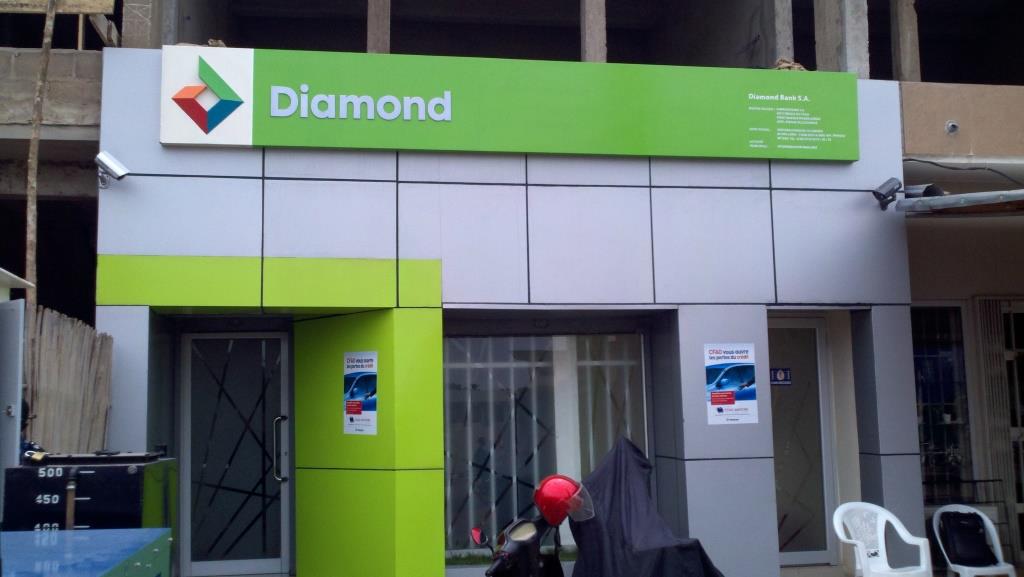
One news item that has dominated the capital market space in Nigeria at the moment is the merger between Diamond Bank and Access Bank.

The merger between both parties was confirmed yesterday after initial denials by both banks, while the deal is expected to be finalised before the end of June 30, 2019.

It is important to note that both financial institutions are trading their equities on the floor of the Nigerian Stock Exchange (NSE).

In a release on Monday by Diamond Bank, its board said, “Based on the agreement reached by the boards of the two financial institutions, Diamond Bank shareholders will receive a consideration of N3.13 per share, comprising of N1.00 per share in cash and the allotment of 2 new Access Bank ordinary shares for every 7 Diamond Bank ordinary shares held as at the Implementation Date.

“The offer represents a premium of 260 percent to the closing market price of N0.87 per share of Diamond Bank on the Nigerian Stock Exchange as of December 13, 2018, the date of the final binding offer.”

This deal, according to the Chief Executive Officer of Diamond Bank, Mr Uzoma Dozie, “will create one of Africa’s leading financial institutions.”

Mr Dozie said, “There is clear strategic rationale for the proposed merger and strong complementarities between the two institutions,” noting that, “While Diamond Bank has pioneered Nigeria’s largest technology-led retail banking platform, Access Bank is one of Nigeria’s leading full-service commercial banks.”

He further said, “The board of Diamond Bank believes that the proposed combination of the two operations provides an exciting prospect for all stakeholders in both businesses and will create a financial institution with the scale, strength and expertise to capitalise on the significant opportunities in Nigeria and sub-Saharan Africa more broadly.”

For the CEO of Access Bank, Mr Herbert Wigwe, “Access Bank has a strong track record of acquisition and integration and has a clear growth strategy.

“Access Bank and Diamond Bank have complementary operations and similar values, and a merger with Diamond Bank, with its leadership in digital and mobile-led retail banking, could accelerate our strategy as a significant corporate and retail bank in Nigeria and a Pan-African financial services champion.

“Access Bank has a strong financial profile with attractive returns and a robust capital position with 20.1 percent CAR as at September 30, 2018.

“We believe that this platform, together with the two banks’ shared focus on innovation, financial inclusion and sustainability, can bring benefits to Access Bank and Diamond Bank customers, staff and shareholders.”

While the Central Bank of Nigeria (CBN) is believed to have midwifed this transaction, both shareholders of Access Bank and Diamond Bank will still have to approve the merger, which some have described as acquisition in reality.

However, Business Post analysts are of the view that shareholders of Diamond Bank will want to create a big obstacle to this merger, especially Carlyle Group, an American equity firm, which in 2014 became the leading individual shareholder in the bank with the acquisition of 17.7 percent of the company’s shares. At that time, the US-based company acquired 4.16 billion shares of Diamond Bank at N5.80k each.

While some minority shareholders may not reject the offering because of what Access Bank is putting forward, Carlyle Group, which has been speculated to have called for the resignation of Mr Dozie, may become the biggest hurdle to cross in making the merger see the light of the day.

In our November 27, 2018 article, we highlighted how Carlyle Group may have lost over N20 billion of their investment in Diamond Bank since they joined the lender.

As it has been reported in some sections of the media, the Pascal Dozie family, founder of Diamond Bank, had allegedly first obtained a loan from GTBank Plc, which was later allegedly taken over by Access Bank Plc.

The loan was said to have been used to chase foreign investors out of the bank, especially, Actis, in 2014, which allegedly sold their shares to the Dozie family at N7.50k per unit, receiving over $125 million from the deal.

Business Post gathered from a statement released then that the Dozie family, through Kunoch Holdings, had acquired the 14.8 percent stake of Actis DB Holdings Limited in Diamond Bank. Actis had invested heavily in Diamond Bank in 2007, when it bought the bank’s shares.

With the above, it is anticipated that Carlyle Group might feel cheated in the Access Bank/Diamond Bank deal and might want to fight back by frustrating it, especially when it has been speculated that the Dozie family are favouring Access Bank to take over Diamond Bank allegedly as pay back for the loan they allegedly obtained some year ago to pursue Actis out of the company.

Also from a leaked letter purportedly written by a former Chairman of Diamond Bank, Mr Seyi Bickerstheth, which was later leaked to the media, Carlyle Group has not been in support of this transaction and the leadership of Mr Dozie.

Mr Bickerstheth, who resigned from the bank over a month ago alongside three other non-executive directors, claimed Carlyle Group had wanted a situation where fresh capital would be injected into Diamond Bank for recapitalisation instead of handing over the bank to Access Bank on a platter of gold.

According to letter, the group had insisted that for the cash injection to happen, Mr Dozie will first have to relinquish his position as the CEO.

“After several discussions, the CEO, of the bank who is also a representative of the second largest shareholder Kunoch Ltd, agreed to resign effective January 3, 2019 but would not tender his letter to confirm his verbal notification.

“In response, the representative of CSSAF DBN Holdings therefore at the board meeting held on October 18, 2018 put forward a motion for the removal of the CEO with immediate effect. This was despite continuous negotiations and attempts by members of the board, to provide an amicable solution to this impending shareholder fight and reaching several tentative agreements, which were frustrated by both parties.

“Nonetheless due to technical reasons and reluctance of board members regarding an immediate removal of the CEO, the vote for the removal of the CEO was postponed, pending legal clarifications, which could not be provided by the Company Secretary,” the letter had said.

It had said further that, “The CEO, at the October 18 2018 meeting, had a financial adviser appointed by the executive management without reference to the board to present to the board various strategic options for recapitalization either through an internal rights issue or possible merger with other Tier 1 banks.

“While the board stated that this was to have been presented to the board capital raising committee, it allowed the presentation to be made. The presentation, though based on 2017 financials was still very high level and, was well received by the board and the board directed that the recommendation be passed on to the capital raising committee of the bank to evaluate this along with all other options being considered – new injection of capital by the shareholders, merger with a local bank or position to partner with an international bank not currently operating in Nigeria

“On Friday October 19, 2018, due to the lack of clarity on the motion for immediate removal of the CEO, the representative of CSSAF DBN Holdings informed board members that as a majority shareholder CSSAF DBN Holdings would call for an Extraordinary General Meeting to remove the CEO since the board had not voted on the matter.

“The 4 NEDs then decided that it was becoming a shareholder fight, which they felt could have been averted either by the CEO tendering a letter indicating his resignation effective January 3, 2019 or by CSSAF DBN Holdings accepting to give the Board the responsibility of ensuring the issue is resolved amicably. Purely on this basis, the 4 NEDs wrote to resign their appointments immediately by emails to the Company Secretary to allow the 2 shareholders resolve the impasse.”

If you desire to read the full letter, kindly click HERE For now, what observers are not sure of is if Carlyle Group will approve the merger between Diamond Bank and Access Bank or would want to first force Access Bank to settle their over N20 billion loss before giving the deal its nod.


Dipo Olowookere is a journalist based in Nigeria that has passion for reporting business news stories. At his leisure time, he watches football and supports 3SC of Ibadan. Mr Olowookere can be reached via [email protected]

Advertisement
Click to comment

Leave a Reply

Your email address will not be published. Required fields are marked *

Banking

5 Smart Moves to Wrap Up Your Year in Financial Style

Published

on

FairMoney

By Margaret Banasko

“Detty December,” Nigeria’s unofficial end-of-year spectacle, is an annual economic boom of concerts and parties, amplified by the return of the “IJGB (I Just Got Back) crowd. This celebration drives massive discretionary spending and consumer euphoria.

However, this festive high often leads to a financial low; the “Long January.” This is when critical non-negotiable expenses like rent and school fees hit hard.

Do not treat December as a financial free-for-all. Savvy individuals and business leaders must reframe it as the final, crucial financial quarter. The goal is to shift from emotional spending to deliberate, strategic saving.

Here are five smart, actionable financial moves that are critical for maintaining fiscal discipline that will enable you to maximize the festive season’s enjoyment while effortlessly de-risking and prepping your finances for a strong Q1 trajectory.

  • Capitalize on Discounted Bill Payments: The increased consumption of utilities, airtime, and data during this period necessitates higher essential recurring costs. Smart financial governance dictates actively seeking value on these high-frequency expenditures. Pay all essential bills from electricity tokens to data bundles and Cable TV subscriptions through a platform, such as the FairMoney app, that provides a direct financial incentive or cashback on purchases. This ensures that operational necessity does not unduly drain capital, as every percentage saved on recurring utilities is capital effectively preserved for critical Q1 requirements.
  • Implement the 50/30/20 Rule Strategically: Acknowledge the inevitable social expenditure of Detty December by imposing a clear framework for resource allocation. This strategic rule dictates how your income must be distributed to ensure financial security. Divide your December income into three non-negotiable categories: Allocate 50 percent of your income directly to critical January financial requirements like rent, transportation, and structured debt payments; this sum must not be compromised. Allocate 30 percent to your discretionary December wants, covering social activities, gifts, and controlled splurges; once this budget threshold is met, spending must cease. Crucially, assign the remaining 20 percent to structured savings and investment.

    This 20 percent is non-negotiable and serves as the anchor for long-term wealth creation and a buffer against the Long January strain. You can automate this crucial 20 percent deduction before you even begin spending using the FairSave feature on the FairMoney App, which enables instant autosave while you earn daily interest and retain the flexibility to withdraw anytime.

  • Convert Festive Windfalls into Capital: Do not view every incoming festive cash gift or unexpected bonus as mere spending money. Instead, strategically treat any financial “windfall” as a direct deposit into your future wealth accumulation. The 100 Percent Rule applies here: commit to saving or investing 100 percent of any financial gift, as this capital was not part of your planned income, offering a critical opportunity to grow your savings effortlessly. Immediately isolate any unexpected cash injections and categorize them as investment capital rather than disposable income.

By leveraging FairLock on the FairMoney App, you can save 100 percent of the festive cash into a fixed deposit. This ensures the funds are secure and illiquid, accruing interest over the stipulated savings period, which can then be released on maturity to sort out major Q1 projects or investments.

  • De-Risk Your December Savings Strategy: FairMoney’s premium, revolving credit line up to ₦5,000,000, FlexiCredit, serves as a crucial liquidity shield over your protected capital. Instead of being forced to prematurely break fixed deposits or liquidate interest-earning savings accounts to cover sudden, urgent expenses such as an unexpected repair or a short-notice business need, you can immediately draw the required funds from your FlexiCredit limit.

This allows critical, ring-fenced funds to remain untouched, continue accruing interest, and maintain their full readiness for the inevitable “Long January” obligations like rent and school fees. FlexiCredit empowers the savvy individual who earns a minimum of ₦250,000 as salary to strategically manage cash flow and capture short-term high-return opportunities without depleting their primary savings or operational capital, offering immediate bridge financing, charged at a competitive 0.25 percent per day only on the amount utilized.

  • Prioritize High-Value, Low-Cost Experiential Activities: While Detty December’s allure often stems from high-ticket social events and luxury venues, truly impactful celebrations are measured by the quality of connection, not the cost of admission. Instead of defaulting to expensive restaurant dinners, exclusive concerts, or impulse travel, strategically redirect your social budget toward creative, high-value experiential activities.

Organize themed potlucks with friends, host a family Christmas hangout at home, or explore local attractions like parks and museums that offer rich experiences without the premium price tag. By substituting generic, high-cost outings with thoughtful, collective events, you significantly slash discretionary spending while often increasing the depth and enjoyment of the festive season, guaranteeing maximum emotional return on minimum financial investment.

By applying these five smart moves, you assert control over your finances, ensuring you do not just survive Detty December and the Long January, but wrap up the year not just in celebration, but in financial style, positioning yourself for an empowered and prosperous New Year.

Margaret Banasko is the Head of Marketing at FairMoney MFB

Continue Reading

Banking

Stanbic IBTC Bank Assures Continued Strategic Investment in Artists, Designers

Published

on

stanbic ibtc 2207bytbally

By Aduragbemi Omiyale

The creative industry in Nigeria may have nothing to worry about with the likes of Stanbic IBTC Bank around the corner.

The financial institution, which has not hidden its love for the sector, has promised to continue with its strategic investment in the country’s designers and artists.

Speaking at an event, An Evening of Fashion, Art & Lifestyle, the Executive Director for Personal and Private Banking at Stanbic IBTC Bank, Mr Olu Delano, represented by the Head of its Private Banking Segment, Ms Layo Ilori-Olaogun, said the company was proud to be associated with the programme, which it also sponsored.

“At Stanbic IBTC, we recognise Nigeria’s creative sector as a vital driver of economic diversification, employment, and global cultural influence.

“We are proud to support the individuals behind these platforms that elevate African excellence and provide visionary talents the visibility that they deserve.

“Nights like this reaffirm our commitment to continued strategic investment in our artists and designers,” he stated.

The invitation-only ceremony, which was held at The Garden, Federal Palace Hotel, Victoria Island, Lagos, hosted by Africa’s leading luxury fashion house, 2207bytbally, in collaboration with the acclaimed art collective Torrista, brought together high-net-worth individuals, art collectors, designers, media personalities, and luxury brand executives for an unparalleled showcase of creativity and sophistication.

The evening opened with a breathtaking runway presentation featuring three signature segments from the Evolve collection by 2207bytbally: Denim, Ethnic, and 2207 Prints. Each piece exemplified the meticulous craftsmanship, bold innovation, and cultural storytelling that has established the brand as a standard-bearer in African luxury fashion.

Complementing the couture was a curated exhibition by Torrista, transforming the venue into an immersive gallery. Commissioned artworks exploring themes of culture, femininity, and evolution created a robust visual dialogue with the collections, demonstrating the seamless harmony that can result when fashion and fine art converge.

“This evening was about more than clothes or canvases; it was about showing the world that African creativity is limitless. When fashion and art share the same space, magic happens, and tonight, Lagos felt that magic,” the Creative Director of 2207bytbally, Tolu Bally, stated.

Continue Reading

Banking

Secure IT, StockMed, 18 Others Make Wema Bank Hackaholics 6.0 Top 20 List

Published

on

Wema Bank Hackaholics 6.0

By Modupe Gbadeyanka

The six edition of the Hackaholics of Wema Bank Plc has produced 20 top finalists shared equally between two streams, Ideathon and Hackathon.

The Hackathon finalists are Rapid DEV, Secure IT, Neurafeed, Trust Lock Babcock, Pulse Track, IlluminiTrust, Trust Lock FUTA, Fix Fraud AI, KASH Flow and VOC AI.

The Ideathon finalists include PLOY, Fertitude, VarsityScape, Mama ALERT, StockMed, Chao, All Arbitrate, FarmSlate, Sane AI and Cycle X.

They emerged after a two-day pre-pitch held on December 16 and 17, 2025, for the grand finale slated for Friday, December 19, 2025.

They grand finale of Hackaholics 6.0 will convene the top players in Africa’s tech and innovation ecosystem, creating an avenue for these finalists to not only put their creativity to the ultimate test but also give their solutions visibility to potential investors for additional funding opportunities beyond the prizes to be won.

The prizes to be won for the Ideathon include N25 million for the winner, N20 million for the first runner-up, N15 million for the second runner-up and N5 million each for two women-led teams.

In the Hackathon category, the first to fourth-place winners will receive N20 million, N15 million, N10 million and N5 million, respectively.

The pre-pitch saw the top 43 contenders battle in a game of innovation and problem solving, presenting compelling pitches for a chance to make it to top 10 in their respective streams.

After a rigorous stretch of pitches and presentations, the top 20 emerged, securing their spot in the grand finale of Hackaholics 6.0.

“Hackaholics started off as a hackathon and morphed into an ideation. For Hackaholics 6.0, the sixth edition, we decided to give both the builders of new solutions and the refiners of existing ones, an opportunity to make meaningful impact.

“For us at Wema Bank, we understand that innovation isn’t just building from scratch. Sometimes, it’s looking at what exists and developing new ways to optimise that and create more efficiency. This is the idea behind our two-stream Ideathon-Hackathon structure.

“Every year, Hackaholics shows us just how eager and motivated Nigerian youth are when it comes to exploring creativity and innovation, and we are honoured to be the institution that provides them with the platform and resources to put this drive to good use.

“We toured seven cities, indulged 1,460 participants and discovered hundreds of remarkable ideas; some of which needed some refining and some of which deserved to move to the next stage.

“For those who needed to go back to the drawing board, we provided useful guidance and for the top contenders, we were able to shortlist to the top 43, who proceeded to the pre-pitch. To every participant, Wema Bank is proud of you. This is just the beginning,” the chief executive of Wema Bank, Mr Moruf Oseni, said.

Continue Reading

Trending