World
AfBD, AU Renew Call for Visa-Free Travel to Boost African Economic Growth
By Adedapo Adesanya
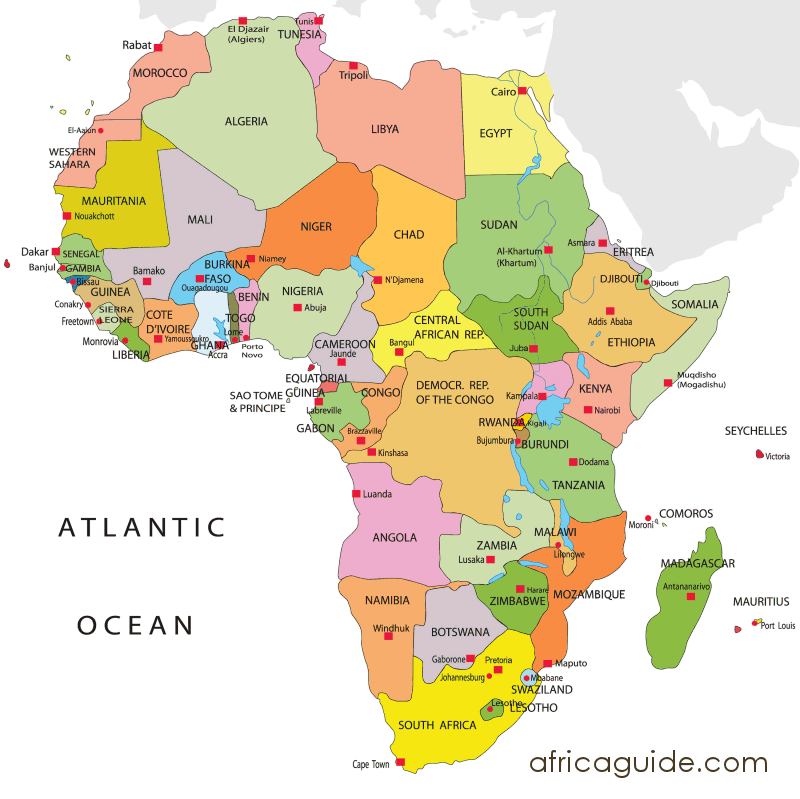
The African Development Bank (AfDB) and the African Union have renewed their push for visa-free travel to accelerate Africa’s economic transformation.
The call was reinforced at a High-Level Symposium on Advancing a Visa-Free Africa for Economic Prosperity, where African policymakers, business leaders, and development institutions examined the need for visa-free travel across the continent.
The consensus described the free movement of people as essential to unlocking Africa’s economic transformation under the African Continental Free Trade Area (AfCFTA).
The symposium was co-convened by AfDB and the African Union Commission on the margins of the 39th African Union Summit of Heads of State and Government in Addis Ababa.
The participants framed mobility as the missing link in Africa’s integration agenda, arguing that while tariffs are falling under AfCFTA, restrictive visa regimes continue to limit trade in services, investment flows, tourism, and labour mobility.
On his part, Mr Alex Mubiru, Director General for Eastern Africa at the African Development Bank Group, said that visa-free travel, interoperable digital systems, and integrated markets are practical enablers of enterprise, innovation, and regional value chains to translate policy ambitions into economic activity.
“The evidence is clear. The economics support openness. The human story demands it,” he told participants, urging countries to move from incremental reforms to “transformative change.”
Ms Amma A. Twum-Amoah, Commissioner for Health, Humanitarian Affairs and Social Development at the African Union Commission, called for faster implementation of existing continental frameworks.
She described visa openness as a strategic lever for deepening regional markets and enhancing collective responses to economic and humanitarian crises.
Former AU Commission Chairperson, Ms Nkosazana Dlamini-Zuma, reiterated that free movement is central to the African Union’s long-term development blueprint, Agenda 2063.
“If we accept that we are Africans, then we must be able to move freely across our continent,” she said, urging member states to operationalise initiatives such as the African Passport and the Free Movement of Persons Protocol.
Ghana’s Trade and Industry Minister, Mrs Elizabeth Ofosu-Adjare, shared her country’s experience as an early adopter of open visa policies for African travellers, citing increased business travel, tourism, and investor interest as early dividends of greater openness.
The symposium also reviewed findings from the latest Africa Visa Openness Index, which shows that more than half of intra-African travel still requires visas before departure – seen by participants as a significant drag on intra-continental commerce.
Mr Mesfin Bekele, Chief Executive Officer of Ethiopian Airlines, called for full implementation of the Single African Air Transport Market (SAATM), saying aviation connectivity and visa liberalisation must advance together to enable seamless travel.
Regional representatives, including Mr Elias Magosi, Executive Secretary of the Southern Africa Development Community, emphasised the importance of building trust through border management and digital information-sharing systems.
Ms Gabby Otchere Darko, Executive Chairman of the Africa Prosperity Network, urged governments to support the “Make Africa Borderless Now” campaign, while tourism campaigner Ras Mubarak called for more ratifications of the AU Free Movement of Persons protocol.
Participants concluded that achieving a visa-free Africa will require aligning migration policies, digital identity systems, and border infrastructure, alongside sustained political commitment.
World
Nigeria Leads Africa in Equity Funding as Startup Investment Hits $254m in H1 2026
By Adedapo Adesanya
Nigeria regained its position as Africa’s leading destination for equity startup investment in the first half of 2026, raising $214 million in equity financing and a total of $254 million across equity and debt, according to the latest Africa: The Big Deal report.
The report, titled H1 2026: Mapping the Money, showed that Nigeria ranked second on the continent in total funding, behind Egypt, which attracted $327 million, while Kenya and South Africa followed with $126 million and $83 million, respectively.
However, the report noted that Egypt’s top position was largely driven by a single fundraising by electric mobility company Spiro, which secured $327 million, including $270 million in equity and $57 million in debt. Excluding debt financing, Nigeria emerged as Africa’s largest equity funding market in the first six months of the year.
According to the breakdown by Africa: The Big Deal, Nigeria’s equity funding of $214 million was higher than Egypt’s $183 million, while South Africa and Kenya attracted $66 million and $46 million, respectively.
Beyond funding value, Nigeria also led the continent in the number of startups that raised at least $100,000 during the review period, reclaiming the top spot after what the report described as an “underwhelming” second half of 2025.
The publication observed that Nigeria’s fundraising performance has remained relatively stable over the past few years and exceeded the $250 million mark for the first time since 2022, pointing to renewed investor confidence in the country’s startup ecosystem.
It also found that while the Big Four startup markets—Nigeria, Egypt, Kenya and South Africa—continued to dominate Africa’s investment landscape, their combined share of total funding stood at 58 per cent in the first half of 2026.
“Zooming back on the Big Four (110 out of 190 $100k+ deals, i.e. 58%), Nigeria is head and shoulders above its peers, with Egypt and Kenya almost tying, and South Africa in fourth position again,” the report noted.
The report highlighted contrasting performances among the continent’s largest startup ecosystems. While Nigeria and Egypt maintained strong funding momentum, Kenya recorded its weakest funding performance since early 2021 after a strong second half of 2025, and South Africa failed to attract $100 million in funding during the period despite leading the continent a year earlier.
Africa: The Big Deal also noted a broader shift in investor behaviour, with funding increasingly concentrated in larger transactions while early-stage investments continued to decline. According to the publication, the drop in smaller funding rounds reflects growing concerns about limited capital available for early-stage startups across Africa.
World
SCRYPT Expands Stablecoin Settlement Infrastructure to East Africa
By Aduragbemi Omiyale
Accessing the US Dollar in the East Africa region has now been made easier with the expansion of the stablecoin settlement infrastructure of SCRYPT.
This development enables banks, payment providers and corporate treasury teams to move value into and out of the continent in real time.
Businesses paying international suppliers frequently have to convert local currency into USD before purchasing stablecoins for settlement, incurring FX conversions and spreads before any payment is made.
But SCRYPT is eliminating this intermediate conversion by enabling direct settlement corridors for local African currencies into stablecoins.
This development allows businesses to move from local currency to stablecoin settlement in a single licensed transaction, without first sourcing rationed bank dollars, as stablecoins are increasingly becoming settlement infrastructure rather than an investment product.
The expansion adds settlement support across four African currencies: the Kenyan shilling (KES), Tanzanian shilling (TZS), Rwandan franc (RWF) and Ugandan shilling (UGX). Each corridor is delivered through the same full-stack infrastructure our clients already use for trading, custody and treasury operations.
Speaking on this, the chief executive of SCRYPT, Norman Wooding, said, “Across Africa, stablecoin adoption is driven by economic need, not speculation.
“Businesses here are not chasing yield; they are trying to pay suppliers and manage treasury without losing margin to a banking system that rations dollars. Licensed, fair-rate dollar access is the clearest proof of what this infrastructure is for.”
Also commenting, the Managing Director of Markets & Trading at SCRYPT, Mr Gabriel Titopoulos, said, “Until now, reaching stablecoins from local African currencies meant buying scarce dollars and incurring several layers of conversion costs.
“SCRYPT removes this friction. Firms and payment providers can now settle straight from local currencies through live corridors, with local partners.”
World
African Graduates Association Promoting Multifaceted Initiatives With Russian Educational Institutions
By Kestér Kenn Klomegâh
In preparations for the third Russia-Africa Summit, scheduled for late October 2026, Dr Francois Ngan, deputy chairman of the Union of Associations of African Graduates of Soviet and Russian Universities, during an official working visit, has held a consultative meeting with Professor Vladimir Filippov, the President of the Russian University of Peoples’ Friendship (RUDN), and former Minister of Higher Education of Russia, Chairman of the National Commission for Accreditation of Higher Education.
RUDN is an educational institution established in 1960, primarily to provide higher education to Third World students. It has now become a popular multidisciplinary spot for many students, especially from developing countries. The university offers various academic programmes and has research infrastructure that comprises laboratories and interdisciplinary centres. The university is named after the former Congolese leader, Patrice Lumumba.
Dr Francois Ngan and Professor Filippov discussed the importance of the Graduates Association as a continental platform dedicated to strengthening unity, cooperation, and promoting shared progress among African graduates who studied in the former Soviet Union and in the Russian Federation. They also reviewed multifaceted initiatives that could bring together alumni associations from across Africa, whose members obtained education and professional training, and cultural experiences in Soviet and Russian institutions of higher learning.
Professor Filippov expressed optimism in addressing emerging challenges as a result of shifting geopolitical changes, emphasised strategic cooperation in the educational sphere with Africa, in general, and with the Republic of Cameroon, in particular, and further about the integration of African students during their studies in the Russian Federation.
The meeting also touched on academic and scientific work, the possibility of rewriting a scientific thesis, and the official organisation of transferring versions translated into six languages for the library of RUDN. Significant questions relating to Russia’s educational opportunities, collaborations and partnerships involving African countries were thoroughly discussed.
The Union of Associations of African Graduates of Soviet and Russian Universities was created under one continental umbrella to promote friendship, for professional networking, to engage in cultural exchange, and with particular emphasis on forging strategic cooperation between Africa and Russia.